

If your hair looks dull no matter what shampoo you use, the problem is usually not dirt or dryness — it is the surface of the hair itself. Healthy hair shines because its outer layer, the cuticle, lies flat and reflects light evenly. When the cuticle is rough, raised or damaged by colouring, heat styling or weather, light scatters instead of reflecting, and the hair looks flat and lifeless even when it is clean. A hair gloss is one of the simplest ways to fix that. It is a semi-permanent treatment that smooths the cuticle and coats the hair shaft, so light bounces off it again and the hair looks shinier, healthier and more polished — usually in about twenty minutes, without a trip to the salon.
This guide explains exactly what a hair gloss is, what it can and cannot do, the types available, and how to apply one at home step by step. It covers how long the shine lasts, who benefits most, and the mistakes that waste the treatment. No miracle claims, no brand hype — just the practical detail that decides whether a gloss is worth your time and money.
Quick answer: A hair gloss is a semi-permanent treatment that coats the hair shaft to add shine, smooth frizz and refresh colour. Clear gloss adds shine without changing colour; tinted gloss adds a sheer wash of tone. Apply it to clean, damp hair, leave it on for about 20 minutes, then rinse. Results last around 4 to 6 weeks and fade gradually with washing. It does not lighten hair, does not permanently change colour, and does not repair damage — it makes the surface look and feel better.
What Is Hair Gloss?
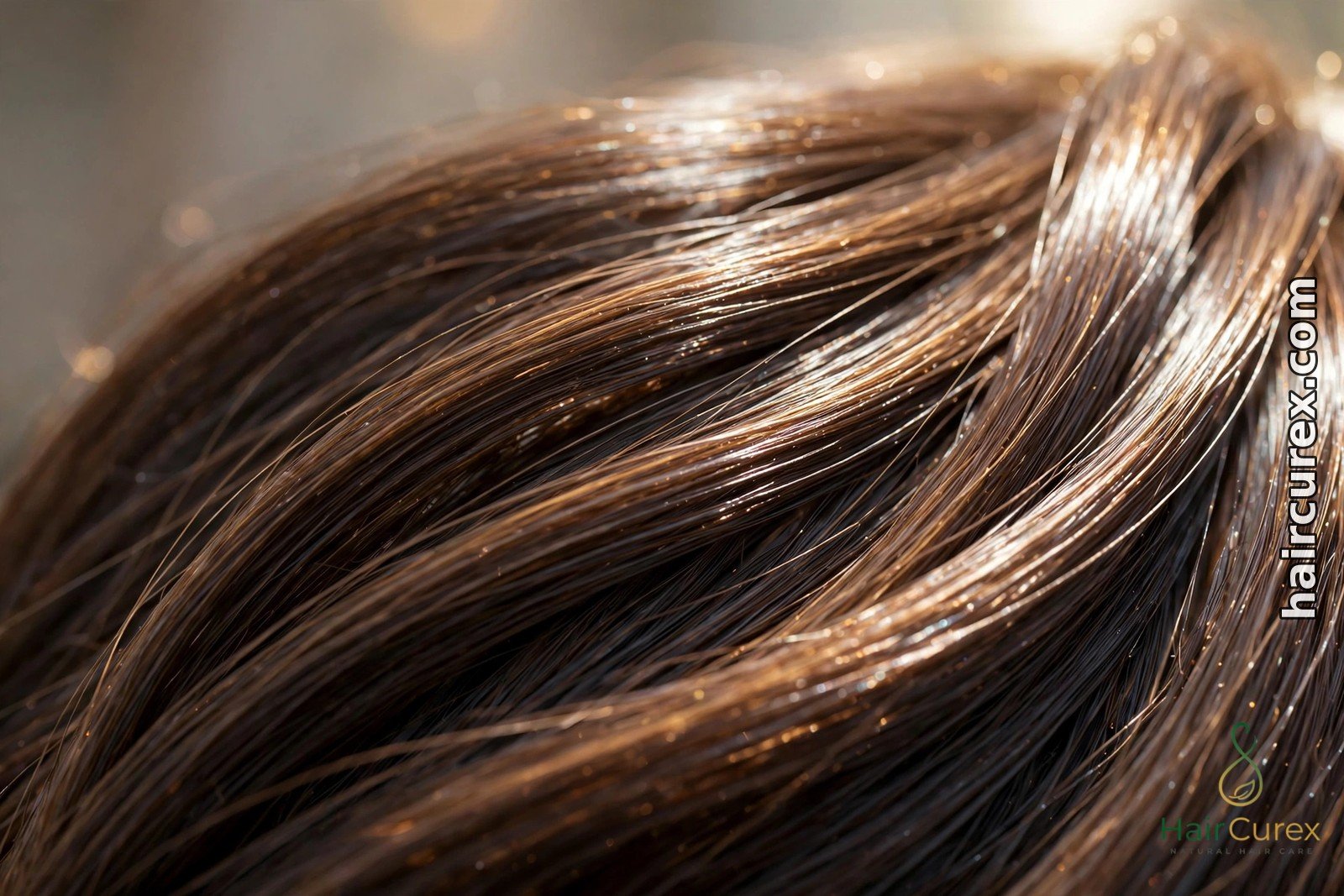
A hair gloss is a lightweight, semi-permanent treatment applied to the hair after washing. It deposits a thin, translucent coating on the outside of each strand and, in the case of tinted formulas, a sheer layer of pigment inside the outer cuticle. The coating smooths the cuticle scales so they lie flat, which is what creates the shine: flat, even surfaces reflect light in one direction, while rough surfaces scatter it. That is why the same head of hair can look dramatically glossier after a gloss, even though nothing about its structure has changed.
A gloss is sometimes called a glaze, and the two words are often used to mean the same thing. In practice, salons use “gloss” for treatments that can add tone as well as shine, and “glaze” for clear, shine-only treatments — but the products overlap so much that the label matters less than the formula. What matters is whether the product is clear or tinted, and whether it is designed for at-home use or professional use. At-home glosses are gentler, ready to apply from a bottle or tube, and made to be forgiving if you leave them on a few minutes too long. Salon glosses are stronger and can shift tone more noticeably, which is why they are usually applied by a stylist.
A gloss is not a dye, a bleach or a permanent colour. It contains no developer strong enough to lift or lighten your natural colour, and it does not open the cuticle the way permanent colour does. That is why it fades gradually instead of growing out with a hard line at the roots. It is also not a deep conditioner, although many formulas include conditioning ingredients. A hair mask works inside the hair to add moisture over time; a gloss works mainly on the surface to add shine and tone right away. The two complement each other — a mask for health, a gloss for finish — but one does not replace the other.
How Hair Gloss Works
The shine from a gloss comes from two things working together. First, the formula contains conditioning agents and silicones or lightweight oils that fill in the tiny gaps and rough patches on the cuticle, creating a smoother surface. Second, many glosses are slightly acidic, which helps the cuticle close and lie flat after washing. Shampoo and water tend to raise the cuticle slightly; an acidic rinse or gloss brings it back down. The result is a surface that reflects light evenly, which your eyes read as shine.
Tinted glosses add a second effect: sheer pigment. The pigment molecules in a gloss are large and mostly sit in the outer layers of the hair, which is why the colour is sheer rather than opaque and why it washes out over a few weeks. A tinted gloss can refresh faded colour, add warmth or coolness, blend the line between coloured lengths and new growth, and make highlights look fresher. It cannot take dark hair lighter, and it cannot cover grey completely — grey hairs are resistant and usually pick up only a sheer tint, which softens their appearance rather than hiding them.
The treatment is temporary by design, and that is its main advantage. Because the colour and the coating wash out gradually, there is no harsh regrowth line and no commitment to a new shade. If you try a tinted gloss and the tone is not quite right, it will fade in a few weeks. If you love it, you simply reapply. For anyone who is nervous about colour, or who wants to test a tone before committing to a permanent dye, a gloss is the lowest-risk way to experiment.
Types of Hair Gloss
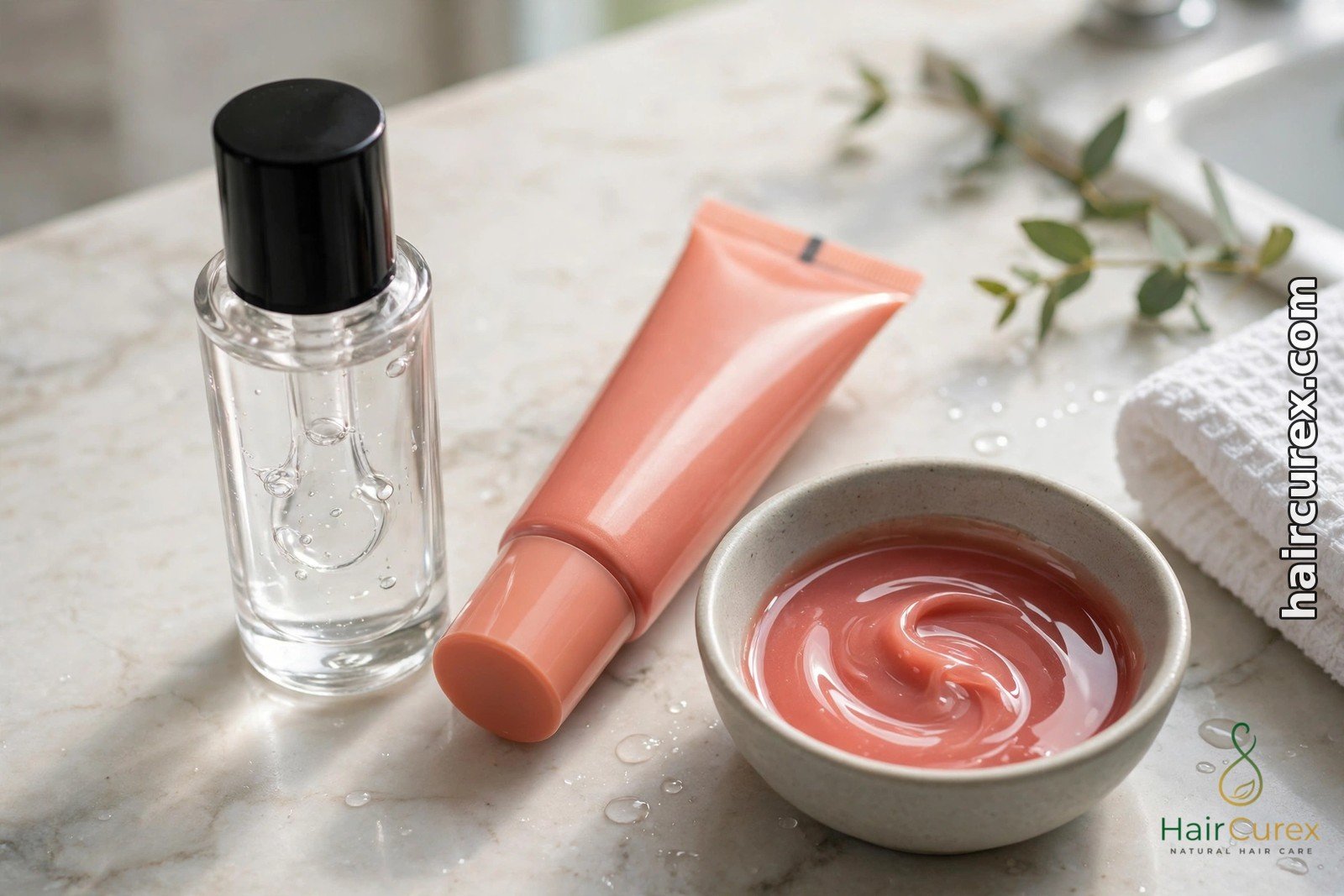
Not all glosses do the same job, and choosing the wrong type is the most common reason people are disappointed. The table below covers the main options.
| Type | What it does | Best for |
|---|---|---|
| Clear gloss | Adds shine and smoothness only, no colour change | Any hair colour; first-time gloss users; dull or frizzy hair |
| Tinted gloss | Adds shine plus a sheer wash of tone | Refreshing faded colour; adding warmth or coolness; blending highlights |
| Colour-enhancing gloss | Deposits more visible pigment in a specific shade | Reviving red, brunette or blonde tones between salon visits |
| In-shower gloss | A lighter, conditioner-style gloss used in the shower | Quick weekly shine boost; low-maintenance routines |
| Salon gloss | Stronger formula applied by a stylist, often with a developer | Precise toning; colour correction; special occasions |
Clear gloss is the safest starting point and the one most people should try first. It works on every hair colour, it cannot go wrong tonally, and it delivers the core benefit — shine — without any colour risk. If your hair is coloured and the colour has gone dull or brassy, a tinted gloss in a shade close to your own colour will do more: it refreshes the tone while it adds shine, so the colour looks freshly done even though you have not dyed it.
In-shower glosses are the newest category and the easiest to use. They work like a deep conditioner: apply after shampooing, wait three to five minutes, rinse. The shine is lighter and lasts a shorter time — usually one to two weeks — but the routine is so simple that people actually stick with it. A traditional leave-on gloss takes about twenty minutes and lasts four to six weeks, so it suits people who are happy to do a proper treatment once a month.
Hair Gloss vs Toner vs Glaze
Gloss, toner and glaze get confused constantly, because they all sit between shampoo and permanent colour. The differences are worth knowing before you buy, because they decide which product solves your problem.
A hair toner is a colour-correcting product used mainly after lightening or bleaching. It neutralises unwanted undertones — yellow in blonde hair, orange in light brown hair — by depositing the opposite tone. Toner is about correcting colour, not adding shine, although many toners do leave the hair looking smoother. A gloss is about shine and sheer tone; a toner is about fixing a specific colour problem. If your blonde has gone yellow, you need a toner. If your hair simply looks dull, you need a gloss.
A glaze is, for most practical purposes, the same as a clear gloss. Some brands use “glaze” for a clear shine treatment and “gloss” for a tinted one, but there is no industry standard, and many products carry both words on the label. If you are choosing between two products and one says glaze and the other says gloss, read the description: if it adds colour, treat it as a gloss; if it only adds shine, the name does not matter.
The practical rule is simple. Want shine with no colour change? Clear gloss or glaze. Want to refresh or slightly change your tone? Tinted gloss. Want to cancel brassiness after bleaching? Toner. Want a permanent colour change or grey coverage? None of these — you need permanent dye, and ideally a stylist.
Who Should Use Hair Gloss
A gloss helps most people, but it helps some hair much more than others. It makes the biggest visible difference on hair that is dull, frizzy or colour-treated. Colour-treated hair loses shine faster than virgin hair because the colouring process roughens the cuticle, so a gloss after colouring restores the finish the dye stripped away. That is why salons so often apply a gloss as the final step of a colour service.
It also works well on hair that is healthy but naturally matte. Some hair simply does not reflect much light, especially fine hair and very dark hair, and a clear gloss gives it a polished finish that shampoo and conditioner alone cannot. Curly and wavy hair benefits too, because the coating smooths the cuticle and reduces frizz — although the shine effect is less obvious on curls than on straight hair, since curls scatter light in more directions. Our guide to the best curl cream for wavy hair covers styling products that pair well with a gloss for wavy textures.
A gloss is a good choice if you want to refresh your colour between salon visits, soften the line where coloured hair meets new growth, or test a tone before committing to it. It is also useful before a special occasion — a gloss the day before an event gives the hair a salon-fresh finish without the risk of a last-minute colour change.
It is less useful if your hair is severely damaged, because a gloss coats the surface rather than repairing the inside of the hair. It will make damaged hair look better for a few weeks, but it will not fix split ends or breakage, and the shine fades faster on damaged hair because the rough cuticle cannot hold the coating. If your hair is very damaged, a hair mask and a trim will do more than a gloss. It is also not the right product if you want to go lighter, cover grey fully, or change your colour by more than a shade — those jobs need permanent colour.
How to Use Hair Gloss at Home
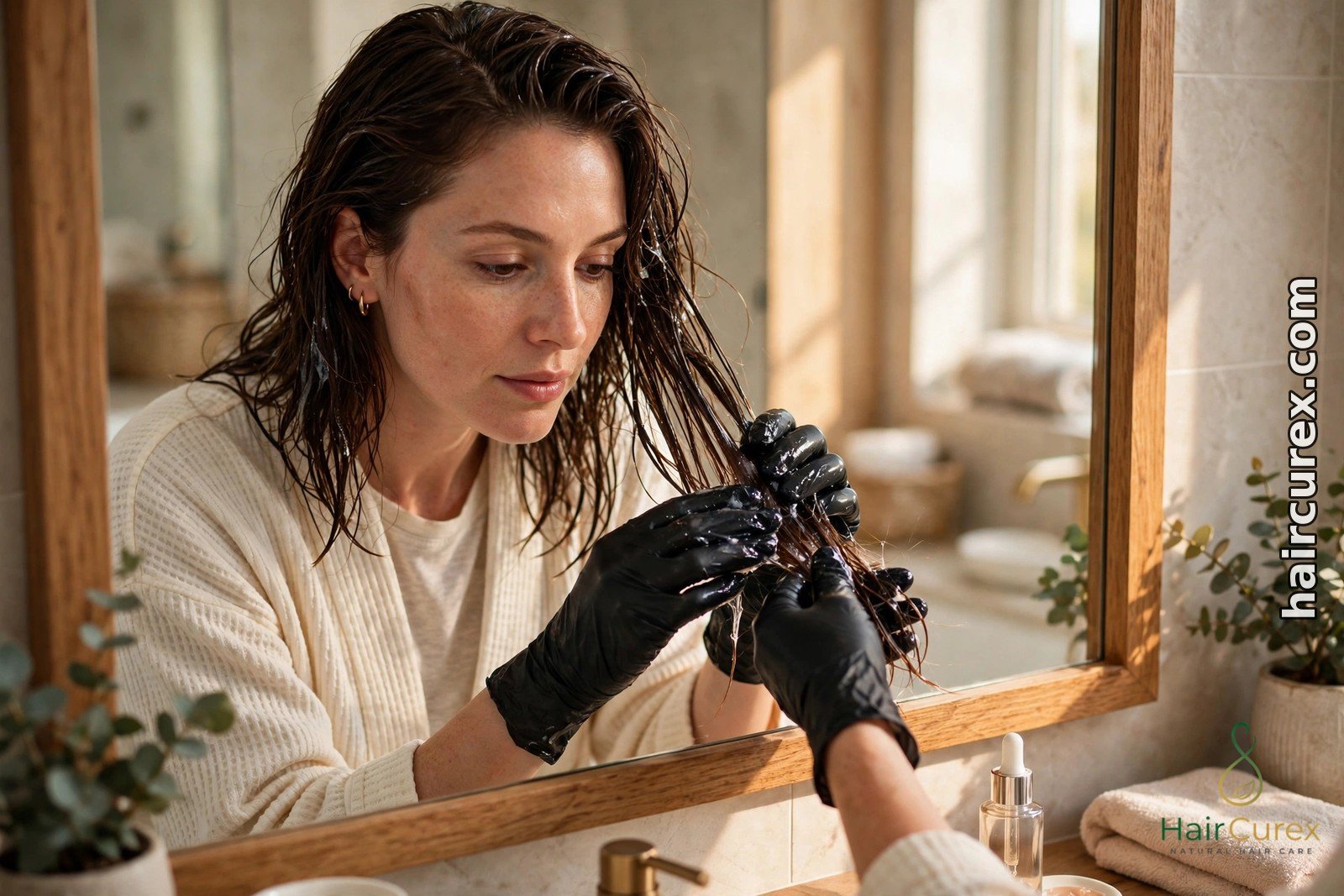
An at-home gloss is one of the easiest salon-style treatments to do yourself, because the formula is forgiving and the process is short. Follow these steps and the result should be even, shiny and natural-looking.
Step 1: Start with clean, damp hair. Wash with a clarifying or regular shampoo and skip conditioner for this wash, so the gloss can grip the hair evenly. Towel-dry until the hair is damp, not dripping. Gloss spreads best on damp hair, and excess water dilutes it.
Step 2: Protect your skin and clothes. Put on the gloves that come with the kit, drape an old towel over your shoulders, and apply a thin line of petroleum jelly or barrier cream along your hairline and ears if you are using a tinted gloss. Clear gloss does not stain, but tinted formulas can mark skin for a day or two.
Step 3: Apply evenly, section by section. Divide the hair into four sections and work through them one at a time, applying the gloss from roots to ends with your gloved hands or an applicator brush. Make sure every strand is coated — missed patches are the main reason home glosses look uneven. Use a wide-tooth comb to distribute the product through each section.
Step 4: Wait about 20 minutes. Most at-home glosses need 15 to 25 minutes; follow the time on your product’s instructions. You can cover the hair with a shower cap to keep it warm, which helps the formula work evenly. Do not leave a tinted gloss on much longer than directed — extra time deposits more pigment and can make the tone darker or warmer than intended.
Step 5: Rinse well and condition lightly. Rinse with lukewarm water until the water runs clear, then apply a light conditioner to the lengths only, leave it for a minute or two, and rinse again. Skip shampoo for 24 to 48 hours after a tinted gloss so the pigment has time to settle. Let the hair air-dry or blow-dry on a low heat setting the first time, so you can see the true result.
Step 6: Check the result in daylight. Indoor lighting can flatter or hide tone, so look at the hair near a window or outside before deciding whether the colour is right. If a tinted gloss came out slightly too warm or too dark, it will fade noticeably within a week of washing, so there is no need to panic or strip it.
What Results to Expect
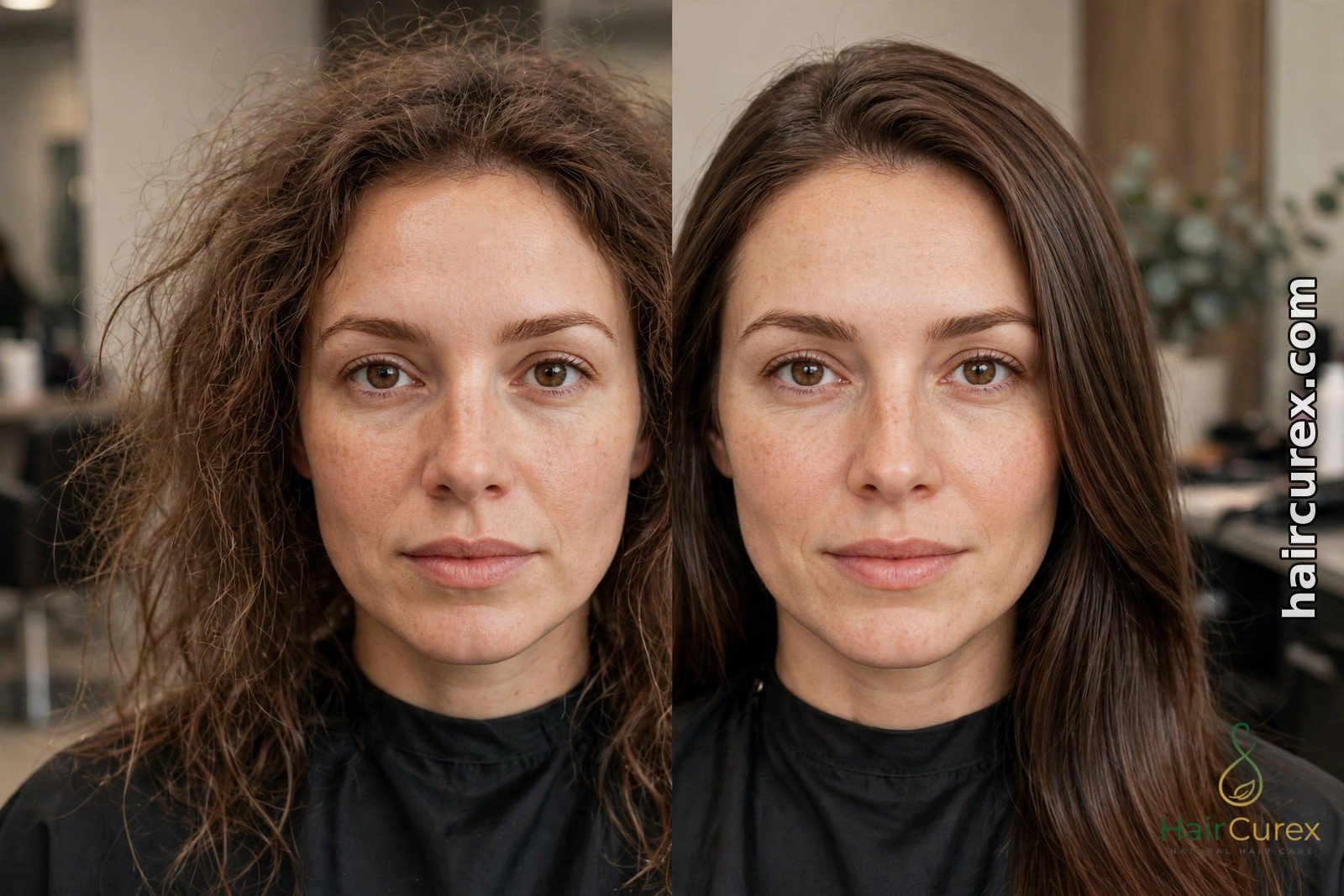
A clear gloss gives an immediate, visible shine boost and smoother-feeling hair. The hair looks glossier in photos, reflects light better, and feels less rough when you run your fingers through it. Frizz is reduced because the smoothed cuticle catches less on neighbouring strands. The effect is most obvious on straight and wavy hair, and subtler — but still real — on curly hair.
A tinted gloss gives the same shine plus a sheer colour shift. Expect the tone to look richer and fresher rather than dramatically different: faded brunette looks deeper, blonde looks less brassy, red looks more vibrant. The change is usually obvious to you and subtle to other people, which is exactly what most people want from a gloss. If you want a visible colour change, a gloss will disappoint you — that is a job for permanent or demi-permanent colour.
Results last around four to six weeks for a standard leave-on gloss, fading gradually with each wash. How long it lasts depends on how often you wash, how hot the water is, and whether you use colour-safe products. Daily washing with hot water and a harsh shampoo can cut the life of a gloss to two or three weeks; washing two or three times a week with lukewarm water and a sulfate-free shampoo can stretch it past six. Sun exposure and swimming also fade tinted gloss faster, so a hat or a swim cap is worth it if you want the tone to last.
Mistakes to Avoid
The most common mistake is choosing a tinted gloss that is too far from your current colour. A gloss deposits sheer pigment, so it can only nudge your tone — it cannot turn dark brown hair copper or blonde hair brunette. Pick a shade within one level of your current colour, and if you are unsure, choose the lighter option: a gloss that is too light fades quickly and harmlessly, while one that is too dark can look muddy for weeks.
The second mistake is applying to dirty or heavily conditioned hair. Product build-up and silicone-heavy conditioner create a barrier that stops the gloss gripping evenly, which is why the instructions say to wash first and skip conditioner before applying. The same applies to styling products: apply gloss to clean hair, not hair full of dry shampoo or hairspray.
The third mistake is leaving a tinted gloss on too long in the hope of a stronger result. Extra time mostly deposits more pigment unevenly — darker at the roots where the hair is warmest, lighter at the ends — and can push the tone warmer than intended. Follow the timing on the box, and if you want a stronger effect, do a second application in a week rather than over-processing the first one.
Finally, do not expect a gloss to fix damage. It is a finishing treatment, not a repair treatment. If your hair is breaking, splitting or feeling like straw, the gloss will make it look better for a few weeks, but the underlying problem needs moisture, protein balance and a trim. For frizz that comes from damage rather than dryness, our guide on how to get rid of frizzy hair covers the longer-term fixes that actually change the hair’s condition.
Aftercare: Making the Shine Last
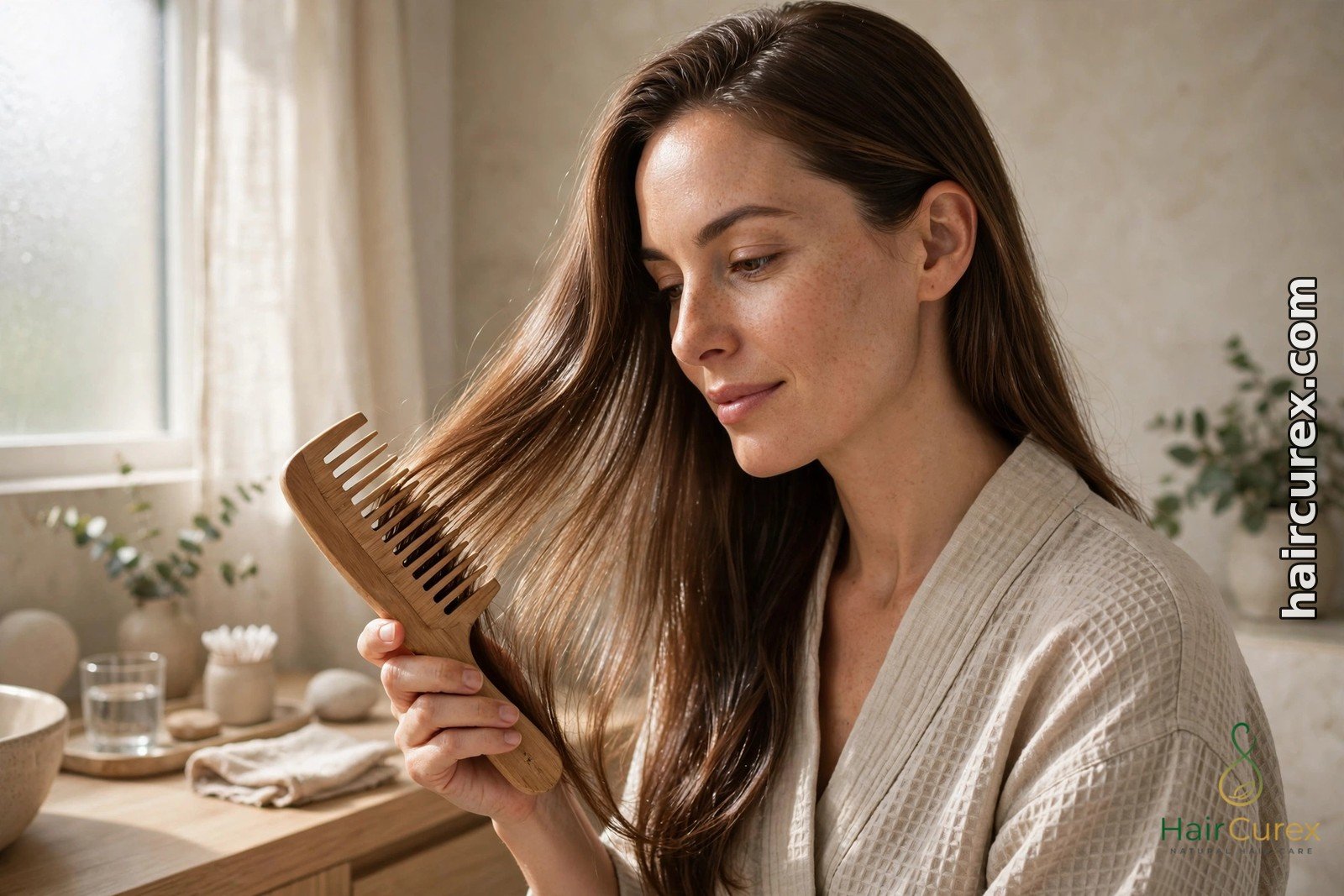
A gloss fades with washing, so aftercare is mostly about washing less harshly. Use a sulfate-free, colour-safe shampoo, wash with lukewarm rather than hot water, and keep washes to two or three times a week if you can. On non-wash days, a rinse with cool water or a dry shampoo at the roots is enough. Every wash with a strong shampoo strips a little of the coating, so the gentler the wash, the longer the shine.
Heat styling also shortens the life of a gloss, because high heat roughens the cuticle again. If you blow-dry or straighten your hair, use a heat protectant and keep the temperature moderate. The same goes for sun and chlorine: UV light fades tinted gloss, and chlorinated pool water strips it quickly, so wear a hat in strong sun and rinse with fresh water immediately after swimming.
When the shine starts to fade, usually around week four or five, you can top it up with an in-shower gloss between full treatments, or simply reapply the full gloss. There is no waiting period between glosses, and reapplying does not damage the hair, so a monthly gloss can become a regular part of your routine if you like the result. Many people with coloured hair time their gloss to sit halfway between salon colour appointments — for example, a gloss three weeks after a colour service keeps the tone fresh until the next appointment. If you are considering a new shade altogether, a tinted gloss is also a good way to preview it; our guide to honey brown hair shows how a warm brunette tone looks before you commit to a permanent version.
For the basics of gentle hair care that protect any treatment — less heat, careful detangling, protecting the hair from damage — the American Academy of Dermatology’s healthy hair tips are a solid, no-nonsense reference. And if you want to understand how hair products are labelled and regulated, the U.S. Food and Drug Administration’s cosmetics pages explain what the ingredient list and the claims on the bottle actually mean.
Frequently Asked Questions
Does hair gloss damage your hair?
No, a hair gloss is one of the gentlest colour treatments available. It contains no ammonia and no strong developer, it does not lift your natural colour, and it coats the outside of the hair rather than opening the cuticle. Most people can use a gloss as often as once a month without damage. If your hair is already very damaged, a gloss will not repair it, but it will not make it worse either.
How long does hair gloss last?
A standard leave-on hair gloss lasts about 4 to 6 weeks, fading gradually with each wash. In-shower glosses last 1 to 2 weeks. How long it lasts depends on how often you wash your hair, the water temperature, and whether you use colour-safe products. Washing less often with lukewarm water and a sulfate-free shampoo makes it last longest.
Can hair gloss cover grey hair?
Only partly. A tinted gloss deposits a sheer wash of pigment, so grey hairs usually pick up a soft tint rather than full coverage. That can blend grey nicely and make it look like natural highlights, but it will not hide grey the way permanent dye does. If covering grey is the goal, a demi-permanent or permanent colour is a better choice.
Is hair gloss the same as toner?
No. A toner corrects unwanted undertones — usually yellow or orange after lightening — while a gloss mainly adds shine and a sheer wash of tone. A toner is a colour-correction product; a gloss is a shine and refresh product. Some salon services combine the two, but at home they solve different problems.
Can I use hair gloss on uncoloured hair?
Yes, and it works very well. Clear gloss adds shine and smoothness to natural hair without changing the colour at all, which makes it a good first treatment for anyone who has never coloured their hair. Tinted gloss on uncoloured hair adds a sheer tone that fades in a few weeks, so it is also a low-risk way to try a new shade.
Does hair gloss lighten hair?
No. A gloss contains no lightening agent strong enough to lift your natural colour. It can only add tone or shine on top of the colour you already have. If you want lighter hair, you need bleach or a high-lift colour, ideally applied by a stylist.