


Quick answer: Hair toner is a semi-permanent, deposit-only colour product that adjusts the tone of lightened or coloured hair. It does not lighten hair. Instead, a hair toner cancels unwanted yellow, orange or brassy tones, adds ash, pearl, gold or warm tones, and gives colour a cleaner, more even finish. A hair toner usually takes 5 to 20 minutes to process and lasts about 2 to 6 weeks.
Hair toner is one of the most misunderstood products in hair colour. It is not a dye, not a bleach and not a shampoo, although it is often confused with all three. If your blonde has gone yellow, your brown has gone brassy, or your freshly coloured hair looks uneven, a hair toner is usually the product that fixes it. This guide explains what a hair toner does, how it works, the different types, how to use it at home step by step, how long it lasts, and the mistakes that make it go wrong, so you can get a clean, natural-looking result without a salon visit.
What Does Hair Toner Do?
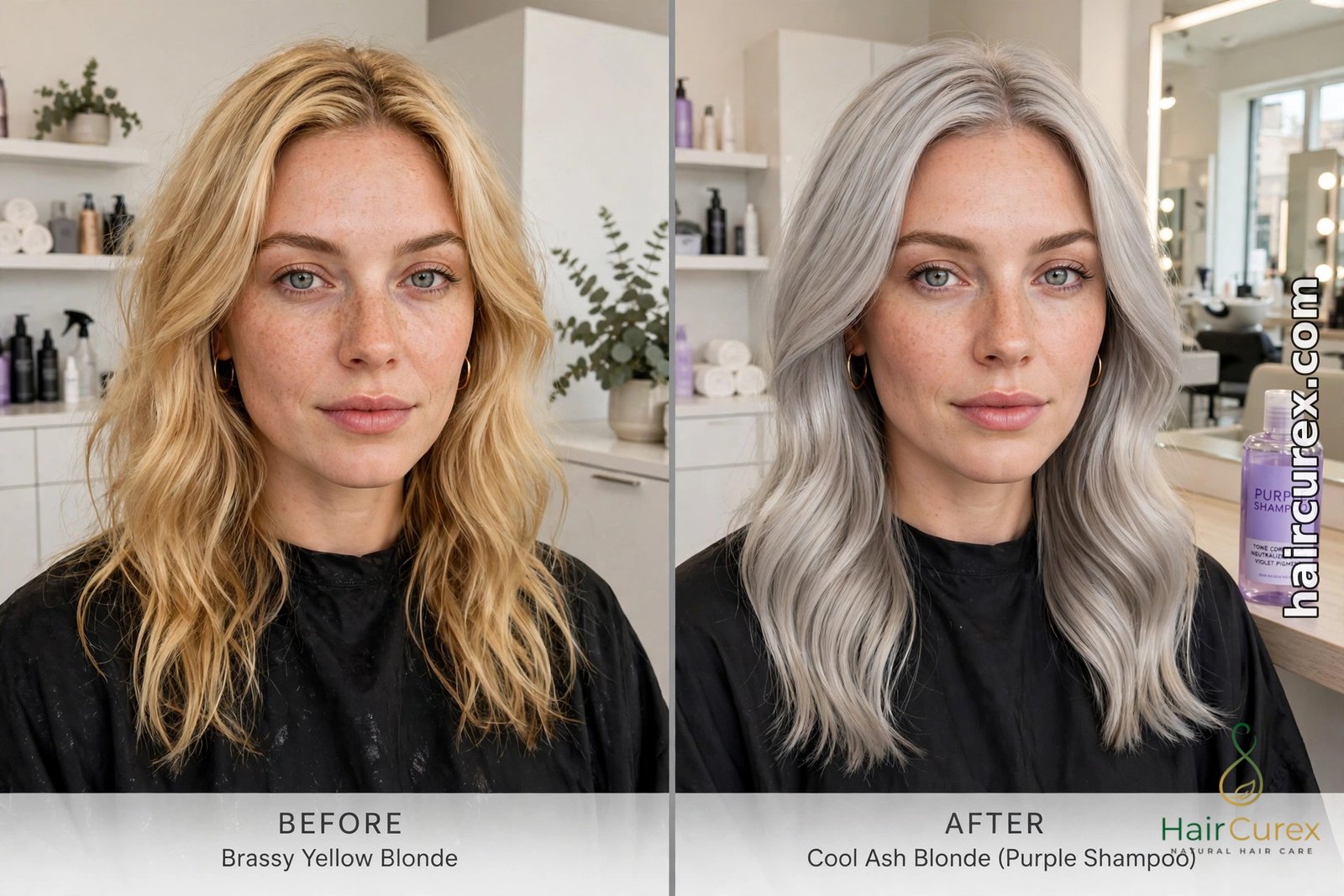
A hair toner fine-tunes colour that is already light enough. When hair is bleached or coloured, the underlying pigment that is left behind is usually warm: yellow at pale blonde levels, orange at mid-blonde levels and red-orange at darker levels. A hair toner deposits a small amount of pigment in the opposite tone to neutralise that warmth. Violet cancels yellow, blue cancels orange, and green cancels red. That is why most toners for blonde hair look purple or blue in the bottle, even though they do not leave hair purple when they are used correctly.
A hair toner can also do more than neutralise brass. It can add a clear direction to colour: ash for a cool, smoky finish, pearl for a soft, iridescent blonde, gold for a warm, honey finish, or copper for a rich, warm glow. It evens out patchy colour, softens harsh lines left by bleach, adds shine by smoothing the hair cuticle, and makes highlights and balayage look blended instead of striped. What it cannot do is make dark hair lighter, cover grey completely, or replace a full colour. If your hair is too dark for the tone you want, it needs to be lightened first, and that is where a careful bleach routine matters before any toner goes on.
How Does Hair Toner Work?
A hair toner works on the colour wheel. Hair colour is measured in levels, from level 1, which is black, to level 10, which is the palest blonde. Bleach lifts hair through those levels, and at each level a different warm undertone is exposed. Toner is chosen to match the level your hair has reached. A level 9 or 10 blonde with a yellow cast needs a violet-based toner. A level 8 blonde with an orange cast needs a blue-violet toner. A level 7 with a strong orange cast needs a blue-based toner. Using a toner that is too dark, or the wrong tone for your level, is the most common reason for a grey, muddy or purple result.
Most traditional toners are mixed with a low-volume developer, usually 10 volume, which opens the cuticle just enough for the pigment to deposit. Because the developer is weak and the pigment is sheer, a hair toner washes out gradually instead of growing out with a hard line. Some toners are direct dyes that need no developer at all, and some are colour-depositing conditioners and masks that work more gently. The table below compares the main types so you can choose the one that fits your hair and your patience.
| Toner type | How it works | Best for | How long it lasts |
|---|---|---|---|
| Demi-permanent toner | Mixed with low-volume developer, deposits tone | Freshly bleached or coloured hair, strong brass | 4 to 6 weeks |
| Semi-permanent toner | Direct dye, no developer needed | A gentle refresh between salon visits | 2 to 4 weeks |
| Toning shampoo | Pigmented shampoo used in the shower | Maintaining cool blonde between toning sessions | A few washes |
| Toning mask or conditioner | Pigment in a conditioning base | Dry or damaged hair that needs care and tone | 2 to 3 weeks |
| Gloss or glaze | Sheer colour and shine treatment | Adding shine and a soft tone to any colour | 3 to 4 weeks |
What Is the Difference Between Hair Toner and Purple Shampoo?
This is the question that causes the most confusion, because both products fight brass and both are often purple. A hair toner is a stronger, one-off treatment that deposits a defined tone and changes the colour you see in a single session. Purple shampoo is a maintenance product: a pigmented shampoo that deposits a small amount of violet pigment each time you wash, keeping brass from building up between toning sessions. Think of toner as the treatment and purple shampoo as the upkeep.
If your hair is freshly bleached and strongly yellow or orange, purple shampoo alone will not fix it. You need a hair toner first, and then purple shampoo once or twice a week to keep the result cool. If your colour is already where you want it and it is only starting to warm up, purple shampoo is usually enough. Using purple shampoo too often, or leaving it on too long, can leave a dull violet cast on very pale hair, just as over-toning can. For a full comparison of the two products, including how often to use each one, see our guide to purple shampoo, and if you are still deciding on your base colour, our blonde hair guide explains the shades and upkeep each one needs.

How to Use Hair Toner at Home
Using a hair toner at home is straightforward, but the details matter. Toner works fast, and a few extra minutes can be the difference between a clean ash blonde and a grey or purple cast. Work on damp, towel-dried hair unless the product label says otherwise, and always read the instructions for the product you bought, because processing times vary by brand and formula.
- Start with clean, lightened hair. Wash with a gentle shampoo, towel-dry until damp, and detangle. Do not apply toner to hair that is coated in heavy conditioner or styling products.
- Do a strand test. Apply the mixed toner to a small, hidden section, wait the recommended time, and rinse. This shows you the true tone and timing for your hair before you commit to the whole head.
- Protect your skin and clothes. Wear gloves, put an old towel around your shoulders, and apply a thin line of petroleum jelly along your hairline.
- Mix the toner exactly as the label says, usually one part toner to two parts 10-volume developer for a traditional demi-permanent toner. Direct toners need no mixing.
- Section your hair into four parts and apply quickly and evenly, starting where the brass is strongest, usually the mid-lengths and ends. Comb through gently so every strand is coated.
- Watch the clock, not the colour in the bowl. Check a strand every 5 minutes. Most toners process in 5 to 20 minutes. Rinse as soon as the tone looks right, because hair can keep darkening while it is wet.
- Rinse with cool or lukewarm water until it runs clear, then condition. Skip shampoo for 24 to 48 hours if you can, so the tone can settle.
- Check the result in daylight. Indoor light can hide a violet or grey cast, so look at your hair by a window before you decide whether you need a second, shorter application.

How Long Does Hair Toner Last?
A hair toner usually lasts 2 to 6 weeks, depending on the type of toner, your hair porosity and how often you wash your hair. Demi-permanent toners last longest, around 4 to 6 weeks, because the developer helps the pigment sit inside the hair shaft. Semi-permanent and direct toners last 2 to 4 weeks. Toning shampoos and masks fade within a few washes. Porous hair, which is common after bleaching, loses tone faster, because the cuticle is open and pigment washes out more easily.
Hot water, clarifying shampoos, frequent washing, swimming in chlorinated water and strong sun all shorten the life of a hair toner. Washing two or three times a week with lukewarm water and a sulphate-free shampoo can add a week or more to your result. When the brass starts to return, you can re-tone, but do not re-tone every week. Wait until the tone has clearly faded, and use purple shampoo in between to stretch the time between full toning sessions. If your hair starts to feel dry or stretchy, that is a sign to pause colour work and focus on conditioning instead.

Who Should Use Hair Toner?
A hair toner is most useful for anyone with lightened or coloured hair that has turned warmer than intended. That includes blonde hair that has gone yellow, light brown hair that has gone orange, grey hair that has gone yellow, and highlighted hair that looks uneven. It is also useful when you want to change the direction of a colour without re-dyeing it: for example, turning a warm blonde into an ash blonde, or softening a brassy brown into a cooler, more natural shade. Our guide to ash brown hair shows how a cool toner can turn a warm brown into a smoky, ashy finish.
A hair toner is less useful on very dark, unbleached hair, because there is no light base for the tone to show on. A violet toner on dark brown hair will not make it ash blonde; it will barely show at all. It is also not the right product if you want a big colour change, full grey coverage, or a colour that lasts for months. In that case a permanent or demi-permanent colour is the better choice, and our comparison of semi-permanent vs permanent hair dye explains which one fits each goal. If your hair is damaged, breaking or very elastic when wet, fix the condition first and wait before toning, because porous, damaged hair grabs toner unevenly and can turn grey or patchy.
How to Choose the Right Hair Toner Shade
Choose your hair toner by the level and undertone you have now, not by the colour you wish you had. First, look at your hair in daylight and name the unwanted tone: pale yellow, gold, orange or red. Then pick the opposite tone on the colour wheel: violet for yellow, blue-violet for yellow-orange, blue for orange, and blue-green for red-orange. If you are unsure, pick a lighter, sheerer toner rather than a darker one, because a toner that is too dark is hard to remove, while a toner that is too light simply fades and can be repeated.
For a cool, ashy blonde, choose an ash or pearl toner. For a soft, natural blonde, choose a natural or beige toner. For a warm, honey blonde, choose a gold toner, but only if the hair is already pale enough, because gold toner on orange hair will look more orange, not less. For brown hair that has gone brassy, choose a blue-based ash toner for brown hair, not a violet toner made for pale blonde. For grey hair with a yellow cast, a violet toner or a silver gloss usually gives the cleanest result. When in doubt, the strand test is your best friend: it costs five minutes and saves you from a whole head of the wrong tone.
5 Mistakes to Avoid with Hair Toner
- Leaving it on too long. Toner keeps depositing while it is on the hair. Set a timer, check a strand every 5 minutes, and rinse as soon as the tone looks right.
- Skipping the strand test. Every head of hair lifts differently. A strand test shows the real result on your hair, not the result on the box.
- Toning hair that is too dark. Toner cannot lift colour. If the hair is still orange at a level 7, it needs more lightening, not a stronger toner.
- Applying it unevenly. Toner applied only to the top layer leaves the underneath brassy. Section the hair, work quickly, and comb through.
- Using a toner that is too dark or too ashy. A dark ash toner on pale hair can turn it grey or muddy. Start lighter and build up if you need more tone.
How to Make Hair Toner Last Longer
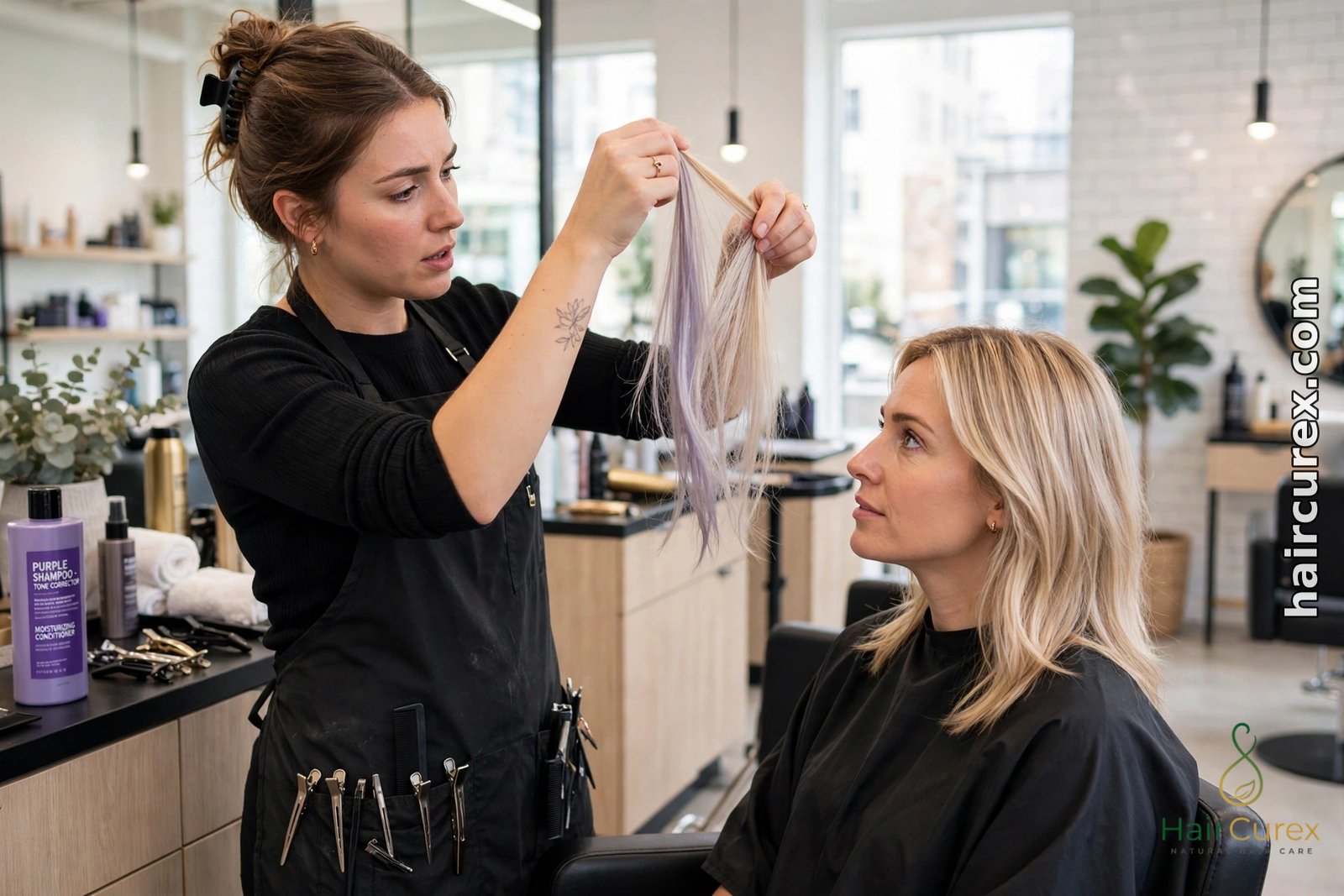
The simplest way to make a hair toner last is to wash your hair less often and more gently. Use lukewarm water, a sulphate-free shampoo, and a conditioner every time you wash. Rinse with cool water at the end to help close the cuticle. Protect your hair from sun with a hat or a UV-protective product, and wear a swim cap or wet your hair with clean water before swimming, so it absorbs less chlorine. Use purple shampoo once a week to top up the cool tone, and use a deep-conditioning mask regularly, because healthy, well-conditioned hair holds pigment better than dry, porous hair. The American Academy of Dermatology’s healthy-hair tips cover the same gentle habits, such as washing less often, using conditioner, and limiting heat, that help any colour last longer.
Frequently Asked Questions
What is hair toner used for?
Hair toner is used to adjust the tone of lightened or coloured hair. It cancels unwanted yellow, orange or brassy tones, adds ash, pearl, gold or warm tones, evens out patchy colour, and adds shine. It does not lighten hair or replace a full hair colour.
Does hair toner damage your hair?
A hair toner is gentler than bleach or permanent dye, because it uses a low-volume developer or no developer at all. It can still dry the hair out, especially if it is used too often or on hair that is already damaged. Deep conditioning and spacing out toning sessions keep the risk low.
How long do you leave hair toner on?
Most hair toners process in 5 to 20 minutes. The exact time depends on the product, your hair level and how strong the brass is. Check a strand every 5 minutes and rinse as soon as the tone looks right, because leaving it on longer can make the result too dark, grey or purple.
Can I use hair toner on dark hair?
A hair toner will barely show on dark, unbleached hair, because toner only deposits tone on hair that is already light enough. It works best on blonde, light brown, highlighted or grey hair. Dark hair needs to be lightened first before a toner can change its tone.
How often should I use hair toner?
Most people need a hair toner every 4 to 6 weeks, when the brass starts to return. You can stretch the time between toning sessions with purple shampoo once or twice a week. Do not re-tone every week, because repeated toning can build up pigment and dry the hair out.
Why did my hair turn purple after toner?
Hair usually turns purple after toner when the toner was left on too long, the toner was too dark or too violet for the hair level, or the hair was very porous and grabbed too much pigment. It usually fades within a few washes. A clarifying shampoo or a warm-toned conditioner can help it fade faster, and a strand test prevents it next time.
A hair toner is a small step that makes a big difference to coloured hair. Used on the right base, in the right shade and for the right amount of time, it turns brassy, uneven colour into a clean, natural-looking finish. Start with a strand test, watch the clock, and let purple shampoo do the maintenance in between, and your colour will stay cooler and brighter for weeks longer.