


Quick answer: Perm hair is hair that has been chemically treated so it holds a curl or wave for months instead of hours. A perm reshapes the bonds inside each hair strand, so straight hair can become curly and limp hair can gain lasting volume. Most perms last 3 to 6 months, depending on the perm hair type, your hair length and how you care for it. The first 48 hours after a perm matter most: keep the hair dry, do not wash it and do not tie it up, so the new curl pattern sets properly.
Perm hair has come a long way from the tight, frizzy curls many people picture from the 1980s. Modern perms are softer, more natural-looking and far more customisable. A body wave perm adds gentle movement to straight hair, a beach wave perm gives relaxed, lived-in texture, and a spiral perm creates defined, springy ringlets. The right perm can cut your daily styling time to almost nothing, because the curl is already built into your hair. The wrong perm, or poor aftercare, can leave hair dry, frizzy and hard to manage.
This guide explains what a perm actually does to your hair, the main perm hair types and styles, how long a perm lasts, and exactly how to care for perm hair so it stays soft, shiny and healthy.
What Is Perm Hair?
Perm hair is hair that has been given a lasting curl or wave through a chemical process called a permanent wave. The word “permanent” is a little misleading: a perm does not last forever, but the curl it creates is permanent in the treated hair, meaning it will not wash out or fall out the way a curl from a hair curler does. The curl only disappears as the treated hair grows out and is cut away.
A perm works in two steps. First, the stylist wraps your hair around rods and applies a perming solution that breaks the disulfide bonds inside each hair strand. These bonds are what give your hair its natural shape. Once they are broken, the hair can be reshaped around the rod. Second, a neutraliser is applied, which rebuilds the bonds in their new, curled position. That is why a perm holds its shape for months: the structure of the hair itself has changed.
Modern perms are gentler than older formulas. Acid perms, used on fine or damaged hair, work more slowly and are less harsh. Alkaline perms, used on coarse or resistant hair, create stronger, longer-lasting curls. A good stylist will choose the formula and rod size based on your hair type, its condition and the curl you want, rather than using the same product for everyone. This is also why a perm is best done by a professional: the timing, the rod placement and the solution strength all affect the result, and getting any of them wrong can damage your perm hair.
Types of Perms

Not all perm hair is the same. The type of perm decides how tight the curl is, how natural it looks and how long it lasts. The table below covers the types most salons offer today, so you can ask for the right one by name.
| Perm type | Result | Best for | Typical lasting time |
|---|---|---|---|
| Body wave perm | Soft, loose waves with lots of volume | Straight or fine hair that needs body | 3–4 months |
| Beach wave perm | Relaxed, tousled, lived-in waves | Medium to long hair; low-maintenance look | 3–5 months |
| Spiral perm | Tight, defined, springy ringlets | Long hair; a bold, dramatic curl | 4–6 months |
| Spot perm | Curl added to one section only | Adding volume at the crown or ends | 3–4 months |
| Root perm | Lift and volume at the roots only | Flat, fine hair that needs height | 2–3 months |
| Digital perm | Soft, natural-looking curls, looser when dry | Thick hair; a modern, natural finish | 4–6 months |
The two most popular choices for first-timers are the body wave perm and the beach wave perm, because both look natural and grow out gracefully. A spiral perm makes a bigger statement but needs more care, and it suits long hair best because the tight curls take up length. A digital perm uses heated rods and works well on thick hair. If you are not sure which type suits you, ask your stylist to show you photos of real results on perm hair like yours, and be honest about how much time you are willing to spend styling each morning.
Perm Hair Styles: Which One Suits You?
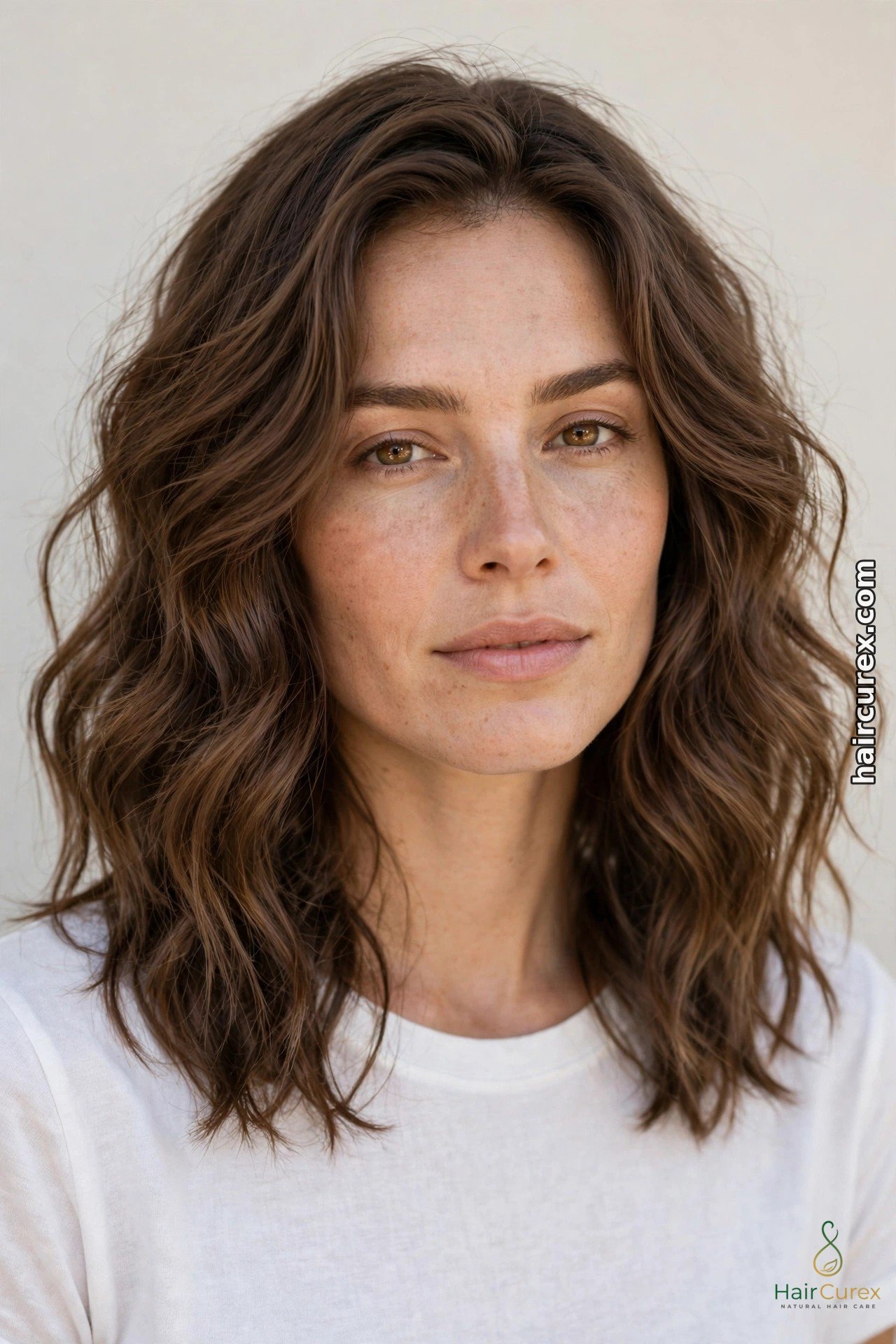
Choosing a perm hair style is less about the trend and more about your hair length, face shape and how much upkeep you want. Short hair takes a perm beautifully: a short curly perm adds texture and volume that straight short hair often lacks, and it is easy to style with a little curl cream. Medium-length hair is the most versatile length for a perm, because it suits body waves, beach waves and loose spiral curls alike.
Long perm hair needs a little more thought. Tight curls on very long hair can look heavy and take a long time to dry, so many stylists recommend a looser wave for long hair, with tighter curls only at the ends. Layers help too: a layered cut lets the curls fall in a shape instead of a triangle, and it stops the perm from looking too wide at the bottom.
Your face shape matters as well. Soft waves flatter most face shapes because they add width where it is needed and soften strong jawlines. Very tight curls close to the face can make a round face look rounder, so if your face is round, ask for the curls to start a little lower, below the cheekbones. If your perm hair is fine, a perm can be a genuine help: the curls add the appearance of thickness and volume that fine hair usually lacks. If your hair is thick and heavy, a looser perm works better, because tight curls on thick hair can be difficult to manage and slow to dry.
Before you book, look at your natural curly hair types for a sense of what curl pattern suits your features. If you already have some natural wave, a perm will enhance it rather than fight it, and the result usually looks more natural.
How Is a Perm Done?
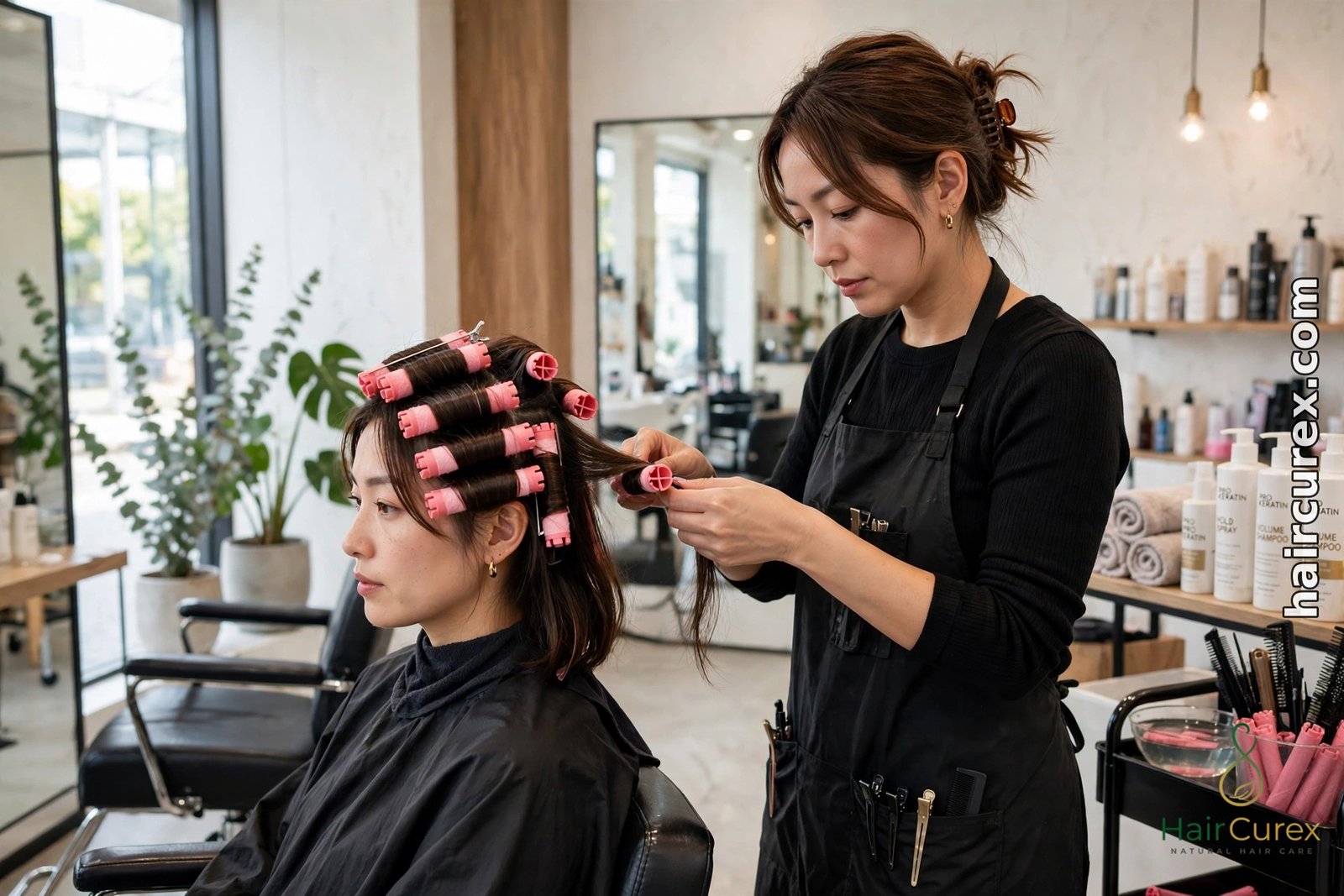
A salon perm usually takes 2 to 3 hours, depending on your hair length and thickness. First, the stylist washes your hair with a clarifying shampoo and assesses its condition. Damaged or heavily processed hair may need a treatment first, or the stylist may advise against a perm altogether. Next, the hair is sectioned and wrapped around perm rods. The rod size decides the curl size: small rods make tight curls, large rods make loose waves. The wrapping must be even and smooth, because any kink or fold in the hair while it is wrapped will show up in the finished curl.
Then the perming solution is applied and left to process, usually for 15 to 30 minutes. The stylist will check a test curl during this time by unwrapping one rod to see how the curl is forming. This is the most important moment in the whole process: leaving the solution on too long is the main cause of damage. After processing, the hair is rinsed thoroughly while still on the rods, and the neutraliser is applied to set the new curl shape. Finally, the rods are removed, the hair is rinsed again, and it is gently towel-dried and styled.
At-home perm kits exist, but they carry real risks. The chemicals are strong, the timing is unforgiving, and you cannot see the back of your own head while wrapping rods evenly. An uneven wrap or over-processing at home can leave hair broken, frizzy or with straight patches. For first-time perm hair, a professional salon is the safer choice by a wide margin, and the result is almost always better.
How Long Does a Perm Last?
Perm hair typically lasts 3 to 6 months. How long yours lasts depends on the perm type, your hair’s natural texture and how you care for it. Spiral and digital perms usually last longest, around 4 to 6 months, because the curl pattern is stronger. Body wave and root perms fade sooner, often in 2 to 4 months, because the curl is looser and the hair at the roots grows out faster.
Hair growth is the real limit. Your new hair grows in straight, so after a few months you will have straight roots and curly ends. Most people book a touch-up or a fresh perm when the straight regrowth reaches about 5 to 8 centimetres, or when the curls start to look limp and uneven. Waiting longer than 6 months between perms is wise: perming over already-permed hair adds chemical stress, and the ends, which are the oldest and driest part of the hair, are the first to break.
Heat styling shortens a perm’s life, so if you straighten your perm hair often, the curls will relax faster. Chlorine from swimming pools and strong sun can also dry out permed hair and loosen the curl. Wearing a swim cap and rinsing your hair with fresh water after swimming helps. A silk or satin pillowcase reduces friction overnight, which keeps the curls defined for longer and cuts down on morning frizz.
Perm Hair Aftercare: How to Care for Permed Hair

Perm hair aftercare starts the moment you leave the salon. For the first 48 hours, do not wash your hair, do not get it wet, and do not tie it up or tuck it behind your ears. The neutraliser is still setting the curl pattern during this window, and water or pressure can flatten or distort the curls. If your hair gets slightly damp by accident, let it air-dry without touching it.
After the first 48 hours, switch to a sulfate-free, moisturising shampoo and conditioner for your perm hair. Sulfates strip the natural oils that permed hair needs, and permed hair is already drier than untreated hair because the chemical process opens the hair cuticle. Wash less often if you can: 2 to 3 times a week is enough for most people. When you do wash, use lukewarm water rather than hot, and finish with a cool rinse to help the cuticle lie flat.
Deep condition once a week. A deep conditioning mask replaces the moisture the perming process removed, and it keeps the curls soft instead of stiff. Leave the mask on for 10 to 20 minutes, and focus it on the mid-lengths and ends, where the hair is driest. The American Academy of Dermatology recommends gentle handling and moisturising care for chemically treated hair, and advises against harsh brushing and tight hairstyles that pull on the hair. You can read their healthy hair tips for the full guidance.
Never brush perm hair when it is dry. Brushing breaks up the curl pattern and creates frizz. Instead, detangle gently with a wide-tooth comb while the hair is damp and coated with conditioner, working from the ends upward. Pat the hair dry with a microfibre towel or an old cotton T-shirt instead of rubbing it with a rough towel, which roughs up the cuticle and makes frizz worse.
Who Should Avoid a Perm?
A perm is not right for everyone, and an honest stylist will say so. Hair that has recently been bleached, heavily highlighted or relaxed is usually too fragile for a perm, because the hair has already been through a strong chemical process. Combining a perm with bleaching your hair in the same period is one of the fastest ways to cause breakage, and most stylists will insist on a gap of at least a few weeks between the two, or refuse the perm entirely until the hair recovers.
Hair that is already breaking, very dry or thinning should also skip a perm until its condition improves. A strand test is the standard safety check: the stylist applies the perm solution to a small hidden section of hair and checks how it reacts. If the strand feels gummy, stretchy or breaks easily, a perm is not safe yet. A patch test on the skin is also wise if you have a sensitive scalp or have ever reacted to hair chemicals.
If you colour your hair, tell your stylist before the perm. Colour and perming interact: a perm can fade or shift perm hair colour, especially reds and fashion shades, and colouring too soon after a perm can damage the hair further. The usual advice is to wait at least two weeks between a perm and a colour service, and to use a semi-permanent vs permanent hair dye comparison to decide which type of colour is gentler on your newly permed hair. The U.S. Food and Drug Administration publishes safety information on hair dyes and the chemicals they contain, which is worth reading before any colour service on permed hair.
See the FDA’s hair dyes safety page. Pregnant people and people with scalp conditions such as eczema or psoriasis should talk to their doctor or dermatologist before a perm, because the scalp is more sensitive during these times and the chemicals can irritate it.
How to Style Perm Hair

The best thing about perm hair is how little styling it needs. On most days, the routine is simple: dampen the hair lightly, scrunch in a curl cream or a light mousse, and let it air-dry or diffuse it on a low heat setting. Scrunching, where you gently squeeze sections of hair upward toward the scalp, encourages the curl pattern and adds definition without frizz.
A diffuser attachment on your hair dryer is the most useful tool for perm hair. It spreads the airflow so the curls dry in their natural shape instead of being blown apart. Use the lowest heat setting and hold the diffuser still against sections of hair rather than moving it around, which disturbs the curl. If you want extra volume at the roots, flip your head upside down while diffusing.
On days when your perm hair looks flat, a light mist of water mixed with a little leave-in conditioner will usually wake them up. Scrunch again and let the hair dry naturally. Avoid heavy oils and thick butters near the roots, because they weigh the curls down and make the hair look greasy. A small amount of lightweight curl cream on the ends is usually enough. For sleeping, the “pineapple” method works well: gather the hair loosely on top of your head with a soft scrunchie, so the curls are not crushed overnight. People with naturally coily hair will recognise the same principles: moisture first, gentle handling, and no dry brushing.
Frequently Asked Questions
How much does a perm cost?
In the United States, a salon perm usually costs between $60 and $250, depending on your hair length, the perm type and the salon’s location. Short hair and a basic body wave perm are at the lower end, while long hair, a spiral perm or a digital perm costs more because it takes longer and uses more product.
Does a perm damage your hair?
A perm does change the structure of your hair, so it causes some dryness and makes perm hair more fragile, especially at the ends. The damage is usually manageable when the perm is done by a professional on healthy hair and followed by good aftercare. The risk rises sharply when perms are repeated too often, combined with bleach, or done on already damaged hair.
Can you perm straight hair?
Yes. Straight hair is actually the most common starting point for perm hair, and it usually takes a perm well because the hair has not been chemically treated before. Fine straight hair holds a body wave perm nicely, while thick straight hair may need a stronger formula or a digital perm to hold the curl.
Can you wash permed hair after 48 hours?
Yes. After the first 48 hours, you can wash your perm hair normally with a sulfate-free shampoo. The 48-hour rule exists because the curl pattern is still setting; after that window, washing will not undo the perm. Use lukewarm water and a moisturising conditioner each time you wash.
How do I make my perm last longer?
Wash your perm hair less often, use sulfate-free products, deep condition weekly, avoid heat styling, protect your hair from chlorine and strong sun, and sleep on a silk or satin pillowcase. These habits slow down the loosening of the curl and keep the hair moisturised, which is what makes a perm look good for months instead of weeks.
Can I straighten permed hair?
You can, but doing it often will relax your perm hair and shorten the life of your perm. If you straighten it, always use a heat protectant first and keep the flat iron temperature as low as possible. Frequent straightening defeats the purpose of a perm, so it is best saved for special occasions.