


Quick answer: Purple shampoo is a toning shampoo with violet pigment that cancels out yellow, brassy tones in blonde, silver, grey and lightened hair. Use it once or twice a week instead of your regular shampoo: wet your hair, massage the purple shampoo in, leave it on for 2 to 5 minutes (up to 10 minutes for strong brassiness), then rinse thoroughly and follow with conditioner. It does not lighten your hair or replace a salon toner — it keeps the cool tone between salon visits. Overusing it can dry your hair out and, on very light or porous hair, leave a lavender tint, so start with a short leave-in time and build up only if you need to.
Blonde hair rarely stays the blonde you left the salon with. Within a few weeks, the cool, ashy tone fades and a yellow, brassy cast creeps in — the result of sun, hard water, heat styling, chlorine, and the natural warmth underneath every blonde colour. It happens to natural blondes, highlighted hair, balayage, silver hair and grey hair alike, and it is the single most common complaint blonde-haired people bring to their stylist. Purple shampoo is the at-home fix the whole blonde world uses, and it costs a fraction of a salon toner appointment. This guide explains how it works, how to use it properly, how often to reach for it, what results to expect, and the mistakes that turn a simple fix into a purple-tinged problem.
What Is Purple Shampoo and How Does It Work?

Purple shampoo is a shampoo with a deep violet pigment added to it. It cleans your hair the same way a normal shampoo does, but as you lather it in, it deposits a small amount of purple pigment onto the hair shaft. That pigment is the whole point of the product, and it works because of a basic rule of colour theory: colours opposite each other on the colour wheel cancel each other out. Purple sits directly opposite yellow, so a violet pigment neutralises yellow tones in the hair, taking the colour back toward neutral instead of brassy. The effect is temporary — the pigment washes out gradually over a few washes — which is why purple shampoo is a maintenance product, not a one-time fix.
It helps to understand what “brassy” actually is. When hair is lightened, whether by bleach, highlights or the sun, the underlying warm pigments in the hair are exposed. Hair contains red, orange and yellow pigments, and the lighter you go, the more of the yellow and gold underneath shows through. At first the toner your stylist applies masks that warmth, but toner fades with every wash — usually within 4 to 6 weeks — and the yellow underneath starts to show. Purple shampoo puts a little violet back onto the hair each time you use it, keeping that yellow in check between salon visits. L’Oréal Paris explains the same principle in its purple shampoo guide: the violet pigment neutralises the yellow tones that make blonde hair look brassy, and the product is designed for blonde, lightened, silver and grey hair — L’Oréal Paris on how to use purple shampoo.
There are clear limits to what purple shampoo can do, and knowing them saves you disappointment. It does not lighten your hair — it cannot lift colour, so it will never make dark blonde into platinum. It does not fix orange brassiness well: orange sits opposite blue on the colour wheel, so orange tones on dark blonde or light brown hair respond to blue shampoo, not purple. It cannot repair damage, and it cannot replace a professional toner when the brassiness is strong or uneven — what it does is maintain a good colour and stretch the time between salon visits. And it does very little on dark hair, because the pigment is too subtle to show through darker strands. If your hair is dark brown or black with brassy tones, a blue shampoo or a salon gloss is the right tool instead.
Who Should Use Purple Shampoo?
Purple shampoo is made for anyone whose hair has been lightened to a blonde, silver or grey tone and is starting to look yellow. That covers a wide range of people: natural blondes whose colour turns dull and yellow in summer, people with highlights or balayage whose toner has faded, platinum blondes keeping their icy tone, silver-haired people keeping their grey bright instead of yellowed, and anyone with grey hair that has picked up a yellow cast from sun or product build-up. If your blonde still looks cool and you like the tone, you do not need purple shampoo yet — it is a corrective product, not a daily necessity, and using it on hair that is not brassy can push the tone too cool or too ashy.
The shade of your blonde decides how strong a purple shampoo you need. Very light, platinum or white-blonde hair picks up pigment fast, so a lighter violet formula — or a shorter leave-in time — is enough, and a strong formula can leave a lavender cast. Golden or honey blonde hair, which is darker and warmer, needs a deeper violet pigment and a slightly longer leave-in time to make a visible difference. Our guides to honey blonde hair and dirty blonde hair cover those warmer blonde shades in detail, and both explain why the warmer the blonde, the faster it goes brassy — and the more it benefits from a toning routine. Grey and silver hair is usually the most porous, so it grabs purple pigment quickly too; start with a short leave-in time and a diluted application if your silver hair is fine or porous.
| Your hair | Brassiness level | Purple shampoo strength | Leave-in time |
|---|---|---|---|
| Platinum or white blonde | Light yellow tinge | Light violet formula | 2–3 minutes |
| Golden or honey blonde | Noticeable yellow | Medium violet formula | 3–5 minutes |
| Highlighted or balayage blonde | Yellow at the ends and parting | Medium violet formula | 3–5 minutes |
| Silver or grey hair | Yellow cast from sun or products | Light to medium violet | 2–4 minutes |
| Dark blonde or light brown | Orange tones | Purple shampoo will not fix this — use blue shampoo | — |
If you are unsure which blonde family you belong to, our blonde hair guide walks through the shades, from platinum to honey to ash, and explains which tones go brassy fastest. The key point is simple: purple shampoo is for yellow tones on light hair. If your problem is orange, or your hair is too dark for the violet pigment to show, a different product will serve you better, and no amount of purple shampoo will change that.
How to Use Purple Shampoo Step by Step

Using purple shampoo is easy, but the details matter — the leave-in time is where most people go wrong, and it is the difference between a cool, bright blonde and a lavender one. Follow these steps and you will get the toning without the side effects.
Step 1: Wet your hair thoroughly. Purple shampoo spreads unevenly on dry or barely damp hair, and uneven application is how you get patchy results — violet in some places, yellow in others. Wet the hair completely with warm water, the same as you would before any shampoo.
Step 2: Apply a generous amount and lather. Squeeze out a normal shampoo-sized amount, or a little more if your hair is long or thick. Work it through the lengths and ends first, where brassiness is usually strongest, then through the roots. Massage it in with your fingertips so the pigment reaches every strand. Wear gloves if you do not want stained hands — the violet pigment can tint your nails and skin temporarily, especially with stronger formulas.
Step 3: Leave it on for 2 to 5 minutes. This is the step that does the toning. Two to three minutes is enough for light brassiness or very light hair. Three to five minutes handles noticeable yellow on golden or highlighted blonde. For strong brassiness, you can leave it for up to 10 minutes — but check the colour in the mirror as you go, and do not exceed the time on your bottle’s instructions. The longer it sits, the more pigment it deposits, and past the point your hair needs, that extra pigment is what turns it lavender.
Step 4: Rinse thoroughly. Rinse until the water runs clear. Any pigment left sitting on the hair keeps toning it, so a half-hearted rinse is another way to end up with a purple tint. Rinse with cool water if you can — it helps seal the cuticle and keeps the colour in.
Step 5: Follow with conditioner. Purple shampoo can be drying, so always follow it with a good conditioner or a hair mask, applied to the mid-lengths and ends. Leave the conditioner on for a few minutes, then rinse. Do not use a purple conditioner on the same wash unless your hair is very brassy — doubling the pigment doubles the risk of over-toning.
Step 6: Dry and check the tone. The true result only shows once the hair is dry. Wet blonde always looks darker and cooler than it really is, so judge the colour after blow-drying. If the yellow is still there, use the purple shampoo again at your next wash, or leave it on a minute or two longer next time. If the hair looks slightly lavender, do not panic — one wash with a regular clarifying shampoo usually removes the excess pigment.
How Often Should You Use Purple Shampoo?
Most people should use purple shampoo once or twice a week, alternating with their regular shampoo. That frequency is enough to keep brassiness under control without drying the hair out or over-depositing pigment. Daily use is too much for almost everyone: purple shampoo is more drying than a regular shampoo because of the pigment and the toning agents, and daily use strips moisture, leaves the hair dull and brittle, and builds up violet pigment until the hair looks grey or lavender instead of blonde.
The right frequency depends on your hair and your water. If you have hard water, swim in chlorinated pools, or spend a lot of time in the sun, your blonde will go brassy faster and you may need the twice-a-week end of the range. If your hair is fine, porous or damaged, stay at once a week — porous hair grabs pigment faster, so it needs less exposure to get the same result, and it dries out faster too. If your hair is very brassy after a colour appointment that has faded, you can use purple shampoo two washes in a row to catch up, then drop back to once or twice a week for maintenance. The rule is to use the least that works: if once a week keeps the yellow away, once a week is right, and adding a second wash only adds dryness.
| Hair situation | How often | Why |
|---|---|---|
| Normal blonde, mild brassiness | Once a week | Enough to hold the cool tone |
| Blonde with hard water or sun exposure | Twice a week | Brassiness returns faster |
| Platinum or very porous hair | Once a week, short leave-in | Grabs pigment fast; dries out easily |
| Fresh salon toner, no brassiness yet | Not yet — start when yellow appears | No yellow to cancel; using it early can over-cool the tone |
| Strong brassiness after toner faded | Two washes in a row, then once or twice a week | Catches up, then maintains |
On the washes when you are not using purple shampoo, use a gentle, sulfate-free shampoo and a moisturising conditioner. Blonde hair that has been lightened is already more fragile than virgin hair, and a harsh shampoo on top of a toning shampoo is a fast route to dryness and breakage. The American Academy of Dermatology’s healthy-hair guidance covers the basics that matter here — gentle washing, minimal heat, and careful handling of wet hair: American Academy of Dermatology healthy hair tips. If your blonde feels dry, a weekly deep-conditioning mask on your non-purple-shampoo wash will do more for the health of your hair than any toning product.
Purple Shampoo Before and After: What Results to Expect
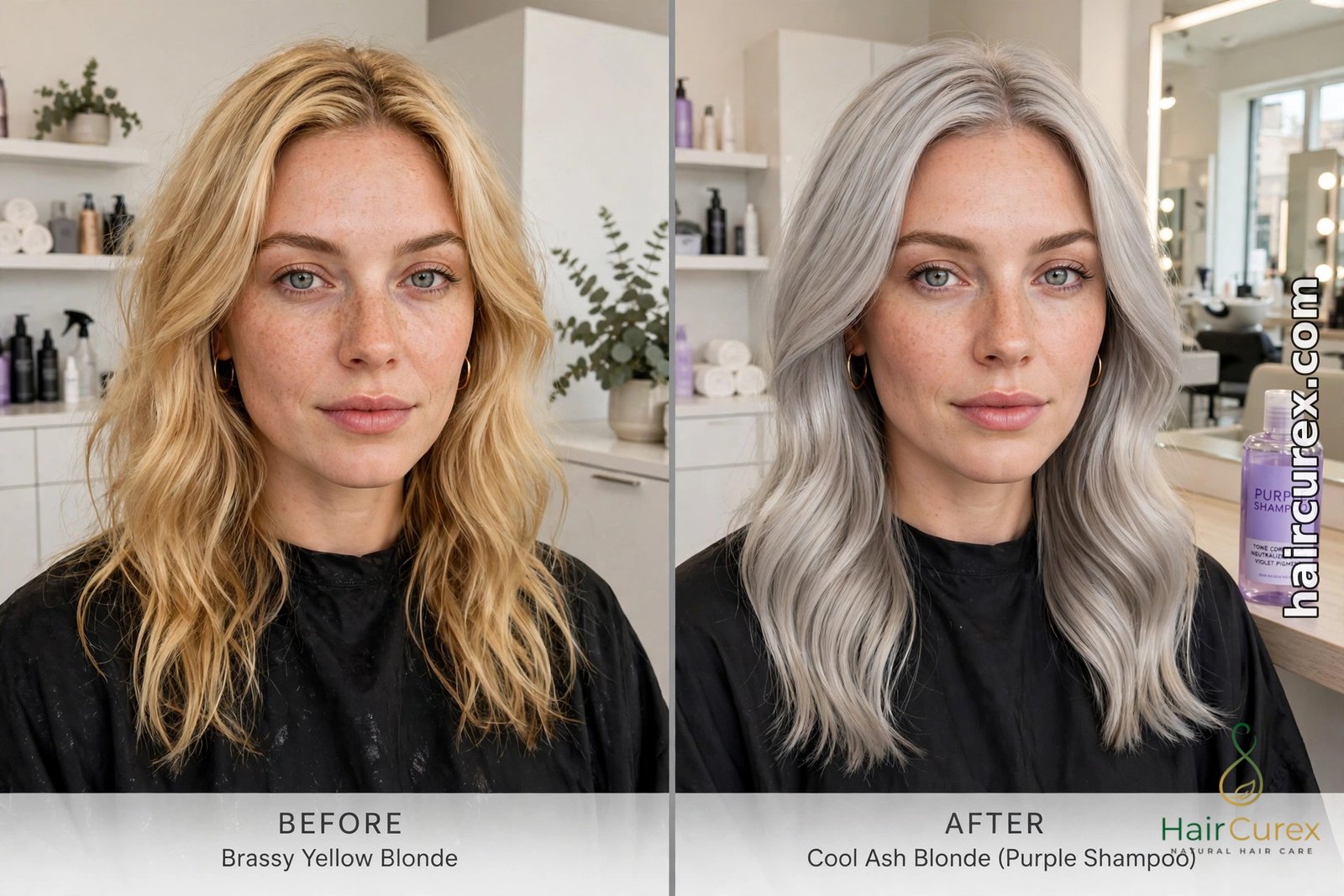
The honest expectation is a visible but modest change: yellow tones soften, the blonde looks cooler and brighter, and the colour looks fresher — like a salon visit was two weeks ago instead of six. What you will not get is a new colour. Purple shampoo cannot turn golden blonde into ash blonde, cannot lift dark roots, and cannot even out a blotchy colour job. It works on the tone that is already there, nudging it cooler. The first use usually gives the biggest visible improvement, because it cancels the yellow that has built up since your last toner; after that, each use is maintenance, holding the line rather than transforming the colour.
How much change you see depends on where you start. Light yellow brassiness on platinum or light blonde hair responds fast — often noticeably cooler after one 3-minute application. Strong yellow on golden blonde takes two or three uses to look meaningfully cooler, and it will never look as cool as a fresh salon toner, because a toner deposits far more pigment than a shampoo can. Uneven brassiness — yellow at the ends but fine at the roots, which is common on balayage hair as the toner fades unevenly — will improve, but the unevenness may remain visible, because the shampoo deposits pigment evenly while the brassiness is not even. In that case a salon gloss or toner is the real fix, and purple shampoo is the product that keeps it looking good afterwards.
It also helps to know what purple shampoo cannot fix. Green tones from chlorine need a clarifying or chelating shampoo, not a violet one. Orange tones need blue shampoo or a toner. Banding — horizontal stripes where the colour was applied unevenly — is a colour correction job for a stylist, and no shampoo will blend it. And if your hair is damaged and porous, it may grab the violet pigment unevenly, leaving some strands lavender while others stay yellow; a deep-conditioning treatment before your first purple shampoo use helps the pigment deposit more evenly. Knowing these limits is what separates people who love purple shampoo from people who try it once, get a disappointing result, and blame the product for a job it was never designed to do.
Choosing the Best Purple Shampoo for Your Hair
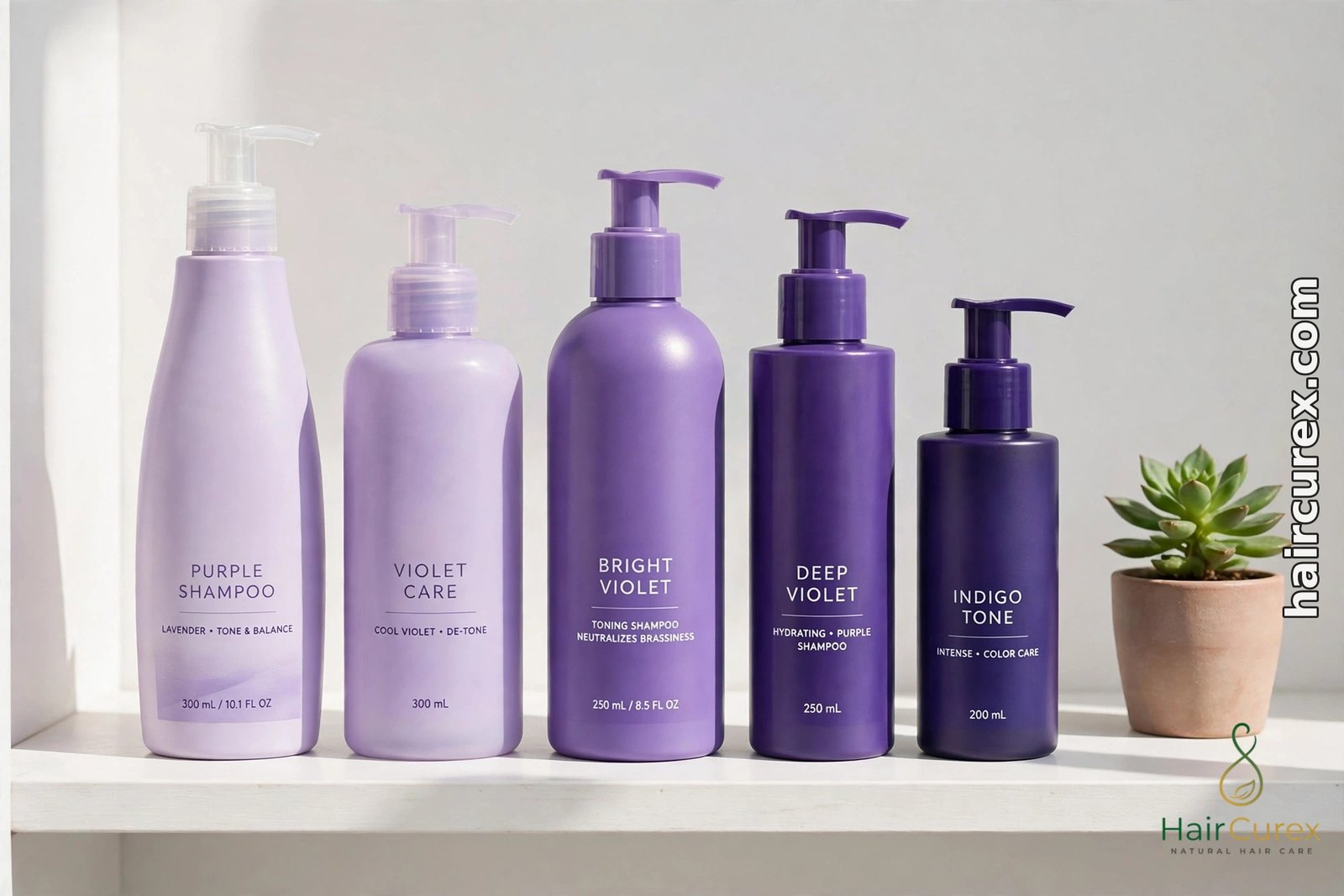
Not all purple shampoos are equal, and the differences matter more than the brand name on the bottle. The first thing to look at is the colour of the product itself: a deeper, more violet liquid deposits more pigment and works faster, while a pale lavender liquid is gentler and safer for very light hair. Very light blondes should start with a lighter formula and work up only if they need to; golden blondes can start with a deeper one. The second thing is the formula around the pigment: look for a sulfate-free formula with moisturising ingredients, because blonde hair is usually dry already, and a harsh purple shampoo makes that worse. The third thing is the price: purple shampoo is one of the few hair products where the budget options genuinely compete with the expensive ones, and a good drugstore purple shampoo typically costs $8 to $15, while salon formulas run $25 to $40 — the difference is usually the conditioning ingredients and the pigment strength, not the basic toning effect.
Other things worth checking before you buy: whether the shampoo is safe for colour-treated hair (it should say so on the bottle), whether it is cruelty-free or vegan if that matters to you, and whether the brand also makes a matching purple conditioner or mask, which you can use on the weeks your hair needs extra toning. Read reviews from people with your hair shade rather than the overall star rating — a shampoo that works beautifully on platinum hair may be too weak for honey blonde, and the reviews will tell you that faster than the marketing will. And buy the smallest bottle first. Purple shampoo is a product you use once or twice a week, so a bottle lasts months, and it is better to find out a formula does not suit your hair from a travel size than from a litre bottle.
If you colour your own hair at home, it also helps to know how purple shampoo fits into the wider colour routine. It is a maintenance product, not a colour product: it does not replace dye, and it does not change the underlying colour the way a semi-permanent or permanent dye does. Our guide to semi-permanent vs permanent hair dye explains the difference between the dyes themselves, and the same logic applies here — purple shampoo sits on the surface and washes out, while real colour changes the hair itself. Keep the two jobs separate and both will work better.
Purple Shampoo Mistakes That Cause Damage or a Lavender Tint
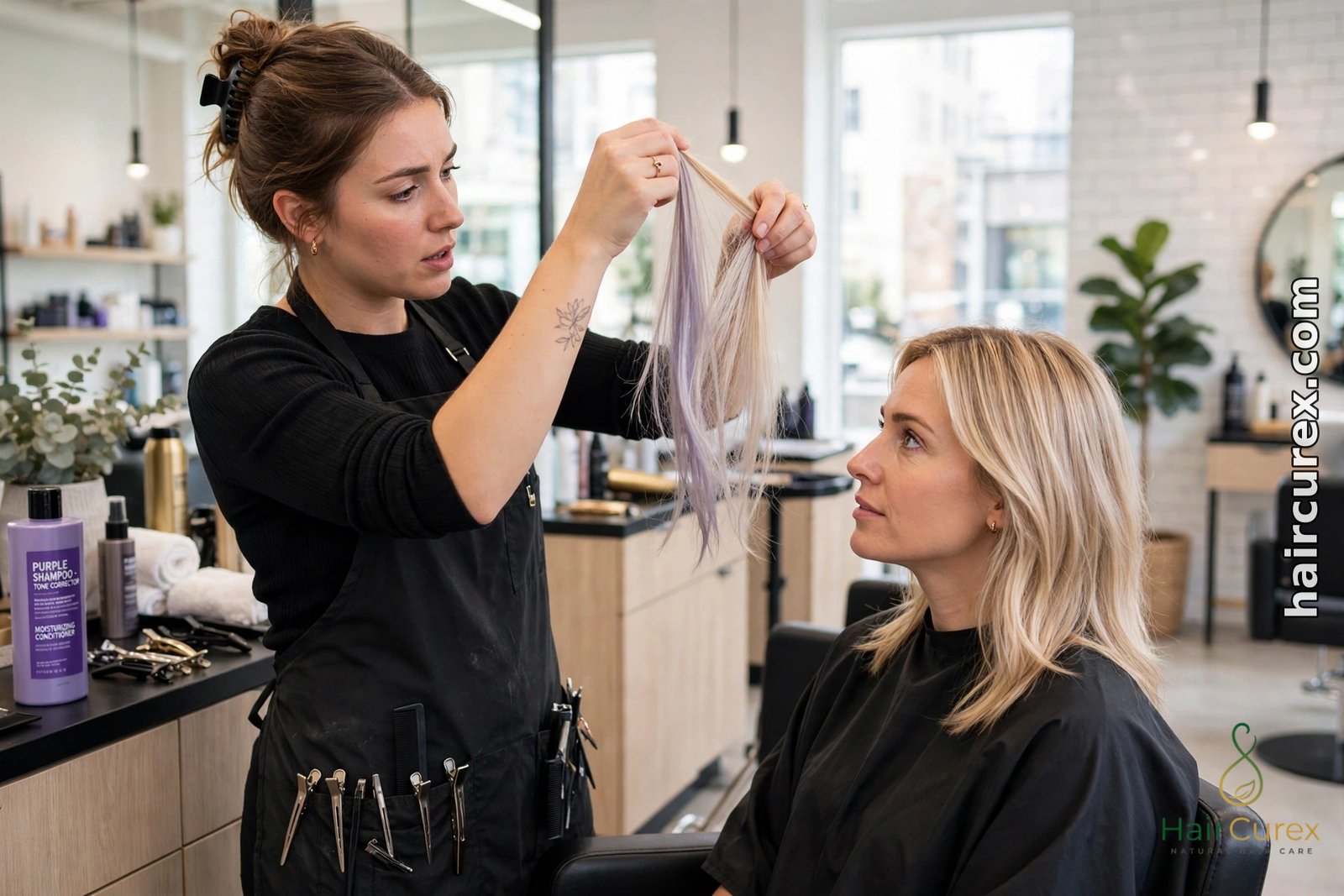
Most purple shampoo problems come from the same few mistakes, and all of them are avoidable. The most common is leaving it on too long. More time does not mean a better result — it means more pigment, and past the point your hair needs, that extra pigment is what turns blonde hair lavender, grey or dull. Start with the shortest time your bottle suggests, check the result when the hair is dry, and only add a minute or two next time if the yellow is still there.
The second mistake is using it too often. Daily purple shampoo dries hair out, builds up pigment, and eventually makes blonde look muddy rather than bright. Once or twice a week is the range for almost everyone, and if your hair is porous or damaged, once a week is the safer end. The third mistake is using it on hair that does not need it — fresh toner, cool blonde with no yellow, or dark hair. On hair with no yellow to cancel, the violet pigment has nothing to neutralise, so it just sits on the hair and makes it look dull or ashy.
The fourth mistake is skipping conditioner. Purple shampoo is drying, and blonde hair is already the driest hair type there is. Every purple shampoo wash should be followed by conditioner or a mask, and if your hair feels straw-like after using it, the answer is more moisture, not more purple shampoo. The fifth mistake is applying it to dry hair. Some people apply purple shampoo to dry hair for a stronger effect, and while that does deposit more pigment, it deposits it unevenly — the driest, most porous sections grab far more than the rest, and the result is patchy. Wet hair gives an even application every time. And the sixth mistake is expecting it to fix orange brassiness: orange needs blue, and no amount of purple shampoo will change that — check the table above if you are not sure which tone you are dealing with.
If you do end up with a lavender tint, the fix is simple and it works. Wash your hair once or twice with a regular clarifying shampoo, which strips the excess violet pigment, and follow with a deep conditioner. The tint fades fast because the pigment sits on the surface of the hair, and most people find it is gone within one or two washes. The lesson is not to stop using purple shampoo — it is to use a shorter leave-in time next time and to judge the result on dry hair, not wet hair, before deciding you need more.
Purple shampoo is a small, cheap, genuinely effective tool — as long as it is used for the job it was designed for. It keeps blonde, silver and grey hair cool and bright between salon visits, it costs a fraction of a toner appointment, and it takes five minutes once or twice a week. Use it on wet hair, leave it on for 2 to 5 minutes, rinse well, condition after, and stop when the yellow is gone. Get those details right and your blonde will look like you just left the salon — get them wrong and you will learn, quickly and visibly, why the leave-in time is printed on the bottle. If you are still deciding which blonde shade suits you in the first place, start with our blonde hair guide — and once you know your shade, purple shampoo is the product that keeps it looking the way it looked on day one.
Purple Shampoo FAQs
How long should I leave purple shampoo on my hair?
Leave purple shampoo on for 2 to 5 minutes for most blonde hair — 2 to 3 minutes for light brassiness or very light hair, and 3 to 5 minutes for noticeable yellow on golden or highlighted blonde. For strong brassiness you can go up to 10 minutes, but check the colour as you go and do not exceed the time on the bottle. Longer is not better: extra time deposits extra pigment, which is what turns hair lavender.
How often should I use purple shampoo?
Once or twice a week, alternating with your regular shampoo. Daily use dries hair out and builds up violet pigment until blonde looks grey or lavender. If you have hard water, sun exposure or chlorine, twice a week may be needed; if your hair is fine, porous or damaged, once a week is safer.
Can purple shampoo turn my hair purple?
Yes, if you leave it on too long or use it too often — especially on very light, platinum or porous hair, which grabs pigment fast. The tint is temporary and sits on the surface: one or two washes with a regular clarifying shampoo usually removes it. Start with a short leave-in time and judge the result on dry hair before adding more time.
Does purple shampoo lighten hair?
No. Purple shampoo does not lift colour or lighten hair — it only deposits violet pigment that cancels out yellow tones, making the blonde you already have look cooler and brighter. It cannot make dark blonde into platinum, and it cannot lighten roots. Lightening requires bleach or a lightening product.
Can I use purple shampoo on brown hair?
Purple shampoo does very little on brown hair, because the violet pigment is too subtle to show through darker strands. If your brown hair has orange or brassy tones, a blue shampoo is the right product, since blue sits opposite orange on the colour wheel. Purple shampoo is made for blonde, silver, grey and lightened hair.
Is purple shampoo damaging to hair?
Purple shampoo itself is not very damaging, but it can be drying — especially with daily use or on hair that is already dry from lightening. Used once or twice a week and followed by conditioner or a mask, it is safe for most blonde hair. If your hair feels dry or straw-like after using it, cut back to once a week and add a weekly deep-conditioning treatment.