

If your hairbrush seems fuller than your ponytail lately, you have probably seen The Ordinary Hair Serum all over your feed. The full name is a mouthful – Multi-Peptide Serum for Hair Density – and at $24 for a 60 ml bottle it is one of the cheapest peptide treatments on the shelf. But cheap only matters if it works, and the honest answer is more complicated than the five-star reviews suggest. This guide looks at what the peptide ingredients are actually claimed to do, what the evidence really shows, how to use it properly, and who should skip it.
Quick answer: The Ordinary Hair Serum is a lightweight, leave-in scalp serum that uses peptide technologies (REDENSYL, Procapil, CAPIXYL, BAICAPIL and AnaGain) plus caffeine to support the appearance of fuller, denser-looking hair. It is not a hair-growth drug, it will not regrow hair on bald areas, and there is no large independent clinical trial proving it grows hair. Most people who see any change need 3 to 4 months of daily use, and results vary a lot from person to person. For early, mild thinning it is a reasonable, low-cost experiment; for significant hair loss, a dermatologist is the better first step.
What Is The Ordinary Hair Serum?
The Ordinary Hair Serum is the short name for The Ordinary Multi-Peptide Serum for Hair Density, a leave-in treatment made by DECIEM’s The Ordinary brand. It comes in a 60 ml glass dropper bottle and costs $24.00 on The Ordinary’s U.S. website. The formula is water-based and lightweight, with no heavy oils, so it should not leave hair greasy when it is applied correctly to the scalp rather than the lengths.
The Ordinary describes it simply as ‘a lightweight serum for fuller, healthier-looking hair.’ Notice the wording: fuller-looking and healthier-looking. That is cosmetic language, and it matters. The brand does not claim the serum regrows hair, cures hair loss, or treats baldness. Any review that promises regrowth is going beyond what the maker itself says.
The serum is vegan, cruelty-free and color-safe, and it suits all hair types. It contains no minoxidil, which is the only over-the-counter drug ingredient approved in the U.S. for hair regrowth. That is an important distinction: this is a cosmetic scalp treatment, not a medicine, and it is regulated and tested like one.
The Ordinary Hair Serum Ingredients: What Each Peptide Is Claimed to Do
The formula stacks several peptide and botanical technologies, each aimed at a different part of the hair growth cycle. Here is what each one is claimed to do, and what the evidence actually shows.

REDENSYL is a patented complex of larix (larch) wood extract, green tea leaf extract and zinc. Its maker says it targets hair follicle stem cells and the dermal papilla to support the anagen (growth) phase. The published evidence is a manufacturer-run study of about 26 men over three months, which reported denser-looking hair. That is a small, industry-funded study, not a large independent trial, so treat the headline numbers with caution.
Procapil combines biotinoyl tripeptide-1 with apigenin (from citrus) and oleanolic acid (from olive leaves). It is claimed to help anchor hair more firmly in the follicle and to counter the effects of DHT, the hormone linked to pattern hair loss, at the scalp surface. The supporting studies are laboratory and small-scale manufacturer studies. There is no strong independent evidence that a topical peptide complex meaningfully blocks DHT the way an oral drug does.
CAPIXYL pairs acetyl tetrapeptide-3 with red clover flower extract. It is claimed to reduce scalp inflammation and support thicker-looking hair over time. Again, the evidence comes from the ingredient manufacturer’s own testing, with small participant numbers.
BAICAPIL is a blend of baicalin (from skullcap root), wheat germ and soybean germ extracts. It is claimed to support follicle metabolism and improve hair density. The evidence base is the same story: promising laboratory and small manufacturer studies, no large independent trial.
AnaGain is a pea sprout extract claimed to reactivate hair growth by stimulating specific growth signals in the dermal papilla. Its maker cites a small study showing reduced shedding after a few months of use.
High-solubility caffeine is included because caffeine is thought to stimulate the scalp and support microcirculation when massaged in. The evidence for topical caffeine and hair is modest but real: small studies suggest it can support hair follicle activity, though it is not a substitute for proven treatments.
The pattern is consistent across all six technologies: each has some laboratory or small manufacturer-funded human data, and none has been proven in a large, independent, peer-reviewed trial of the finished serum. That does not make the ingredients useless – it makes the claims softer than the marketing suggests. A fair reading is ‘may help hair look denser over time’ rather than ‘grows hair.’
The Ordinary Hair Serum: Claims vs. Evidence
| Claim you will see | What the evidence actually shows |
|---|---|
| Promotes hair growth | No large independent trial proves regrowth from this serum; evidence is small manufacturer studies on individual ingredients |
| Thicker, denser-looking hair | Plausible over 3-4 months of daily use; ‘looking’ is the key word – cosmetic improvement, not new follicles |
| Reduces hair shedding | Some users report less shedding after 8-12 weeks; no independent trial confirms a shedding reduction for the finished product |
| Targets hair loss at the follicle | Ingredients are designed to support follicle health, but topical peptides have limited proof of reaching follicles in meaningful amounts |
| Works for everyone | Results vary widely; it cannot help scarring hair loss, advanced pattern baldness, or hair loss caused by medical conditions |
| Results in weeks | The brand’s own guidance points to months; anyone promising results in two weeks is overselling |
How to Use The Ordinary Hair Serum Correctly
Getting the application right matters more than most people think, because a scalp serum only works if it actually reaches the scalp. Follow the official instructions, which The Ordinary lists on its product page.

First, start with a clean, dry scalp. Wash your hair as usual and let it dry, or apply to dry hair between washes. Product buildup and oil on the scalp can block absorption, so a clean scalp gives the serum its best chance.
Second, part your hair into sections to expose the scalp. A wide-tooth comb or your fingers work fine. The serum belongs on skin, not on your hair strands – drops sitting on the lengths do nothing for density and can make hair look greasy.
Third, apply a few drops directly to the scalp in each section, focusing on the areas where hair looks thinnest, usually the crown and the part line. A few drops per section is enough; flooding the scalp wastes product.
Fourth, massage gently with your fingertips for one to two minutes. This spreads the serum evenly and supports circulation. A gentle scalp massage is a useful habit on its own, and it is one of the simplest things you can add to a hair care routine.
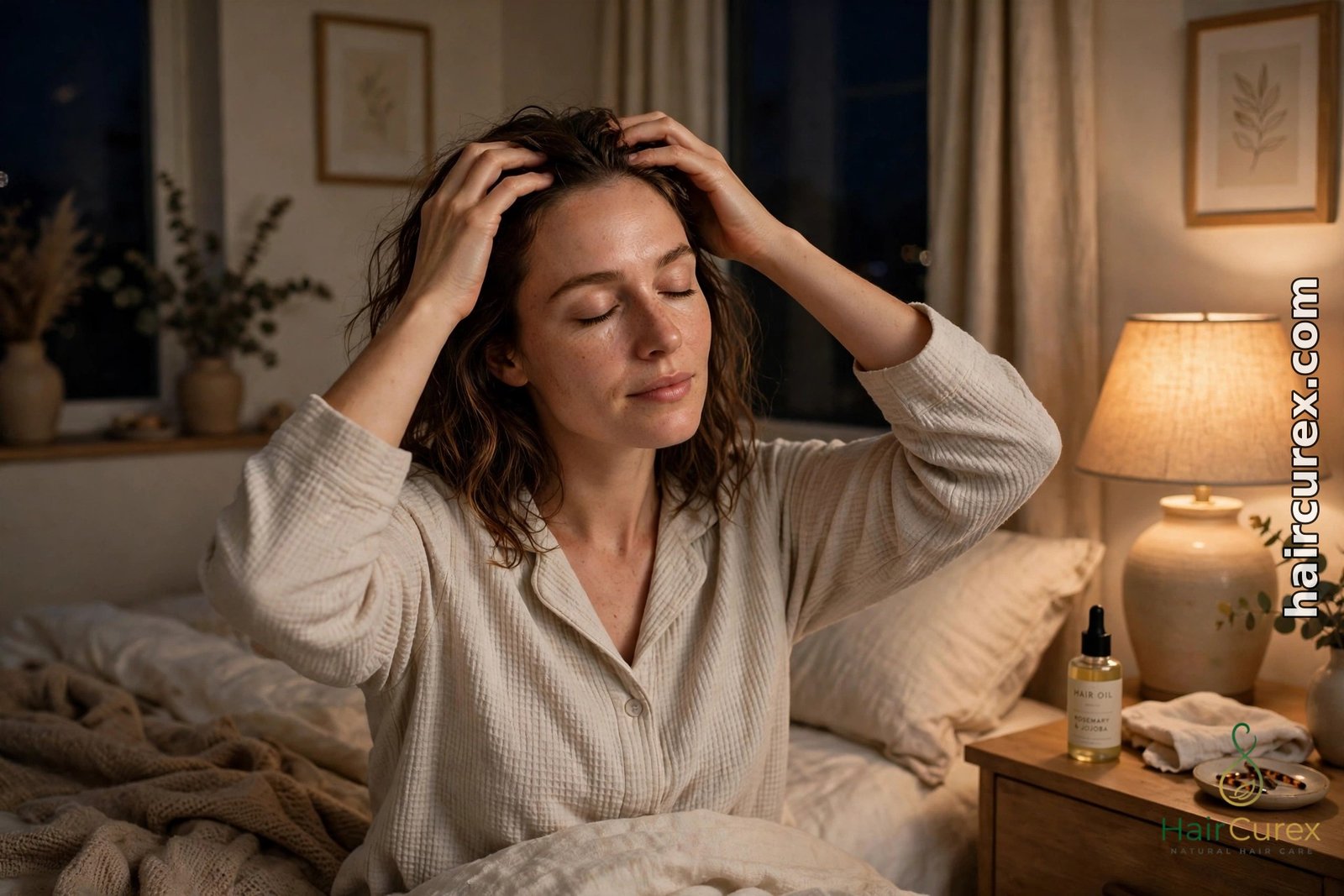
Fifth, do not rinse. This is a leave-in treatment. The Ordinary says to use it once daily, ideally at bedtime, so it stays undisturbed on the scalp overnight. Do not wash your hair or scalp after application.
Consistency is the whole game. Missing days here and there will not ruin it, but the serum needs daily use for months before you can judge it fairly. If you stop after three weeks because nothing changed, you have not really tested it – though you also should not keep buying bottle after bottle for a year with no visible change.
How Long Does The Ordinary Hair Serum Take to Work?
Set your expectations by the hair growth cycle, not by the bottle. Hair grows about half an inch a month, and the anagen growth phase lasts years, so any product that claims to change density needs months to show anything visible.

Most users who report a difference mention it after 3 to 4 months of daily use: slightly less shedding in the shower, a part line that looks a little less wide, hair that feels a bit fuller when gathered into a ponytail. These are subtle, gradual changes, not dramatic before-and-after photos.
If you see nothing at all after four months of correct daily use, it is fair to stop. The serum is inexpensive, but money spent on a product that does not work for you is still wasted, and your hair concerns may need a different approach. Take a photo of your part line and crown in the same light once a month so you can compare honestly instead of relying on memory.
The Ordinary Hair Serum vs. Minoxidil: An Honest Comparison
Many people ask whether this serum replaces minoxidil, and the answer is no. Minoxidil is a drug with decades of large clinical trials behind it, and it is the standard over-the-counter treatment for pattern hair loss. The Ordinary Hair Serum is a cosmetic with promising but much weaker evidence.
That does not mean minoxidil is right for everyone. It can cause scalp irritation and an initial shedding phase, it must be used indefinitely to keep results, and some people simply prefer to start with a gentler cosmetic option. A reasonable approach is to try the peptide serum first if your thinning is mild and recent, and to talk to a dermatologist about minoxidil if the thinning is advanced, fast-moving, or distressing. Some people use both, but ask a dermatologist first before combining treatments, especially if your scalp is sensitive.
Compared with other cosmetic options, the serum sits in a sensible middle ground. Rosemary oil for hair growth has a small amount of comparative evidence and costs less, but it is oil-based and messier to apply. A Kérastase Elixir Ultime hair oil is a finishing oil that makes hair look shinier and healthier, but it is not a scalp density treatment at all. The Ordinary serum is the only one of the three designed specifically as a daily scalp-density treatment, and at $24 it is far cheaper than most salon alternatives. To compare the wider category first, see our guide to hair growth serum options.
Who Should Use It – and Who Should Skip It
This serum is a reasonable choice if your thinning is early and mild, if your hair looks less dense than it used to but your scalp is still well covered, if you want a low-cost, low-risk first step before considering drug treatments, or if you simply want to support scalp health as part of a broader routine. It also suits people with color-treated hair, since it is color-safe.
Skip it, or at least see a doctor first, if you have sudden or patchy hair loss, bald spots, a red, painful or scaly scalp, or hair loss that started with an illness, a new medication, or a major hormonal change. These can signal conditions a cosmetic serum cannot fix, such as alopecia areata, scarring alopecia, thyroid problems, or iron deficiency. The serum will not regrow hair on fully bald areas where follicles are no longer active, and no cosmetic product will.
Patch test first, as The Ordinary advises: apply a small amount to clean skin on your upper forearm, keep the area dry, and check for redness, burning, itching or irritation over 24 hours. If irritation occurs on your scalp, rinse it off, stop using it, and consult a physician. Also check our list of ingredients to avoid in hair products before trying any new scalp treatment.
The Ordinary Hair Serum Pros and Cons
Pros: very affordable at $24 for 60 ml; lightweight, non-greasy, leave-in formula; vegan, cruelty-free and color-safe; stacks six peptide and botanical technologies instead of betting on one; simple once-daily routine, ideally at bedtime; generally well tolerated.
Cons: no large independent trial of the finished product; evidence rests on small manufacturer-funded studies; needs 3-4 months of daily use before you can judge it; will not regrow hair on bald areas or treat medical hair loss; results vary a lot between people; the dropper makes precise dosing a little fiddly on thick hair.
Is The Ordinary Hair Serum Worth It?
For $24, The Ordinary Hair Serum is one of the most reasonable experiments in the hair-density aisle – as long as you buy it for what it actually is. It is a gentle, well-priced cosmetic scalp serum with interesting peptide ingredients and modest evidence, not a hair-growth guarantee. If your thinning is mild, your expectations are realistic, and you can commit to daily use for at least three months, it is worth trying. If you need real regrowth, a dermatologist and a proven treatment like minoxidil will serve you better, and the sooner you get proper advice, the more hair you keep. An independent review summary reaches a similar conclusion: modest evidence, fair price.

Think of it this way: the serum is a supporting player for scalp health, not the star of a hair-loss treatment plan. Used honestly, alongside a good shampoo routine, gentle handling, and attention to the real causes of shedding, it earns its place. Bought as a miracle cure, it will only disappoint – and that disappointment is avoidable once you know what the evidence actually says.
Frequently Asked Questions
Does The Ordinary Hair Serum regrow hair?
No. It is a cosmetic serum, not a drug, and The Ordinary only claims it supports fuller, healthier-looking hair. It will not regrow hair on bald areas or reverse advanced pattern hair loss. Proven regrowth treatments such as minoxidil have far stronger clinical evidence.
How long does The Ordinary Hair Serum take to work?
Most people need 3 to 4 months of once-daily use before judging it. Hair grows slowly, so changes in density are gradual. If you see no change after four months of correct daily use, it is reasonable to stop.
Can I use The Ordinary Hair Serum with minoxidil?
Many people use a cosmetic peptide serum alongside minoxidil, but check with a dermatologist first, especially if your scalp is sensitive. Apply the treatments at different times of day if your doctor agrees, and stop either product if irritation appears.
Is The Ordinary Hair Serum safe for color-treated hair?
Yes. The formula is color-safe and suitable for all hair types, including color-treated and sensitive scalps. Patch test first if your scalp reacts easily.
Does The Ordinary Hair Serum cause shedding?
Some people notice temporary shedding when starting any new scalp treatment, and hair naturally sheds every day. A sudden, large increase in shedding, or shedding in patches, is a reason to stop and see a dermatologist rather than pushing through.
Can men use The Ordinary Hair Serum?
Yes. The serum is unisex and the peptide ingredients work the same way regardless of gender. Men with early thinning are the most common users, though it cannot replace proven treatments for male pattern baldness.
How much does The Ordinary Hair Serum cost?
The 60 ml bottle costs $24.00 on The Ordinary’s U.S. website. At a few drops once a day, one bottle usually lasts about two to three months, which makes it one of the cheapest peptide hair treatments available.