


Quick answer: Kerastase hair oil — the Elixir Ultime L’Huile Originale — is worth it if you want a lightweight, non-greasy shine oil with a luxury scent and you are happy to pay around $50–$55 for a 100ml bottle. It smooths frizz, adds instant gloss, protects against heat up to 230°C, and a little goes a long way, so one bottle lasts months. It is not worth it if your only goal is moisture or hair growth, because cheaper oils like argan or coconut do that job just as well for far less money, and no hair oil can repair split ends or regrow hair.
Walk into any salon and you will find this bottle on the shelf. Kerastase Elixir Ultime has been the brand’s most iconic product since it launched in 2010, and it sells at a rate the beauty world never stops quoting — roughly a bottle every couple of minutes worldwide. That kind of fame creates a fair question: is the oil itself actually that good, or are you mostly paying for the gold bottle and the name?
This review answers that honestly. It covers what the oil is, what is inside it, what it costs in the US and the UK, how to use it without ending up greasy, what it does well, where it falls short, and how it compares with cheaper alternatives — so you can decide before you spend the money.
What Kerastase Hair Oil Actually Is

Kerastase hair oil in this review means one product: Elixir Ultime L’Huile Originale, the leave-in oil that sits at the centre of the Elixir Ultime range. It is a finishing and treatment oil for all hair types, designed to be used on damp hair before styling or on dry hair as a final smoothing step. It is not a rinse-out mask, not a deep conditioner, and not a scalp treatment — it is a lightweight oil that coats the outside of the hair shaft, which is exactly how it creates shine and tames frizz.
The formula is built around a blend of plant oils. The current version leads with French camellia oil, supported by argan oil and marula oil, plus vitamin E. Camellia oil is the interesting one: it is very light, absorbs quickly, and has been used in Japanese hair care for centuries, which is why this oil feels less heavy than a pure argan oil even though it does a similar job. The oil also carries the brand’s signature scent — warm, floral and slightly powdery — which is part of what people are paying for, whether they admit it or not. If you are sensitive to fragrance, that matters: the scent is noticeable and it lingers in your hair for hours.
One thing that changed recently is the packaging. The classic 100ml glass bottle is being replaced in many markets by a refillable 75ml bottle, with a refill option that costs about 29% less than buying a fresh bottle. The oil inside is the same. If you buy online, check whether you are getting the 100ml original or the 75ml refillable version, because the price per millilitre is different and the bottles look similar in photos. There are also scented variants in the same range — including a rose version for fine hair — but this review covers the original, which is the one made for all hair types.
What It Costs and What You Get
Price is the whole debate with this product, so here it is plainly. In the US, the 100ml bottle of Kerastase hair oil sells for around $50–$55 at major retailers, with some stores listing it slightly lower or higher depending on sales. In the UK, the current refillable 75ml bottle is £58.50 direct from Kérastase, with a 30ml travel size at £29 and a 250ml salon size at £122. Prices vary by country and retailer, and they move with promotions, so treat these as the verified range at the time of writing (November 2026) rather than a fixed price — check the retailer’s page before you buy.
| Size | Format | Price (Nov 2026) | Best for |
|---|---|---|---|
| 30ml | Travel / trial | £29 (UK) | Trying the oil before committing |
| 75ml | Refillable bottle | £58.50 (UK) | Regular use; refill saves ~29% |
| 100ml | Classic bottle | Around $50–$55 (US) | Best value per ml in the US |
| 250ml | Salon size | £122 (UK) | Daily users and long hair |
That price stings until you do the per-use maths. One pump is enough for shoulder-length hair, and two pumps cover long, thick hair. At one to two pumps a day, a 100ml bottle lasts roughly three to four months — which works out at about 40 to 55 cents a day. That does not make it cheap, but it does mean the cost is closer to a daily coffee than to a luxury habit. The refill system helps too: once you own the glass bottle, the refill costs noticeably less, which narrows the gap with mid-range oils over time. Still, if you use three or four pumps a day on very long hair, the bottle will not last three months, and the cost adds up fast.
How to Use Kerastase Hair Oil

Most bad experiences with Kerastase hair oil come from using too much of it, not from the oil itself. The rule is simple: start with less than you think you need. Warm one pump between your palms first — this spreads the oil thin and stops it landing in one heavy patch — then smooth it over the mid-lengths and ends of your hair. Keep it away from your roots and scalp unless your hair is very thick and dry, because oil at the roots is what makes hair look greasy and flat within hours.
There are three good moments to use it. First, on damp hair after washing: apply one to two pumps before blow-drying, and the oil acts as a heat protectant up to 230°C while adding slip that makes brushing easier. Second, on dry hair as a finisher: a single drop smoothed over the surface calms flyaways and adds shine without weighing anything down, which is the fastest way to make a second-day style look fresh.
Third, as an overnight treatment: apply two to three pumps to the lengths before bed, braid loosely, and wash it out in the morning — this is the only way the oil genuinely conditions, because it has hours to sit on the hair rather than minutes.
What not to do: do not apply it to soaking wet hair, because the water dilutes it and it slides off; towel-dry first. Do not use it as a scalp oil or a growth treatment, because it is not formulated for the scalp and there is no evidence it helps hair grow. And do not expect it to fix split ends — no oil can glue a split end back together, and the only real fix is a trim. Used the right way, one pump should leave your hair glossy but not oily to the touch; if your hair feels coated, you used too much, and the fix next time is half a pump less rather than a different product.
What It Does Well

The shine is the first thing you notice, and it is real. The oil leaves a glassy, reflective finish that cheaper oils struggle to match without feeling heavy — that is the camellia oil doing its work, because it is unusually light for a plant oil and spreads into a very thin film. On dull, dry ends the difference is visible immediately, and on colour-treated hair it makes the colour look richer, because smooth, light-reflecting hair simply shows colour better than rough, light-scattering hair.
Frizz control is the second strength. The oil smooths the cuticle — the overlapping scales on the outside of each strand — which stops individual hairs from sticking out and catching the light unevenly. In humid weather this matters most: a light layer of oil acts as a barrier that slows moisture getting into the hair shaft, which is what makes hair puff up. It will not hold a style through a rainy day on its own, but it noticeably delays the frizz, and it is one of the reasons the oil has survived fifteen years of trends.
The third strength is how little it weighs hair down. This is where Kerastase hair oil earns its price against other luxury oils. Many rich oils make fine hair go limp, but this one is light enough that fine-haired people can use a single pump without losing volume — as long as they keep it on the ends. It also layers well: you can use it before heat styling and again after, without the hair feeling coated or product-heavy. And then there is the scent, which is genuinely lovely and lasts for hours — the kind of detail that makes people repurchase even when a cheaper oil would do the same technical job.
Where It Falls Short
An honest review has to say what the oil cannot do. It does not repair damage. Marketing language around “nourishing” and “restoring” can make it sound like a treatment, but a leave-in oil works on the surface of the hair: it smooths, softens and protects, but it cannot rebuild the protein structure inside a damaged strand or close a split end.
If your hair is badly damaged from bleach or heat, Kerastase hair oil will make it look better, and it will protect it from further heat damage — but the damage underneath is still there, and only time and trims deal with that. Our guide to at what temperature does hair burn explains the heat limits that matter here, because the oil’s 230°C protection only helps if your tools stay within it.
It is also not a growth product. Nothing in the formula stimulates the scalp or the follicle, and there is no credible evidence that rubbing a cosmetic oil on your lengths makes hair grow faster. If growth is your goal, the evidence-backed options are different — our review of rosemary oil for hair growth explains what the research actually says, including the one small study people keep quoting and what it did and did not prove. Buying a $54 shine oil for growth is spending luxury money on the wrong job.
The remaining weaknesses are practical. The fragrance, which many people love, is a real problem if you are sensitive to scent or you work somewhere fragrance-free — it is strong and it stays. The pump can dispense more than you need if you press it fully, which wastes an expensive product; half a press is usually enough. And the bottle, while beautiful, is glass, so it is not the best travel companion unless you decant it or buy the 30ml size. None of these are deal-breakers, but they are the things that surprise first-time buyers, and they are worth knowing before the bottle arrives.
Kerastase Hair Oil vs Cheaper Alternatives
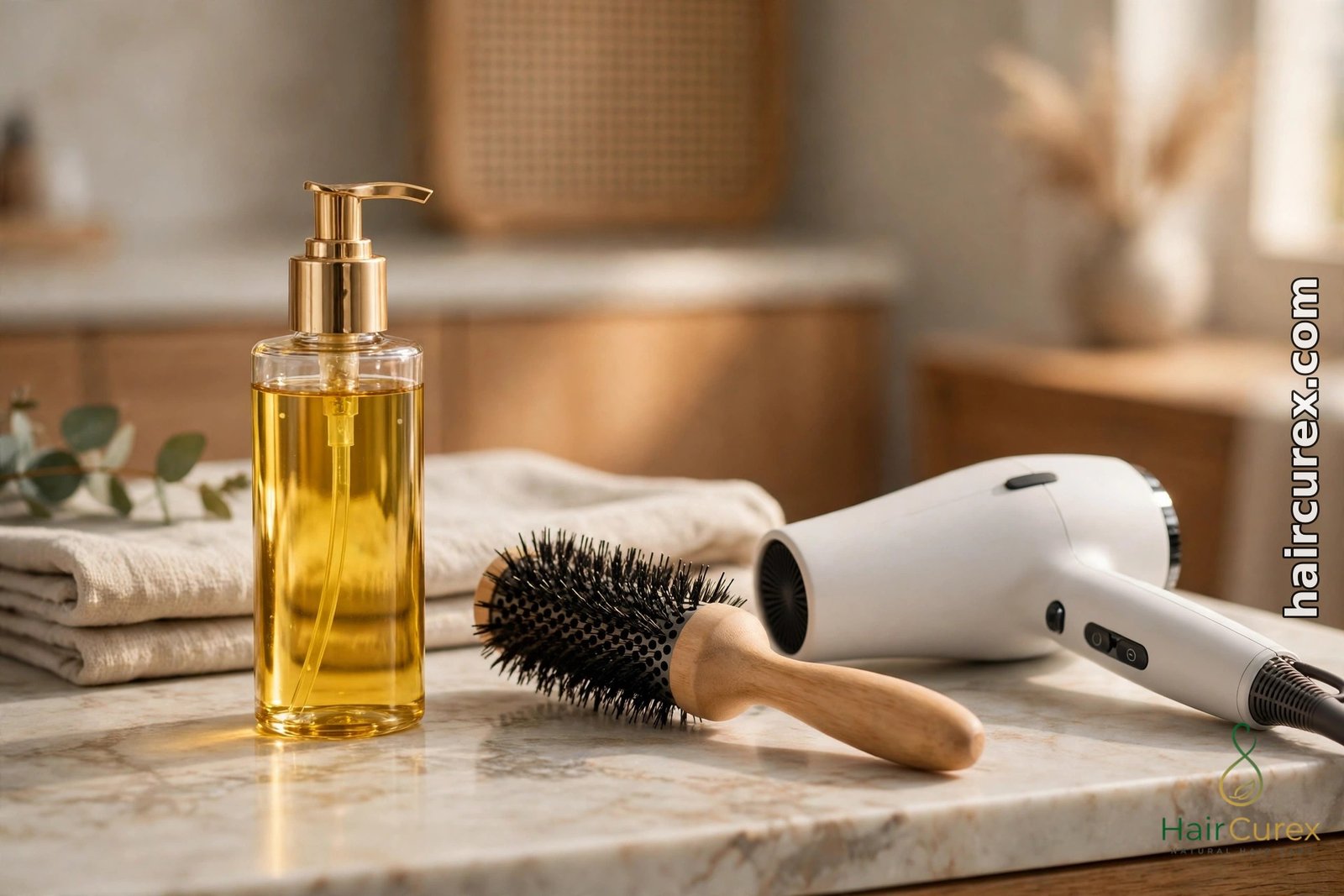
The fairest way to judge a $54 oil is to line it up against the oils people actually buy instead. Pure argan oil costs a fraction of the price and does most of the same work: it smooths, adds shine, and protects against heat to a degree. Coconut oil is even cheaper and genuinely penetrates the hair shaft, which Kerastase hair oil does not — but coconut oil is heavy, it solidifies in cool weather, and it can make fine hair look limp, so it suits thick, dry hair far better than fine hair. Our guide to coconut oil for hair covers who should use it and who should avoid it, because it is not the universal fix it is often sold as.
| Oil | Price (100ml) | Best at | Watch out for |
|---|---|---|---|
| Kerastase Elixir Ultime | Around $50–$55 | Lightweight shine, frizz control, scent, heat protection to 230°C | Price; fragrance; does not penetrate the shaft |
| Pure argan oil | Around $10–$20 | Shine and softness at a low price | Heavier feel; quality varies a lot between brands |
| Coconut oil | Around $5–$10 | Deep conditioning; actually penetrates hair | Too heavy for fine hair; solidifies when cool |
| Batana oil | Around $20–$40 | Rich conditioning for very dry, coarse hair | Very heavy; strong smell; slow to absorb |
| Drugstore shine oil (e.g. L’Oréal Elvive) | Around $9 | Budget shine and frizz control | More silicones; less refined finish and scent |
Batana oil is the interesting comparison for very dry or coarse hair: it is richer and more conditioning than Elixir Ultime, and some people with thick, curly hair prefer it — but it is heavy, slow to absorb, and has a strong natural smell, so it is a treatment oil rather than a daily finisher.
Our review of batana oil for hair sets out what it can realistically do and where it disappoints. The drugstore option, a silicone-based shine oil at around $9, gets you surprisingly close on shine and frizz control for a tenth of the price — what you lose is the lightweight feel, the refined scent, and the luxury of the formula. If you cannot tell the difference between the $9 oil and the $54 oil on your own hair, buy the $9 one and spend the difference on a better shampoo.
The honest summary is this: Kerastase hair oil is not ten times better than a $9 oil, because no hair oil is ten times better than another. What it is, is the most refined version of the job — lighter, better-smelling, and more forgiving on fine hair than almost anything cheaper. Whether that refinement is worth $45 extra is a personal call, not a technical one, and it depends on your hair type, your budget, and how much you care about the experience of using it.
Who Should Buy It — and Who Should Skip It

Buy it if your hair is fine to medium and you want shine without weight, because this is the hair type the oil was designed for and the one where it beats cheaper oils most clearly. Buy it if you heat-style often and want a single product that protects, smooths and finishes in one step — the 230°C heat protection is genuine and useful, not marketing. Buy it if frizz is your daily problem and you live somewhere humid, because the cuticle-smoothing effect is real and it lasts through the day. And buy it if you simply enjoy luxury hair care and the scent and the ritual matter to you — there is nothing wrong with paying for pleasure, as long as you know that is what you are paying for.
Skip it if your budget is tight and shine is all you want, because a good argan oil or a drugstore shine oil gets you most of the result for a fifth of the price. Skip it if your hair is very thick, coarse or extremely dry, because you may get more from a heavier, penetrating oil — coconut or batana — used as a pre-wash treatment rather than a finisher. Skip it if you are sensitive to fragrance, because the scent is strong and long-lasting and there is no fragrance-free version.
And skip Kerastase hair oil if you are buying it for hair growth or damage repair, because it does neither, and the money is better spent on the things that do — a good shampoo, a regular trim, and less heat. If you want the full picture of how oils fit into a routine, our guide to hair oil compares the ten best oils for growth, scalp health and stronger hair, so you can match the oil to the job instead of the brand to the shelf.
Our verdict: Kerastase hair oil is a genuinely excellent shine oil, and the price is the only real argument against it. If you can afford it and you value a lightweight feel and a beautiful scent, you will not regret the bottle — and because a little goes a long way, the cost per use is far less dramatic than the sticker price suggests. If you cannot justify $54 for a finishing oil, you are not missing a miracle; you are missing a refinement, and a good argan oil will keep your hair looking healthy for a fraction of the cost.
Either way, the oil will not change your hair’s health on its own — healthy hair still comes from gentle washing, minimal heat and regular trims, as the American Academy of Dermatology’s healthy hair tips explain. Check the current price on the official Kérastase Elixir Ultime product page before you buy, because sizes and prices change with the refillable range rolling out.
Kerastase Hair Oil FAQs
Is Kerastase hair oil worth the money?
Yes, if you want a lightweight shine oil with frizz control, heat protection up to 230°C and a luxury scent — and you are happy to pay around $50–$55 for 100ml. A bottle lasts three to four months at one to two pumps a day, so the cost is roughly 40–55 cents per use. It is not worth it if you only want moisture or hair growth, because cheaper oils do those jobs just as well.
How much Kerastase Elixir Ultime should I use?
One pump for shoulder-length hair and two pumps for long or thick hair is enough. Warm it between your palms first, then smooth it over the mid-lengths and ends, keeping it away from the roots. If your hair feels oily after use, you used too much — try half a pump less next time rather than switching products.
Can I use Kerastase hair oil on fine hair?
Yes — it is one of the few luxury oils light enough for fine hair, thanks to the camellia oil base. Use a single pump on the ends only, and avoid the roots, or your hair will look flat. If your fine hair still goes limp, apply it to damp hair before blow-drying rather than to dry hair as a finisher.
Does Kerastase hair oil help hair grow?
No. It is a cosmetic finishing oil that smooths and shines the hair shaft; it does not stimulate the scalp or the follicle, and there is no credible evidence it speeds up growth. If growth is your goal, look at scalp care and evidence-backed options instead of a shine oil.
Can I use Elixir Ultime before heat styling?
Yes. Apply one to two pumps to damp, towel-dried hair before blow-drying or using a flat iron — it protects against heat up to 230°C. Keep your tools within that limit, and do not use it as a substitute for a dedicated heat protectant if you regularly style above 230°C.
What is the difference between the 100ml and 75ml bottles?
The 100ml bottle is the classic original size, while the 75ml bottle is the newer refillable version, with a refill that costs about 29% less than a fresh bottle. The oil inside is the same. Check which size you are buying online, because the price per millilitre differs between the two.