


Quick answer: An apple cider vinegar rinse for hair is a diluted mixture of apple cider vinegar and water poured over your hair after shampooing. It can help remove product buildup and make hair look shinier and smoother, because the vinegar’s acidity helps the hair cuticle lie flat. It does not grow hair, cure dandruff, or repair damage — and it must always be diluted, because undiluted vinegar can irritate or burn your scalp.
Used once or twice a week at the right dilution, it is a cheap, simple clarifying step; used too strong or too often, it can dry your hair out. This guide covers the exact recipe, what it really does, and who should skip it.
Apple cider vinegar has been a kitchen staple for centuries, and somewhere along the way it became a hair-care staple too. Scroll through any hair forum and you will find people swearing that a vinegar rinse transformed their hair — shinier, softer, less frizzy, scalp calmer. Others say it did nothing, or left their hair dry and smelling like salad dressing. Both groups are telling the truth, because the result depends almost entirely on how you use it: the dilution, the frequency, and your hair type.
This guide sorts the real effects from the hype. You will learn what an apple cider vinegar rinse actually does and what it cannot do, the exact dilution that dermatologists and hair experts recommend, a step-by-step method, how it compares with a detox shampoo, and the situations where you should skip it entirely.
What Is an Apple Cider Vinegar Rinse for Hair?
An apple cider vinegar rinse for hair is exactly what it sounds like: apple cider vinegar (ACV) mixed with water and poured over the hair and scalp, usually after shampooing and before or instead of conditioner. It is a do-it-yourself clarifying treatment, not a shampoo replacement — it does not clean hair the way shampoo does, and it is not meant to be left on the hair undiluted.
The reason it works at all comes down to pH. Healthy hair and scalp sit at a slightly acidic pH of around 4.5 to 5.5. Most shampoos, hard water, and styling products are more alkaline, which lifts the hair cuticle — the overlapping scales on the outside of each strand — and leaves hair looking rough, dull, and frizzy.
Apple cider vinegar is strongly acidic, with a pH of about 2 to 3. When it is diluted and poured over the hair, it can help bring the pH back down and encourage the cuticle to lie flat again. Flat cuticles reflect light better, which is why hair looks shinier, and they snag less on each other, which is why hair feels smoother and tangles less.
That is the mechanism, and it is plausible — but it is worth being honest about the evidence. As Healthline notes in its guide to apple cider vinegar for hair, no research has directly examined ACV’s role in regulating hair pH, and the research on ACV’s benefits for hair health overall is very limited and mixed: Healthline on apple cider vinegar for hair. Much of what people report — the shine, the softness, the feeling of cleaner hair — is anecdotal. An apple cider vinegar rinse for hair is best thought of as a gentle clarifying step with a plausible mechanism, not a proven treatment.
What Does an Apple Cider Vinegar Rinse Actually Do?
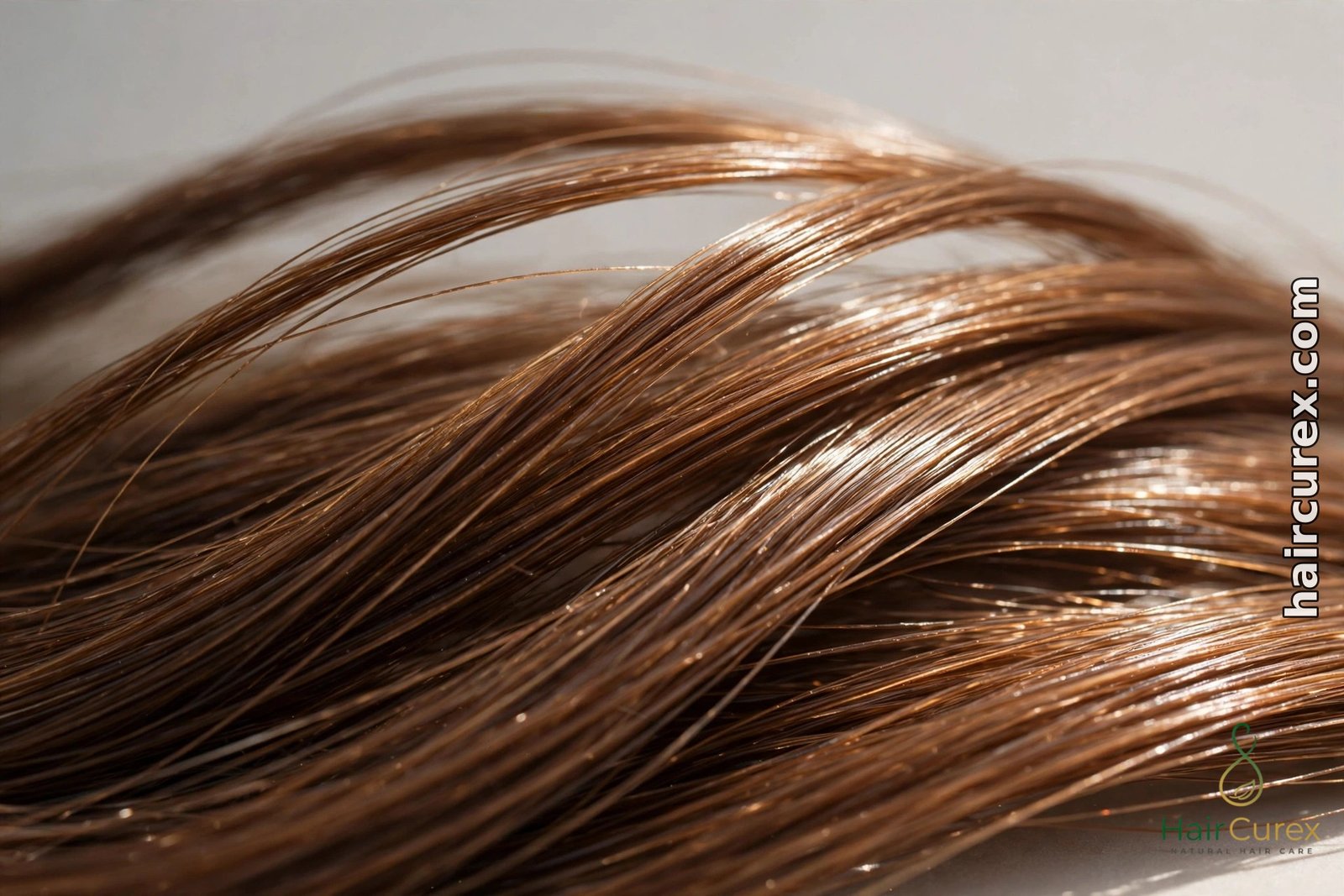
Here is what an apple cider vinegar rinse for hair can realistically do for your hair, and what it cannot. The distinction matters, because the rinse gets credited with far more than it delivers.
It can remove product buildup. This is the rinse’s strongest, most reliable effect. Styling products, silicones, and hard-water minerals leave residue on the hair and scalp that ordinary shampoo does not always remove. The acidity of diluted vinegar helps dissolve that residue, so hair feels lighter and cleaner after a rinse. If your hair has started feeling coated, heavy, or dull despite regular washing, an apple cider vinegar rinse for hair is often the fastest fix.
It can add shine and smoothness. When the cuticle lies flat, hair reflects more light and feels smoother to the touch. This is the effect most people notice first, and it is real — though it is temporary, lasting until the next wash or two. It works best on hair that is dull because of buildup or hard water, and less noticeably on hair that is already healthy and shiny.
It may help with frizz. Frizz is often a sign of raised, rough cuticles, so anything that smooths the cuticle can reduce it. Our guide to getting rid of frizzy hair covers the full frizz-control routine; an apple cider vinegar rinse for hair is one small tool inside that routine, not a standalone cure. And again, no study has directly tested ACV on frizzy hair — the effect is inferred from the pH mechanism, not proven.
It may calm an itchy scalp. ACV has antibacterial and antifungal properties in laboratory settings, and it may help with the yeast and bacteria that contribute to itching and flaking. Some people find an apple cider vinegar rinse for hair soothes a mildly itchy scalp. But ACV has not been tested as a treatment for dandruff, and it should not be relied on to solve scalp conditions. If your itching comes with heavy flaking, redness, or sore patches, you need a proper diagnosis, not a kitchen remedy. Our guide to dandruff vs dry scalp explains how to tell the two apart and what actually helps each one.
It does not grow hair. There is no evidence that an apple cider vinegar rinse for hair makes hair grow faster or thicker, and it cannot restore hair loss. Medical News Today is clear on this: ACV may have some benefits for hair health, but it may not support hair growth or restore hair loss, and much of the excitement is based on anecdotal evidence: Medical News Today on apple cider vinegar for hair growth. The one indirect link is that removing buildup keeps follicles clearer, which supports a healthy scalp — and a healthy scalp is the foundation hair grows from. That is a long way from a growth treatment.
It does not repair damage. An apple cider vinegar rinse for hair cannot fix split ends, reverse chemical damage, or rebuild broken hair. It can make damaged hair look and feel better temporarily by smoothing the cuticle, but the damage underneath is still there. If your hair is breaking, you need protein and moisture care and a trim, not vinegar.
| Claim | What the evidence says | Verdict |
|---|---|---|
| Removes product buildup | Acidity helps dissolve residue and mineral deposits | Likely — the rinse’s most reliable effect |
| Adds shine and smoothness | Lower pH can help the cuticle lie flat and reflect light | Plausible — widely reported, mechanism makes sense |
| Reduces frizz | Smoother cuticle can mean less frizz | Possible — no direct studies on ACV and frizz |
| Calms an itchy scalp | Antibacterial and antifungal properties in lab settings | May help mild itching — not a dandruff treatment |
| Makes hair grow faster | No studies support hair-growth claims | No — do not expect growth |
| Cures dandruff | ACV has not been tested as a dandruff treatment | No — use a medicated shampoo instead |
| Repairs damaged hair | Cannot rebuild broken hair structure | No — only a temporary smoothing effect |
How to Do an Apple Cider Vinegar Rinse for Hair
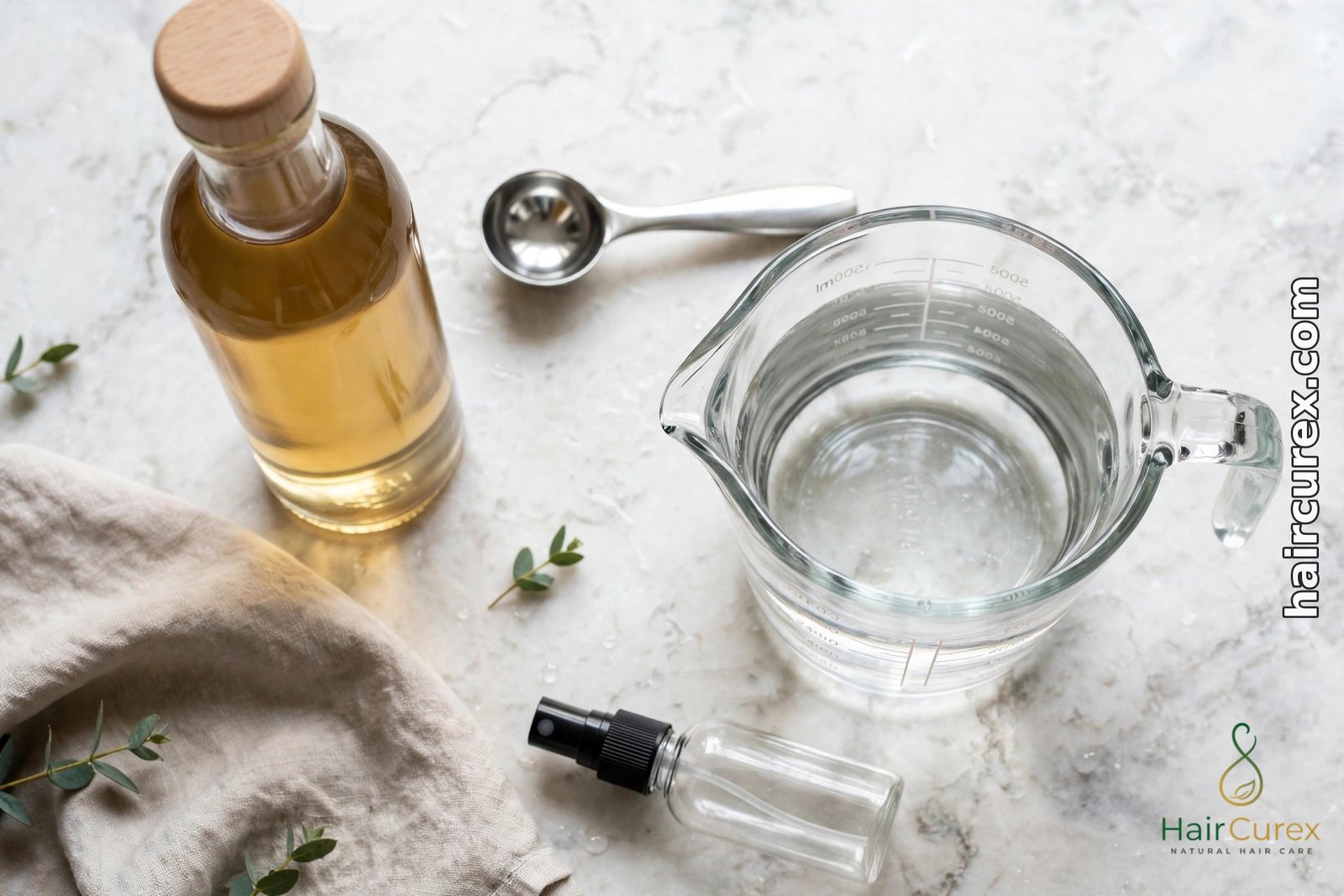
Getting an apple cider vinegar rinse for hair right is mostly about dilution. Too weak and it does nothing; too strong and it irritates your scalp and dries your hair out. Follow the recipe below and you will be in the safe, effective range.
The recipe. Mix 2 to 4 tablespoons of apple cider vinegar into 16 ounces (about 2 cups) of cool water. That is roughly a 1:8 to 1:4 ratio of vinegar to water — start at the weaker end (2 tablespoons) if you have fine, dry, or color-treated hair, or if you have never tried a rinse before.
Use plain, unfiltered apple cider vinegar if you have it; the cloudy “with the mother” kind is fine, but any food-grade apple cider vinegar works. Mix it in a plastic bottle or jug — not a metal container, because the acid can react with metal. Do not use white vinegar, which is harsher and has no place on your hair.
Step 1: Shampoo as usual. Wash your hair with your regular shampoo and rinse it out fully. An apple cider vinegar rinse for hair works best on clean hair, because shampoo has already removed the surface dirt and oil, leaving the rinse free to deal with buildup and the cuticle.
Step 2: Pour the rinse over your hair. Tilt your head back slightly and slowly pour the diluted mixture over your scalp and hair, working it through with your fingers so it reaches everywhere. Keep your eyes closed — vinegar in the eyes stings badly. Massage your scalp gently for 30 seconds to a minute so the rinse contacts the skin, not just the lengths.

Step 3: Let it sit for 2 to 3 minutes. Two to three minutes is enough. Longer is not better: leaving an acidic mixture on your hair and scalp for 10 or 20 minutes increases the risk of irritation and dryness without adding benefit. Set a timer the first few times until the timing feels natural.
Step 4: Rinse it out — or leave a little in. Most people rinse the mixture out with cool water, which helps seal the cuticle further. Some people leave a small amount in and go straight to conditioner; either is fine, but rinsing out is the safer default, especially if you are new to it. If you use conditioner, apply it to the lengths only, not the scalp, and rinse thoroughly.
Step 5: Dry as usual. Your hair may smell faintly of vinegar while it is wet. The smell disappears completely once your hair is dry, so do not worry about walking around smelling like a salad. If the smell bothers you, add a drop or two of a pleasant essential oil such as lavender or rosemary to the mixture — never more than a drop or two, and never apply undiluted essential oil to your scalp.
That is the whole method. It takes about five minutes, costs almost nothing, and needs no special equipment. The most common beginner mistake is skipping the dilution step — never pour undiluted apple cider vinegar on your hair or scalp. Undiluted ACV has a pH of 2 to 3 and its acetic acid is caustic enough to irritate or even burn skin; there are published case reports of chemical burns from undiluted ACV applied to skin. Dilution is not optional, it is the whole safety rule.
How Often Should You Use an Apple Cider Vinegar Rinse for Hair?
Once a week is the right frequency for most people, and twice a week is the maximum. More often than that, and the acidity starts working against you: it can dry the hair out, make it brittle, and irritate the scalp — the opposite of what you want.
If your hair is dry, fine, or chemically treated, once a week or even once every two weeks is plenty. If your hair is oily, thick, or heavy with product buildup, twice a week may suit you better. Start with once a week for a month and judge by how your hair feels: if it is shinier and lighter without feeling dry, you have found your frequency.
Timing matters too. An apple cider vinegar rinse for hair is most useful on wash days when your hair feels coated or heavy, or after swimming, hard-water exposure, or a week of heavy styling products. It is not something you need every wash. Think of it the way you think of a clarifying shampoo: a periodic reset, not a daily step. If you have hard water at home, a weekly rinse can help with the mineral buildup that makes hair feel rough and look dull — our guide to hard water and your hair explains the signs of mineral buildup and how to deal with it.
Apple Cider Vinegar Rinse for Hair vs Detox Shampoo
People often ask whether an apple cider vinegar rinse for hair replaces a detox or clarifying shampoo. The short answer is that they do a similar job in different ways, and you do not need both on the same day.
A detox shampoo is a formulated product designed to strip buildup: it contains surfactants and chelating ingredients that lift residue, silicones, and minerals off the hair and scalp, and it is tested and balanced for hair use. An ACV rinse is a home remedy that uses acidity to dissolve residue and smooth the cuticle. The shampoo is stronger and more thorough; the rinse is gentler, cheaper, and leaves the cuticle smoother, which is why hair often looks shinier after a rinse than after a clarifying shampoo.
Choose an apple cider vinegar rinse for hair when your buildup is light, your hair is generally healthy, and you want a cheap weekly reset with a shine boost. Choose a detox shampoo when the buildup is heavy — after weeks of styling products, after swimming in chlorinated water, or when your hair feels coated no matter what you do. Our detox shampoo guide explains how clarifying shampoos work and how often to use them without drying your hair out. And whichever you choose, do not use both in the same wash: a clarifying shampoo followed by an ACV rinse is double stripping, and your hair will feel it.
Who Should Skip an Apple Cider Vinegar Rinse for Hair?

An apple cider vinegar rinse for hair is safe for most people when it is properly diluted, but it is not for everyone. Skip it, or talk to a dermatologist first, if any of the following apply to you.
Freshly color-treated hair. This is the biggest caution. ACV is acidic, and acidic rinses can open the hair shaft slightly and speed up color fading, especially on vivid, fashion, or semi-permanent color. If you have just had your hair colored, wait at least a week or two before trying a rinse, use the weakest dilution, and watch whether your color fades faster than usual. If you paid for expensive color, a rinse is probably not worth the risk — ask your colorist first.
A sensitive, broken, or irritated scalp. If you have cuts, scratches, sunburn, eczema, psoriasis, or an active scalp infection, do not put vinegar on it. The acid will sting, and it can worsen irritation or delay healing. The same applies if your scalp is already red, sore, or flaking heavily — a rinse is not a treatment for those conditions, and a dermatologist should see them first.
Very dry or damaged hair. If your hair is already dry, brittle, or breaking, an acidic rinse can make it worse by stripping the little moisture it has left. People with a dry scalp should be especially careful: the rinse can dry the scalp further and make flaking worse. Our guide to dry scalp with curly hair covers gentler ways to care for a dry, flaky scalp that do not involve acids.
Children and anyone with a known vinegar sensitivity. Children’s scalps are more sensitive, and there is no reason to use an acidic rinse on them. And if you have ever reacted to vinegar on your skin, do not use it on your scalp either.
Before a chemical treatment. Do not use an ACV rinse in the days before a perm, relaxer, keratin treatment, or bleach appointment. The altered pH can interfere with how the chemicals process, and your stylist will not thank you for the surprise. Tell your stylist if you use rinses regularly so they can plan around it.
When in doubt, do a patch test first: apply a small amount of the diluted mixture to the skin behind your ear or on the inside of your wrist, wait 24 hours, and check for redness, itching, or irritation. If anything reacts, skip the rinse.
Mistakes to Avoid With an Apple Cider Vinegar Rinse for Hair
Most bad experiences with an apple cider vinegar rinse for hair come from one of a handful of avoidable mistakes. Here they are, so you can skip them.
Using it undiluted. This is the big one, and it causes most of the burns and irritation people report. Always dilute — 2 to 4 tablespoons per 16 ounces of water — and never apply the vinegar straight from the bottle.
Using it too often. Daily rinses dry hair out and irritate the scalp. Once or twice a week is the ceiling, not the floor.
Leaving it on too long. Two to three minutes is enough. Leaving it on for 20 minutes does not make it work better; it just increases the chance of dryness and irritation.
Using white vinegar instead of apple cider vinegar. White vinegar is more harshly acidic and has no place in a hair routine. Stick to apple cider vinegar.
Expecting it to replace shampoo. An apple cider vinegar rinse for hair does not clean hair the way shampoo does. The “no-poo” routines that replace shampoo with baking soda and vinegar can leave hair coated and scalps irritated over time. Use the rinse after shampoo, not instead of it.
Getting it in your eyes. Keep your eyes closed while pouring, and tilt your head back. If it does get in your eyes, rinse immediately with plenty of clean water.
What to Do After the Rinse

After an apple cider vinegar rinse for hair, your hair is in a good state to absorb moisture, so this is the right moment for a light conditioner or leave-in treatment on the lengths — never on the scalp. If your hair is dry, follow the rinse with a moisturizing conditioner and leave it on for two to three minutes before rinsing. If your hair is fine or oily, a tiny amount of lightweight leave-in on the ends is enough; too much product will undo the clean, light feeling the rinse just gave you.
Do not follow an apple cider vinegar rinse for hair with a heat styling session on the same day if you can avoid it. Your cuticle is freshly smoothed and your hair is at its most manageable, so let it air-dry if possible and enjoy the shine. If you do use heat, use a heat protectant and keep the temperature moderate — the rinse has not made your hair heat-proof.
Keep a simple record for the first month: note the date, the dilution you used, and how your hair felt afterward. If your hair is shinier, lighter, and easier to manage without feeling dry, the rinse is working for you. If your hair feels straw-like, dull, or your scalp itches more than before, stop — the rinse is either too strong, too frequent, or simply not right for your hair. There is no obligation to make it work: plenty of people get the same shine and buildup control from a good clarifying shampoo, and that is a perfectly good answer too.
An apple cider vinegar rinse for hair is a small, cheap, honest tool: it clarifies buildup, it can add shine, and it costs almost nothing. It is not a miracle, it is not a growth treatment, and it is not for everyone. Used once a week, properly diluted, with realistic expectations, it earns its place in a routine. Used too strong, too often, or on the wrong hair, it causes the very problems it is supposed to solve. The difference is entirely in how you use it — and now you know how.
Apple Cider Vinegar Rinse for Hair FAQs
Can I use apple cider vinegar on my hair every day?
No. An apple cider vinegar rinse should be used at most once or twice a week. Daily use can dry your hair out, make it brittle, and irritate your scalp. Once a week is the right frequency for most people.
Should I use apple cider vinegar before or after shampoo?
After shampoo. Wash your hair with your regular shampoo first, rinse it out, then pour the diluted apple cider vinegar mixture over your hair, leave it for 2 to 3 minutes, and rinse it out. The rinse works best on clean hair.
Do I need to dilute apple cider vinegar for my hair?
Yes, always. Mix 2 to 4 tablespoons of apple cider vinegar into 16 ounces (about 2 cups) of cool water. Never apply undiluted apple cider vinegar to your hair or scalp — its acidity can irritate or burn the skin.
Will an apple cider vinegar rinse fade my hair color?
It can, especially on freshly colored, vivid, or semi-permanent color. The acidity can speed up color fading. If you have color-treated hair, wait at least a week or two after coloring, use the weakest dilution, and watch for faster fading. Ask your colorist if you are unsure.
Does apple cider vinegar help hair grow?
There is no evidence that apple cider vinegar makes hair grow faster or thicker, or that it restores hair loss. It can help remove buildup and support a healthy scalp, which is the foundation hair grows from, but it is not a growth treatment.
How long should I leave an apple cider vinegar rinse on my hair?
Two to three minutes is enough. Longer is not better — leaving an acidic rinse on for 10 or 20 minutes increases the risk of scalp irritation and dry hair without adding any benefit.