


Purple hair is one of the most forgiving fashion colours you can try: it suits warm and cool skin tones, it works on short cuts and long hair alike, and when it fades it usually fades into a soft lavender rather than an awkward in-between shade. The catch is that purple is also one of the fastest-fading colours. The dye molecules sit on the surface of the hair rather than deep inside it, so every wash lifts a little colour away. That is why two people can use the same dye and get completely different results — one person’s purple hair is still vivid after a month, the other person’s is greyish-pink after a week. The difference is almost always the base colour underneath, the dye type, and the wash routine. This guide covers all three: the shades that suit your skin tone and starting colour, how to dye your hair purple at home step by step, and the care routine that keeps the colour vivid for as long as possible.
Quick answer: To get purple hair that lasts, start with hair lightened to a pale blonde base (level 9-10) for pastel and bright purples, or a light brown base for dark violet. Use a semi-permanent dye, apply it to clean, dry hair in sections, leave it for the full processing time, and rinse with cool water. Then wash only 1-2 times a week with cool water and sulfate-free shampoo, avoid heat styling when you can, and refresh the colour every 3-4 weeks with a purple colour-depositing conditioner. On dark hair without bleach, only dark violet shades show up clearly — bright and pastel purples need a light base.
Purple Hair Shades: From Lavender to Deep Violet

The word “purple” covers a wide range of shades, and picking the right one matters more than the brand of dye. A shade that is too dark for your base will look muddy; a shade that is too light will barely show. The main families are lavender, lilac, violet, plum, and deep purple — and each one asks for a different starting colour.
Lavender and lilac are the lightest purples. They are soft, greyish-purple tones that look best on very pale blonde hair, and they suit fair skin with cool undertones particularly well. They are also the fastest to fade, usually lasting 1-2 weeks before they need a refresh. Violet is the classic mid-tone purple — rich, clearly purple in any light, and the most versatile shade. It works on light blonde to light brown hair and suits most skin tones. Plum is a warmer purple with red undertones; it flatters warm skin tones and olive skin, and it is a good choice if you want purple hair that still looks natural in an office. Deep purple and indigo sit at the darkest end. They are the longest-lasting shades, they show up on medium brown hair with little or no lightening, and they fade gradually into a soft violet instead of washing out to grey.
Your skin tone is a useful guide, not a strict rule. Cool skin tones (pink undertones, veins that look blue) pair well with blue-based purples like lavender, violet, and indigo. Warm skin tones (yellow or golden undertones, veins that look green) pair well with red-based purples like plum, burgundy-purple, and magenta-purple. If you are unsure, hold a piece of purple fabric near your face in daylight: if it makes your skin look brighter, that family of purple will suit you. The same shade logic applies to other fashion colours — the approach in our pink hair guide works the same way, because both colours need a light base and fade on a similar schedule.
| Shade | Best base colour | Best for | How long it lasts |
|---|---|---|---|
| Lavender / lilac | Pale blonde (level 10) | Fair, cool skin; soft look | 1-2 weeks |
| Violet | Light blonde to light brown (level 8-9) | Most skin tones; classic purple | 3-4 weeks |
| Plum | Light to medium brown (level 6-8) | Warm and olive skin | 3-5 weeks |
| Deep purple / indigo | Medium brown (level 5-6) | Dark hair without heavy bleaching | 4-6 weeks |
| Pastel purple | White-blonde (level 10+) | Very fair skin; subtle colour | 1-2 weeks |
Do You Need to Bleach Your Hair First?

For most purple shades, yes — bleaching is the step that decides whether the colour looks vivid or dull. Purple dye is translucent: it adds colour on top of whatever is underneath instead of replacing it. On dark hair, a bright purple dye has nothing light to reflect off, so it shows up as a faint tint that is only visible in sunlight. On pale blonde hair, the same dye looks rich and even, because the light base lets the purple show at full strength.
The level you need depends on the shade. Pastel and lavender purples need hair lifted to level 10, a very pale blonde with almost no yellow left. Bright violet needs level 9, a pale blonde. Dark violet and plum can work from level 7-8, a medium blonde. Deep purple is the exception: on medium brown hair it can show up without any bleaching, though the result is darker and subtler than on a light base. If your hair is already light brown or dark blonde, you may only need one gentle lightening session; if it is dark brown or black, you will need two sessions, spaced at least a week apart, to reach a safe level without serious damage.
Bleaching is also the step where most at-home dye jobs go wrong. The American Academy of Dermatology advises using the lowest effective heat and chemical settings, doing a strand test before a full application, and giving damaged hair time to recover before another chemical process. Do a strand test on a hidden section first: apply the lightener, check the result after the recommended time, and only proceed if the hair still feels strong and elastic when wet. If the strand feels stretchy or gummy, stop — the hair needs conditioning treatments and a break before any more lightening. A purple colour-depositing conditioner can also be used as a low-commitment test: it adds a sheer purple tint that washes out in a few washes, so you can try the colour before committing to bleach and dye. If you are deciding between dye types, our guide to semi-permanent vs permanent hair dye explains which one fits a fashion colour like purple.
How to Dye Your Hair Purple at Home: Step by Step

Dyeing purple hair at home is straightforward if you work in sections and respect the timing. Semi-permanent dye is the usual choice for purple because it is gentler than permanent dye, it fades gradually instead of growing out with a harsh line, and most purple shades are sold as semi-permanent or direct dyes anyway. Gather everything before you start: dye, gloves, an old towel and old shirt, a tint brush or applicator bottle, sectioning clips, petroleum jelly for your hairline, and a shower cap.
Start with clean, dry hair. Wash it 24 hours before dyeing with a clarifying shampoo and no conditioner — the dye grips better on hair that is free of silicone and styling product, and slightly dry hair absorbs direct dye more evenly than wet hair. Protect your skin by applying petroleum jelly along your hairline, ears, and the back of your neck, and wear the gloves the whole time: purple dye stains skin and surfaces quickly.
Section your hair into four parts — two at the front, two at the back — and clip each one up. Work one section at a time, starting at the back where the hair is thickest. Apply the dye generously from root to tip, making sure every strand is fully saturated; thin, patchy application is the most common reason purple hair comes out uneven. Use the tint brush to push the dye into the hair rather than just painting the surface. Once all four sections are covered, pile the hair on top of your head, cover it with a shower cap, and leave the dye for the full time on the packet — usually 30-45 minutes. Longer is not automatically better, but cutting the time short is the fastest way to get a pale, uneven result.
Rinse with cool water until it runs mostly clear, and do not shampoo at this stage — just rinse and condition. Cool water keeps the hair cuticle closed, which locks the dye in; hot water opens the cuticle and lets the colour run straight down the drain. Dry your hair gently with a towel (use a dark towel, because purple dye can stain light fabric for the first few washes) and look at the colour in daylight before deciding whether it needs a second coat. A second application the next day, using the same dye, deepens the colour noticeably and is safer than leaving the first application on for hours. For a full walkthrough of the technique from a brand that makes purple dye, L’Oréal Paris has a clear guide on how to dye hair purple.
Purple Hair on Dark Hair Without Bleach
If you do not want to bleach, you can still get purple hair — but you need to choose the shade honestly. On dark brown or black hair, bright purple, lavender, and pastel shades will not show up. What does show up is deep violet, dark plum, and indigo: these shades add a visible purple cast that is obvious in sunlight and looks rich and glossy indoors. The result is subtler than a bleached-base purple, but it is also much healthier for your hair and it needs almost no upkeep.
There are two ways to do it. The first is a dark purple permanent dye, which lifts the hair slightly while depositing colour — this gives a stronger result than a semi-permanent dye on dark hair, but it grows out with a visible root line and it is harder to change later. The second is a semi-permanent deep purple applied to clean, dry hair and left for the full processing time, sometimes with gentle heat from a shower cap and a warm towel to help the colour penetrate. It will look like a purple tint in daylight and a dark, glossy brown-purple indoors. Purple hair wax and temporary colour sprays are a third option: they coat the surface of the hair, show up well on dark hair for a day, and wash out with one shampoo — good for trying the look before committing.
One thing to avoid is bleaching just the ends or just the top layer to “test” purple. A half-bleached base gives a half-purple result, and the line between the bleached and unbleached sections is hard to fix. Either commit to lightening the whole head, or choose a dark shade that works with your natural colour. The same honesty applies to other dark bases: our black hair dye guide covers how dark shades behave on unbleached hair, and the principle is identical.
How to Make Purple Hair Last: Washing and Care

Purple hair fades because the dye sits in the outer layer of the hair, and every wash — especially a hot wash — lifts some of it away. The single biggest lever is how often and how hot you wash. Wash 1-2 times a week if you can, use cool or lukewarm water, and use a sulfate-free shampoo made for colour-treated hair. Sulfates are strong cleansers that strip colour faster; a sulfate-free formula cleans without pulling as much dye out. Between washes, dry shampoo keeps the roots fresh without a full wash.
Conditioning matters just as much. Purple dye leaves the hair slightly more porous than before, so a weekly deep-conditioning mask helps the cuticle lie flat, which both locks colour in and makes the hair look shinier. Apply the mask to the lengths and ends, leave it for 10-15 minutes, and rinse with cool water. Avoid clarifying shampoos, dandruff shampoos, and anything labelled “deep cleansing” while the colour is fresh — these are designed to strip build-up, and they strip purple dye just as efficiently.
Heat styling is the second biggest cause of fading. Flat irons and curling irons open the cuticle and drive colour out, so if you use them, keep the temperature as low as it will still work, use a heat protectant every time, and never iron the same section twice. Air-drying is the kindest option for purple hair. Sun and chlorine are the other two enemies: UV light breaks down purple pigment faster than most colours, so wear a hat or use a UV-protectant spray in strong sun, and wet your hair with clean water and apply a leave-in conditioner before swimming so it absorbs less chlorinated water. The American Academy of Dermatology’s healthy hair tips cover the same basics — gentle washing, low heat, and protecting hair from sun and chlorine — and they apply doubly to fashion colours.
How to Refresh Faded Purple Hair
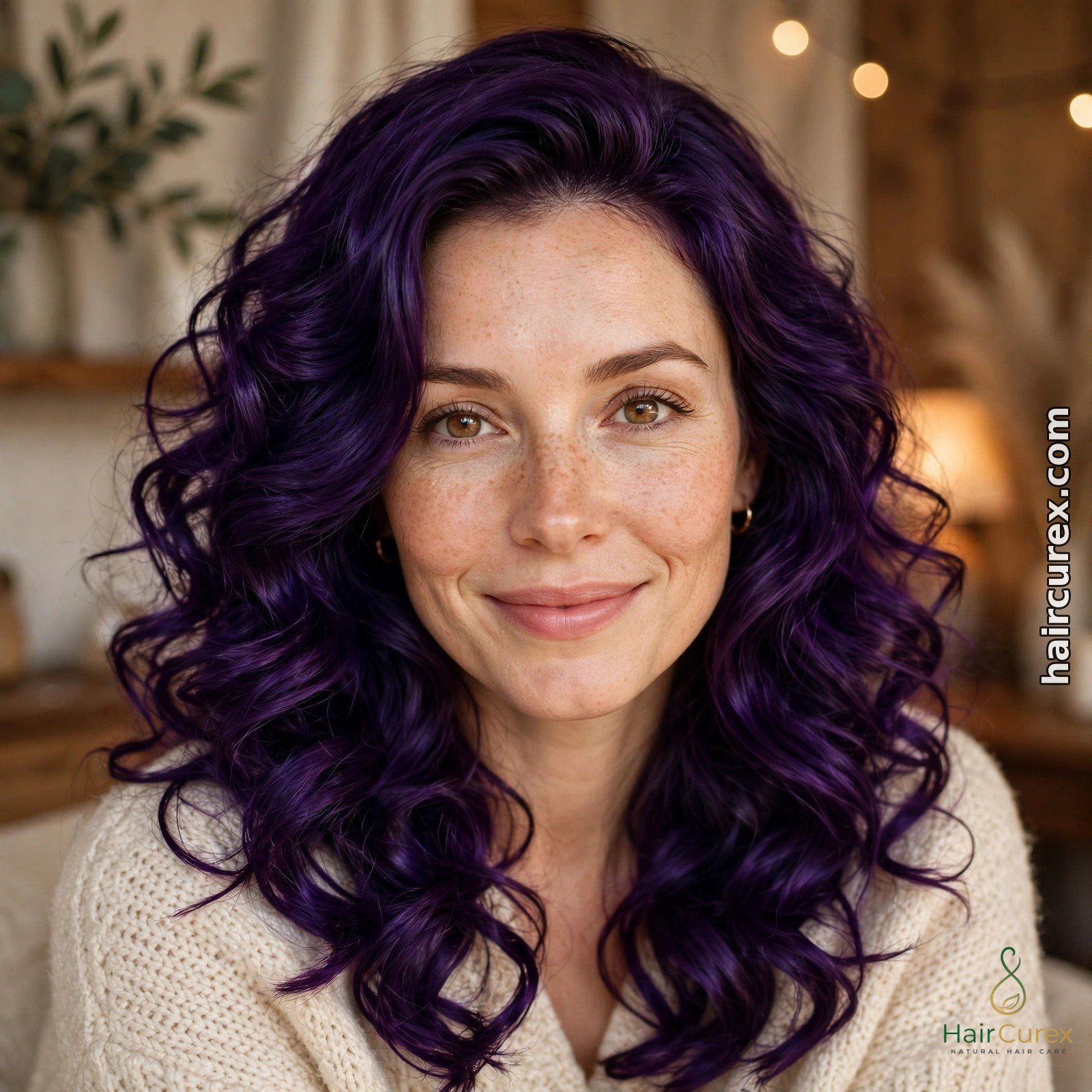
Even with perfect care, purple hair fades — usually to a soft lavender-grey after 3-4 weeks. Refreshing it is much easier than the first dye job, because the hair is already light and porous. A purple colour-depositing conditioner is the simplest option: it is a conditioner with purple pigment in it, you use it in place of your normal conditioner, leave it for 5-10 minutes, and it tops the colour back up. Use it once a week, or every other wash, depending on how fast your colour fades. It also works as a toner between full dye sessions.
A second option is a “colour bath”: mix a small amount of your original semi-permanent dye into a white conditioner, apply it to damp hair, leave it for 15-20 minutes, and rinse with cool water. This is cheaper than a full re-dye and gives a more even result than spot-touching faded patches. A full re-dye is only needed when the colour has faded unevenly — for example, the ends are still purple but the roots have washed back to blonde — or when you want to change the shade entirely.
When the purple has faded to a greyish tone you do not like, a purple shampoo can help in a different way: it is a toning shampoo that neutralises yellow tones in blonde hair, and on faded purple hair it can clean up the brassiness and make the remaining lavender look fresher. It does not add purple colour, so it is a complement to a colour-depositing conditioner, not a replacement for it. And if you are comparing purple with other fashion colours, the fading pattern is similar to red hair dye — both are high-maintenance colours that reward a cool-water, low-wash routine.
Common Purple Hair Mistakes to Avoid
The most common mistake is dyeing over hair that is still yellow. Purple and yellow are opposites on the colour wheel, so purple dye over a yellow base turns muddy or grey instead of vivid — that is the single biggest reason a purple dye job looks dull. If your bleached hair is still yellow, tone it first with a purple toner or a purple shampoo until it is pale and neutral, then apply the purple dye.
The second mistake is washing with hot water and shampooing every day. Hot water is the fastest way to wash purple dye out, and daily shampooing multiplies the damage. If you work out daily and need to wash often, rinse with water alone most days and use shampoo only once or twice a week. The third mistake is skipping the strand test. Purple looks different on every base colour, and a 15-minute strand test tells you the true result before the whole head is committed. The fourth is using a permanent dye for a first purple: permanent purple is harder to remove, it grows out with a visible line, and if you dislike the shade you are stuck with it for months. Semi-permanent dye lets you change your mind in a few weeks.
Finally, do not mix purple dye with conditioner in the first application to “make it pastel” unless you have tested the ratio. Diluting dye with conditioner does create pastel shades, but the ratio decides the result — too much conditioner and the colour barely shows, too little and it is not pastel at all. Test the mix on a strand first, and write down the ratio that worked so you can repeat it.
Frequently Asked Questions
Q: How long does purple hair last?
A: Semi-permanent purple hair usually lasts 4-6 weeks, with the brightest shades fading fastest. Lavender and pastel purples last 1-2 weeks, violet lasts 3-4 weeks, and deep purple lasts 4-6 weeks. Washing with cool water and sulfate-free shampoo, washing less often, and using a colour-depositing conditioner can stretch each of these by a week or two.
Q: Does purple hair need bleach?
A: Bright, pastel, and lavender purples need a pale blonde base, so yes — bleach is required on most natural hair colours. Dark violet, plum, and deep purple can show up on medium brown hair with little or no bleaching, but the result is subtler. On dark brown or black hair without bleach, only the darkest purple shades are visible.
Q: How do I stop purple hair from fading so fast?
A: Wash 1-2 times a week with cool water and sulfate-free shampoo, avoid hot water and daily shampooing, use a heat protectant and low heat settings when styling, protect hair from sun and chlorine, and refresh the colour every 3-4 weeks with a purple colour-depositing conditioner.
Q: Can I dye my hair purple over brown hair?
A: Yes, but only dark purple shades will show clearly without bleach. Deep violet, plum, and indigo add a visible purple cast to brown hair, especially in sunlight. For bright purple or lavender on brown hair, you need to lighten the hair to a pale blonde first.
Q: Is purple hair dye damaging?
A: Semi-permanent purple dye itself is gentle, because it does not contain the developer that opens the hair shaft — the damage, if any, comes from the bleaching needed to reach a light base. Keep bleaching sessions spaced apart, do strand tests, and deep-condition weekly to keep the hair healthy.