

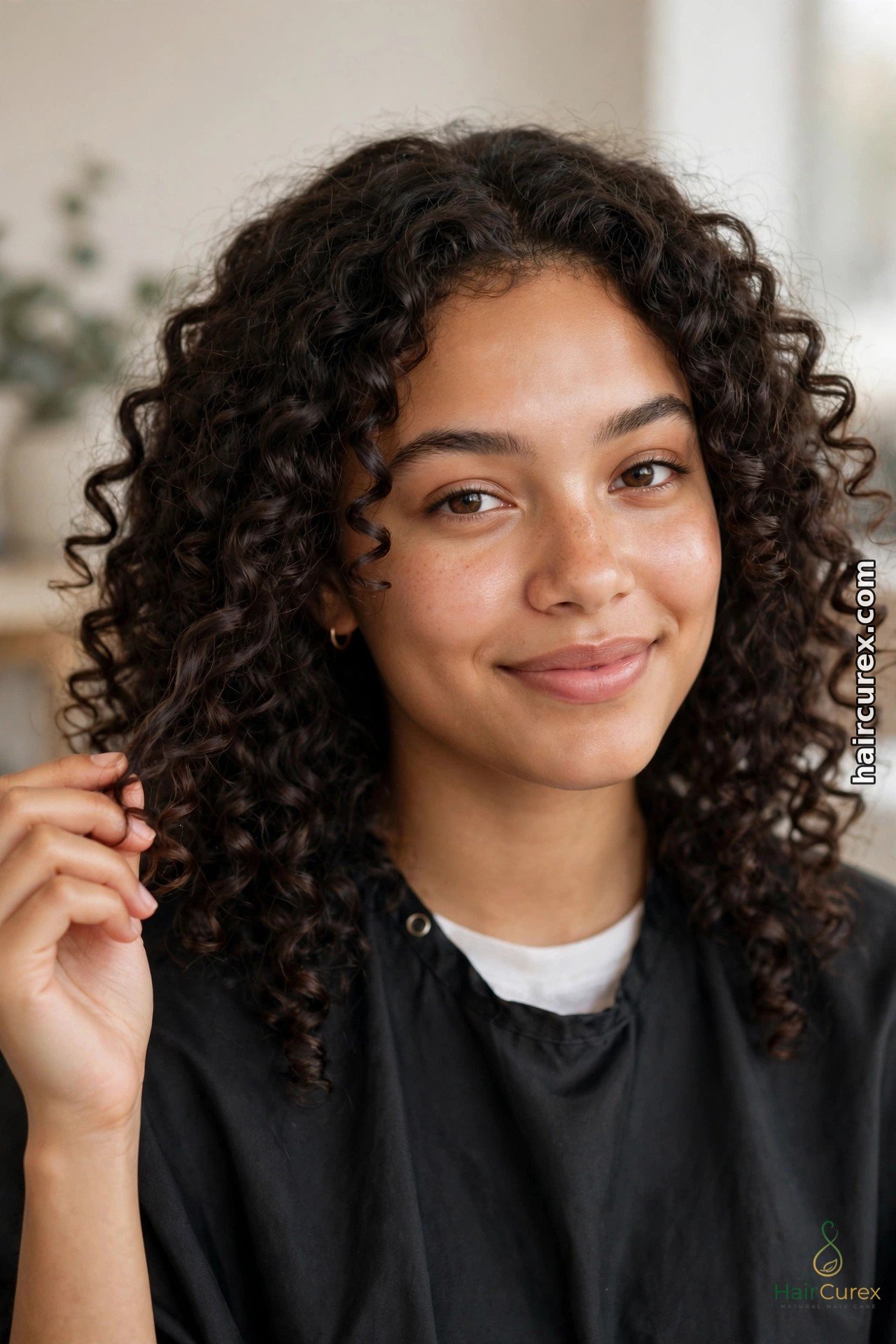
Quick answer: The curly girl method is a gentle, sulfate-free and silicone-free routine that helps natural curls and waves form their best pattern. You wash with a sulfate-free cleanser or conditioner, condition generously, style soaking-wet hair with gel, and dry without brushing or rough towels. Most beginners see softer, less frizzy hair within a few weeks, and full results usually take six to twelve weeks.
If your curls look flat, frizzy, or undefined, the problem is often not your hair but the routine. Everyday shampoos strip away the oils curly hair needs, and many styling products coat hair with silicones that hide dryness instead of fixing it. The curly girl method works with your hair, using gentle cleansing, plenty of moisture, and hands-off drying.
What Is the Curly Girl Method?
The curly girl method is a hair care approach for naturally curly or wavy hair, popularised by hairstylist Lorraine Massey in Curly Girl: The Handbook. Curly hair is naturally drier than straight hair because scalp oils struggle to travel down each twist and turn, and harsh cleansing and heavy products make that dryness worse.
The method removes the products and habits that damage curls and replaces them with gentler ones: no sulfates, no silicones, no drying alcohols, no heat styling, and no brushing dry curls. Instead, you cleanse gently, condition well, add moisture while the hair is still wet, and let curls dry in their natural shape.
It cannot change your curl type, make straight hair curly, or repair split ends. It can reveal the curl pattern you already have, reduce frizz, and improve moisture — but that comes from consistency, not any single product. Healthline offers a clear overview of the method and its core rules: Healthline’s guide to the curly girl method.
Who Is the Curly Girl Method For?
The method was designed for wavy, curly, and coily hair, roughly curl types 2A through 4C. If your hair has any natural bend, wave, or curl, you can benefit; straight hair (type 1) usually will not see much difference.
- Type 2A to 2C (wavy): Often the biggest surprise. Many people with wavy hair think their hair is straight and frizzy, when it is really under-moisturised waves weighed down by heavy products. Lightweight products usually bring out visible waves within weeks. Our guide to wavy hair explains how to tell if your hair is wavy.
- Type 3A to 3C (curly): The classic audience. Defined curls, springy texture, and a tendency to frizz in humidity. These hair types usually respond fastest. Our guide to 3A hair shows what this curl pattern looks like.
- Type 4A to 4C (coily): Tight coils that need the most moisture. The method still applies, but coily hair usually needs richer creams, heavier leave-in conditioners, and protective styling. Gentle handling matters most here, because coily hair is the most fragile.
The method also helps hair damaged by heat styling, colouring, or years of harsh shampoo, though the transition may take longer. Fine hair needs lightweight products; thick or coarse hair usually does better with richer products.
The Core Rules of the Curly Girl Method
1. No sulfates
Sulfates are strong detergents in many shampoos. They clean well but strip the natural oils curly hair needs to stay soft and defined. Use sulfate-free shampoos or low-poo cleansers instead. Hair may feel less squeaky clean at first; that is normal, and it means your hair is keeping more moisture.
2. No silicones
Silicones coat the hair and make it feel smooth, but most can only be removed with sulfates. Stop sulfates but keep silicones, and the coating builds up, blocks moisture, and weighs curls down. Check labels for words ending in -cone, -conol, or -xane, such as dimethicone and cyclopentasiloxane.
3. No drying alcohols or heat styling
Not all alcohols are bad. Fatty alcohols such as cetyl alcohol are moisturising and fine. Drying alcohols such as isopropyl alcohol and alcohol denat dry out curly hair, so avoid products listing them near the top. Flat irons and high-heat blow drying also damage the curl pattern. Diffusing on low or cool heat is allowed, but direct high heat is out.
4. No brushing dry hair
Brushing dry curls breaks up the curl pattern and creates frizz. Detangle only when the hair is wet and full of conditioner, using your fingers or a wide-tooth comb. Once styled, keep your hands out of your hair until it is fully dry.
5. Co-washing is allowed
Co-washing means washing with conditioner instead of shampoo. It suits many curly-haired people, especially those with dry or thick hair. Others prefer a gentle sulfate-free shampoo, or alternate between the two. Try both and see which leaves your scalp clean and your curls defined.
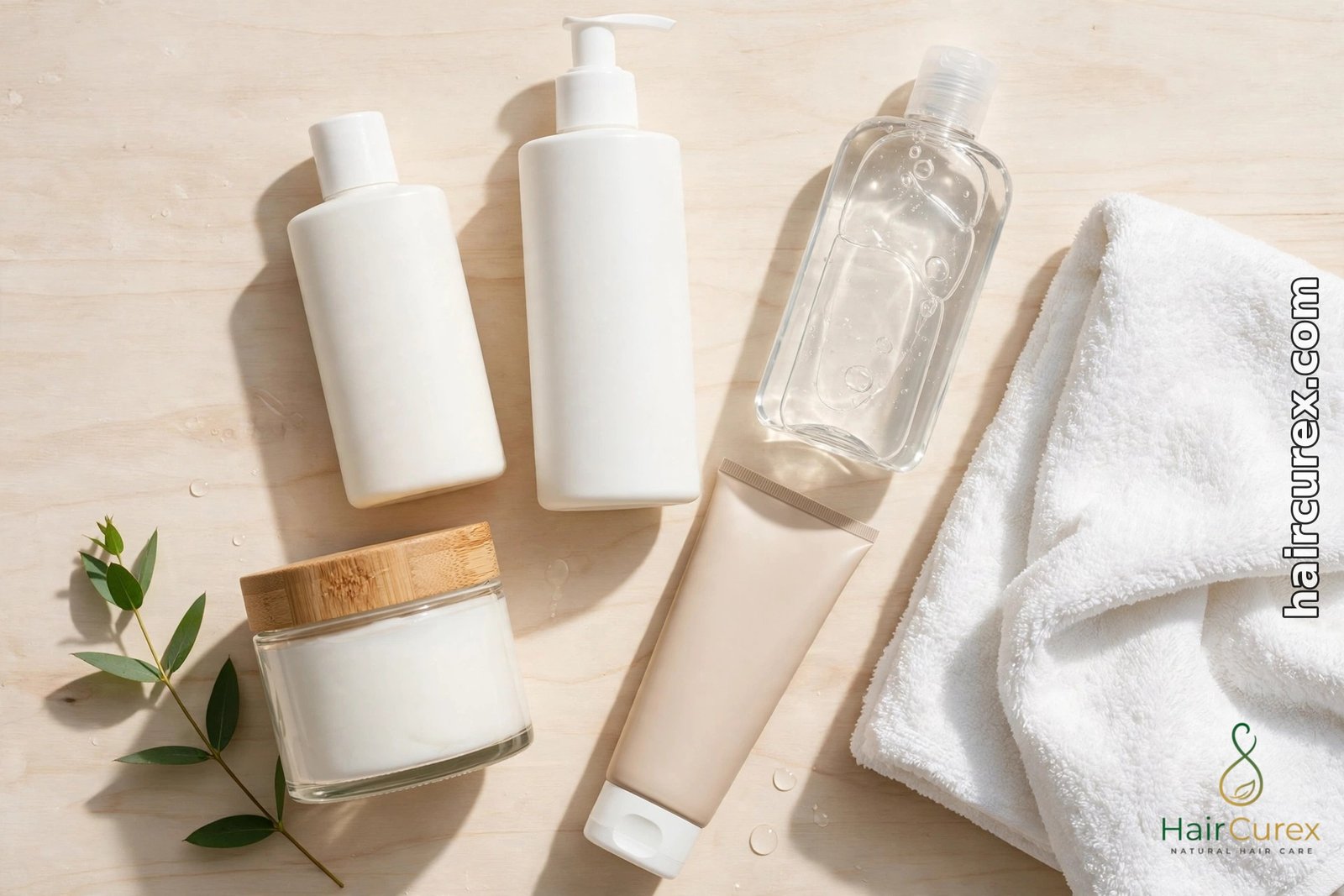
Curly Girl Method Approved vs Avoid Ingredients
| Ingredient type | Approved (use) | Avoid |
|---|---|---|
| Cleansers | Cocamidopropyl betaine, decyl glucoside, gentle sulfate-free surfactants | Sodium lauryl sulfate, sodium laureth sulfate, ammonium laureth sulfate |
| Conditioning agents | Cetyl alcohol, stearyl alcohol, behentrimonium methosulfate | Dimethicone, cyclopentasiloxane, amodimethicone, mineral oil |
| Moisturisers | Glycerin, aloe vera, shea butter, argan oil, jojoba oil | Isopropyl alcohol, ethanol, alcohol denat (drying alcohols) |
| Styling products | Water-based gels, flaxseed gel, light curl creams | Products with silicones, heavy waxes, or drying alcohols listed first |
| Protein (in moderation) | Hydrolysed wheat protein, keratin, silk protein | Overusing protein treatments, which can make hair stiff and brittle |
Protein needs balance: too much makes hair stiff and prone to breakage, too little leaves it limp and mushy when wet. Most people do well with a protein treatment once every four to six weeks and moisture-focused products the rest of the time.
Your Step-by-Step Wash Day Routine
Wash day is the heart of the curly girl method. It takes longer than a quick shampoo at first, but most people get faster with practice. Expect 30 to 45 minutes at the start, including drying time.
Step 1: Cleanse gently
Wet your hair fully with lukewarm water; hot water strips moisture. Apply a sulfate-free shampoo or cleansing conditioner to your scalp and massage with your fingertips for one to two minutes. The lengths get clean as the product rinses down. If co-washing, use plenty of conditioner on the scalp and rinse well. If your scalp feels itchy or coated after a few co-washes, use a gentle shampoo for a wash or two.
Step 2: Condition generously
Apply conditioner from mid-length to ends, using more than you think you need, and leave it in for three to five minutes. Detangle now, with the conditioner in, using fingers or a wide-tooth comb, starting at the ends. Rinse out most of it, but leave a little in if your hair is very dry.
Step 3: Apply leave-in conditioner
While your hair is still soaking wet, apply a pea-sized to coin-sized amount of leave-in conditioner, depending on thickness. Smooth it over the lengths with praying hands, pressing your palms together with the hair between them, so curls clump instead of separating into frizz. A good leave-in conditioner for curly hair makes a real difference here.
Step 4: Apply gel and squish to condish
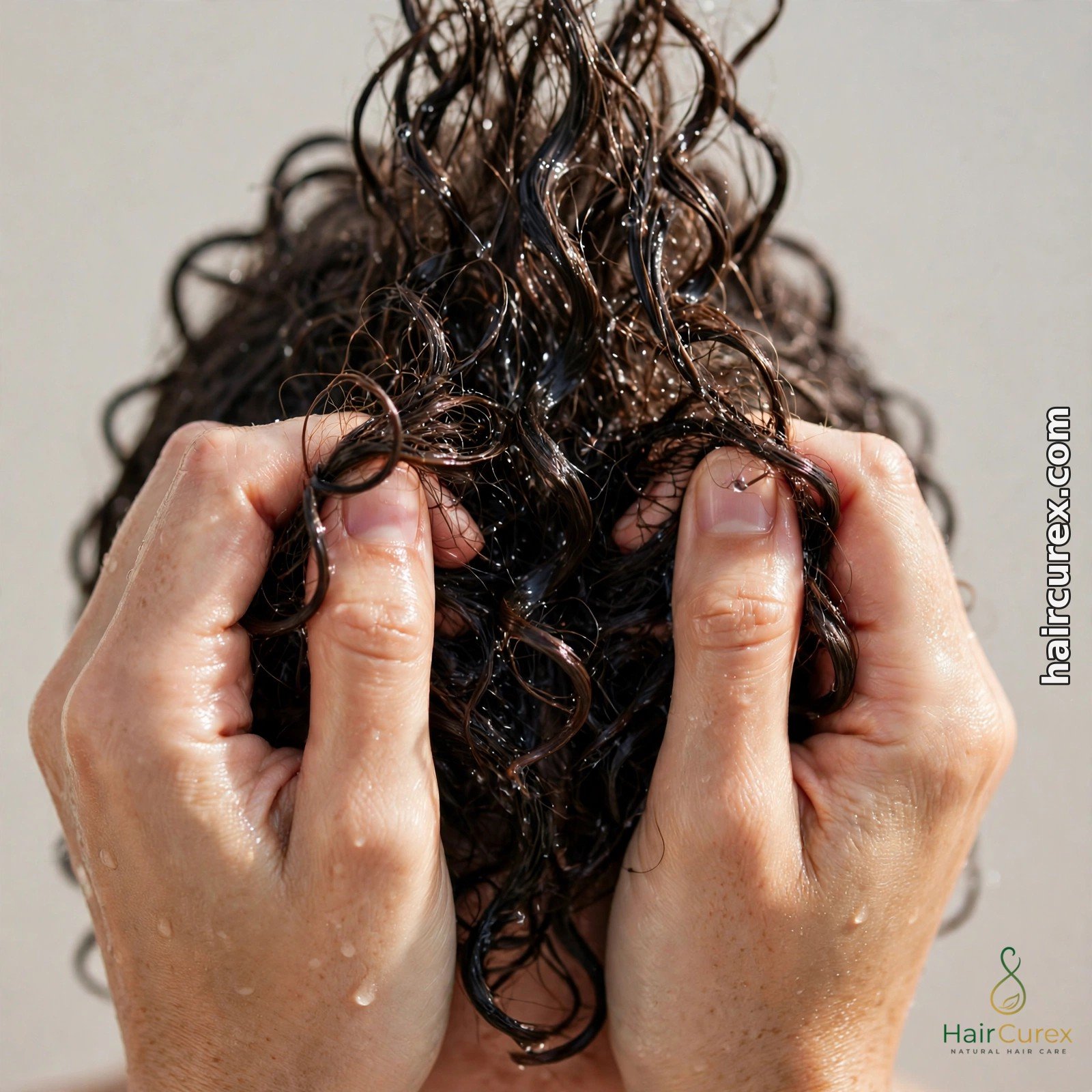
Apply gel generously to soaking-wet hair, then cup sections in your hands and scrunch upwards towards your scalp. This is squish to condish; the squishing sound tells you there is enough water in the hair. The gel forms a cast, a slightly crunchy coating, that locks the curl shape in place while it dries. You scrunch it out later.
Step 5: Plopping
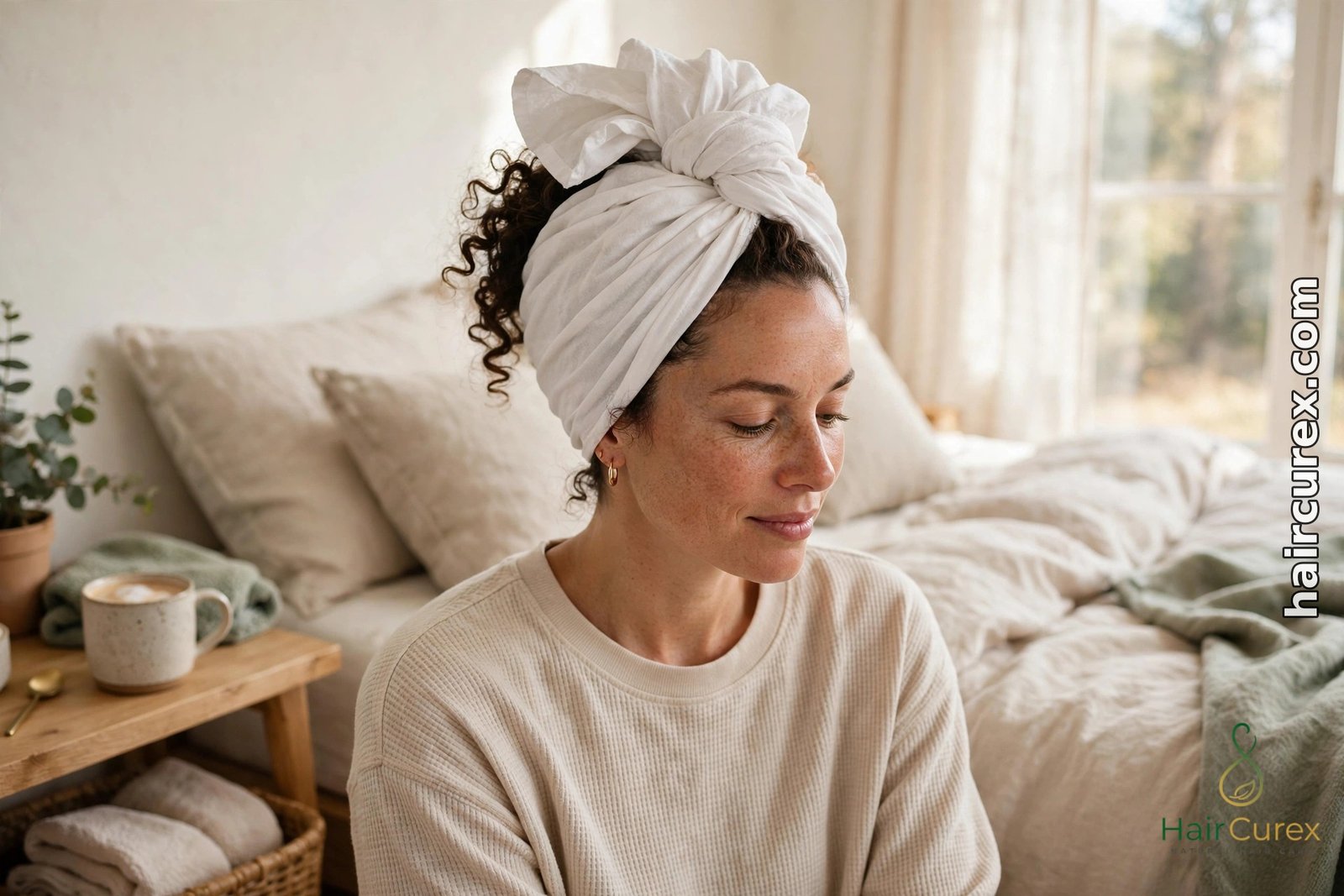
Plopping means wrapping wet hair in a cotton t-shirt or microfibre towel, never a rough terry towel. Lay the shirt flat, flip your hair onto it, and wrap and tie it at the back for 10 to 20 minutes. It removes excess water without disturbing the curl pattern. Do not leave it on for hours, as that can cause frizz and scalp discomfort.
Step 6: Diffuse or air dry
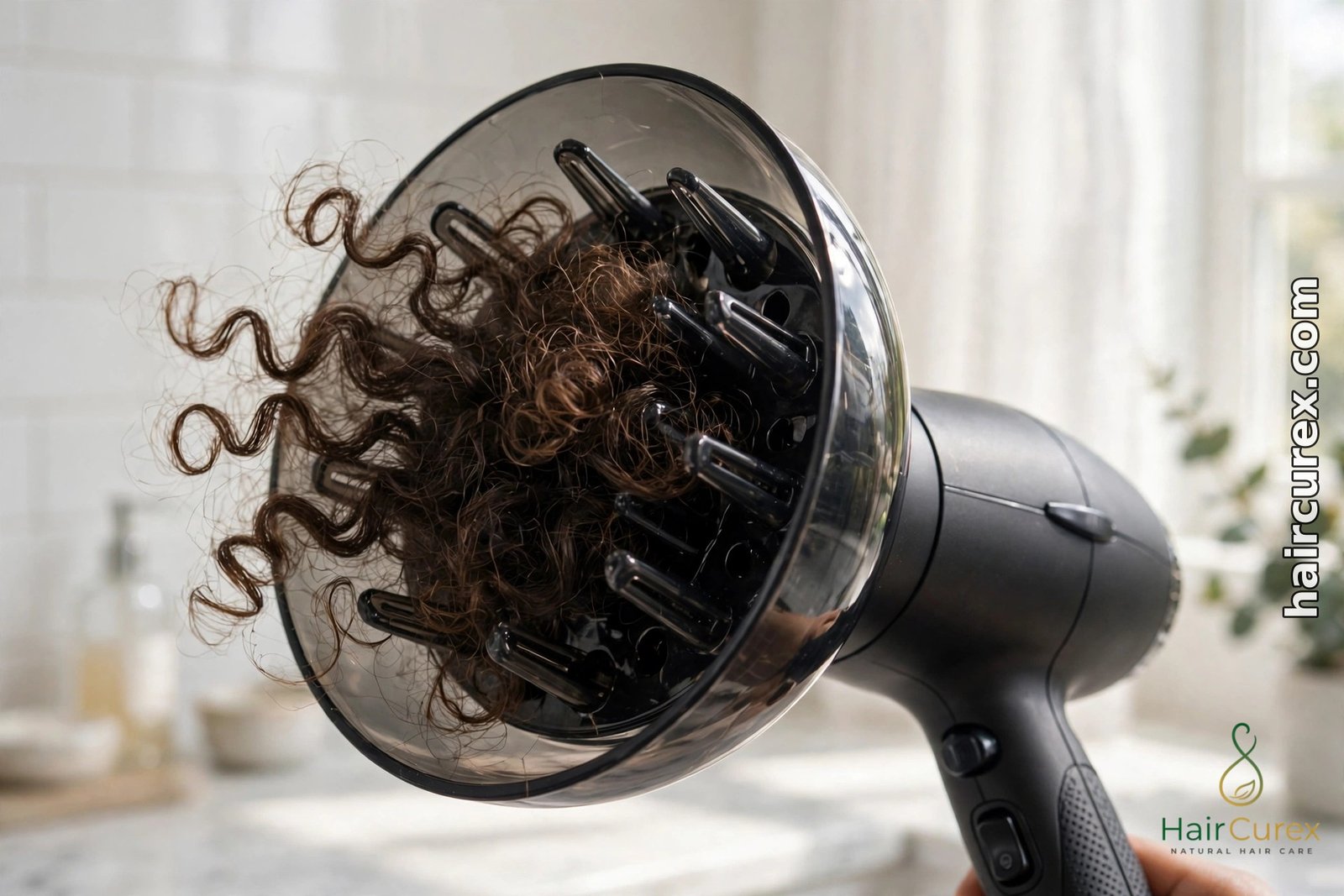
After plopping, air dry or diffuse on low heat, cupping curls into the diffuser bowl rather than blasting them. Do not touch your hair while it dries; touching wet curls is the fastest way to create frizz. Air drying takes one to three hours depending on thickness, so plan wash day around it.
Step 7: Scrunch out the crunch
Once your hair is 100 percent dry, and only then, scrunch the gel cast out with your hands, adding a drop of light oil to your palms first to reduce frizz. Curls should feel soft, springy, and defined. If they still feel crunchy, they are probably not fully dry yet; wait longer and try again.
How Often Should You Wash?
Most people wash every two to four days. Wavy hair often needs washing more often, because it gets weighed down faster. Thick, coily hair can often go four to seven days between washes. If your scalp itches, flakes, or feels coated, wash sooner.
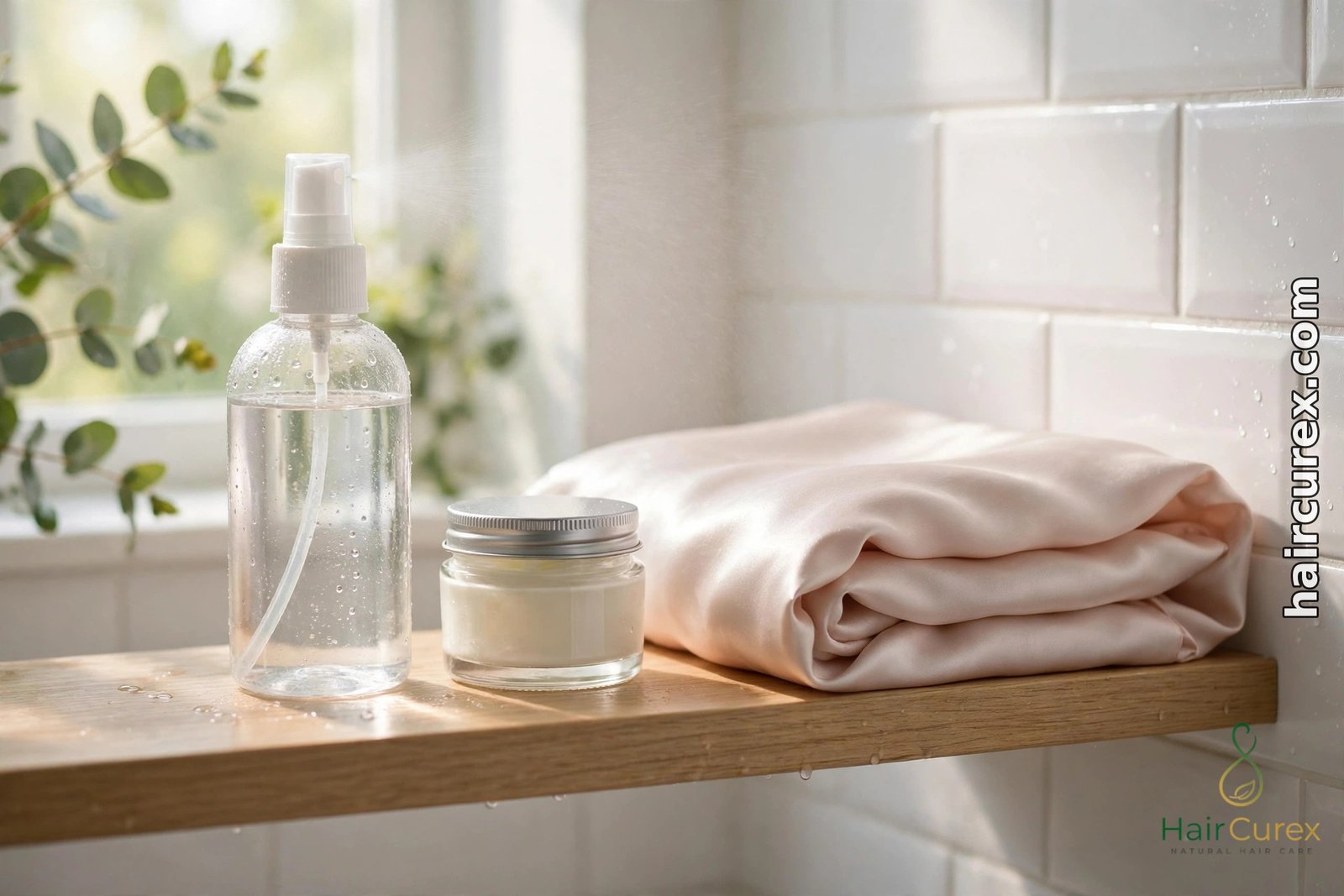
Between wash days, protect your curls at night. Sleep on a silk or satin pillowcase, or wrap your hair in a silk scarf. Many people also use the pineapple method: gather the hair loosely on top of the head with a soft scrunchie before bed, so curls are not flattened overnight.
Refreshing Curls on Day 2 and Day 3
Second-day curls do not need a full wash. Mist your hair with water until damp, smooth a little leave-in conditioner or curl cream over frizzy sections, then scrunch gently upwards and let it air dry. If sections have gone flat, wet them a little more and re-scrunch. If roots look oily, a little dry shampoo can help, but check the ingredients first.
The Transition Period: What to Expect
The transition period is when your hair recovers from years of sulfates, silicones, and heat. It usually lasts four to twelve weeks, and your hair may look worse before it looks better. That is normal, and it is why many people quit too early.
In the first two weeks, hair may feel greasy or coated as silicone build-up washes away and your scalp adjusts to gentler cleansing. One final clarifying wash with a sulfate shampoo before you start removes old build-up and gives you a clean starting point.
Between weeks three and six, frizz often peaks as your curl pattern reforms. By weeks six to twelve, most people notice softer hair, clearer definition, and less frizz. Take a photo on day one and compare it at week eight. Medical News Today explains the transition and the science in plain language: Medical News Today’s curly girl method overview.
Common Mistakes Beginners Make
- Using too much product. Start small; heavy product weighs waves down and leaves hair sticky.
- Brushing or combing dry hair. This breaks curl clumps and creates frizz instantly. Detangle only when wet and conditioned.
- Touching hair while it dries. Every touch disturbs the curl pattern. Leave it alone until completely dry.
- Skipping the gel cast. The crunch holds the curl shape while drying. Scrunch it out once dry for soft, defined curls.
- Using a terry towel. Rough towels rough up the cuticle and create frizz. Use a cotton t-shirt or microfibre towel.
- Expecting instant results. The method takes weeks, not days. Judging it after one wash is like judging a fitness routine after one workout.
- Copying someone else’s routine exactly. A routine for thick 3C curls may be far too heavy for fine 2A waves. Adjust products and amounts to your own hair.
- Ignoring frizz causes. If frizz stays bad after six weeks, check for hidden silicones and try a clarifying wash. Our guide on how to get rid of frizzy hair covers the most common causes.
How Much Does the Curly Girl Method Cost?
A basic starter routine needs only three things: a sulfate-free shampoo or cleansing conditioner, a silicone-free conditioner, and a gel. Most people start with drugstore products and spend roughly $20 to $40 in total. You can add a leave-in conditioner and a diffuser attachment later.
What costs more is time: wash days take longer at first, and the transition asks for patience. But the routine often saves money in the long run, because you stop buying heat tools and straightening treatments. If a product is marketed as a miracle cure at a high price, be sceptical. The routine, not the brand, is what makes the difference.
Curly Hair and Shrinkage
Shrinkage surprises many beginners. Curly hair looks much shorter dry than wet, because curls spring up as they dry. This is normal, and it is a sign of healthy, elastic curls. Hair shrinkage can make hair look 30 to 50 percent shorter, and in coily hair even more. Do not judge your length when it is dry and curly; stretch a single curl gently while wet to check your real length.
When to See a Professional
See a dermatologist if you notice sudden hair loss, bald patches, severe itching, sores, or flaking that does not improve after a few weeks of gentle washing. These can be signs of a scalp condition that a routine change alone will not fix.
See a curly hair specialist, a stylist trained in cutting curly hair dry, if you want a shape that works with your curl pattern. Ask for a stylist with experience in your curl type, and bring photos of your hair on a good wash day. If one section never forms curls, a stylist can check whether heat damage or uneven cutting is the cause.
Frequently Asked Questions
How long does the curly girl method take to work?
Most people notice softer, less frizzy hair within two to four weeks. Full results, including a clearer curl pattern and better definition, usually take six to twelve weeks. Hair with heat damage or years of silicone build-up may take longer.
Can I use shampoo on the curly girl method?
Yes. You can use a sulfate-free shampoo, often called a low-poo, or co-wash with conditioner. Both are allowed. Choose a gentle shampoo if your scalp gets oily or itchy, and try co-washing if your hair is very dry.
Does the curly girl method work for wavy hair?
Yes, and wavy hair often shows the biggest change. Many people with type 2 hair think their hair is straight and frizzy, when it is actually waves weighed down by heavy products. Use lightweight products and the same wash-day steps.
Why is my hair frizzy after starting the curly girl method?
Frizz in the first few weeks is usually part of the transition, as old build-up washes away and your curl pattern reforms. It can also come from touching wet hair, using a rough towel, or skipping gel. If it continues after six weeks, check for hidden silicones and drying alcohols.
Do I have to give up heat styling completely?
High heat from flat irons and curling wands is not part of the method, because it damages the curl pattern. Diffusing on low or cool heat is allowed. If you occasionally straighten your hair, expect your curls to need a few wash days to recover.
Is the curly girl method expensive?
No. A starter routine needs only a sulfate-free shampoo or cleansing conditioner, a silicone-free conditioner, and a gel, usually about $20 to $40 at drugstore prices. You do not need expensive branded products.