


Quick answer: Can not washing your hair cause hair loss? Not directly — skipping washes does not kill hair follicles or cause permanent hair loss on its own. But washing too rarely lets oil, sweat, dead skin, and styling products build up on the scalp, and that buildup can inflame the scalp, trigger or worsen seborrheic dermatitis (dandruff), and increase shedding. The hairs you see after a long gap between washes are mostly hairs that were already ready to shed — they just all come out at once. The fix is simple: wash as often as your scalp type needs, keep the scalp clean without over-stripping it, and see a dermatologist if shedding lasts more than a few months.
It is a worry that crosses almost everyone’s mind at some point. You skip a few washes, your scalp feels greasy and itchy, and then the next time you finally shampoo, the drain looks full of hair. The obvious conclusion feels like the lack of washing caused the hair loss. Social media makes the fear worse: “no-poo” routines, hair-training trends, and warnings that shampoo strips your hair all pull in opposite directions, leaving you unsure whether washing more or washing less is the problem. This guide sorts out the myth from the facts, explains what actually happens on an unwashed scalp, and gives you a washing schedule that keeps both your hair and your scalp healthy.
Can Not Washing Your Hair Cause Hair Loss? What the Evidence Says
The short version is reassuring: there is no good evidence that simply washing your hair less often causes true hair loss. Hair loss — the kind where follicles stop producing hair — is driven by genetics, hormones, medical conditions, medications, and severe stress, not by your shampoo schedule. Dermatologists are clear on the related point: washing your hair does not cause hair to thin, and the hairs that come out during a wash were hairs that were already destined to fall out. You normally shed 50 to 100 hairs a day, according to the American Academy of Dermatology (AAD), and those shed hairs have to go somewhere — if you do not wash or brush for days, they stay tangled in the rest of your hair and then all appear at once.
That does not mean washing frequency is irrelevant. Your scalp is living skin, and like the skin on your face, it needs regular cleaning. When you go too long between washes, sebum (your scalp’s natural oil), sweat, dead skin cells, and product residue pile up around the follicles. That buildup can clog follicles, irritate the skin, feed the yeast that causes dandruff, and create the itching and scratching that damages hair at the root. In that indirect way, not washing enough can contribute to extra shedding — but it is the scalp condition doing the damage, not the skipped shampoo itself. The distinction matters, because it tells you where to focus: a clean, calm scalp, not a magic number of washes per week.
It is also worth knowing the opposite myth. Washing your hair every day does not cause hair loss either. Dermatologists say daily washing is perfectly safe for oily scalps when you use a gentle shampoo. The real risk of over-washing is dryness and breakage — stripped, brittle strands that snap — which is not the same as hair falling out from the root. Both extremes are about hair health, not about follicles shutting down.
Why Skipping Washes Looks Like Hair Loss
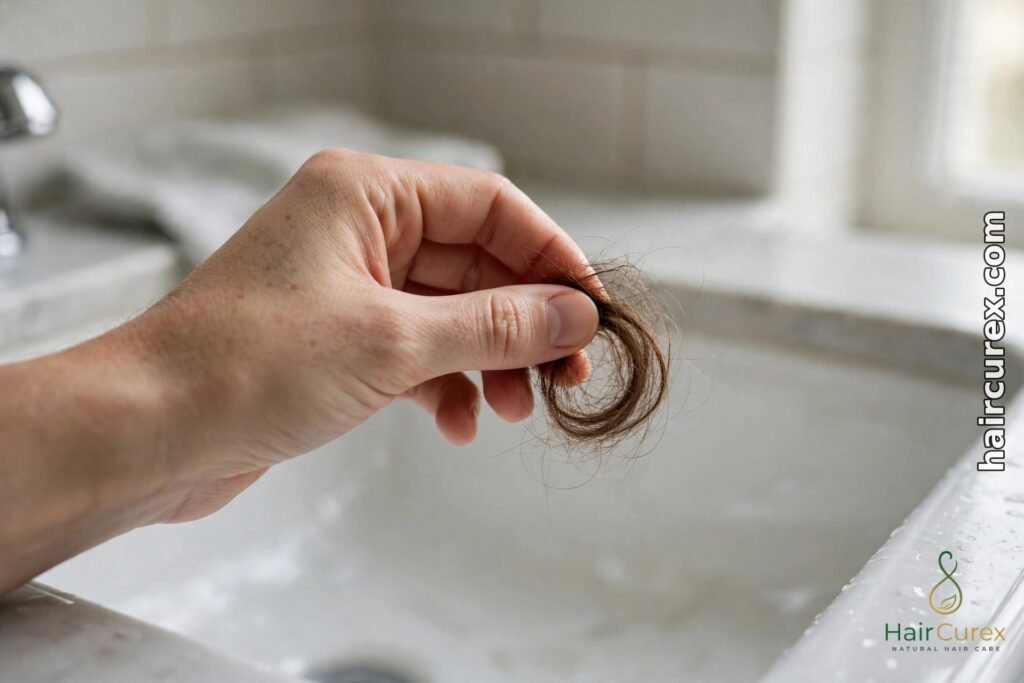
The most common reason people blame infrequent washing is the shower-drain shock. Here is what is actually happening. Every hair on your head cycles through growth, rest, and shedding phases, and about 10 to 15 percent of your hairs are in the shedding phase at any time. When you wash daily, shed hairs rinse away a few dozen at a time and you barely notice them. When you wash once a week, a whole week’s worth of shed hairs — potentially 350 to 700 — come out in a single wash. It looks dramatic, but the total amount shed over the week is the same. You are seeing a week’s shedding in one go, not a week’s worth of extra loss.
The same effect happens with brushing. People who rarely brush or wash between washes trap shed hairs in their style, braids, or curls. The first proper wash and detangle releases them all together. If the hairs coming out have a small white bulb at the root, that is a normal shed hair that finished its cycle — it is not a sign of damage. Broken hairs, by contrast, are short, have no bulb, and usually snap from dryness or rough handling rather than shedding from the root.
There is one real way skipping washes can increase shedding, and it is mechanical. A greasy, unwashed scalp makes hair clump and tangle more easily, and detangling matted, oily hair takes more force. Rough brushing, tight pulling, and ripping through tangles can pull out hairs that were not ready to shed and break others mid-shaft. Keeping your scalp reasonably clean keeps hair smoother and easier to detangle, which means less pulling and less breakage. Our guide to telling the two apart explains the signs in detail: hair shedding vs hair loss — how to tell the difference.
What Happens When You Don’t Wash Your Hair Enough
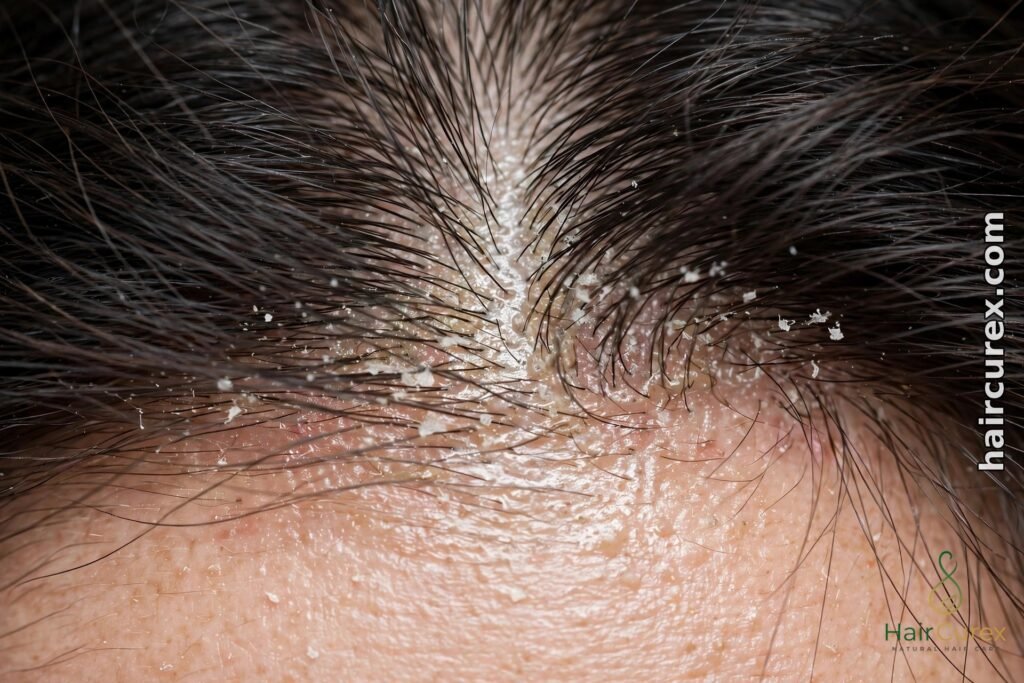
Your scalp produces sebum every day, and the amount varies a lot from person to person. On an unwashed scalp, that oil mixes with sweat, dead skin cells, dust, and leftover styling products. Within a few days the mixture forms a visible, waxy buildup along the parting and at the roots. The scalp starts to feel heavy, itchy, and greasy, hair loses volume and looks limp, and in warm weather the buildup can develop a stale, sour smell. For most people this stage is uncomfortable but harmless, and one good wash resets it.
Left longer, the problems deepen. The buildup creates a warm, oily environment where Malassezia — a yeast that naturally lives on everyone’s scalp — multiplies. In some people that overgrowth triggers inflammation: redness, itching, and the yellowish, greasy flakes of seborrheic dermatitis. The itching leads to scratching, and scratching damages the scalp surface and can dislodge hairs and break new growth. Product buildup also coats the hair shaft itself, making hair look dull and feel coated, and it can block the scalp enough that treatments such as minoxidil or scalp serums cannot reach the skin properly.
How quickly this happens depends on your scalp. An oily scalp can reach uncomfortable buildup in two to three days, while a dry, curly, or coily scalp may go a week or more before buildup becomes a problem — partly because sebum travels slowly down curly hair and partly because these hair types need their natural oils. Exercise, heat, humidity, hats, and heavy styling products all speed buildup up. There is no single “too long” that applies to everyone, which is why the right schedule is the one that matches your scalp, not someone else’s routine.
Seborrheic Dermatitis: When a Dirty Scalp Really Does Cause Shedding
Seborrheic dermatitis is the one scalp condition where washing too rarely can genuinely contribute to hair loss. It is a common, chronic inflammatory condition that causes flaking, redness, and itching on oily areas of the scalp. The flakes are often yellowish and greasy, unlike the dry white flakes of simple dry scalp, and the scalp can feel sore or burning. The condition is driven by the Malassezia yeast feeding on scalp oil, and infrequent washing lets both the oil and the yeast build up, which makes flare-ups more likely and more severe.
Can it cause hair loss? The inflammation itself does not usually destroy follicles, and hair loss from seborrheic dermatitis is usually temporary — but it is real. Chronic inflammation around the follicles can push more hairs into the shedding phase, a process called telogen effluvium, and constant scratching can damage follicles and break hairs. The good news is that treating the condition usually reverses the shedding: regular washing with an anti-dandruff shampoo containing ketoconazole, selenium sulfide, zinc pyrithione, or coal tar reduces the yeast, calms the inflammation, and lets the shedding settle over a few months. Healthline explains the connection between the condition and shedding here: Healthline: seborrheic dermatitis and hair loss.
If you have stubborn flakes, redness, or itching that does not improve with a few weeks of regular washing and an anti-dandruff shampoo, do not just wash harder — see a dermatologist. Seborrheic dermatitis can look similar to scalp psoriasis, eczema, or a fungal infection, and each needs different treatment. A dermatologist can also check whether your shedding has another cause entirely, such as a thyroid problem, iron deficiency, or hormonal hair loss, which no shampoo schedule will fix. Our guide to choosing the right wash for this situation is here: best shampoo for hair fall and dandruff.
How Often Should You Wash Your Hair?
There is no universal number, and dermatologists say so plainly: how often you wash should be based on how much oil your scalp produces, your hair type, and your lifestyle. The AAD’s guidance is simple — if your hair gets oily quickly, wash it more often; very curly or coily hair is less oily and can be washed less often; chemically treated hair is usually washed less often too. The goal is a scalp that feels clean and comfortable, not a schedule copied from someone with completely different hair. The AAD’s healthy hair tips are a good baseline: American Academy of Dermatology: healthy hair tips.
| Hair / scalp type | Typical washing frequency | Why |
|---|---|---|
| Oily scalp, fine or straight hair | Daily or every other day | Sebum spreads fast on straight, fine hair; hair looks greasy within a day |
| Normal scalp, wavy hair | Every 2 to 3 days | Moderate oil production; washing 2–3 times a week keeps the scalp clean without drying the lengths |
| Dry scalp, curly hair (type 3) | 2 times a week | Curls need their natural oils; overwashing strips moisture and causes frizz |
| Very dry, coily hair (type 4) | Once a week or every 2 weeks | Sebum travels slowly down tight curls; co-washing or rinsing between washes helps |
| Active lifestyle / daily sweating | Rinse or wash after workouts | Sweat traps dirt and salt on the scalp; a water rinse or gentle wash prevents buildup |
| Dandruff or seborrheic dermatitis | 2 to 3 times a week with medicated shampoo | Regular washing controls yeast and flakes; leaving it longer worsens flare-ups |
| Color-treated or bleached hair | 2 to 3 times a week | Less washing protects color and limits dryness, but the scalp still needs cleaning |
Use your scalp as the guide, not the calendar. Wash sooner if your scalp itches, your roots look greasy or clumped, your hair has lost its volume, or you can see flakes or buildup along the parting. You are probably washing enough if your scalp feels comfortable between washes and your hair keeps its shape and shine.
If you are stretching washes to “train” your scalp to produce less oil, know that the evidence for oil training is weak — sebum production is mostly set by hormones and genetics, and stretching washes too far usually just means more buildup and itching. A practical middle ground is to stretch by one day at a time and stop at the point where your scalp still feels clean.
Healthline’s dermatologist-backed guide to washing frequency covers the same ground: Healthline: how often should you wash your hair.
How to Wash Your Hair the Right Way
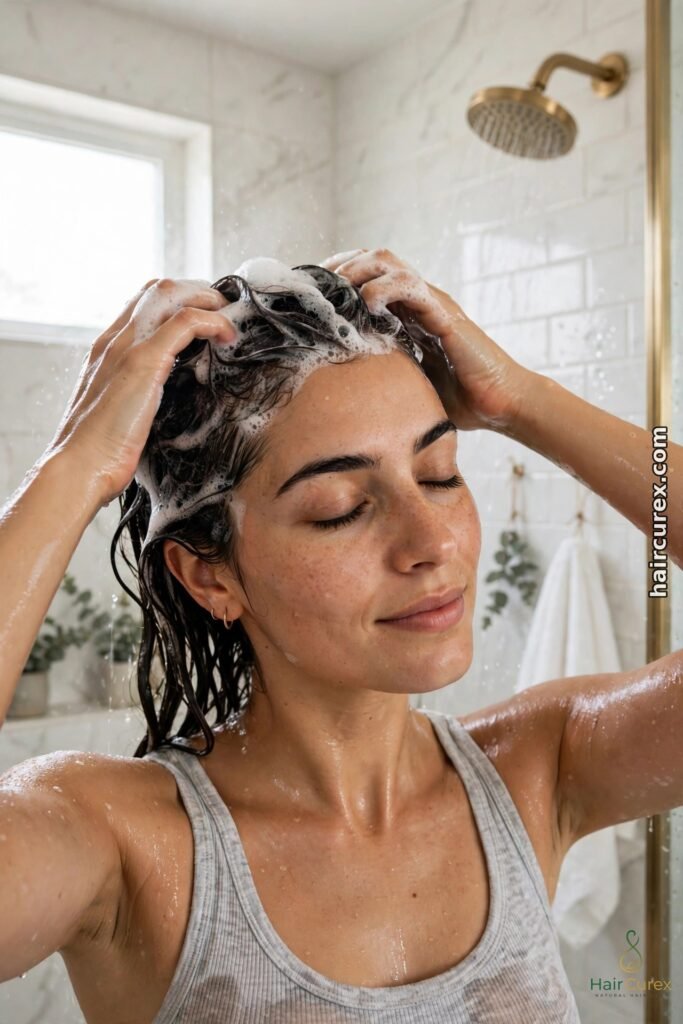
Washing well matters as much as washing often. The shampoo is for your scalp, not your lengths: massage it into the scalp with your fingertips for 30 to 60 seconds, using gentle circular motions. That massage lifts buildup and boosts blood flow, and it is the same technique behind the scalp-massage routines studied for hair thickness — our guide explains how to do it properly: scalp massage for hair growth. Do not scrub with your nails, which can scratch the scalp and cause irritation. Let the lather run down the lengths as you rinse; the ends rarely need direct shampooing and over-washing them causes dryness.
Use lukewarm water, not hot. Hot water strips sebum aggressively and leaves both scalp and hair drier, which can make the scalp overcompensate with more oil and can worsen flaking. Rinse thoroughly — leftover shampoo residue is itself a form of buildup and can irritate the scalp. Conditioner goes on the mid-lengths and ends only, never on the scalp, unless the product is specifically made for scalp use. A weekly clarifying wash helps if you use a lot of styling products: a detox shampoo removes the residue that regular shampoo leaves behind.
Between washes, dry shampoo can absorb oil and add volume, but it is a bridge, not a replacement. Used for several days in a row without a real wash, dry shampoo adds its own powdery buildup to the scalp, and that buildup can clog follicles and worsen itching. Our full guide covers how often it is safe to use and when it becomes a problem: dry shampoo — how it works and whether it is bad for your hair. Brushing daily with a clean brush also helps: it distributes sebum along the hair, removes shed hairs gradually instead of all at once, and keeps tangles from forming.
Not Washing Enough vs Real Hair Loss: How to Tell
The worry is understandable, so here is a simple way to tell whether your problem is a washing schedule or something that needs a doctor. Buildup-related shedding improves quickly once you wash regularly — within a few weeks the itching eases, the flakes reduce, and the amount of hair in the drain returns to normal. Real hair loss follows a different pattern: it continues for months regardless of how you wash, it shows up as widening parts, a shrinking ponytail, a receding hairline, or visible scalp, and it does not improve with a better shampoo routine.
| Sign | Likely a washing / buildup issue | Likely real hair loss — see a dermatologist |
|---|---|---|
| Shedding amount | A big clump after a long gap, then normal between washes | Steadily more than 100 hairs a day for months |
| Scalp feel | Greasy, itchy, flaky — improves with washing | Often feels normal; itching is not the main symptom |
| Visible change | Hair looks limp and dull but density is unchanged | Widening part, thinner ponytail, visible scalp, receding hairline |
| Timeline | Starts after stretching washes; eases within weeks of regular washing | Gradual over months, or sudden heavy shedding after illness, stress, or medication |
| Hairs lost | Full-length hairs with a white bulb; more tangling and breakage | Miniaturized, shorter, thinner hairs; bald patches or pattern thinning |
Keep a simple check for two to four weeks: wash on a regular schedule suited to your scalp, note how much hair comes out at each wash, and take a photo of your parting and hairline in the same light once a week. If shedding stays heavy, if you see your scalp more than before, or if you notice patches, that is the point to stop experimenting and book a dermatologist. Photos are more reliable than memory for slow changes, and they give the dermatologist something concrete to compare.
When to See a Dermatologist
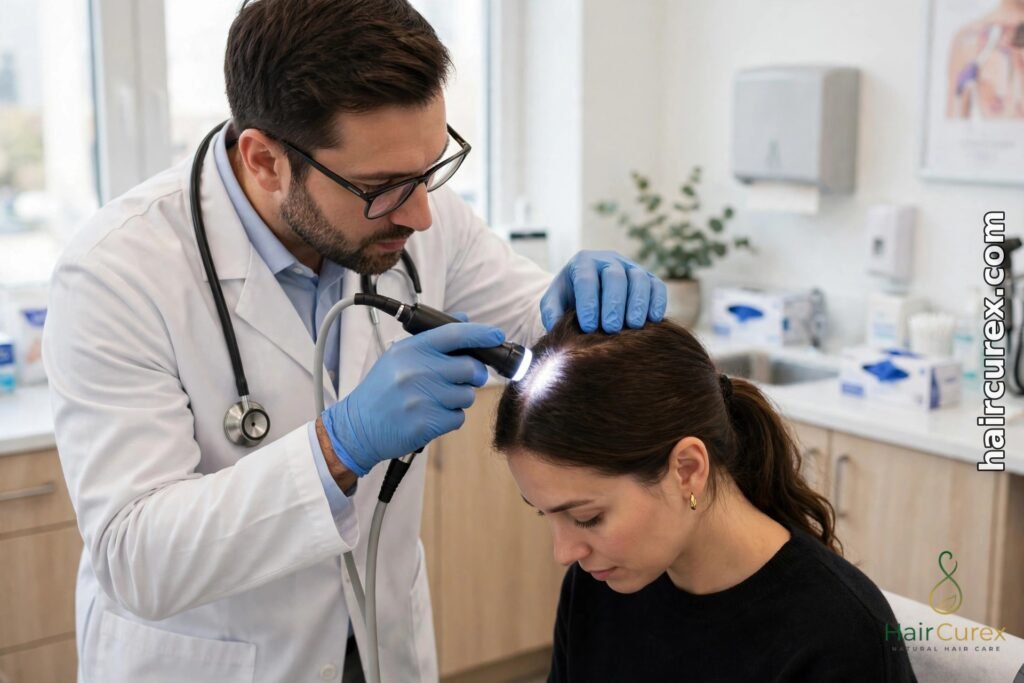
Most washing-related scalp problems clear up with a better routine, but some signs need medical attention. See a dermatologist if shedding stays heavy for more than three months, if you notice bald patches, a rapidly widening part, or a receding hairline, or if your scalp is red, sore, blistered, or bleeding. See one promptly if hair loss starts suddenly after an illness, a major stress, a new medication, or childbirth — these are classic triggers of telogen effluvium, which usually recovers but is worth confirming.
Also seek help if anti-dandruff shampoo and regular washing do not control flakes and itching within four to six weeks. That can mean the problem is not simple dandruff but psoriasis, eczema, a fungal infection, or contact dermatitis from a hair product, and each needs a different treatment. A dermatologist can examine your scalp with a dermoscope, check the pattern and density of your hair, and order blood tests for iron, thyroid, or vitamin D if needed. Bring a list of your products and your washing routine to the appointment — it saves time and helps the dermatologist rule out the simple causes first.
Frequently Asked Questions
Can not washing your hair cause hair loss?
Not directly. Skipping washes does not destroy hair follicles or cause permanent hair loss. But washing too rarely lets oil, dead skin, and product residue build up, which can inflame the scalp, worsen seborrheic dermatitis, and increase shedding. That shedding is usually temporary and improves once you wash regularly.
How long can you go without washing your hair before it becomes a problem?
It depends on your scalp. Oily scalps can develop uncomfortable buildup in 2 to 3 days, while dry, curly, or coily hair may go a week or more. The warning signs are itching, visible flakes or buildup along the parting, greasy clumped roots, and a stale smell — wash when those appear rather than following a fixed number of days.
Why does so much hair come out when I finally wash after a week?
You are seeing a week’s worth of normal shedding all at once. You shed 50 to 100 hairs a day, and hairs that are ready to fall out stay trapped in unwashed, unbrushed hair until you wash. A week’s worth can be 350 to 700 hairs in one wash, which looks alarming but is usually normal.
Does washing your hair every day cause hair loss?
No. Dermatologists say daily washing is safe for oily scalps when you use a gentle shampoo, and washing does not make hair thin. The hairs that come out in the wash were already ready to shed. Over-washing can dry hair out and cause breakage, which is different from hair falling out at the root.
Can seborrheic dermatitis from not washing cause permanent hair loss?
Usually not. The shedding linked to seborrheic dermatitis is typically temporary and reverses once the inflammation is treated with regular washing and an anti-dandruff shampoo. But long-term, untreated inflammation and constant scratching can damage follicles, so persistent flakes, redness, and itching are worth getting checked by a dermatologist.
How often should I wash my hair to keep my scalp healthy?
Match your scalp, not a trend. Oily or fine hair usually needs washing daily or every other day; normal hair every 2 to 3 days; curly hair twice a week; coily hair once a week or every two weeks. If you have dandruff, wash 2 to 3 times a week with a medicated shampoo. Wash sooner whenever your scalp itches or looks greasy.