

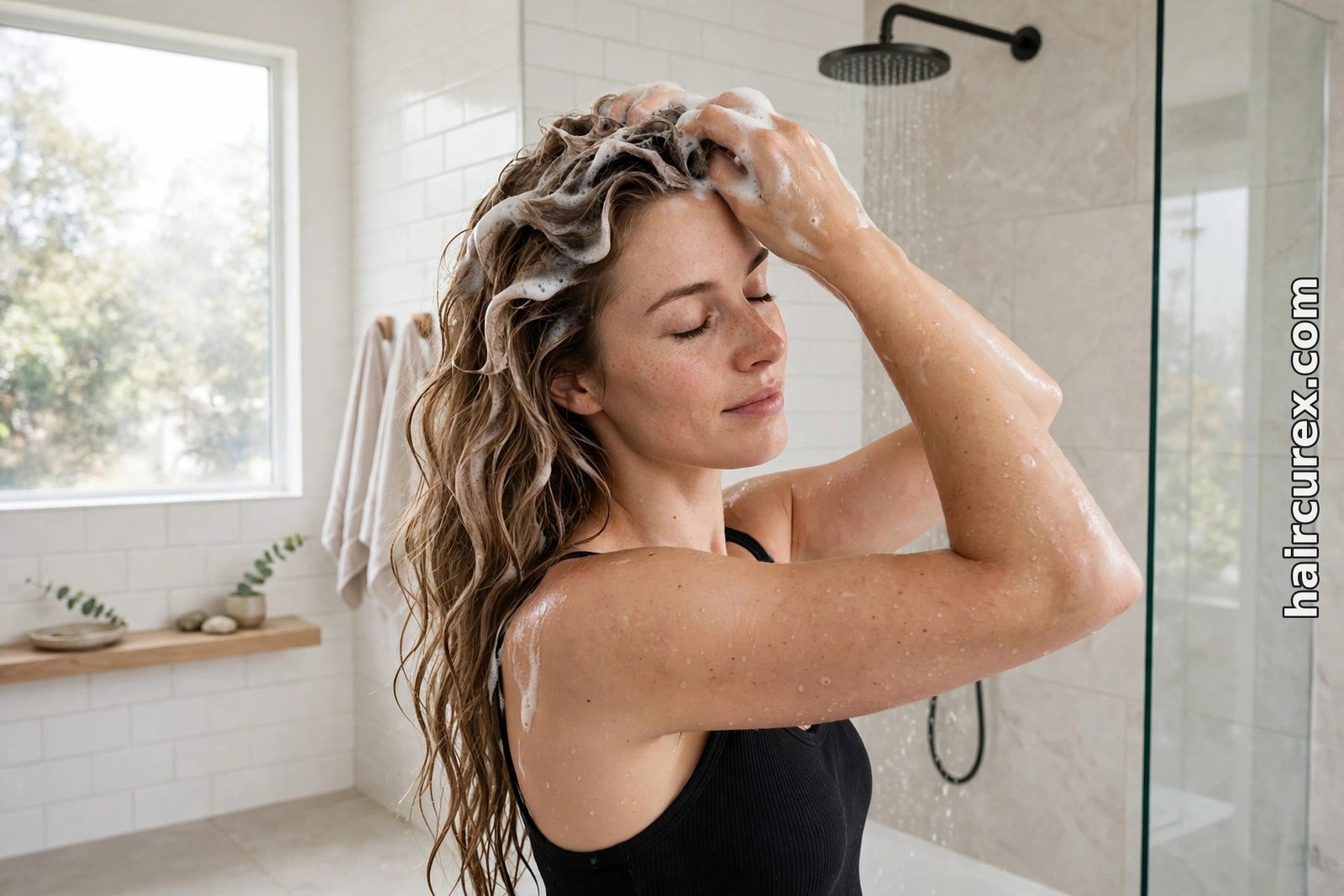
A gentle shampoo is a cleanser designed to remove dirt, oil and product buildup from your scalp and hair without stripping away the natural oils that keep both healthy. It usually relies on milder surfactants — the cleaning agents in shampoo — instead of harsh sulfates, and it skips or limits strong fragrances, drying alcohols and heavy silicones. A gentle shampoo suits anyone with a dry, itchy or sensitive scalp, color-treated or chemically processed hair, curly or coily textures, or hair that is washed often, but it is not a magic fix: it cleans less aggressively, so very oily scalps and heavy styling buildup may still need an occasional deeper cleanse. The rest of this guide explains how to tell a truly gentle formula from a marketing label, which ingredients to look for and which to avoid, and how to pick one for your hair type.
What Makes a Shampoo “Gentle”?
“Gentle” is not a regulated term, so any brand can print it on a bottle. What actually makes a shampoo gentle is the formula underneath the label. The single biggest factor is the surfactant system. Strong anionic surfactants such as sodium lauryl sulfate (SLS) and sodium laureth sulfate (SLES) create big, rich lather and clean aggressively, but they can also lift away the scalp’s protective sebum and leave hair feeling rough or squeaky. Milder alternatives — sodium cocoyl isethionate, cocamidopropyl betaine, decyl glucoside, coco-glucoside and sodium lauroyl sarcosinate — clean effectively while leaving more of the scalp’s natural moisture intact. A genuinely gentle shampoo usually leads with one or more of these milder cleansers and keeps any strong surfactant low on the ingredient list.
The second factor is what the formula leaves out. Heavy fragrance blends, essential oils at high concentrations, drying alcohols such as denatured alcohol, and harsh preservatives are common irritants for sensitive scalps. A gentle shampoo tends to be fragrance-free or only lightly scented, and it avoids those drying alcohols. The third factor is pH. Hair and scalp sit happiest near a mildly acidic pH of around 4.5 to 5.5, and formulas in that range help keep the hair cuticle smooth. Some brands state pH on the label; if yours does not, the way your hair feels after washing — soft and manageable rather than rough and tangled — is a useful everyday test.
None of this means lather equals cleaning power. A gentle shampoo often produces less foam than a sulfate shampoo, and that is normal. Low lather is not a sign that your hair is still dirty; it is a sign that the surfactants are milder. If you judge a shampoo by its foam, you will keep choosing the harshest bottle on the shelf.
Gentle Shampoo: Who Needs One?
A gentle shampoo is worth switching to if any of these sound familiar. First, a sensitive or reactive scalp: itching, tightness, redness or flaking after washing often improves when harsh cleansers and strong fragrance are removed. Second, dry or damaged hair: hair that is bleached, colored, permed, relaxed or heat-styled regularly has a weakened cuticle, and a mild cleanser removes less of the moisture it is already short of. Third, curly, coily or wavy hair: these textures are naturally drier because scalp oils travel slowly down bends and coils, so a gentle wash protects the moisture curls need to stay defined rather than frizzy. Fourth, frequent washers: if you shampoo daily because of workouts, work or personal preference, a mild formula makes daily washing sustainable instead of progressively drying. Fifth, color-treated hair: gentler washing slows color fade, because aggressive surfactants strip color molecules along with oil.
A gentle shampoo is less essential if your scalp is very oily and your hair is short, straight and unprocessed — but even then, a mild formula used daily can be kinder than a strong one used every other day. The real question is not whether gentle is “better” in the abstract, but whether your scalp and hair are currently telling you they are over-cleansed. If your hair feels stripped, tangles easily when wet, or your scalp feels tight after washing, those are signs to switch.
How to Read a Gentle Shampoo Label
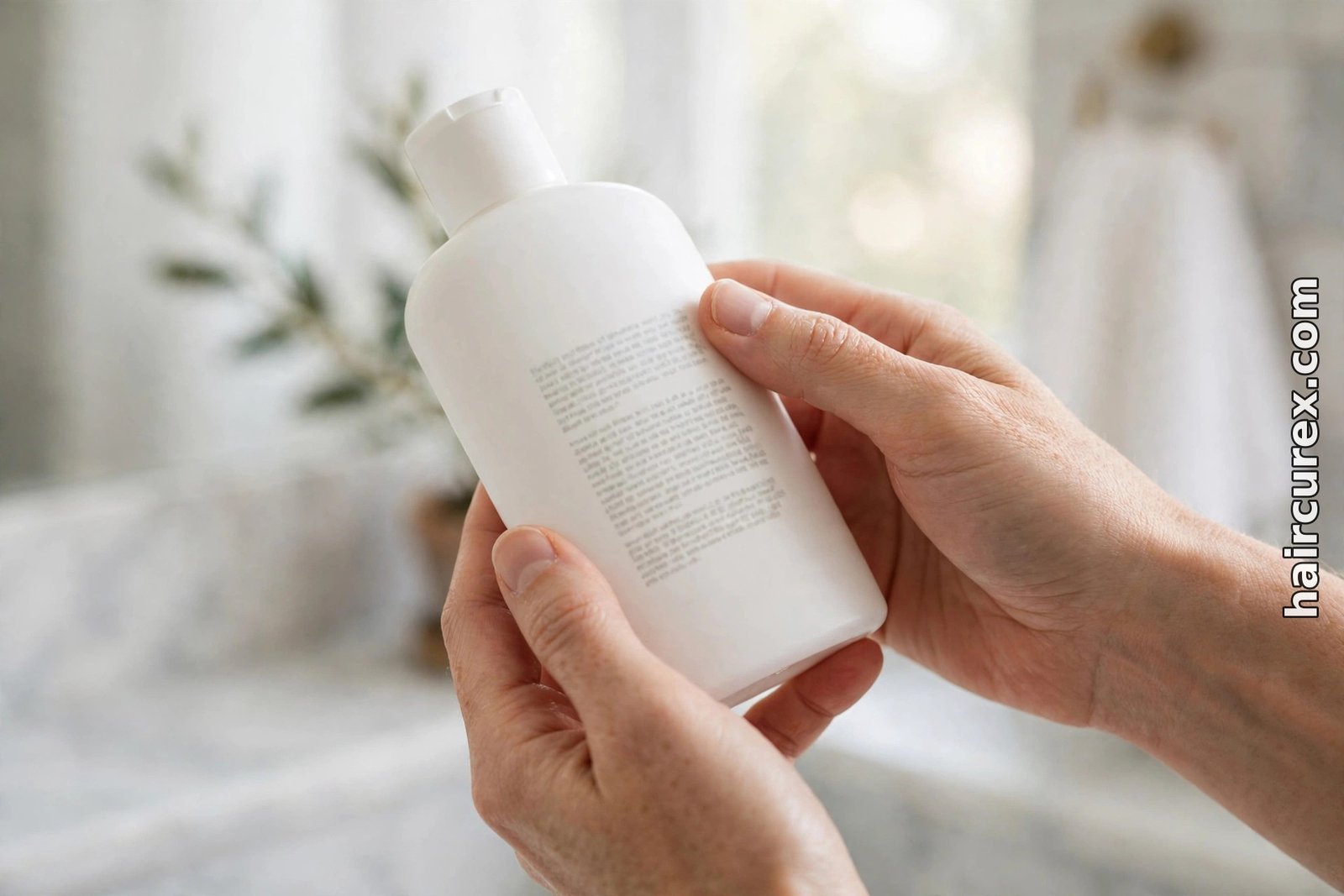
The front of the bottle is marketing; the ingredient list is the truth. Ingredients appear in descending order by amount, so the first five or so matter most. Look for a mild surfactant in the top few positions — cocamidopropyl betaine, sodium cocoyl isethionate, decyl glucoside, coco-glucoside or sodium lauroyl methyl isethionate are good signs. Be cautious if sodium lauryl sulfate or ammonium lauryl sulfate appears near the top, especially if the bottle also claims to be gentle: the claim and the formula do not match.
Helpful supporting ingredients include glycerin and panthenol (pro-vitamin B5), which attract and hold moisture, and light conditioning agents such as guar hydroxypropyltrimonium chloride, which reduce tangling without heavy buildup. For curly hair, fatty alcohols such as cetyl alcohol and stearyl alcohol are moisturizing, not drying — do not confuse them with the drying alcohols to avoid. On the avoid list for sensitive scalps: strong fragrance or “parfum” high on the list, denatured alcohol, and formaldehyde-releasing preservatives. “Sulfate-free” is a useful filter but not a guarantee: a sulfate-free shampoo can still be harsh if it relies on other strong cleansers, and a shampoo with a small amount of a mild sulfate can still be gentle overall. Judge the whole formula, not one buzzword.
A note on claims: “dermatologist tested” means a dermatologist was involved in testing, not that dermatologists recommend the product. “Hypoallergenic” suggests a lower allergy risk but is not a regulated guarantee. “pH balanced” usually means the formula sits near the skin’s natural pH, which is a genuine plus for hair, but it tells you nothing about surfactant strength. Use claims as a shortlist, and the ingredient list as the decision.
Gentle Shampoo vs Regular Shampoo vs Clarifying Shampoo
These three categories do different jobs, and understanding the difference stops you from expecting one bottle to do everything.
| Type | Cleaning strength | Best for | Watch out for |
|---|---|---|---|
| Gentle shampoo | Mild, preserves natural oils | Sensitive scalps, dry or curly hair, color-treated hair, daily washing | May not remove heavy buildup alone |
| Regular shampoo | Moderate, balanced cleanse | Normal scalps and hair washed a few times a week | Can dry hair out if used daily on already-dry hair |
| Clarifying shampoo | Strong, strips buildup | Occasional deep cleanse after heavy styling products, hard water or chlorine | Too harsh for frequent use; can fade color and dry the scalp |
Most people do best with a gentle shampoo as their everyday bottle and a clarifying wash once every few weeks, or whenever buildup makes hair feel coated, heavy or dull. That combination gives you daily kindness and occasional deep cleaning without asking one formula to do both jobs badly. If you use a lot of styling products, swim regularly, or live in a hard-water area, the clarifying step matters more; if your hair is fine and lightly styled, you may rarely need it. Our guide to the best detox shampoo explains when a deeper cleanse is genuinely needed and when it is overkill.
How to Choose a Gentle Shampoo for Your Hair Type
Start with your scalp, not your hair length. An oily scalp with dry ends still needs a cleanser that handles oil at the roots; apply shampoo mainly to the scalp and let the rinse carry it through the lengths, which is exactly the technique dermatologists recommend. The American Academy of Dermatology advises applying shampoo to the scalp rather than the full length of hair, so you cleanse away buildup and excess oil without drying the lengths unnecessarily.
For fine hair, choose a lightweight, transparent or gel-like gentle shampoo and skip heavy butters and oils in the formula, which can weigh fine strands down. For thick or coarse hair, a creamier gentle shampoo with glycerin or fatty alcohols gives the slip and moisture thick hair needs. For curly and coily hair, look for a moisturizing gentle shampoo, wash in sections if your hair is long or thick, and follow with a rich conditioner; our curly hair routine guide walks through the full wash-day sequence. For color-treated hair, pick a gentle, sulfate-free formula and wash with lukewarm rather than hot water to slow fading. For dandruff-prone scalps, a gentle shampoo alone may not be enough: you may need a medicated shampoo used on the scalp a few times a week, with a gentle shampoo on the other days — our guide to the best shampoo for hair fall and dandruff covers how to combine the two without over-drying.
Whatever your type, patch-test a new shampoo the way you would a new skin product: use it for two weeks before judging. Hair often feels different in the first few washes simply because it is adjusting from a stronger cleanser, and two weeks is enough to tell a genuine improvement from a first impression.
How to Wash Hair With a Gentle Shampoo
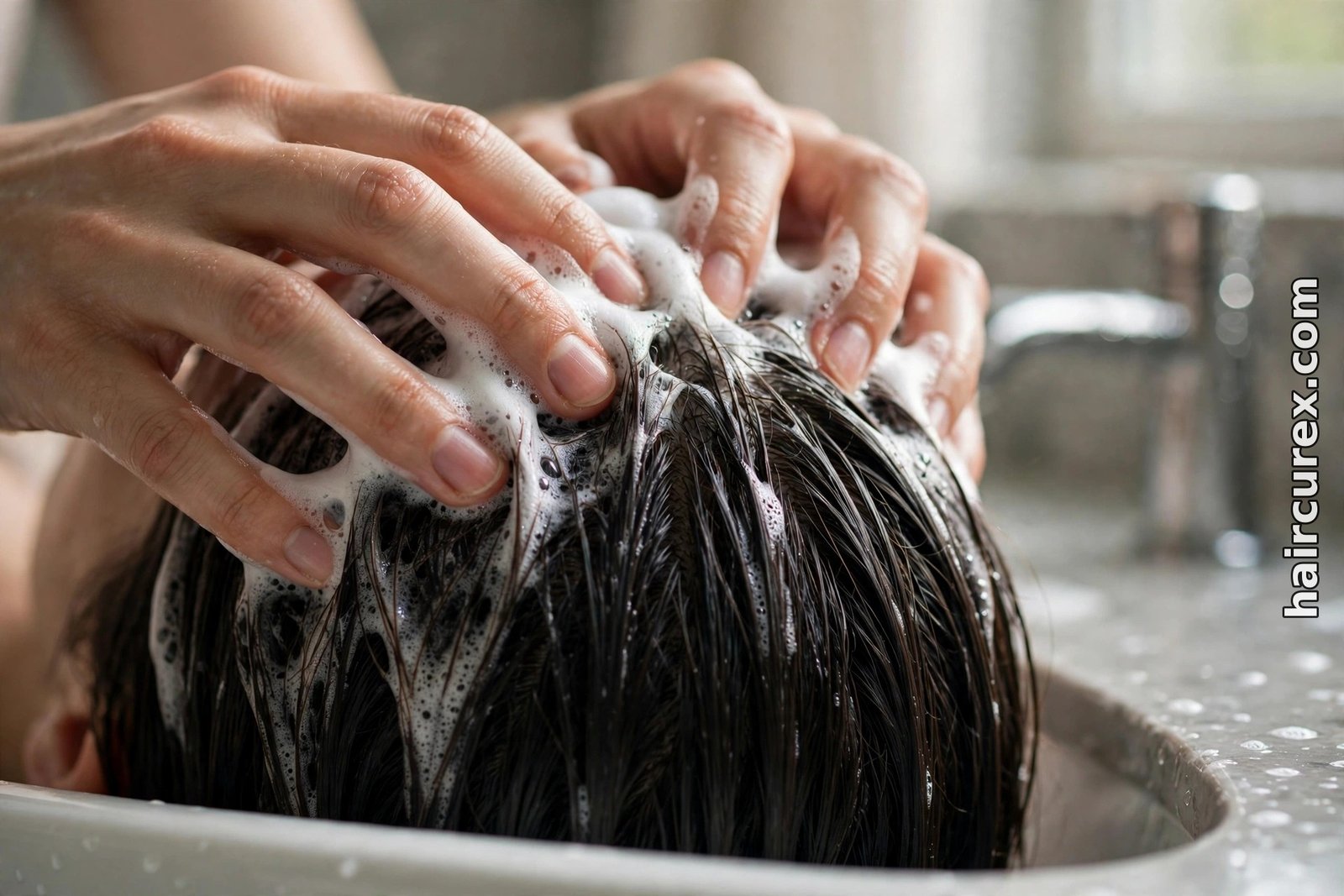
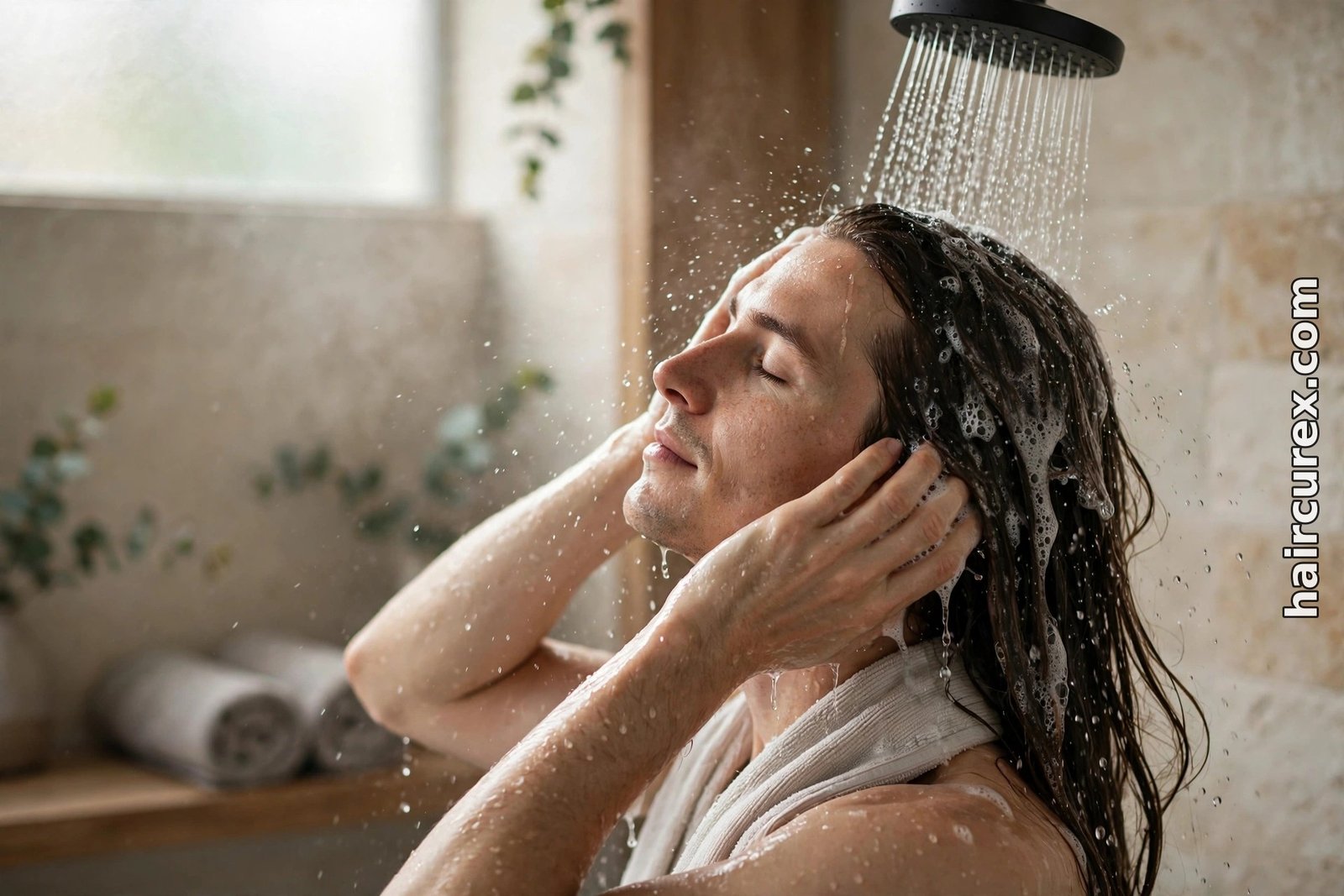
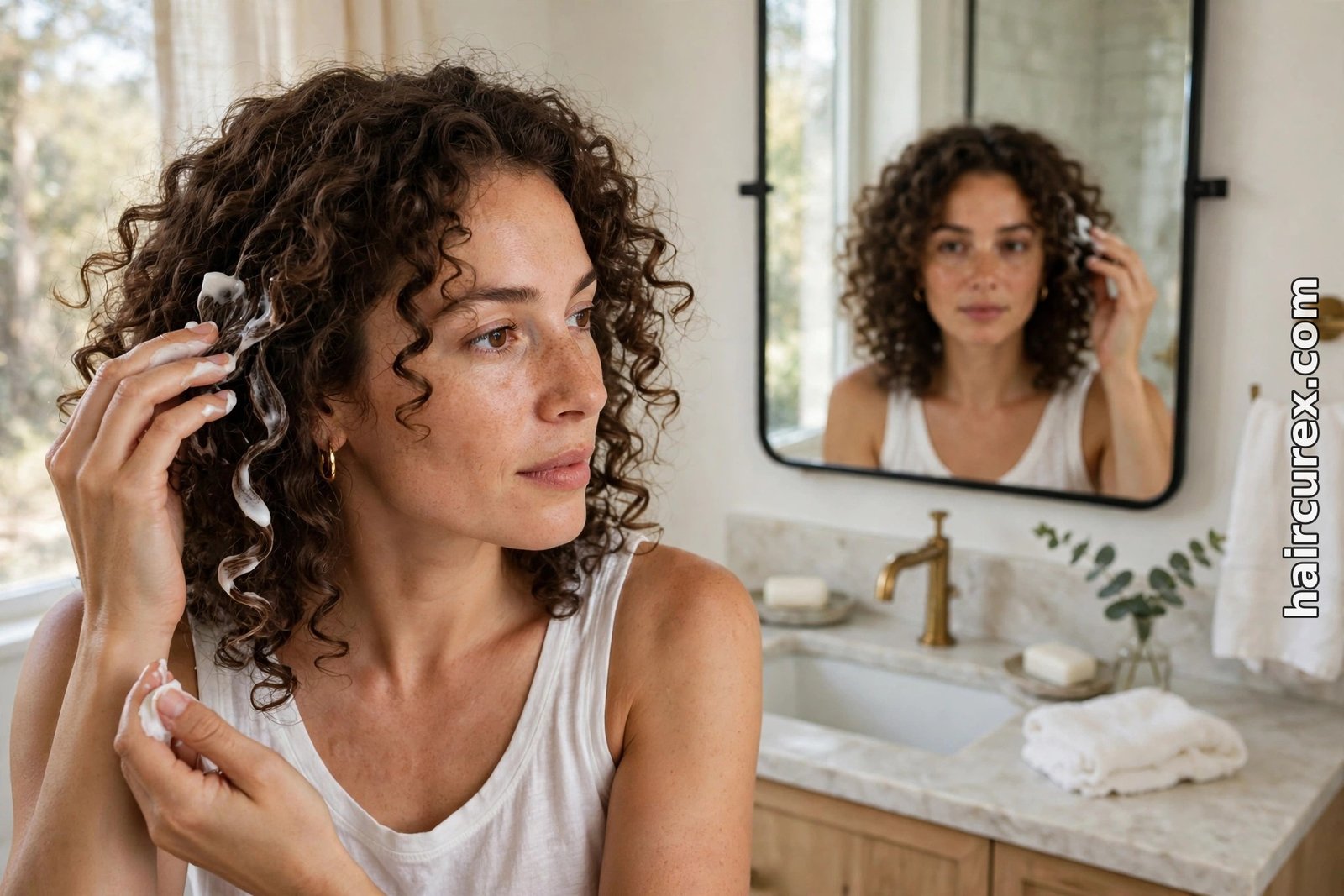
Technique matters as much as formula, and a gentle shampoo rewards a slightly different routine. Wet your hair thoroughly first — a full minute under warm water — so the cleanser spreads evenly instead of sitting in one spot. Use less than you think: a coin-sized amount for short to medium hair, a little more for long or thick hair. Work it into your scalp with your fingertips, not your nails, massaging for 30 to 60 seconds. Scrubbing with nails irritates the scalp and tangles the lengths; fingertips clean just as well.
Let the lather run down the lengths as you rinse rather than scrubbing the ends directly — the ends are the oldest, driest part of your hair and rarely need direct shampooing. Rinse thoroughly, because residue from even a gentle shampoo can make hair feel coated. If your hair is very oily or you have a lot of buildup, a second, smaller wash often cleans better than one large amount: the first wash lifts surface oil, the second actually cleans the scalp. Finish with conditioner on the mid-lengths and ends, and if your hair is fine, keep conditioner off the roots. Full step-by-step washing guidance for every hair type is in our hair washing guide.
How often should you wash? That depends on your scalp and hair type, not on a fixed rule. Oily, straight hair may need daily washing; dry, curly or thick hair often does best washed once or twice a week. Dermatologists note that washing frequency should follow how oily or dirty your hair actually gets, and that curly or textured hair should be washed at least every two to three weeks at minimum. A gentle shampoo makes more frequent washing safer, but it does not make over-washing harmless — if your scalp is producing more oil to compensate, or your ends feel dry despite gentle products, try stretching the gap by a day.
Common Mistakes With Gentle Shampoo
The most common mistake is using too much. Because gentle shampoos lather less, people pour out extra product to chase foam, which wastes product and can leave residue. Use the coin-sized amount, add a little water to help it spread, and accept the lighter lather. The second mistake is expecting a gentle shampoo to fix hair fall. Shedding has many causes — stress, hormones, nutrition, scalp conditions — and a shampoo can support scalp health but cannot regrow hair on its own. If shedding is sudden, patchy or heavy, see a dermatologist rather than shopping for another bottle; our guide to the best shampoo for hair fall explains what a shampoo can and cannot do for shedding.
The third mistake is never clarifying. A gentle shampoo used for months over heavy styling products, silicones or hard water can leave buildup that makes hair dull and heavy, and the fix is an occasional clarifying wash, not abandoning the gentle shampoo. The fourth mistake is switching bottles every week. Hair and scalp need time to settle, and constant switching makes it impossible to tell what is actually helping. Give a new gentle shampoo at least two weeks, and change one product at a time. The fifth mistake is ignoring water temperature: very hot water strips oils and fades color faster, even with the gentlest formula. Lukewarm water for washing and a cool final rinse is kinder to both scalp and color.
Gentle Shampoo for Special Situations
After a color or bleach service, switch to a gentle, sulfate-free shampoo for at least the first two weeks, when the cuticle is most open and color most vulnerable. Wash less often in that window if you can, and keep water lukewarm. After a keratin or smoothing treatment, many stylists recommend sulfate-free washing to extend the result — check your stylist’s specific advice, since treatment formulas differ.
For babies and children, use a dedicated fragrance-free baby shampoo; adult gentle shampoos are milder than regular ones but are not formulated for a child’s eyes or scalp. For swimmers, a gentle shampoo after every swim removes chlorine without daily harshness, and a weekly clarifying wash handles the rest. For people with eczema or a diagnosed scalp condition, bathing and washing advice from your dermatologist comes first: the National Eczema Association’s bathing guidance emphasizes lukewarm water, gentle cleansers and moisturizing right after washing, all of which apply directly to choosing a gentle shampoo. If a shampoo stings, burns or worsens redness, stop using it — no “gentle” label overrides your scalp’s reaction.
For winter, when cold air and indoor heating dry both skin and hair, a gentle shampoo pairs well with a richer conditioner and less frequent washing; our winter hair care routine covers the seasonal adjustments in full.
Is a Gentle Shampoo Worth It?
For most people, yes — especially if your scalp is sensitive, your hair is dry, curly, color-treated or washed often. A gentle shampoo costs roughly the same as a regular one, it reduces the daily wear that harsh cleansers cause, and it makes the rest of your routine work better: conditioner absorbs into less-stripped hair, color lasts longer, and curls stay defined instead of frizzy. The honest limits are real, though. A gentle shampoo will not regrow hair, cure dandruff, repair split ends or replace a clarifying wash when buildup is heavy. Think of it as the everyday foundation of a hair routine, not a treatment.
The simplest way to decide is a two-week test. Pick a formula whose ingredient list leads with a mild surfactant, is fragrance-free or lightly scented, and suits your hair type from the guidance above. Wash as described, use a reasonable amount, and note three things: how your scalp feels after washing, how your hair detangles when wet, and how it looks on day two. If all three improve, you have found your bottle — and the cheapest upgrade in hair care is often simply switching to a cleanser that stops working against you.
Frequently Asked Questions About Gentle Shampoo
What is a gentle shampoo?
A gentle shampoo is a cleanser that removes dirt, oil and buildup using mild surfactants, without stripping the scalp’s natural oils. It usually avoids harsh sulfates, strong fragrance and drying alcohols, making it suitable for sensitive scalps and dry, curly or color-treated hair.
Is sulfate-free the same as gentle?
Not always. Sulfate-free is a useful filter, but a sulfate-free shampoo can still be harsh if it uses other strong cleansers, and a formula with a small amount of a mild sulfate can still be gentle overall. Judge the full ingredient list, not one claim.
Who needs a gentle shampoo?
Anyone with a dry, itchy or sensitive scalp, color-treated or chemically processed hair, curly or coily textures, or hair that is washed daily benefits most. It also suits people whose hair feels stripped, tangles easily when wet, or whose scalp feels tight after washing.
Can a gentle shampoo clean oily hair?
Yes, for everyday oil, especially when applied to the scalp with a good massage and, if needed, a second smaller wash. Very heavy buildup from styling products, chlorine or hard water may still need an occasional clarifying shampoo.
How often should I wash with a gentle shampoo?
Follow your scalp: oily, straight hair may need daily washing, while dry, curly or thick hair often does best once or twice a week. A gentle formula makes frequent washing safer, but over-washing can still dry the ends.
Does gentle shampoo help color-treated hair?
Yes. Gentler surfactants strip less color with each wash, so color fades more slowly. Pair a gentle, sulfate-free shampoo with lukewarm water and less frequent washing for the best color retention.