

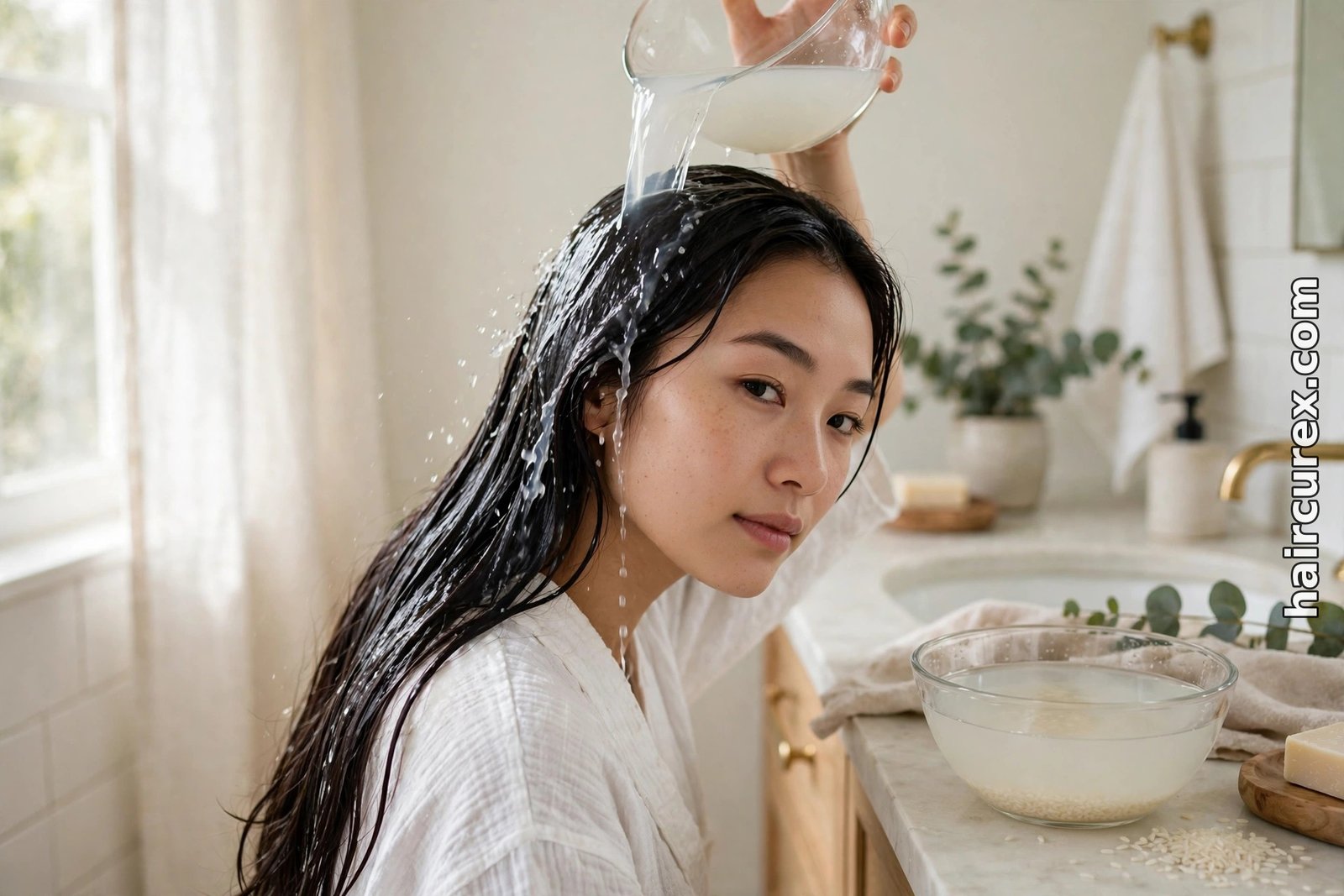
Rice water for hair is the cloudy, starchy liquid left after rice is rinsed, soaked or boiled, and it has been used as a hair rinse for centuries in parts of Asia. The honest summary is this: rice water for hair can make hair feel smoother, shinier and easier to detangle, and it may help reduce breakage by lowering friction between strands, but there is no good evidence that it makes hair grow faster or regrows lost hair. The best-supported effect comes from inositol, a carbohydrate in rice water that can stay on the hair after rinsing and help it feel smoother. Used once a week, diluted, and followed by conditioner, it is a low-risk experiment for most people. Used too often, left on too long, or made with fermented water that has gone off, it can leave hair stiff, dry or coated, and it can irritate an already inflamed scalp. This guide separates the tradition from the evidence, shows you three safe ways to make it, and tells you exactly when to stop.
What Is Rice Water for Hair?
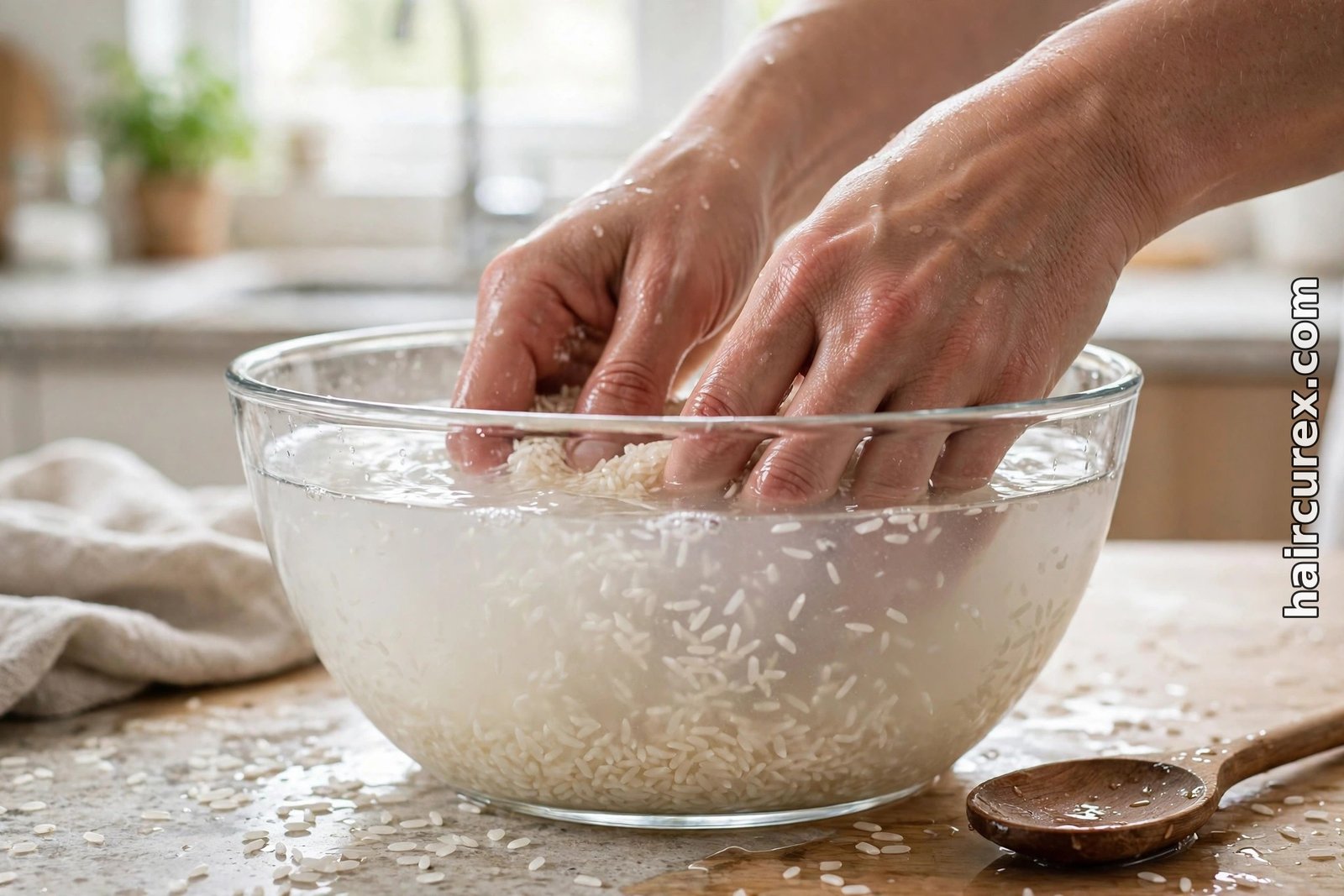
Rice water is simply the water that rice has been washed or soaked in. When you rinse uncooked rice, starch, small amounts of protein, amino acids, B vitamins and minerals wash off the grains and cloud the water. That cloudy liquid is what people pour over their hair. It is not the same as rice bran extract, which is a concentrated product made from the outer layer of the grain and used in laboratory and commercial studies — a distinction that matters, because several eye-catching “rice water grows hair” claims online actually trace back to bran-extract studies, not to the rinse you make at home.
The tradition is real and well documented. In Japan’s Heian period (794–1185 CE), court women were said to wash their floor-length hair in Yu-Su-Ru, the water left from rinsing rice. In Huangluo, China, Red Yao women have washed their hair in fermented rice water for generations and are known for very long hair kept into old age. These stories are fascinating, and they explain why rice water feels like an ancient secret rather than a fad, but they are not controlled evidence. Long hair in those communities also reflects genetics, diet, gentle handling, infrequent heat styling and a lifetime of careful routines — not one rinse alone. Tradition tells us rice water is worth trying; it does not tell us it works miracles.
Rice Water for Hair: What the Evidence Actually Says
The evidence for rice water is thin, and being honest about that is what makes this guide useful. The most-cited study is a 2010 paper in the Journal of the Society of Cosmetic Chemists of Japan, which found that Yu-Su-Ru reduced surface friction and increased hair elasticity in laboratory tests on hair samples. Inositol, the carbohydrate in rice water, appeared to remain in the hair after rinsing, which would explain a lasting smoothing effect. The same study also noted a problem: raw rinse water used on its own left flaking on the hair surface, which is why the researchers moved on to refined extracts rather than recommending the raw rinse directly.
That is the strongest evidence, and its limits are clear. It was laboratory work on hair samples, not a clinical trial on people’s heads, and it measured friction and elasticity — not growth, thickness or regrowth. Dermatologists at Cleveland Clinic make the same point in plain language: there is anecdotal potential, but rice water for hair growth “is not something that has been scientifically proven,” and most people’s hair growth rate is genetically set. A rinse sits on the hair shaft and the scalp surface; it does not reach the follicle deep in the skin, where growth is actually decided. So when a video promises inches in a month, it is selling a story, not a result.
What rice water can plausibly do is more modest and still worthwhile. Starch coats the hair shaft and smooths the cuticle, so strands rub against each other less when you brush or detangle. Less friction means less breakage, and less breakage means you keep more of the length you already grow — which can look like faster growth over months, even though the growth rate itself has not changed. That distinction matters: keeping length is a real benefit, and it is the benefit you should judge rice water by. If you measure progress by fewer broken pieces in your brush and smoother ends, you are testing the right thing.
Benefits of Rice Water for Hair
With expectations set correctly, here is what rice water can reasonably offer. First, smoother, shinier hair. The starch coating flattens the cuticle, so hair reflects more light and feels less rough to the touch. Many people notice the difference most on the first use, when hair dries with a softer, glossier finish. Second, easier detangling. Lower surface friction means a comb slides through with less snagging, which is especially helpful for wavy, curly and long hair that tangles easily. Third, less breakage from handling. If your main problem is snapped strands and split ends from brushing, heat or tight styles, a smoothing rinse that reduces friction attacks the actual cause of that breakage. Fourth, a cheap, simple routine. Rice water costs almost nothing, uses an ingredient already in most kitchens, and adds only a few minutes to wash day — a fair trade for a modest benefit, provided you use it safely.
There are also benefits people claim that you should treat with scepticism. Rice water will not repair split ends — nothing can glue a split end back together; only a trim removes it, and a rinse can at best make the ends look smoother temporarily. It will not cure dandruff, eczema or hair loss, and it is not a substitute for proven treatments when shedding is sudden, patchy or heavy. It may support scalp health in the sense that a gentle, residue-free rinse is kinder than a harsh product, but that is a low bar, and anyone with a diagnosed scalp condition should follow their dermatologist’s advice first. The American Academy of Dermatology’s healthy hair guidance stresses gentle handling, washing to suit your hair type, and protecting hair from heat and harsh treatments — rice water fits into that framework as a gentle extra, not as a treatment in its own right.
Risks and Side Effects of Rice Water for Hair
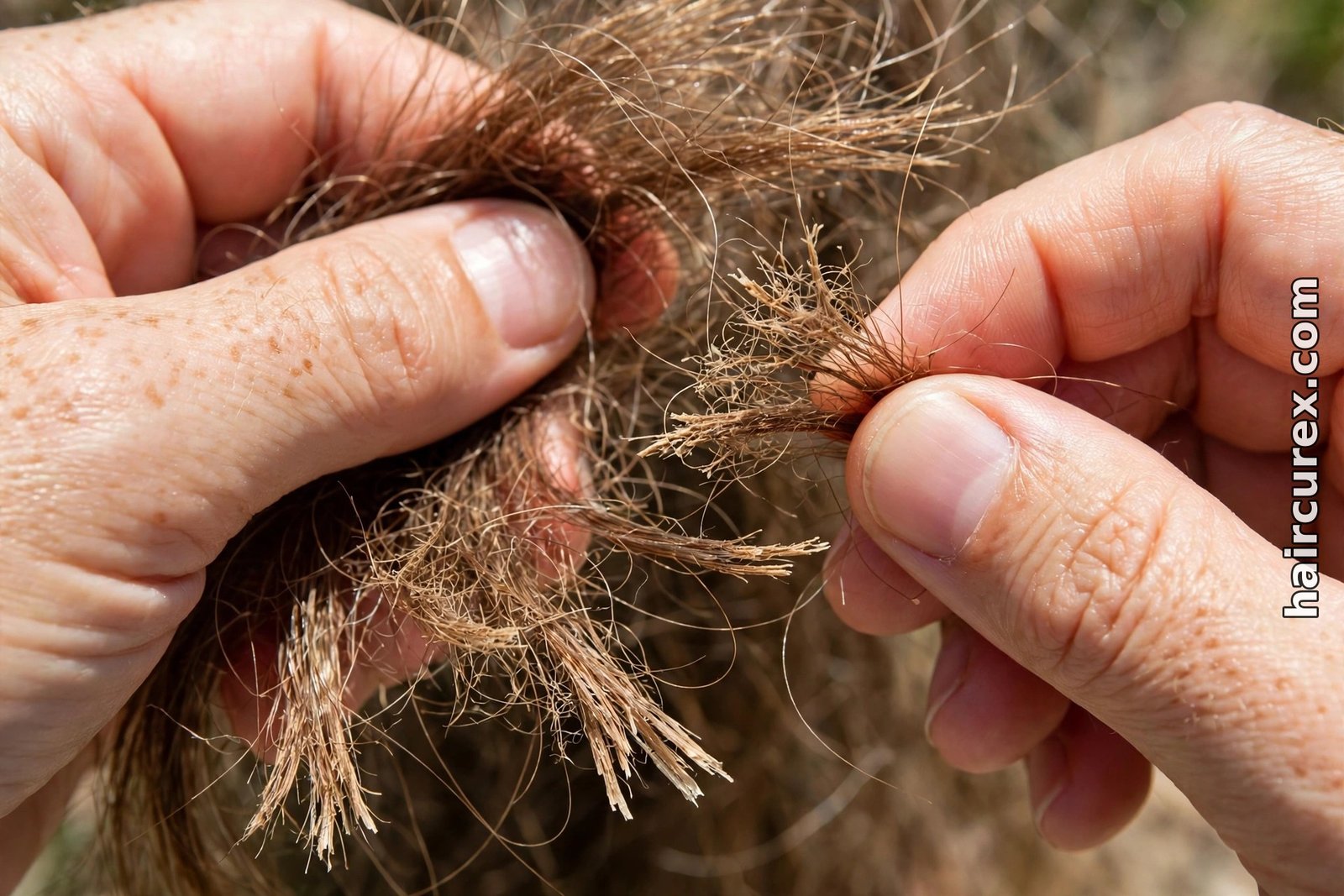
Rice water is low-risk, but it is not risk-free, and most problems come from overuse or poor hygiene rather than from the rice itself. The most common problem is stiffness and dryness from too-frequent use. Rice water contains starch and small amounts of protein-like material, and repeated coatings can build up on the hair, especially on fine, low-porosity or protein-sensitive hair. The hair starts to feel straw-like, loses its movement, and becomes more likely to snap — the opposite of what you wanted. Dermatologists describe this as protein overload, and it is most likely when rice water is used several times a week or left on for hours. If your hair feels worse after two or three uses, that is your answer: stop, clarify gently, and deep-condition.
The second risk is buildup and flaking. The 2010 study itself found flaking when raw rinse water was used alone, and the same thing happens at home if the rinse is too concentrated or not washed out properly. A coated, flaky scalp can itch, and residue can make hair look dull and heavy rather than shiny. The third risk is scalp irritation. Cleveland Clinic dermatologists caution against rice water if you have scalp inflammation, because any extra residue on an irritated scalp can make it worse. The fourth risk is spoilage. Fermented rice water is a living mixture with no preservative: left too long at room temperature, or kept in the fridge for weeks, it grows bacteria and smells sour, and putting spoiled liquid on your scalp invites irritation or infection. Finally, there is the risk of false hope. Months spent chasing a rinse while a treatable cause of shedding goes unchecked is a real cost, and it is why this guide keeps coming back to one rule: if shedding is sudden, patchy or severe, see a dermatologist instead of trying another rinse.
| Method | How to make it | Strength | Best for | Watch out for |
|---|---|---|---|---|
| Plain rinse water | Rinse 1 cup rice, soak in 2 cups water 30 minutes, strain | Mildest | Beginners, fine or low-porosity hair | Weakest effect, use fresh |
| Soaked (unfermented) | Soak rinsed rice 12–24 hours, strain | Moderate | Most people, weekly use | Refrigerate, use within a week |
| Fermented | Soak 24–48 hours until slightly sour, dilute 1:1 with water | Strongest | Coarse, thick or high-porosity hair | Easiest to overdo, spoils fastest, patch-test first |
How to Make Rice Water for Hair Safely
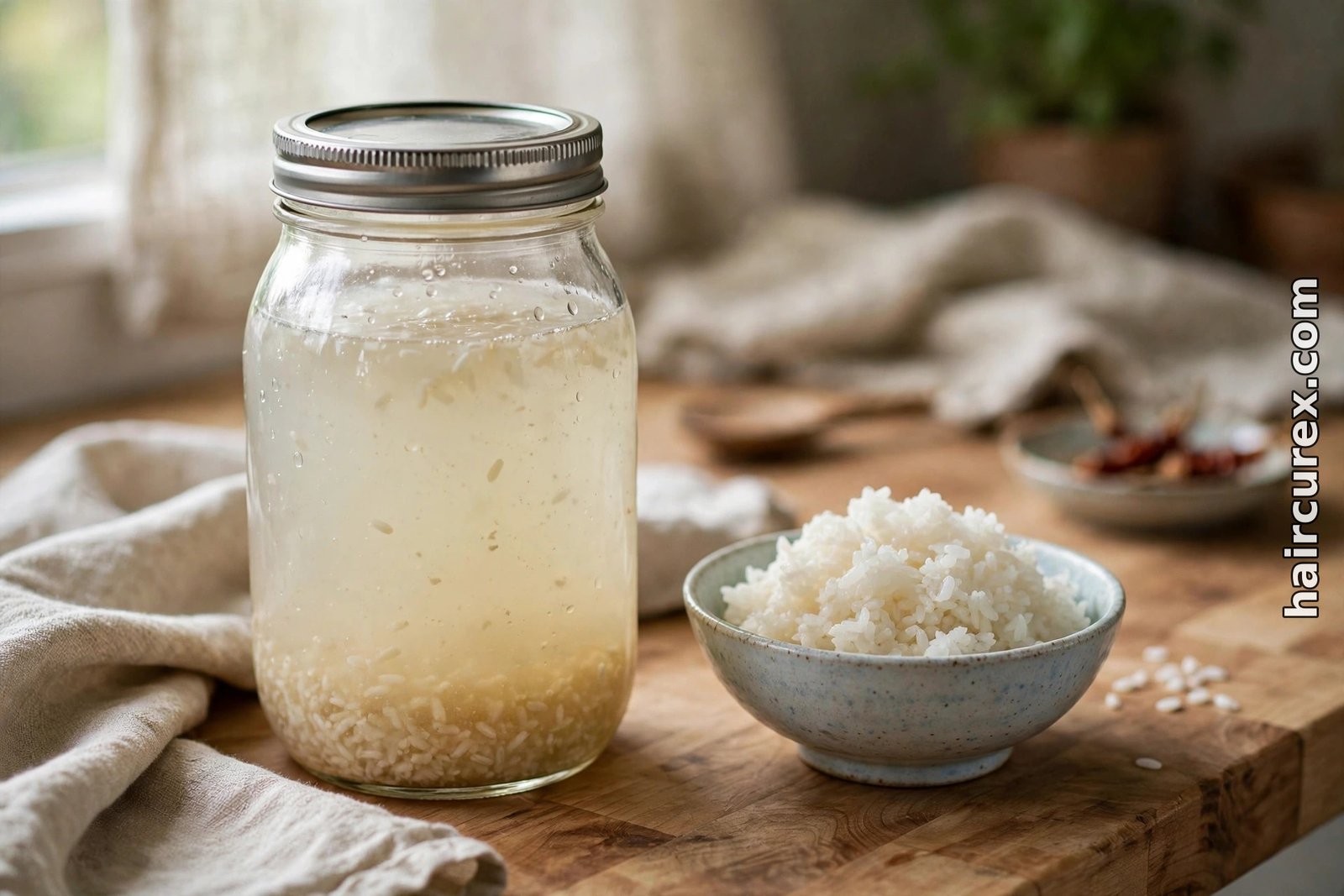
Start with the mildest method and only move up if your hair likes it. For plain rinse water, rinse half a cup of uncooked rice until the water runs mostly clear — this removes surface dust — then add two cups of clean water, swirl for a minute, and strain. You can use it straight away. For soaked rice water, take the rinsed rice, cover it with two cups of water, and leave it covered for 12 to 24 hours at room temperature, then strain. For fermented rice water, leave the same soak for 24 to 48 hours until it smells slightly sour, then dilute it with an equal amount of plain water before use, because undiluted fermented water is the strongest and most likely to leave residue. White rice works fine; brown rice gives a slightly different nutrient mix but no proven advantage for hair, so use whatever you already buy.
Hygiene rules matter more than the recipe. Always use a clean jar or bottle, clean hands and a clean strainer. Label the bottle with the date you made it. Keep unfermented rice water in the fridge and use it within a week; keep fermented rice water in the fridge and use it within a week as well, and throw it away at the first sour, rancid or mouldy smell, any visible mould, or any slimy texture. Never use a batch you cannot date, and never keep a room-temperature batch for days on end. If in doubt, throw it out and make a fresh batch — it costs pennies, and a fresh batch is always safer than a doubtful one.
How to Use Rice Water for Hair, Step by Step
Use rice water on wash day, after shampooing and before conditioning. First, wash your hair as usual with a gentle shampoo, so the rinse lands on clean hair rather than on top of oil and product. Second, pour or spray the rice water slowly over your hair, working it through the lengths with your fingers and massaging a little into the scalp — you do not need to soak the scalp, and you should not scrub it in. Third, leave it on for 5 to 20 minutes. Beginners should start at 5 minutes; 20 minutes is the upper limit, and leaving it on for hours or overnight raises the risk of stiffness and buildup without adding benefit. Fourth, rinse thoroughly with lukewarm water until the water runs clear. Fifth, and most importantly, follow with a moisturising conditioner on the mid-lengths and ends. Rice water is not a conditioner, and skipping conditioner after a starchy rinse is how hair ends up feeling dry. Our guide to coconut oil for hair explains how a moisturising step fits into a routine, and our winter hair care routine covers the same balance for dry-season hair.
Frequency is where most people go wrong. Once a week is the safe starting point for most hair types. Fine, low-porosity or protein-sensitive hair should start at once every two weeks, and only move to weekly if hair still feels soft and flexible after a month. Coarse, thick or high-porosity hair — the kind that soaks up moisture quickly and loses it just as fast — can usually handle weekly use, and our high porosity hair guide explains why that hair type behaves differently. Never use rice water daily, and never use it as a leave-in unless you have diluted it heavily and tested it first: a leave-in starch coating builds up fast. After four to six weeks, judge it honestly. Less breakage, smoother detangling and shinier ends mean it is helping. Stiffness, dullness, flaking or more breakage mean it is not for your hair, and stopping is the right result, not a failure.

Rice Water for Hair by Hair Type
Hair type changes the answer, so here is the short version for each. For straight, fine hair, use plain or soaked rice water only, once every two weeks, well diluted, and rinse thoroughly — fine hair shows buildup fastest and goes flat under any coating. For wavy hair, weekly soaked rice water usually works well, followed by a light conditioner so waves keep their movement instead of going limp. For curly and coily hair, rice water can help detangling and definition, but curls are also the most vulnerable to protein-style stiffness, so start fortnightly, watch your curl pattern, and stop if curls go limp or crunchy. For low-porosity hair, where the cuticle lies flat and resists absorbing anything, rice water mostly sits on the surface, so use it sparingly and expect less benefit. For high-porosity hair, where the cuticle is lifted and hair loses moisture easily, the smoothing coating can genuinely help seal the surface and reduce tangling — this is the hair type most likely to notice a difference.
For colour-treated hair, rice water is generally safe as a rinse because it contains no bleach or dye, but rinse well and do not leave it on for long, since any coating can dull colour over time. For damaged, bleached or heat-styled hair, rice water can be a useful smoothing step between trims, but it does not repair damage, and it should never replace conditioner, a bond treatment or a trim. For a dry or flaky scalp, skip rice water until the scalp calms down; for an oily scalp, rice water will not control oil, and shampooing the scalp properly matters far more than any rinse. The American Academy of Dermatology advises concentrating shampoo on the scalp and letting it rinse through the lengths — that advice applies on rice-water wash days too.
Common Mistakes With Rice Water for Hair
The first mistake is using it too often. Social media routines that show daily rice water use are the fastest route to stiff, brittle hair. The second mistake is fermenting too long. A 48-hour ferment is already strong; a week-old jar on the counter is not a stronger treatment, it is a spoiled one. The third mistake is skipping conditioner, on the theory that rice water “is” the conditioner. It is not: it is a starchy rinse, and hair needs real moisture after it. The fourth mistake is judging it by growth. Measure breakage and smoothness, not inches, or you will declare a useful rinse a failure — or keep using a useless one because you misread normal growth as a result. The fifth mistake is applying it to a problem it cannot fix. If you are losing hair in patches, shedding heavily, or seeing a receding hairline change quickly, that needs a dermatologist, not a kitchen remedy, and the same is true if you are already using a proven treatment: do not swap it for rice water without medical advice. Our rosemary oil for hair growth guide shows the same discipline applied to another popular natural option — promising in one small trial, but no substitute for proven treatment when hair loss is real.

Is Rice Water for Hair Worth Trying?
For most people, yes — as a cheap, low-risk experiment with modest, honest expectations. If your main frustrations are frizz, tangling and breakage, a weekly rice water rinse followed by conditioner is a reasonable thing to try for a month, and you will know by the end of that month whether your hair likes it. If your main hope is faster growth or regrowth, rice water is not the answer, and your time is better spent on proven options and a dermatologist’s advice. The best test is simple: try the mildest method, once a week, for four weeks, and keep everything else in your routine the same. Photograph your ends, count broken pieces when you detangle, and notice how your hair feels on day two after washing. If breakage drops and hair feels smoother without going stiff, keep it in your routine. If nothing changes, or hair feels worse, stop — you have lost nothing but a few cups of rice water, and you now know something useful about your hair.
Frequently Asked Questions About Rice Water for Hair
Does rice water for hair make hair grow faster?
No good evidence shows that rice water makes hair grow faster. It may reduce breakage by smoothing the hair surface, which helps you keep more of the length you grow, but growth itself happens in the follicle and is largely set by genetics.
How often should I use rice water for hair?
Once a week is the safe starting point for most people. Fine, low-porosity or protein-sensitive hair should start once every two weeks. Never use it daily, and stop if hair feels stiff, dry or coated.
Should I use fermented or plain rice water?
Start with plain or soaked (unfermented) rice water, which is mildest. Fermented rice water is stronger and more likely to cause buildup, so dilute it 1:1 with water, patch-test it, and never use a batch that smells rancid or shows mould.
How long should I leave rice water on my hair?
5 to 20 minutes is enough. Beginners should start at 5 minutes. Leaving it on for hours or overnight raises the risk of stiffness and buildup without adding benefit.
Can rice water damage my hair?
It can leave hair stiff, dry or coated if overused, left on too long, or not rinsed out well, especially on fine or low-porosity hair. It can also irritate an inflamed scalp. Used once a week, diluted, rinsed thoroughly and followed by conditioner, it is low-risk for most people.
Do I need conditioner after rice water?
Yes. Rice water is a starchy rinse, not a conditioner. Always follow it with a moisturising conditioner on the mid-lengths and ends, or hair can end up feeling dry.