

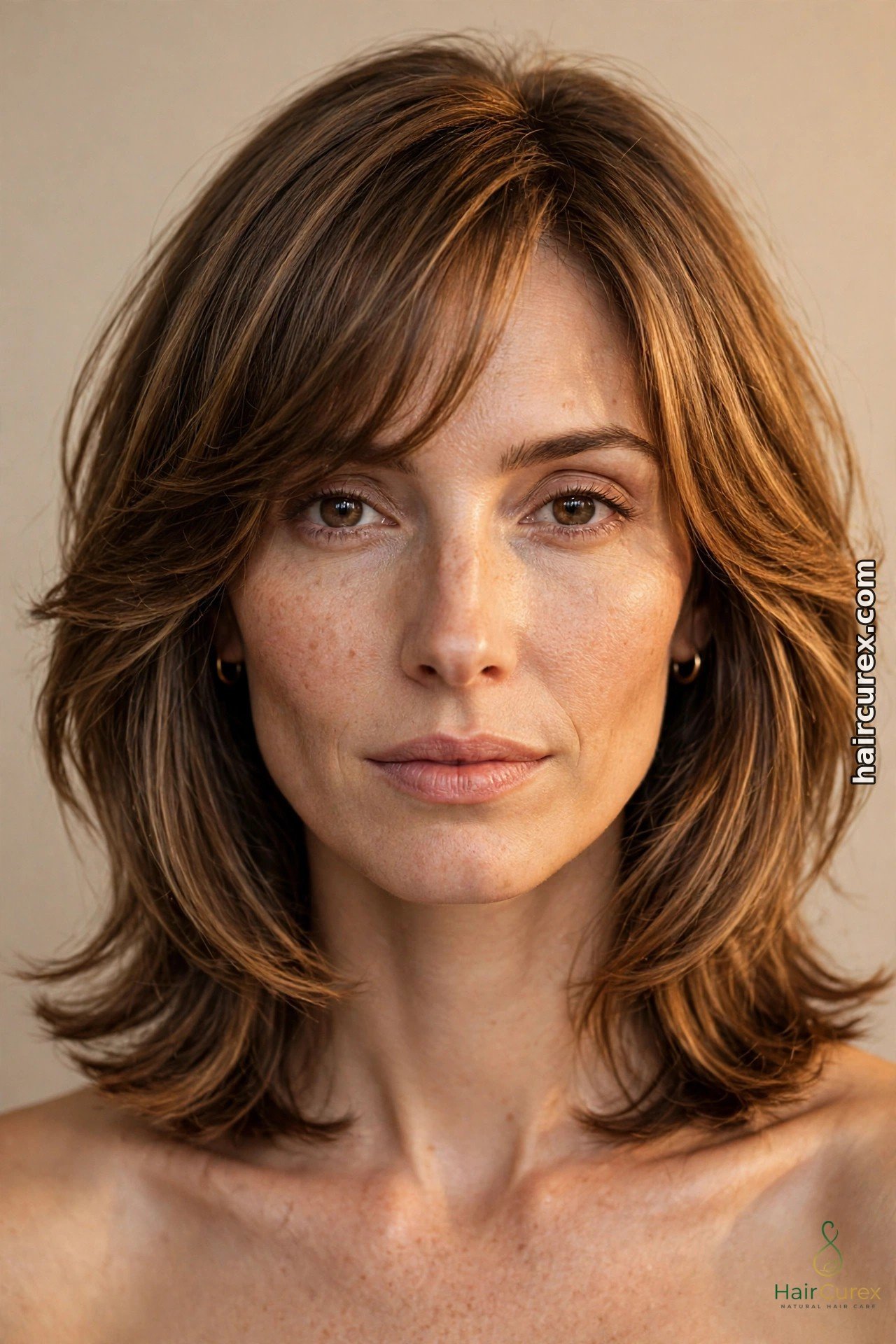
Quick answer: The best haircuts for long face shapes add width at the sides and shorten the look of the face: a wavy lob, chin-length bob, long layers with volume at cheek level, curtain bangs or side-swept bangs, and soft curls all do this well. Avoid very long, straight, one-length hair and flat, centre-parted styles with no layers, because they stretch the face even longer. Bring photos to your stylist and ask for width at the cheekbones and jawline, not length.
Haircuts for long face shapes work on one simple principle: balance. A long or oblong face is noticeably longer than it is wide, often with a long forehead, a longer chin, and cheekbones that sit a little high and narrow. The right cut does not try to hide your face — it adds horizontal volume where the face is narrowest and breaks up the vertical line, so your features look proportioned rather than stretched. The wrong cut does the opposite: flat, straight, one-length hair that hangs past the shoulders pulls the eye down and makes a long face look even longer.
This guide covers the nine styles that flatter a long face most reliably, how to ask for each one at the salon, the cuts to avoid, and how to style your new cut at home. Every recommendation here follows the same rule — width at the sides, softness around the forehead and jawline, and movement instead of flat lines.
Haircuts for Long Face That Add Width: The 9 Best Styles
Before the styles, it helps to know why they work. Hairstylists think in lines: vertical lines lengthen, horizontal lines widen. A long face already has plenty of vertical line, so the goal is to introduce horizontal shape — layers that flick out at cheek level, waves that sit wide at the sides, a fringe that cuts the forehead shorter, or a bob that ends at the jaw and creates a strong horizontal edge. Keep that idea in mind and you can judge almost any haircut for yourself.
1. The wavy lob
The wavy lob — a long bob that falls between the chin and the collarbone — is the single most reliable haircut for a long face. It ends right where width is needed, at the jaw and cheekbones, and the waves push the hair outward instead of letting it hang flat. Ask for a cut that sits just below the chin, with soft layers through the ends and a deep side part to break up the symmetry of a long face.
Styling is simple: a large-barrel curling iron or a few twists dried with a diffuser gives the waves that create the width. A little texturising spray at the roots stops the top going flat, which matters because flat roots plus long length is exactly the combination to avoid.

2. Long layers with volume at cheek level
If you love long hair and do not want to cut it short, long layers are the answer — but only if the layers start at the right place. Layers that begin at the chin or cheekbone and flick outward create width exactly where a long face needs it. Layers that only start at the ends, or that are cut straight and flat, do nothing for face balance.
Ask your stylist for face-framing layers starting at cheekbone level, with the shortest layer no higher than the chin. Blow-dry the front sections outward with a round brush, or add a few loose waves through the mid-lengths. The result keeps your length while the face looks shorter and wider. This is also the easiest style to grow out, because the layers can simply be trimmed as they grow.
3. Curtain bangs
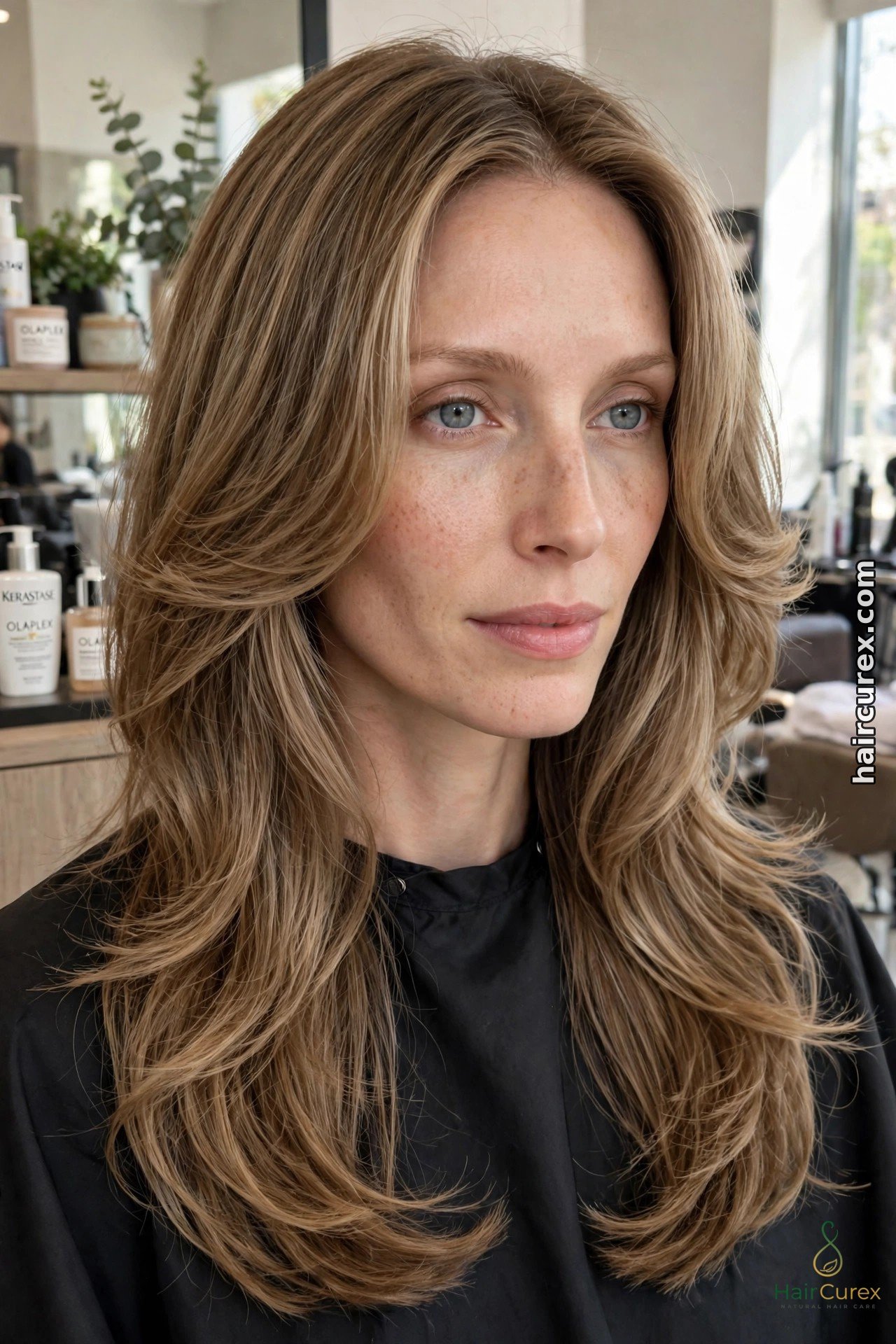
A fringe is the fastest way to shorten a long face, and curtain bangs are the most forgiving version. They part in the middle, sweep to each side, and cover the top of the forehead — which visually removes an inch or two of face length — while the longer side pieces blend into face-framing layers. Unlike a blunt straight fringe, curtain bangs grow out gracefully and suit almost every hair texture.
They pair beautifully with the cuts in this guide: curtain bangs with a lob, with long layers, or with a bob all work. If your hair is very fine, ask for the bangs to be cut slightly thicker so they hold their shape; if it is thick, ask for them to be thinned at the ends so they do not look heavy. Our full guide to curtain bangs — how to ask for them, style them and grow them out covers the grow-out plan in detail.
4. The chin-length bob with volume
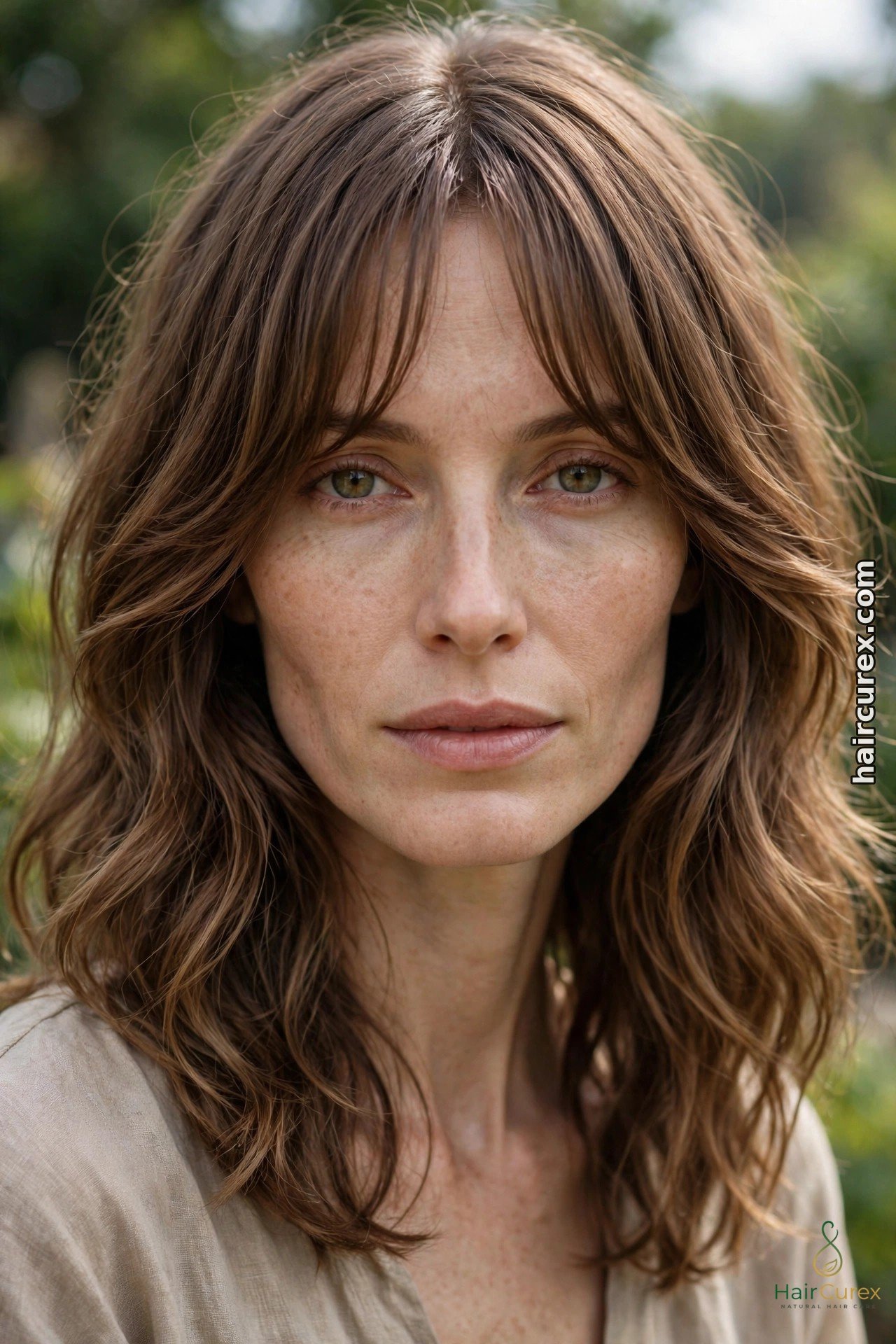
A chin-length bob creates one of the strongest horizontal lines in hairdressing: the cut ends at the jaw, the eye stops there, and the face instantly looks shorter. Add soft curls or a slight outward flick at the ends and the bob also adds width. This is a bold choice if you have always had long hair, but it is one of the most flattering cuts for a long face, and it is easy to maintain.
Ask for a bob that ends at the chin or just below it, with light layering through the ends so it moves rather than sitting like a helmet. A side part softens the look further; a centre part with a bob can look severe on a long face, so a side part is usually the safer choice. For more short-cut ideas, see our guide to the pixie cut — who it suits and how to style it, which also works well when the top is kept full and textured.
5. Side-swept bangs with a layered cut
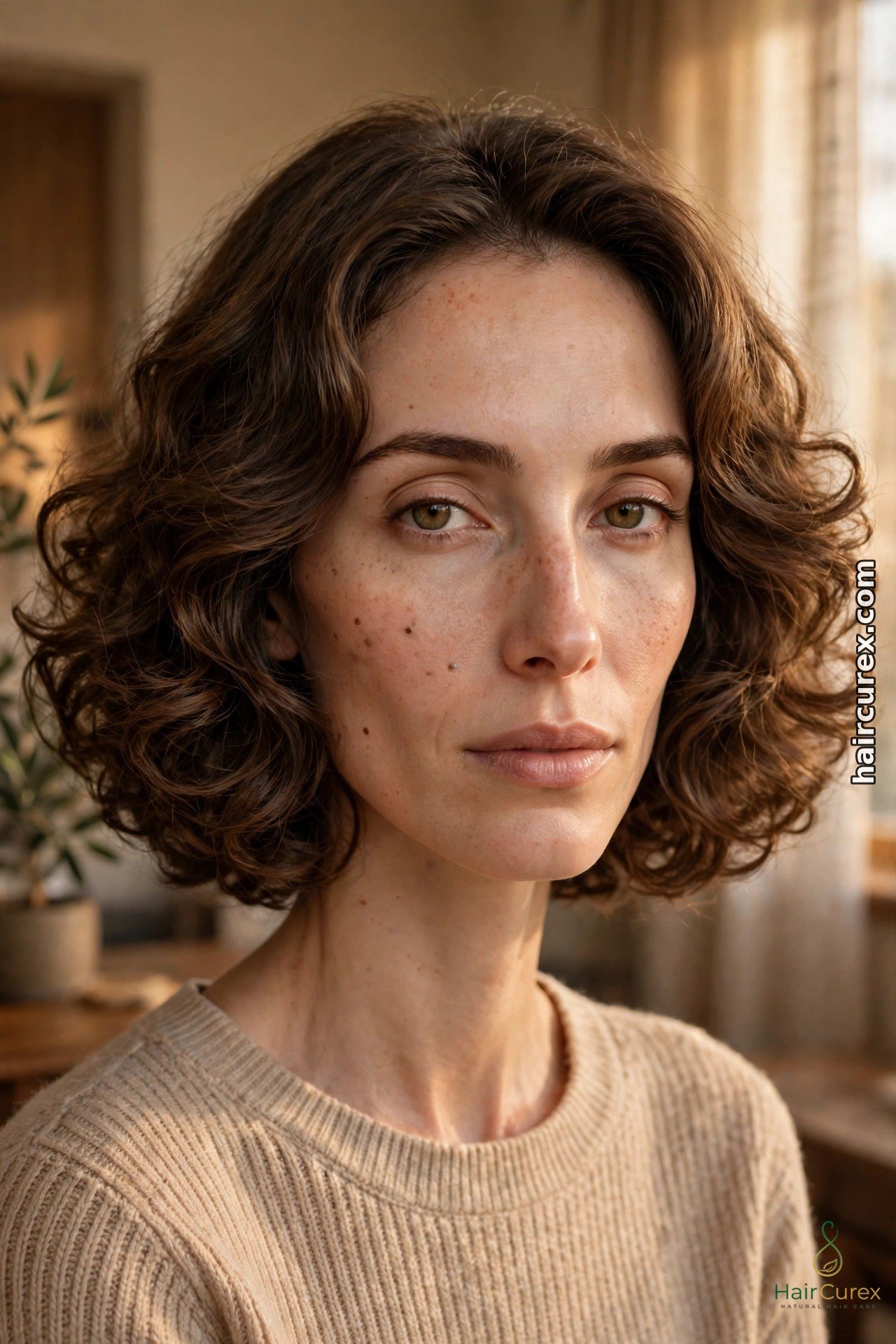
Side-swept bangs do two jobs at once: they cover part of the forehead, shortening the face, and their diagonal line breaks up the long vertical symmetry. They work with almost any length, from a bob to long layers, and they are the lowest-commitment fringe — if you do not like them, they grow out into face-framing layers within a few weeks.
Ask for bangs that start at the eyebrow on the shorter side and sweep across to the cheekbone on the longer side. Blow-dry them to the side with a round brush while they are still damp, and they will hold the sweep all day. Avoid cutting them too short and straight across, which creates a hard horizontal line that can look harsh rather than softening.
6. Soft curls and waves
Texture is a long face’s best friend. Curls and waves naturally sit wider than straight hair, so they add width at the sides without any cutting at all. If your hair is naturally wavy or curly, let it do the work: layers that encourage the curl pattern, a diffuser when drying, and a cut that keeps the weight at the sides rather than pulling it down.
If your hair is straight, loose waves through the mid-lengths and ends give the same effect. The key is keeping the waves soft and wide rather than tight and small, which can add height at the top and lengthen the face further. Our guide to haircuts for a round face explains the same width principle from the opposite side — the goal is always balance, whichever face shape you have.
7. The butterfly haircut
The butterfly haircut — long layers with shorter, bouncy layers on top that flick out like wings — adds volume at the sides and movement around the face. The short top layers sit at cheekbone level, which is exactly where a long face needs width, while the long bottom layers keep the length you love.
It needs a little styling to look its best: blow-dry the top layers outward with a round brush, or use large rollers for a bouncy finish. Done well, it is one of the most glamorous options on this list. Read our full butterfly haircut guide — the layered cut, how to ask for it and style it before your appointment so you can describe the layer placement clearly.
8. The shaggy cut with textured ends
A modern shag — choppy layers, textured ends, and plenty of movement — breaks up the long vertical line of the face with lots of short, horizontal pieces. It works best on wavy or thick hair, where the texture holds the shape, and it looks deliberately undone rather than over-styled, which suits everyday wear.
Ask for layers that start at the cheekbones and a textured, razored finish rather than blunt ends. A shag grows out well because the choppy texture hides uneven growth, so it is a good choice if you do not visit the salon often. Keep the top flatter and the sides fuller — volume at the crown adds height and lengthens the face, which is the opposite of what you want.
9. The side-parted midi cut
A midi cut that falls between the shoulders and the collarbone, worn with a deep side part, is a safe, polished choice. The side part shifts the hair’s weight to one side, creating an asymmetric line that shortens the face, and the midi length keeps the ends near the jaw and neck where they add width. Add a few soft layers through the ends and a little bend with a flat iron, and the cut looks finished with very little effort.
This is a good first step if you are nervous about cutting shorter: it is long enough to tie back, short enough to change the proportions, and easy to grow into longer layers or cut into a lob later.
How to Choose: A Quick Comparison
Use this table to match a style to your hair type, the maintenance you are willing to do, and how much length you want to keep.
| Style | Best for | Length kept | Daily styling |
|---|---|---|---|
| Wavy lob | Most hair types | Chin to collarbone | Low — waves with spray |
| Long layers at cheek level | Long hair lovers | Full length | Low — round-brush front |
| Curtain bangs | Long forehead | Any length | Low — quick blow-dry |
| Chin-length bob | Straight or wavy hair | Short | Medium — needs shaping |
| Side-swept bangs | Any length | Any length | Low — sweep and go |
| Soft curls and waves | Wavy or curly hair | Any length | Low — diffuser drying |
| Butterfly haircut | Thick or wavy hair | Long | Medium — round-brush finish |
| Shaggy cut | Thick or wavy hair | Medium to long | Low — air-dry friendly |
| Side-parted midi cut | Straight or fine hair | Shoulders | Low — flat-iron bend |
Haircuts to Avoid With a Long Face
Just as important as the right cut is knowing what to skip. These styles tend to make a long face look longer, and they are the most common regrets after a salon visit.
- Very long, straight, one-length hair. With no layers and no texture, the hair forms one long vertical line from the crown to the ends. If you love long hair, keep the length but add layers at cheek level and some wave through the mid-lengths.
- A flat centre part with no layers. A severe centre part draws the eye straight down the middle of the face and emphasises its length. A side part, or a centre part with curtain bangs and layers, is almost always more flattering.
- High, flat volume at the crown. Height on top adds vertical length. Keep the crown relatively smooth and put the volume at the sides, at cheek and jaw level.
- A long, straight fringe cut blunt across. A heavy blunt fringe can work, but if it is cut too straight and heavy it creates a harsh line and can make the lower face look even longer. Curtain bangs or a soft, side-swept fringe are safer.
- Super-short crops with flat sides. Very short cuts can suit a long face if the top is kept full and textured, but a flat, close-cropped style with no width at the sides will stretch the face. If you go short, ask for texture and fullness at the sides.
The same logic applies in reverse for other face shapes: our guide to haircuts for a square face shows how softening a strong jawline uses many of the same tools — layers, waves and side parts — aimed at a different problem.
What to Ask Your Stylist
A good consultation prevents most bad haircuts. Before the scissors come out, tell your stylist three things: that your face is long and you want width at the sides, where you want the shortest layer to sit (cheekbone or chin is a good starting point), and how much styling you will realistically do each morning. Bring two or three photos of cuts you like, ideally on people with a similar face shape, and one photo of a cut you do not want.
Ask the stylist to show you how to style the cut before you leave — how to blow-dry the front layers outward, where to part it, and what product to use. A cut you cannot recreate at home is a cut you will not enjoy. If you are unsure about a fringe, ask for longer curtain bangs first; they can always be cut shorter at your next visit, but a fringe cut too short takes months to grow back.

Styling and Caring for Your New Cut
Most of the cuts above rely on width and movement, and both need a little help from styling products. A volumising mousse applied at the roots on the sides — not the crown — lifts the hair outward where you want it. A texturising spray through the mid-lengths keeps waves from falling flat by midday, and a large round brush used on the front sections while blow-drying pushes the layers out at cheek level.
Healthy hair holds a cut better than damaged hair, so keep the basics in place: do not overwash, use conditioner on the lengths, and limit heat styling where you can. The American Academy of Dermatology’s healthy hair tips cover the everyday habits that keep hair strong enough to hold volume and shape. If you notice unusual shedding, breakage or scalp problems, that is worth a professional opinion rather than a new haircut — the NHS guidance on hair loss explains when to seek medical advice.
Book a trim every six to eight weeks to keep the shape. Layers grow out fastest at the front, and once the face-framing layers pass the chin, the width effect fades — a small trim restores it. Between visits, a little dry shampoo at the roots on the sides keeps the volume without adding height at the crown.
For a broader look at what is possible, our hair cuts hub — 25+ trendy haircut ideas for every hair type and face shape — collects the site’s cut guides in one place, so you can compare the long-face styles here with the options for other shapes.
Frequently Asked Questions
What is the best haircut for a long face?
A wavy lob or a chin-length bob with volume is usually the best choice, because both end at the jaw and add width where a long face is narrowest. Long layers starting at cheekbone level and curtain bangs are the best options if you want to keep your length.
Should I get bangs if I have a long face?
Yes — bangs are one of the most effective tools for a long face, because they cover part of the forehead and visually shorten it. Curtain bangs and side-swept bangs are the safest choices; a blunt straight fringe can also work but is harder to grow out if you do not like it.
Does long hair make a long face look longer?
Long, straight, one-length hair usually does, because it creates a single vertical line. Long hair can still flatter a long face if it has layers starting at cheek level, waves through the lengths, and a side part or bangs to break up the vertical line.
Is a bob good for a long face?
Yes. A bob that ends at the chin or just below it creates a strong horizontal line at the jaw, which shortens the look of the face. Add soft curls or an outward flick at the ends for extra width, and choose a side part rather than a severe centre part.
What haircuts should a long face avoid?
Avoid very long straight one-length hair, flat centre parts with no layers, high volume at the crown, and very short flat crops with no width at the sides. All of these add vertical line or remove the width a long face needs.