


Quick answer: A pixie cut is a short haircut with short sides and back and slightly longer hair on top, usually 1 to 4 inches long. It suits most people when it is cut for their face shape and hair texture — oval and heart-shaped faces can wear almost any version, round and square faces look best with height on top and longer side pieces, and fine hair often looks thicker in a pixie cut because the weight is gone. Daily styling takes about five minutes, but the cut needs a trim every 4 to 6 weeks to keep its shape. Growing it out is the part nobody warns you about: expect 6 to 12 months to reach a chin-length bob and 12 to 18 months to reach shoulder length, with an awkward in-between stage around months three to four.
The pixie cut has been a stylist’s staple since Audrey Hepburn wore one in Roman Holiday in 1953, and it has never really gone away — Mia Farrow, Halle Berry, Gwyneth Paltrow and countless others have kept it in fashion for seven decades. The reason it lasts is simple: it is the shortest way to completely change how you look, it dries in minutes, and it puts your face — not your hair — at the centre of the picture. The reason people hesitate is just as simple: once it is cut, there is nowhere to hide a bad version of it, and growing it out takes real patience. This guide covers all three questions that matter before you book the appointment: who a pixie cut actually suits, how to style one day to day, and what growing it out is honestly like — so you can decide with your eyes open.
What Is a Pixie Cut?
A pixie cut is a short women’s haircut characterised by short hair on the sides and back, with slightly longer hair on top, often with a short fringe. The top is usually about 1 to 4 inches long, while the sides and back are tapered close to the head, either with scissors or clippers. That contrast — longer on top, shorter underneath — is what makes a pixie cut different from a traditional men’s short back and sides, which is squarer, more uniform, and usually finished with squared sideburns and neckline. A pixie cut is rounder and softer in shape, with the length on top doing the styling work.
Within that definition there is a lot of room to move, and the version you choose changes the whole look. A classic pixie is neat and close-cropped, with a short fringe and clean lines around the ears and neck — the timeless, low-effort version. A textured pixie adds choppy layers through the top for volume and movement, and it is the most forgiving version if your hair has a natural wave or cowlick. A long pixie keeps more length on top and around the face, sometimes long enough to tuck behind the ears, and it is the easiest version to grow out later. A pixie with a fringe — side-swept, blunt, or wispy — adds versatility and softens the forehead. And at the edgy end, an undercut pixie shaves one side or the nape, which looks striking but needs the most frequent upkeep. Knowing which version you want before you sit in the chair is half the job, because “a pixie cut” means something different to every stylist.
The other thing to know upfront is that a pixie cut is a commitment to the salon, not just to short hair. Because the shape is so short, half an inch of growth changes the whole silhouette — especially around the ears and the nape — so the cut needs reshaping every 4 to 6 weeks. That is the trade-off at the heart of the style: five minutes of styling each morning in exchange for a standing salon appointment roughly once a month. If that rhythm sounds fine to you, the rest of this guide is about getting the version that flatters you.
Who Suits a Pixie Cut? Face Shape Comes First
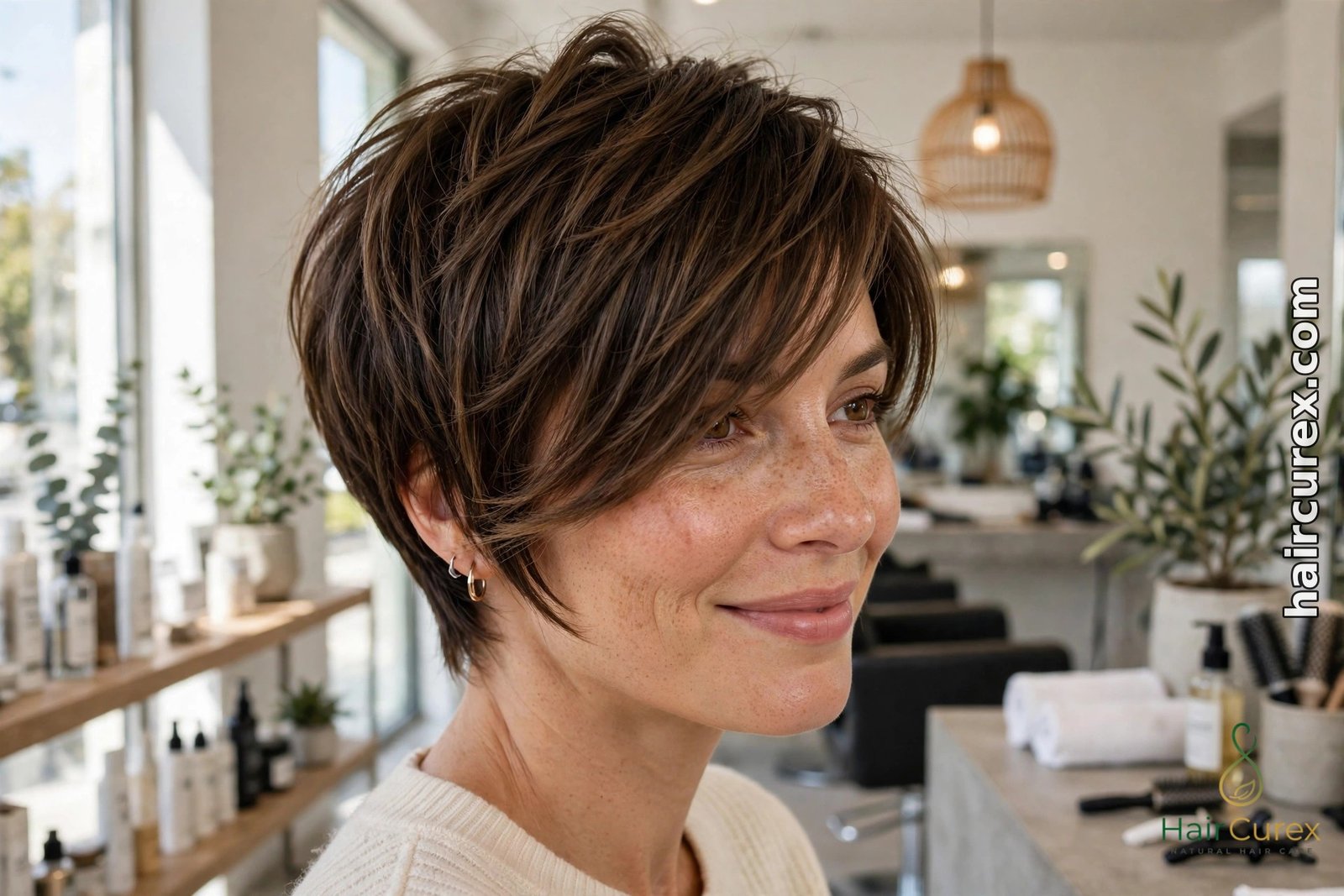
The honest answer is that a pixie cut suits most people — once it is cut for their features. Face shape matters more than anything else, because with so little hair left, your face does the talking. The table below is a starting point, not a rulebook: a good stylist will adapt the cut to your bone structure, hairline, and the way your hair naturally falls, and that matters more than any chart. But knowing what usually works for your face shape means you can walk in with a clear request instead of leaving it entirely to chance.
Oval faces have the easiest time with a pixie cut. Balanced proportions mean almost any version works — classic, textured, long, or cropped close — and the only real decision is how much fringe you want. Heart-shaped faces, with a wider forehead and narrower chin, suit a longer pixie with a side-swept fringe, which softens the forehead, and a little volume around the jawline to balance the chin. Round faces need the opposite trick: height and volume on top with tapered sides, which makes the face look longer, and a side-swept fringe that adds angles. A short, flat pixie on a round face can make the face look rounder, so length on top is the key detail. Square faces, with a strong jawline, look best with soft, wispy layers and a textured fringe that breaks up the jawline — a severe, blunt pixie can make the jaw look harder. Long faces suit a pixie cut with a fringe, because the fringe shortens the appearance of the face; without one, a very short pixie can make a long face look longer. If you are still working out which category you fall into, our guide to haircuts for a round face walks through face-shape basics in detail, and our haircuts for a square face covers the styles that soften a strong jawline — the same principles apply when the cut is a pixie.
Hair texture matters at least as much as face shape, and it decides which version of the pixie cut will behave for you. Fine hair is the classic pixie candidate: short hair looks and feels thicker once the weight is gone, and soft layers on top add height that fine hair cannot hold at longer lengths. John Frieda’s pixie guide makes the same point — a pixie cut tends to suit finer hair, because layered short cuts add volume and movement without length weighing the hair down: John Frieda on pixie cuts for different hair types. Thick hair can wear a pixie cut too, but it needs thinning and textured layers inside the cut, or the result can look bulky and mushroom-shaped — and you will need to be clear with your stylist about that, or the grow-out turns into an unmanageable bowl shape. Wavy hair works well in a textured pixie, because the natural wave gives the layers movement for free; very curly hair needs a longer pixie, cut dry so the stylist can see how each curl springs up, or the length shrinks far more than expected. And if you have a strong cowlick at the front hairline or the nape, say so before the scissors come out — a good stylist cuts around growth patterns instead of fighting them. If you want to see how a pixie cut would look on your own face before committing, try it virtually first with our guide to the AI hairstyle changer for women, which lets you test short styles from one photo.
There is also a confidence question, and it is worth answering honestly. A pixie cut puts your face, ears, and neckline on display in a way no other haircut does. If you love your cheekbones and are happy for people to notice them, a pixie cut will feel like a gift. If you usually hide behind your hair, the first week can feel exposed — most people adjust within days, but it is a real adjustment, and it is better to expect it than to be surprised by it. The cut suits people who are ready for that visibility, and it suits people who want to spend less time on their hair each morning and more time on everything else.
Pixie Cut Styles: Which Version Should You Choose?
| Pixie cut version | Length and shape | Best for | Upkeep |
|---|---|---|---|
| Classic pixie | Short sides and back, 1–2 inches on top, short fringe | Oval faces; anyone who wants a neat, timeless look | Trim every 4–5 weeks |
| Textured pixie | Choppy layers through the top, piece-y finish | Fine hair that needs volume; wavy hair; low-effort styling | Trim every 4–6 weeks |
| Long pixie | Longer top and sides, can tuck behind ears | Round and heart faces; first-timers; easiest grow-out | Trim every 5–6 weeks |
| Pixie with a fringe | Side-swept, blunt, or wispy fringe added to any pixie | Long faces; softening a wide forehead | Fringe trim between full cuts |
| Undercut pixie | One side or nape shaved, longer top | Bold, edgy look; thick hair that needs bulk removed | Trim every 3–4 weeks |
| Bixie (pixie-bob hybrid) | Grown-out pixie length, chin-skimming layers | The grow-out stage itself; people who want short but softer | Shaping trim every 6–8 weeks |
For a first pixie cut, the long pixie is the safest starting point. It still reads clearly as a pixie cut, but it leaves enough length to sweep, tuck, and restyle while you get used to short hair — and if you hate it, you are already partway through the grow-out. The textured pixie is the best choice if your main goal is volume, especially on fine hair, because the layers do the work that products cannot. The classic pixie is the one to pick when you want the cleanest, most polished version and you are happy to visit the salon most often. And the undercut is a style decision, not a beginner move: it looks fantastic on the right person, but the shaved section grows out visibly within two weeks, so it commits you to the most frequent trims of any version.
Whatever version you choose, bring pictures. Stylists interpret words differently — your “short” and their “short” may be inches apart — but a photo of the exact length, fringe, and texture you want removes the guesswork. Bring two or three photos of the same cut from different angles if you can, and one photo of a version you do not want, which is just as useful. Ask your stylist how the cut will grow out and when your next trim should be before they start cutting, not after. A skilled stylist cuts with the next eight weeks in mind, not just today, and the grow-out plan should be part of the conversation from the start.
How to Style a Pixie Cut in About Five Minutes
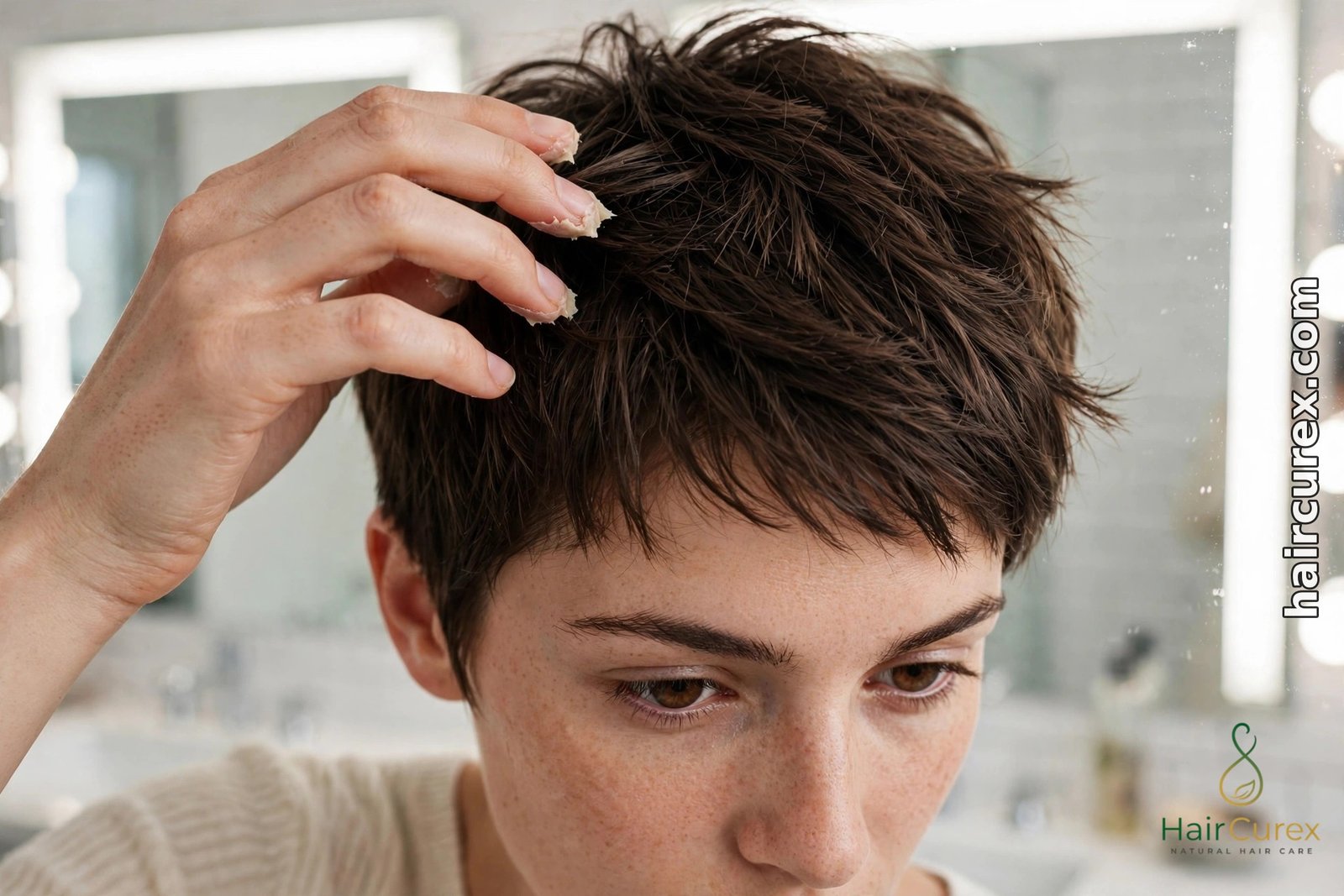
Styling a pixie cut is fast, and that is one of the main reasons people keep the cut for years. Most pixie wearers are done in about five minutes, and the routine is simple enough to learn on the first morning. Start with damp hair — towel-dried, not dripping. Work a pea-sized amount of product through the hair while it is still damp, because product spreads evenly on damp hair and sits on top of dry hair. For volume, apply a lightweight styling primer or mousse at the roots and blow-dry with your fingers, lifting the roots as you go; a small round brush adds more lift if you want a polished finish. For a sleek look, smooth a lightweight serum through the lengths and blow-dry with a flat brush. For a textured, lived-in look, skip the dryer entirely: work a small amount of matte wax or texturizing paste between your fingers and piece the layers where you want them, then leave it alone — the more you touch a pixie cut during the day, the flatter it gets.
The product rule for a pixie cut is the opposite of the rule for long hair: less is more, and the wrong product shows immediately. A pea-sized amount of wax or paste is enough for the whole head; more than that leaves the hair greasy and stringy, because there is so little hair for the product to spread across. Choose matte products for a textured pixie and light shine products for a sleek pixie, and avoid heavy oils and thick creams entirely — they flatten short hair within an hour. If your pixie cut goes flat by midday, the fix is usually dry shampoo at the roots, not more product: a quick spray, a minute to absorb, and a shake at the roots brings the volume back without adding weight.
Washing is simpler too, but it needs a small adjustment. Short hair gets oily faster, because the scalp’s natural oils have only an inch or two to travel before they coat the whole strand — so most pixie wearers wash every day or every other day, and that is normal for this cut. Use a gentle shampoo and a light conditioner applied only to the ends, and keep conditioner away from the roots or the hair will lie flat. The American Academy of Dermatology’s healthy-hair guidance covers the basics that matter here — gentle washing, minimal heat, and handling wet hair carefully: American Academy of Dermatology healthy hair tips. If your scalp gets dry or itchy with daily washing, try a sulfate-free shampoo and a cooler rinse before changing the wash frequency. Our hair care routine for beginners walks through wash frequency and product order if you are building a routine from scratch.
Heat styling is optional on a pixie cut, and most days you will not need it. If you do use a dryer, keep it on low or medium heat and hold it at least six inches from your head — short hair sits closer to the scalp, so it feels the heat more. A flat iron is rarely needed and can easily make a pixie cut look stiff; if you use one, keep it on the lowest setting that works and only on the pieces that need it. The whole point of the cut is that your hair’s natural texture does most of the work, so let it.
Pixie Cut Maintenance: Trims, Cost and Upkeep

A pixie cut is low maintenance day to day and higher maintenance at the salon — that is the deal, and it is worth pricing before you commit. Expect a trim every 4 to 6 weeks to keep the shape sharp; the undercut version needs one every 3 to 4 weeks, and the long pixie can stretch to 5 or 6 weeks. Each trim is usually a shorter, cheaper appointment than a full cut — typically in the range of $30 to $60 in most U.S. salons, against $50 to $100 or more for the first full pixie cut, depending on the city and the salon. Over a year, that works out to roughly 9 to 12 salon visits, so the annual cost of keeping a pixie cut is higher than the cost of keeping long hair, even though each visit is cheaper. Budget for it the same way you would budget for a subscription: it is the price of the shape, not an optional extra.
Between trims, there are two things that keep a pixie cut looking intentional instead of overgrown. The first is the neckline: the hair at the nape grows out fastest and looks untidy first, so some people tidy it at home with clippers between appointments — but only if you are confident doing it, because a slip at the nape is very visible. The second is the fringe: a fringe grows into your eyes within three weeks, and a quick fringe trim between full appointments is cheap and keeps the whole cut looking fresh. Ask your stylist whether they offer free or low-cost fringe trims between cuts; many salons do, and it stretches the time between full appointments.
Colour is the other upkeep question. A pixie cut shows colour differently from long hair: regrowth is visible sooner because there is less length to distract from it, so root touch-ups come around more often — typically every 4 to 6 weeks, in step with the trims. On the other hand, a pixie cut uses far less colour product, so each colour appointment is usually cheaper, and the short length means damage grows out quickly — a pixie cut is one of the fastest ways to cut away years of heat and colour damage in a single appointment. If you have been thinking about going back to your natural colour, a pixie cut is the quickest route there is.
Growing Out a Pixie Cut: What It Is Really Like

Growing out a pixie cut is the part nobody warns you about, and it is the most common reason people say they would think twice before getting one. The honest timeline is this: hair grows about half an inch per month, so a pixie cut takes roughly 6 to 12 months to reach a chin-length bob, and 12 to 18 months to reach shoulder length. That sounds manageable until you hit the awkward stage, which usually arrives around months three to four: the back and sides have grown faster than the top, the shape starts to look mullet-like, and the hair will not do what you want it to do. This stage is normal, it happens to almost everyone, and it is the stage where most people either give up and cut it short again or push through with the right strategy.
The strategy that works is counterintuitive: keep going to the salon. Schedule shaping trims every 6 to 8 weeks during the grow-out, and ask your stylist to trim the back and sides while letting the top and crown keep growing. This keeps the shape intentional and prevents the mullet stage from taking over, and it removes split ends so the length you do gain is healthy. Between months four and eight, the cut passes through the bixie stage — a shaggy pixie-bob hybrid that is a genuine style in its own right, not just a waiting room — and many people end up liking the bixie enough to stay there for a while. After that comes the short bob, and from there the grow-out gets steadily easier, because the hair is long enough to tie back and the shape holds itself.
Accessories are your best friend during the awkward stage. Headbands, clips, barrettes, and scarves pin back the pieces that will not behave, and they turn a bad hair day into a deliberate look. A little extra volume helps too: as the hair grows, the extra length gives you more volume to work with, and texturizing spray or root booster at the crown keeps the shape from going flat. The other thing that helps is a goal: decide in advance whether you are growing to a bob, a lob, or shoulder length, and tell your stylist, so every trim is planned around that target instead of just “keeping it tidy.” The grow-out is a long project, but it is a project with a definite end — and the people who plan for it almost always get there.
Is a Pixie Cut Good for Fine or Thinning Hair?

Yes — a pixie cut is one of the best cuts for fine hair, and it is often recommended for hair that is starting to thin. The reason is straightforward: long fine hair is weighed down by its own length, so it lies flat against the scalp and the scalp shows through. Short hair has no weight pulling it down, so it stands up from the scalp, and soft layers on top add height and the appearance of thickness. A textured pixie with layers is the most effective version for this, because the layers create the illusion of density that fine hair lacks on its own. The same logic applies to thinning hair: a pixie cut does not regrow hair or treat hair loss, and no haircut can, but it makes the hair you have look fuller than any longer style will.
There are limits, and they are worth knowing. A pixie cut will not suit hair that is thinning in patches with visible scalp in specific spots, because short hair cannot cover those areas the way longer hair can — in that case, a longer style with strategic layering is usually the better choice, and a dermatologist is the right person to talk to about the thinning itself. Very thick hair needs thinning inside the pixie cut or it will look bulky, and very curly hair needs a longer pixie cut dry so the curl pattern is visible while it is being cut. If your hair is fine and you are over 60, a pixie cut is a particularly popular choice — it adds volume, it is easy to manage, and it frames the face without the weight that drags older, finer hair down. The short version is this: a pixie cut makes fine hair look thicker, makes thinning hair look fuller, and makes thick hair manageable only with the right thinning and layering inside the cut.
Mistakes to Avoid Before You Get a Pixie Cut
The biggest mistake is getting a pixie cut on impulse — after a breakup, a bad day, or a photo of a celebrity whose face shape and hair texture are nothing like yours. A pixie cut is a wonderful decision when it is your decision, and a regrettable one when it is a reaction. Sleep on it for a week. Try the style virtually first, look at photos of people with your face shape and hair type wearing it, and talk to your stylist about what version would work for you before anyone picks up the scissors.
The second mistake is not communicating clearly with your stylist. “Short” means different things to different people, so bring photos, point to the exact length you want on the photo, and say what you do not want as clearly as what you do. Ask how the cut will grow out, when your next trim should be, and how to style it at home — and ask your stylist to show you the styling routine before you leave the salon, while your hair is still damp, so you can copy it the next morning. A good stylist will be glad to do this; a stylist who rushes you out the door is a sign to find someone else for the next trim.
The third mistake is expecting a pixie cut to be zero maintenance. It is low maintenance in the morning and high maintenance at the salon, and people who expect zero maintenance in both places are the ones who end up frustrated by week five. Budget for the trims, learn the five-minute styling routine, and keep a little dry shampoo in your bag for midday flatness. The fourth mistake is using too much product: a pea-sized amount of wax or paste is enough for the whole head, and more will leave the hair greasy and stringy. And the fifth mistake is forgetting the grow-out plan. If there is any chance you will want longer hair within the next year, choose a long pixie to start with — it is the version that gives you the most options and the shortest road back.
A pixie cut is a bold, practical, and genuinely liberating haircut — if you go in knowing what it asks of you. It suits most face shapes when it is cut for your features, it takes five minutes to style, and it makes fine hair look thicker than any longer style. It also asks for a trim every month or so and real patience if you ever grow it out. If that trade sounds fair to you, the next step is simple: book a consultation, bring your photos, and ask your stylist which version of the pixie cut fits your face, your hair, and your life. If you are torn between a pixie and something with more length to play with, our wolf cut for wavy hair guide covers a longer layered cut that keeps the volume and edge with more styling options — the two cuts suit different moods, and the right one is the one that fits how you actually live.
Pixie Cut FAQs
Does a pixie cut suit every face shape?
Almost — every face shape can wear a pixie cut when it is tailored to balance individual proportions. Oval faces suit nearly any version; round faces look best with height on top and tapered sides; square faces suit soft, wispy layers that soften the jawline; heart-shaped faces suit a longer pixie with a side-swept fringe; and long faces suit a pixie cut with a fringe. Hair texture matters as much as face shape, so a good stylist will adapt the cut to both.
Is a pixie cut good for fine hair?
Yes, it is one of the best cuts for fine hair. Short hair looks and feels thicker because the weight is gone, and soft layers on top add height that fine hair cannot hold at longer lengths. A textured pixie is the most effective version for volume. A pixie cut does not treat hair loss or regrow hair, but it makes the hair you have look fuller.
How often do you need to trim a pixie cut?
Every 4 to 6 weeks to keep the shape. Half an inch of growth changes the whole silhouette on a cut this short, especially around the ears and the nape. Undercut versions need a trim every 3 to 4 weeks, and a long pixie can stretch to 5 or 6 weeks. A fringe trim between full appointments keeps the cut looking fresh for longer.
How long does it take to grow out a pixie cut?
Plan on 6 to 12 months to reach a chin-length bob and 12 to 18 months to reach shoulder length, since hair grows about half an inch per month. Expect an awkward stage around months three to four, when the back grows faster than the top. Shaping trims every 6 to 8 weeks — trimming the back and sides while the top grows — keep the grow-out looking intentional.
Is a pixie cut high maintenance?
It is low maintenance in the morning and higher maintenance at the salon. Daily styling takes about five minutes, and washing and drying are faster than with long hair. But the cut needs a trim every 4 to 6 weeks, which works out to roughly 9 to 12 salon visits a year. If you are happy with that rhythm, the cut feels effortless; if you dislike regular salon visits, a longer style will suit you better.
Can you wear a pixie cut with curly hair?
Yes, but choose a longer pixie and have it cut dry so the stylist can see how each curl springs up. Curly hair shrinks more than straight hair when it dries, so a pixie cut too short can end up much shorter than expected. Textured layers work with the curl pattern instead of fighting it, and a longer pixie gives you more styling options while the curls settle.