

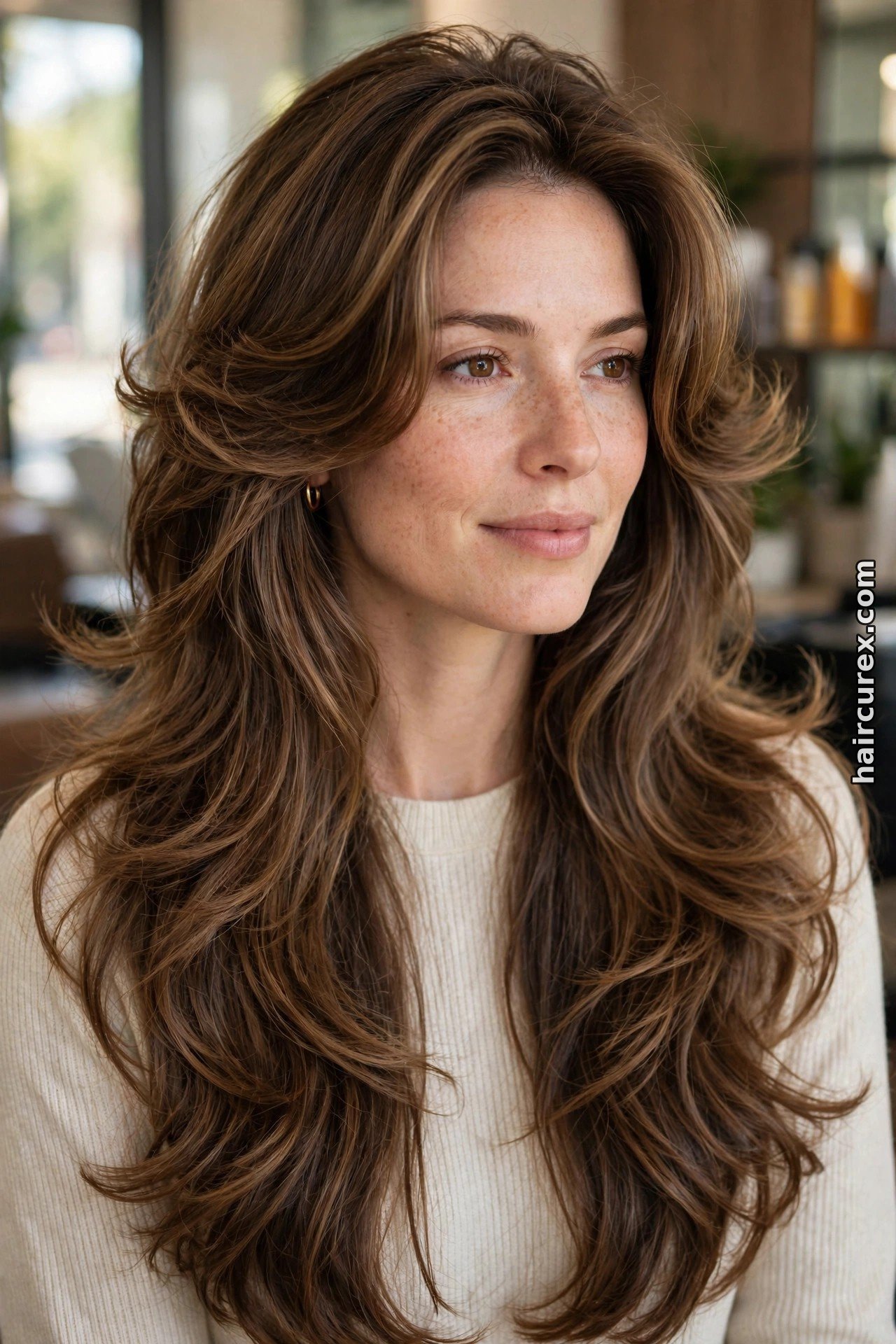
Quick answer: A butterfly haircut is a long layered haircut that keeps your overall length at the back while adding shorter, face-framing layers at the front. The top layers are cut short enough to lift and sweep away from the face — like wings — while the longest layer underneath stays long, so you get movement and volume without a dramatic chop. It works best on medium to long hair, and it looks its best with a bouncy blowout or a soft, brushed-out finish.
What Is a Butterfly Haircut?
The butterfly haircut gets its name from its shape, not from a single technique. When the hair is styled, the shorter layers around the face fan outward and back, while the longer hair underneath stays in place. From the front, it can look like a shorter, bouncy cut. From the back, it is clearly still long hair. That two-in-one effect is the whole appeal of the butterfly haircut.
In practical terms, a butterfly haircut has three parts that work together. First, there are long layers through the back and lengths, which remove heaviness and add movement without taking away much length. Second, there are shorter face-framing layers at the front, usually starting somewhere between the cheekbones and the chin. Third, there are often long curtain bangs that part in the middle and blend into those face-framing pieces. The key word is blend: the front pieces should flow into the longer layers, not sit apart from them like a separate haircut.
That blending is what separates a good butterfly haircut from a rushed layered cut. If the shortest front layer stops abruptly and the back is untouched, the result can look disconnected, with a shelf of short hair sitting on top of long hair. A skilled stylist connects the angles so the eye travels smoothly from the bangs, through the face frame, and into the long layers. When you run your fingers through the finished cut, you should feel a gradual change in length, not a sudden step.
Who Does a Butterfly Haircut Suit?
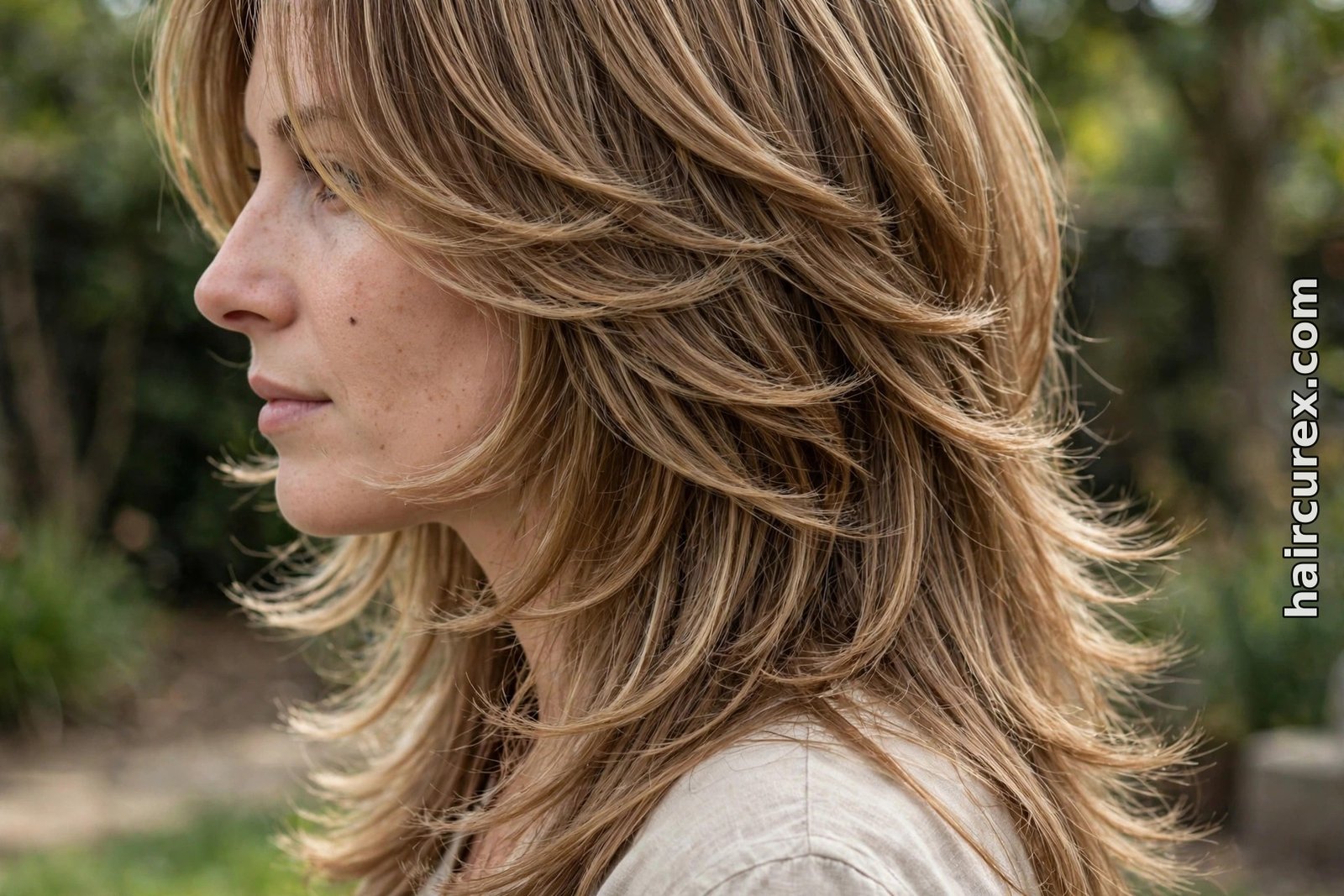
The butterfly haircut is most forgiving on medium to long hair with a straight, wavy, or loosely curled texture. You need enough length for the contrast between the short front layers and the long back to show. On hair that is already shoulder-length or shorter, there is less room to create that contrast, and the result may read as an ordinary layered bob or shag rather than a butterfly haircut.
Density matters too. Medium to thick hair usually shows the layers best, because there is enough hair to keep the ends looking full after layering. Very fine hair can still wear a butterfly haircut, but the layers need to be longer and fewer, or the ends can start to look thin and wispy. If your hair is fine, ask your stylist to keep the layers soft and to avoid heavy thinning, which removes bulk without adding shape. Conversely, very thick, heavy hair often benefits most from this cut, because the long layers take out weight and let the hair move instead of sitting like a solid curtain.
Face shape is less of a deal-breaker than social media suggests, because the stylist can move the shortest layer up or down. A good starting point is to think about where you want attention drawn. Layers that start at the cheekbones add lift and draw the eye to the cheekbones and eyes. Layers that start at the chin or below tend to be softer and more forgiving, and they are often a safer first step if you have never had face-framing layers before. If your face is rounder and you want a lengthening effect, longer curtain bangs and a lower starting point usually work better than very short pieces at the widest part of the cheeks. If your face is longer, a fuller curtain bang can help balance the length rather than stretching it further.
There are two groups who should pause and talk carefully with a stylist first. The first is people with very tight curls or coils. Layering changes how curls spring up and fall, and a cut designed around a blowout may behave very differently when the hair air-dries in its natural pattern. That does not mean a butterfly haircut is impossible on curly hair — many curly cuts use layered, face-framing shapes — but it should be cut and discussed with your natural texture in mind, not copied from a straight-hair reference photo. Our guide to building a curly hair routine can help you think through how a new shape will fit your wash-day pattern. The second group is people who rarely style their hair with heat. A butterfly haircut still looks good air-dried, but it will not give you the winged, bouncy shape on its own. If you want a truly low-effort cut, compare it with the options in our low-maintenance hairstyles guide before you commit.
Butterfly Haircut by Hair Type
Use this table as a starting point for your salon conversation, not as a rule. Your stylist should adjust every detail for your density, growth patterns, and how you actually wear your hair day to day.
| Hair type | What usually works | What to watch out for |
|---|---|---|
| Straight, medium to thick | Classic version: cheekbone-to-chin face frame, long layers, bouncy blowout | Layers can look flat if they are cut too long; styling is what sells the shape |
| Wavy | Softer, longer face frame; layers that enhance the natural wave | Short layers can flip unpredictably; ask how it will sit air-dried |
| Loose curls | Longer layers cut with curl pattern in mind; face frame kept below the chin | Curls spring up shorter than they appear when wet, so go longer at first |
| Fine hair | Fewer, longer layers; blunt-ish perimeter to keep ends looking full | Heavy thinning or too many short layers can make ends look wispy |
| Thick, heavy hair | Long layers throughout to remove weight and add movement | Without blending, the top can look bulky and the ends can look disconnected |
| Short hair (above shoulders) | Usually better as a layered cut or shag-inspired shape | Not enough length for the classic long-back, short-front contrast |
Butterfly Haircut vs. Other Layered Cuts
It helps to know how the butterfly haircut differs from the cuts it is most often confused with. A regular long layered cut adds layers all over, mainly to remove weight and add movement. A butterfly haircut is more deliberate at the front: the face-framing layers are the star, and the back layers exist to support them while keeping the length. A wolf cut, by contrast, is intentionally choppier and more textured, with shorter layers through the crown and a shaggier finish. If you like the idea of layers but want something softer and more polished than a shag, the butterfly haircut is usually the better match — and you can compare the mood of each by reading our wolf cut for wavy hair guide alongside this one.
For a broader sense of what is possible at different lengths, our hair cuts guide rounds up shapes worth considering before you book. Bringing one or two reference photos of a butterfly haircut on hair similar to yours — similar length, density, and texture — is still the single most useful thing you can do. Avoid heavily filtered photos or photos of hair extensions, which set expectations no real cut can meet.
How to Ask for a Butterfly Haircut at the Salon
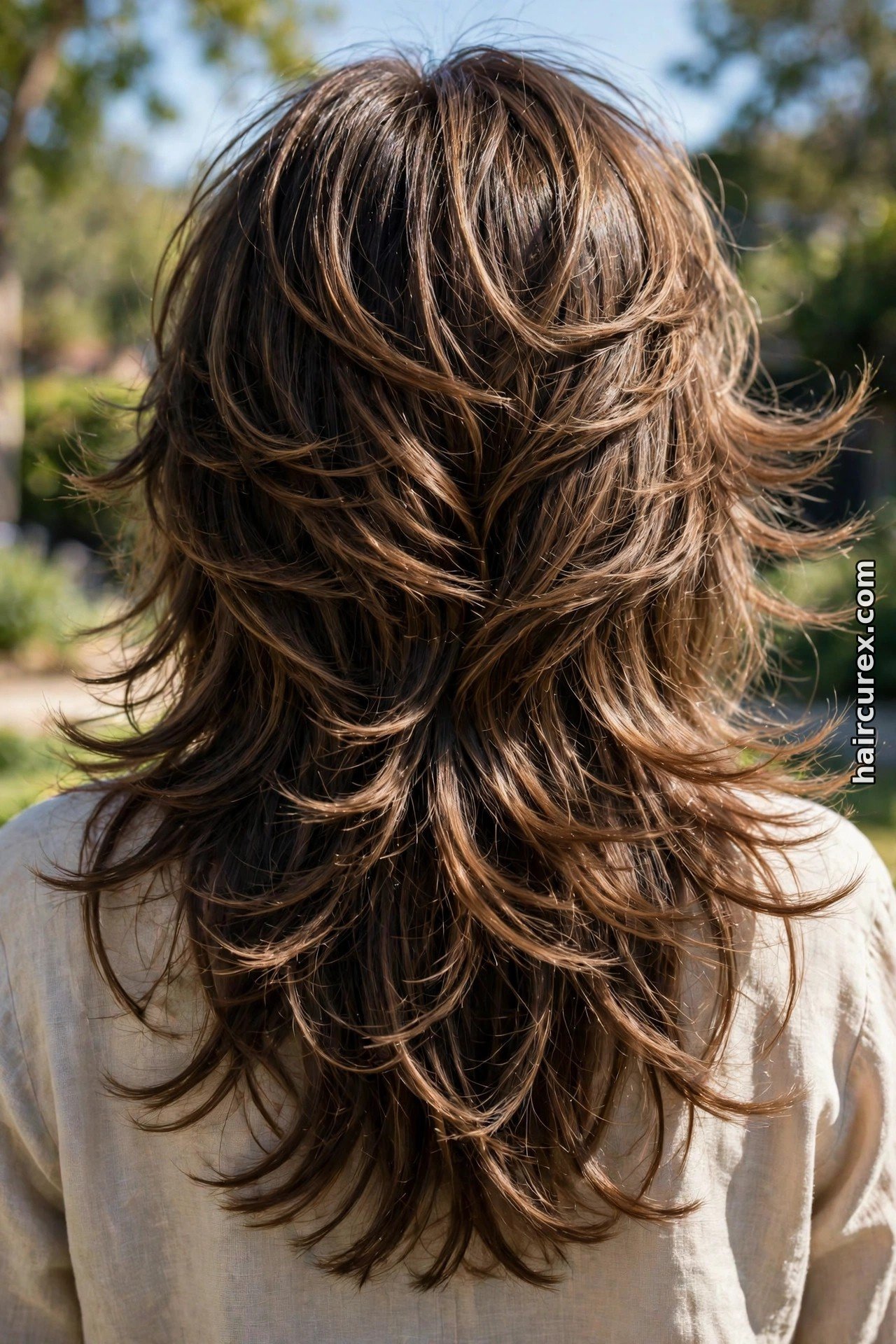
Stylists hear the words “butterfly haircut” and picture slightly different things, so do not rely on the name alone. Describe the shape, the length you want to keep, and where the shortest layer should start. Here is a script you can adapt:
“I would like a butterfly haircut that keeps my length at the back. Please add long layers through the lengths, with shorter face-framing layers at the front that blend into the rest of the hair. I would like long curtain bangs that part in the middle and sweep back, starting around [cheekbone / chin / collarbone — pick one]. I want movement and volume, not choppy pieces or heavy thinning, and I want the ends to stay as full as possible.”
Before the scissors come out, confirm these five points:
- Where does the shortest layer start? Cheekbone, chin, or collarbone are the usual choices. Start lower if you are nervous — you can always go shorter next time, but you cannot glue hair back on.
- How much length stays at the back? Say it plainly: “Please keep the longest layer as long as possible.” If your stylist suggests taking significant length off the back, ask why, because length preservation is central to a butterfly haircut.
- Do you want curtain bangs? They are common but not compulsory. You can have a butterfly haircut with face-framing layers and no separate bang section.
- How will it be cut — wet or dry? For wavy and curly hair, ask how the stylist accounts for shrinkage and natural fall. For straight hair, a wet cut followed by a styled finish is standard.
- How should it grow out? Ask what the cut will look like in six to eight weeks. A well-blended butterfly haircut grows out softly; a choppy one can start to look uneven quickly.
How to Style a Butterfly Haircut
The signature butterfly haircut finish is a bouncy blowout: the face-framing layers curve away from the face, the lengths have soft bend, and the ends flick out just slightly. You do not need a salon to get close to it, but you do need to style the front layers with direction. Left to dry however they fall, they will usually fall forward, which hides the shape.
The classic bouncy blowout
Start with damp, detangled hair and a heat protectant. Rough-dry until the hair is about 80 percent dry, then switch to a round brush. Work in sections, starting at the back and moving forward. For the face-framing layers, the key move is to brush them back and away from the face as you dry, rolling the brush outward so the ends curve away rather than toward your chin. For the lengths, brush downward with a slight bend at the ends. Finish with a cool shot from the dryer to help the shape hold, and avoid brushing everything out aggressively once it is dry — that flattens the layers you just built.

The quick flat-iron bend
On days when a full blowout is too much, a flat iron can fake the same direction. Take the face-framing pieces, clamp near the mid-lengths, and curve the iron gently backward, away from the face, as you glide down. Do the same with a soft outward flick on the very ends of the long layers. Keep the iron moving, use a low or medium heat setting, and always use a heat protectant first. This method is faster, but it gives less volume than a round-brush blowout, so it suits second- or third-day hair and softer, everyday versions of the butterfly haircut.
Styling a butterfly haircut without heat
A heat-free version will not give you the full winged blowout, but it can still look intentional. After washing, scrunch or finger-coil your natural wave, and clip the front face-framing pieces back and away from the face with small clips while the hair dries. This trains the front layers to fall backward instead of forward. Once dry, remove the clips and separate the layers gently with your fingers. On wavy hair, a light curl cream applied to damp lengths can help the layers clump into soft waves rather than frizzing apart.

Keeping a Butterfly Haircut Looking Good
Layered cuts show damage more readily than blunt cuts, because the shortest pieces are also the most visible ones. The American Academy of Dermatology’s hair-care advice is a useful baseline here: apply shampoo mainly to the scalp rather than scrubbing the lengths, condition after washing (ends only for fine or straight hair, full length for dry or curly hair), detangle wet hair gently with a wide-tooth comb starting at the ends, and protect hair from heat with low or medium settings and a heat-protectant product. You can read those dermatologist tips in full on the AAD’s healthy hair tips page. Our own hair washing guide walks through the same wash-day habits step by step.
Colour can emphasise the shape, because highlights placed through the face-framing layers catch the eye where the layers move. But colour and frequent heat styling add up, so if your hair is already colour-treated, discuss spacing out chemical services with your stylist. For curly or coily textures, the AAD’s curly hair tips from dermatologists are worth reading before combining a layered cut with colour or heat.
Mistakes to Avoid With a Butterfly Haircut
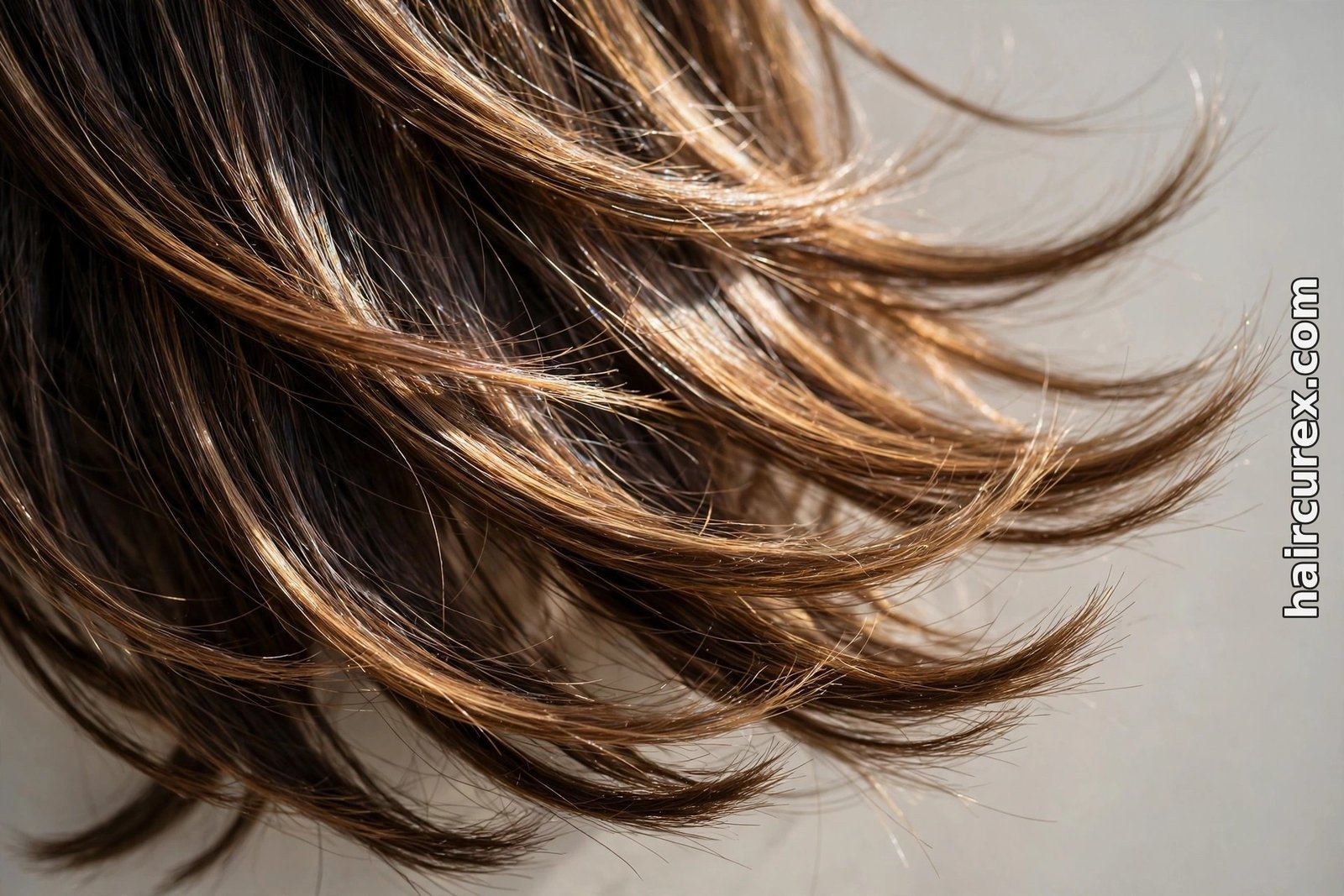
The most common mistake is asking for the name without describing the shape, then being surprised by the result. The second is going too short at the front on the first try. Very short face-framing pieces can look striking in a photo, but they are harder to tie back, harder to grow out, and more likely to flip in unexpected directions on wavy or cowlick-prone hair. Start longer; you can refine the cut at your next appointment once you know how it behaves on your hair.
Another mistake is heavy thinning. Thinning shears can make thick hair feel lighter, but over-thinning the ends of a butterfly haircut removes the fullness that makes the long back look good. If your stylist reaches for thinning shears, ask what they are trying to achieve and whether long layers alone would do it. Similarly, be cautious about cutting a butterfly haircut on hair that is already damaged or breaking at the ends — layers will expose the weakest hair, and the result can look thinner than you hoped. In that case, a period of trims and gentler care first may give you a better foundation.
Butterfly Haircut FAQs
Is a butterfly haircut good for thin hair?
It can be, but with restraint. Keep the layers long and few, and keep the perimeter as full as possible so the ends do not look wispy. Avoid heavy thinning, and discuss with your stylist whether a softer version of the butterfly haircut suits your density better than the full, bouncy version seen online.
Does a butterfly haircut work on short hair?
Not in its classic form. The butterfly haircut relies on the contrast between short front layers and a long back, so it needs medium to long hair to read clearly. On shorter hair, a layered cut or shag-inspired shape usually gives a similar feeling with a better result.
How do I ask for a butterfly haircut without losing length?
Say so directly: ask your stylist to keep the longest layer as long as possible, add long layers for movement, and put the shortest face-framing layer no higher than you are comfortable with. Bring reference photos on hair similar to yours, and confirm the shortest layer’s starting point before cutting begins.
Can I get a butterfly haircut with curly hair?
Yes, but it should be adapted to your curl pattern rather than copied from a straight-hair photo. Keep the face frame longer to allow for shrinkage, ask how the cut will look air-dried as well as blow-dried, and consider a stylist experienced with curly cuts. The shape can be beautiful on curls; the styling routine will simply be different.
How often should I trim a butterfly haircut?
Every 8 to 12 weeks is a good general range. The face-framing layers grow out first and lose their lift, so if you love the crisp front shape, you may prefer the shorter end of that range. Between trims, the cut should still grow out softly if the layers were well blended.
Do I need a blowout every day for a butterfly haircut?
No. A blowout gives the full winged effect, but the cut also works with a quick flat-iron bend, rollers on the front sections, or a heat-free routine where the front pieces are clipped back while drying. What matters is styling the front layers away from the face; without that direction, the shape is much less visible.
Will a butterfly haircut make my hair look thicker or thinner?
It can do either, depending on how it is cut. Well-placed layers add volume and movement, which can make hair look fuller. Too many short layers, or heavy thinning, can make the ends look thinner. Tell your stylist which outcome you want, and ask them to protect the fullness of the ends if thickness is your priority.