

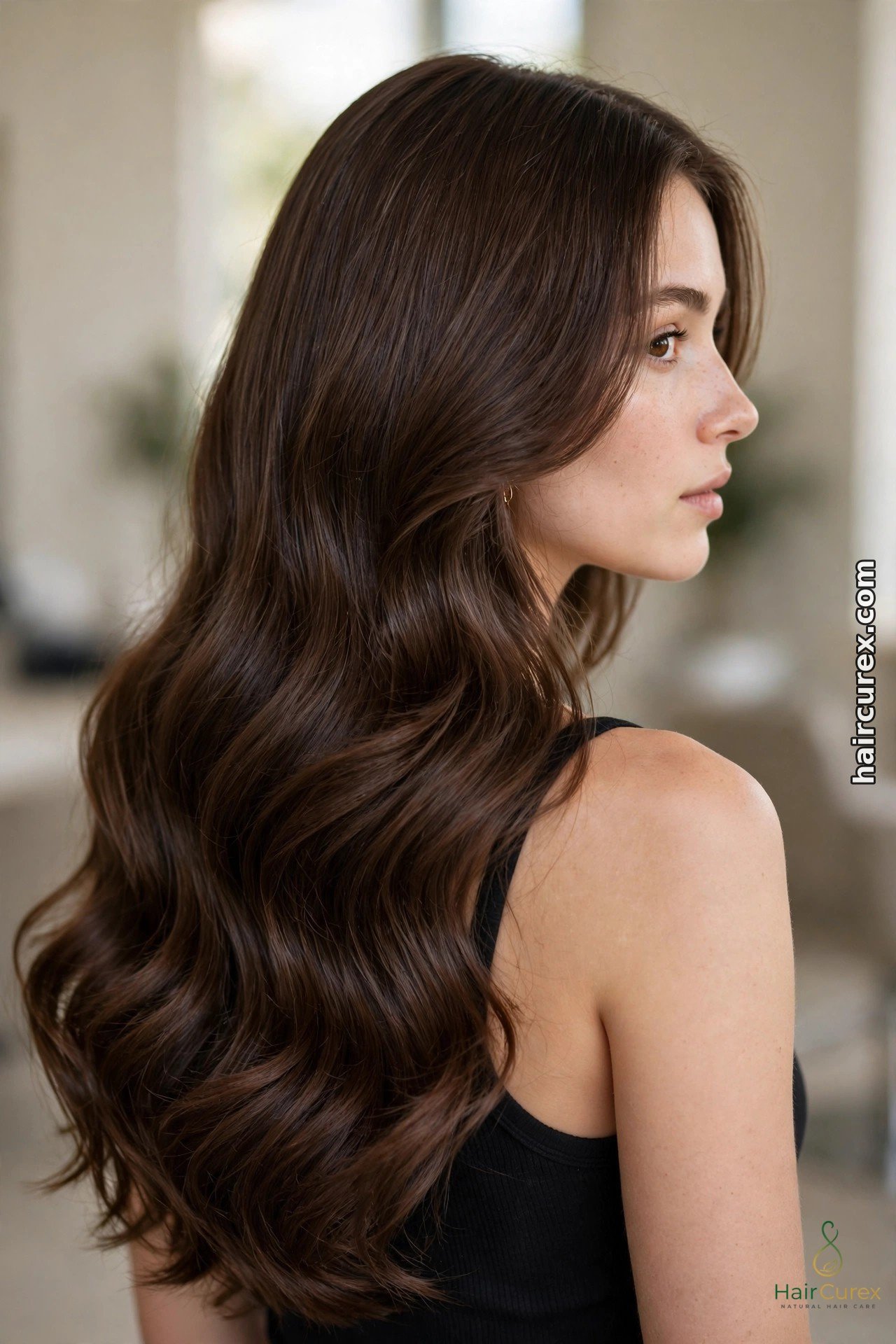
Halo hair extensions are a single weft of real or synthetic hair sewn onto a thin, clear wire that sits around the crown of your head like a halo, with no clips, glue, tape, or braids. Your own hair is pulled over the wire to hide it, and the weft hangs underneath, adding length and volume in minutes. Because nothing is attached directly to your strands, they are one of the gentlest ways to change your hair for a day, a wedding, or a photo, and one of the easiest for a complete beginner to use at home.
Quick answer: If you want longer, fuller hair without a salon appointment, damage, or a long-term commitment, halo hair extensions are a good first choice. Choose human hair if you want to heat-style it and blend it naturally, pick a length only a few inches longer than your own hair, match the colour to the ends of your hair rather than the roots, and expect to spend two to five minutes putting it on once you have practised. With gentle care, a good human-hair halo lasts a year or more.
What Are Halo Hair Extensions?
A halo extension is a curved weft of hair with an invisible wire sewn to each end. The wire rests on your head about an inch or two back from your hairline, and the weft falls down the back of your head. You leave a section of your own hair out at the front and on top, then pull that hair over the wire so the wire disappears and the extension blends in underneath. The weight is spread around your head rather than pulling on a few small sections, which is why most people find a halo comfortable for a full day.
Most halo hair extensions are made from human hair or from heat-friendly synthetic fibre. Human hair costs more, but it can be curled, straightened, and coloured in the same way as your own hair, and it usually looks and moves more naturally.
Synthetic halo hair extensions are cheaper and hold a pre-set style well, but they cannot take high heat and may look shinier or feel coarser. Either type comes in a range of lengths, colours, and weights, and many brands sell a standard weft plus a thicker weft for very thick hair. For a general overview of the other options available, see our guide to hair extensions and how each method works.
How Halo Extensions Differ From Clip-Ins, Tape-Ins, and Sew-Ins
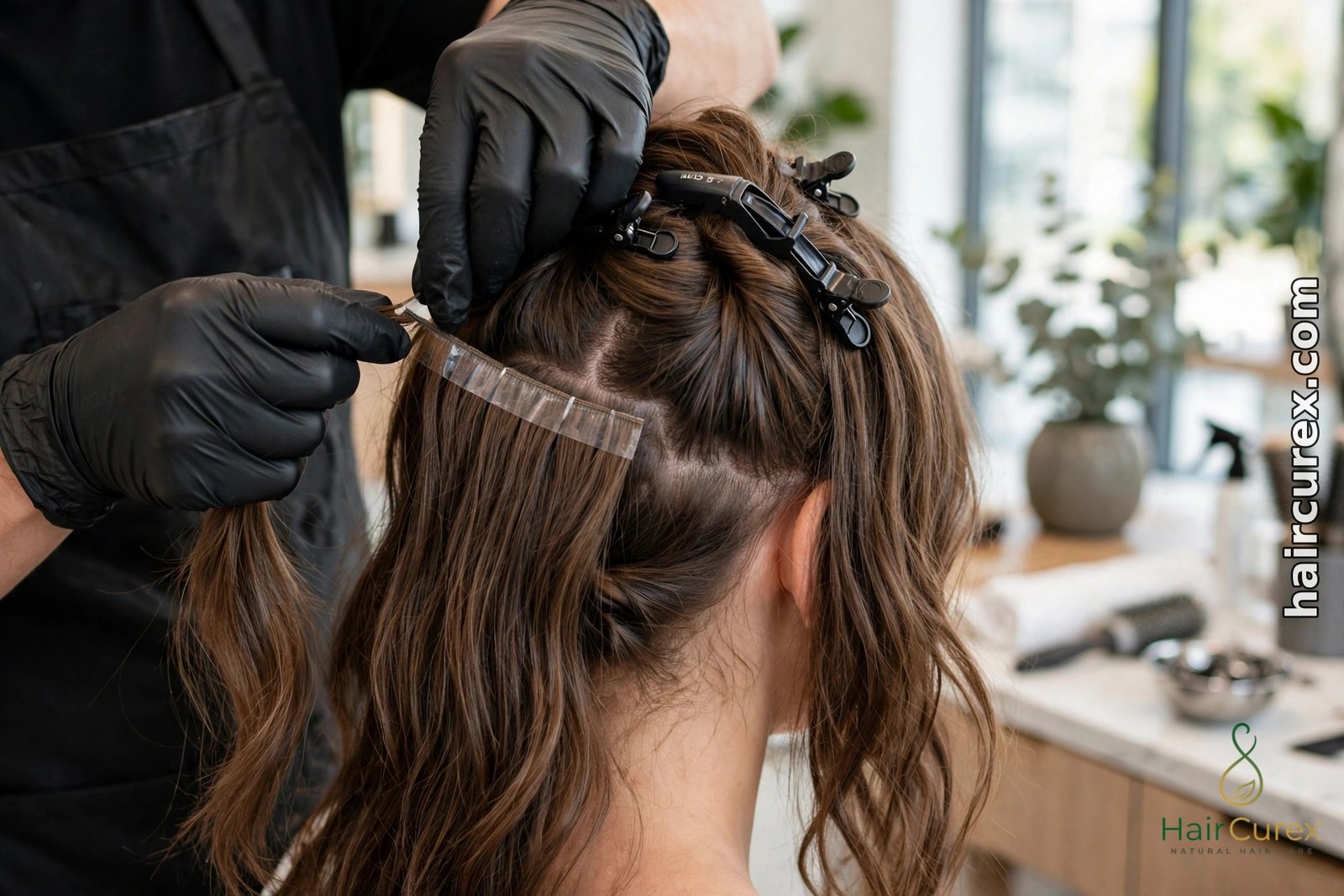
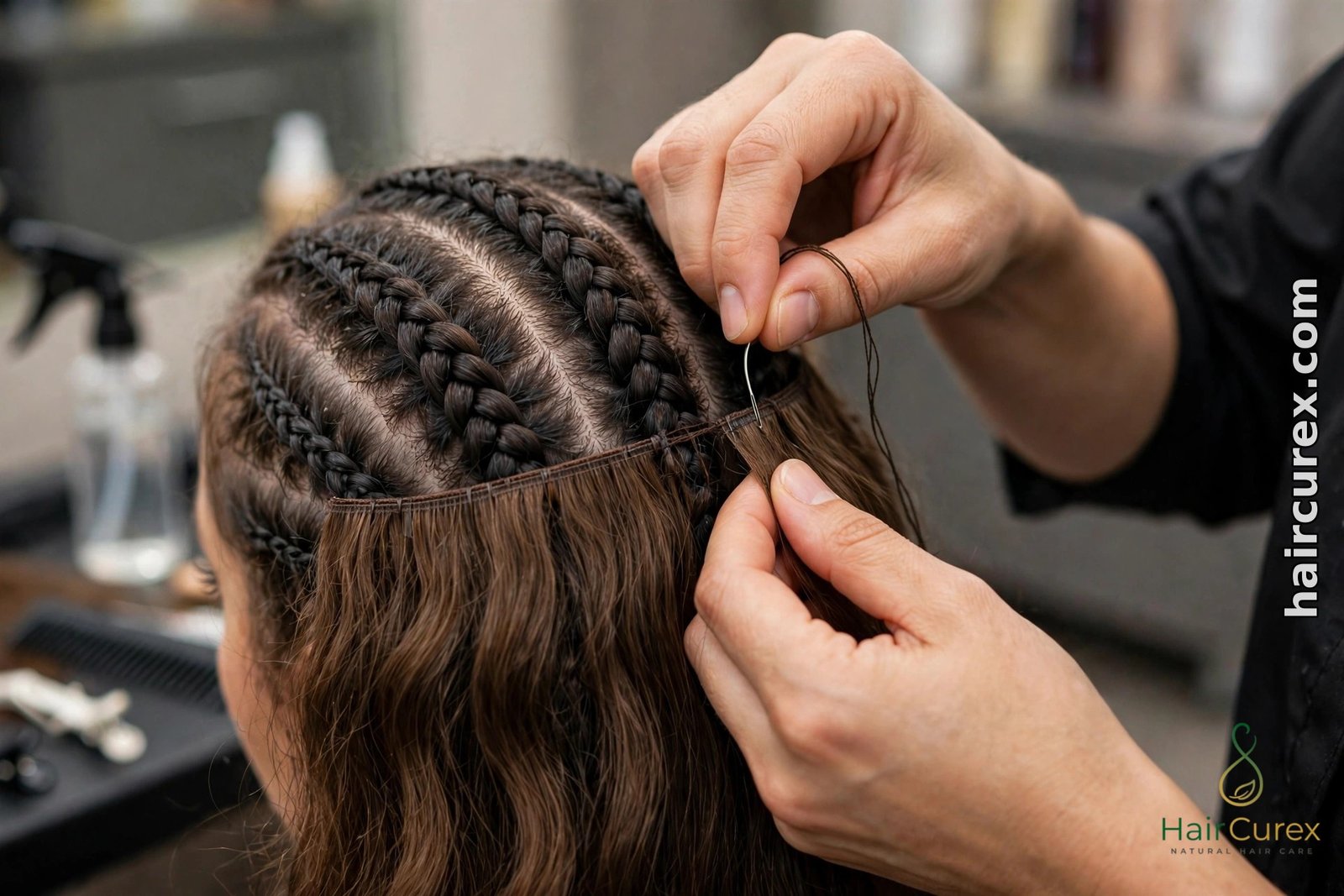
The main difference is how the hair is attached. Clip-ins use small clips that grip your own hair, tape-ins are glued in thin sandwiches around your hair, and sew-ins are stitched onto braids. Halo hair extensions use none of these. That makes them faster to put on and take off, and it removes the most common causes of pulling, breakage, and scalp soreness. The trade-off is that a halo is not a semi-permanent method: you take it out every night, and it is not meant for swimming, sleeping, or very high ponytails.
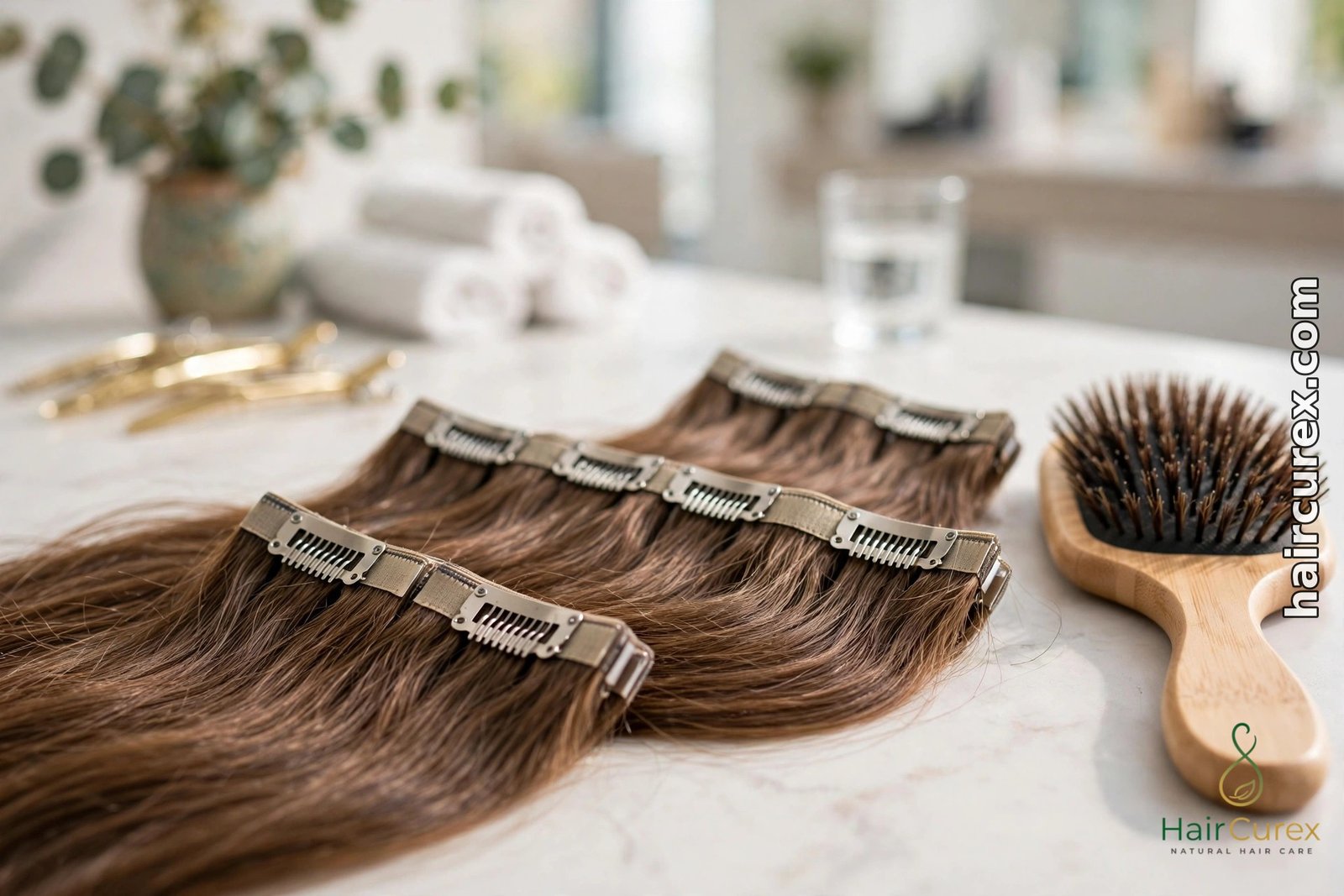
Clip-ins are the closest alternative. They give you more control over where the volume goes, because you can place wefts exactly where you need them, but they take longer to fit and each clip is a small pressure point. Tape-ins and sew-ins stay in for weeks, so they suit people who want a lasting change and are happy to visit a salon for fitting and removal, but they need professional maintenance and carry a higher risk of damage if they are fitted too tightly or left in too long. A halo sits in the middle: a bigger change than a single clip-in weft, with far less commitment than tape or a sew-in.
Halo vs Clip-In vs Tape-In vs Sew-In at a Glance
| Method | Install time | Damage risk | Longevity | Typical cost |
|---|---|---|---|---|
| Halo | 2 to 5 minutes at home | Very low; nothing is glued or clipped to your hair | 6 to 12 months or more with care | About $50 to $400 |
| Clip-in | 5 to 15 minutes at home | Low, but clips can pull if worn daily | 6 to 12 months with care | About $40 to $300 |
| Tape-in | 30 to 60 minutes in a salon | Moderate; adhesive and removal can stress hair | 6 to 8 weeks per fitting | About $200 to $800 per fitting |
| Sew-in | 1 to 3 hours in a salon | Moderate to high if braids are tight or heavy | 6 to 8 weeks per fitting | About $250 to $1,000 per fitting |
Prices vary widely with hair quality, length, and where you live, so treat the figures above as a guide. A human-hair halo from a reputable brand usually costs more than a synthetic one, and a thicker weft costs more than a fine one, but the cost per wear is often lower than salon methods because you can reuse the same halo for a year or more.
Who Do Halo Hair Extensions Suit?
Halo hair extensions suit most hair types, and they are especially helpful for fine or thin hair, because they add volume without clips that can slip or show through. If your hair is very short, very curly, or very thick, you may need to check the fit more carefully: a halo blends best when your own hair is at least shoulder length, so the ends of the weft can mix with your own ends.
People with a sensitive scalp often prefer halo hair extensions because there is no glue, tape, or tight braiding, and the wire can be loosened or tightened to suit your head.
They are also a good choice if you are new to extensions, if you only want them for weddings, holidays, or special occasions, or if you are growing your hair out and want extra length while you wait.
If your hair is thinning, halo hair extensions can add the appearance of fullness, but they will not treat the cause. In that case, look at the basics first, including a gentle shampoo for thinning hair, and talk to a dermatologist if shedding continues or you notice patchy loss. The American Academy of Dermatology has clear, practical guidance on hair loss and when to seek help, which is worth reading before you spend money on any extension method.
How to Choose Length, Colour, and Weight
Length
Measure from the top of your head, where the wire will sit, down to where you want the ends to fall. For a natural result, choose a halo only two to four inches longer than your own hair. A much longer weft on short hair is hard to blend, because your own ends will stick out in a visible line. If your hair is layered, a 16-inch or 18-inch halo is often the most believable first choice, while 20 inches and longer suit people whose own hair is already long.
Colour
Match your halo hair extensions to the ends of your hair, not the roots, because the ends are what sit beside the weft. If you have balayage or highlights, look for a blended or rooted shade rather than a single flat colour. If you are between two shades, choose the lighter one: a slightly lighter weft blends more easily than a darker one, and it looks like a natural highlight. Most brands offer free colour-matching help if you send a photo taken in daylight, and that is worth using before you order.
Weight
Weight is usually given in grams. Halo hair extensions of about 100 to 140 grams suit fine to medium hair, while 160 to 220 grams suit thick hair or a very full look. A heavier weft on fine hair can feel heavy, slip, and show at the parting, while a light weft on thick hair will look thin by comparison. If in doubt, ask the brand which weight they recommend for your hair thickness, and check the return policy before you buy.
How to Put On a Halo Hair Extension in Minutes
Put your halo hair extensions on before you do your makeup or get dressed, so you can check the fit in a mirror from the front and the back. Work on dry, brushed hair, and keep the wire loose enough to sit comfortably. The first few tries feel fiddly; by the third or fourth time, most people can do it in under five minutes.
- Brush your own hair and the halo gently, from the ends upward, so there are no tangles.
- Adjust the wire so it fits snugly around your head, like a headband, with the weft hanging at the back.
- Place the wire on your head about an inch or two behind your hairline, with the weft resting just below the crown.
- Pull a section of hair from the front and top over the wire, so the wire is hidden and only your own hair shows on top.
- Check the sides in a mirror and pull a little more hair forward over the wire if you can see it.
- Brush the top layer of your own hair over the weft, then brush the ends together so they blend.
- Shake your head gently and look from behind. If the weft shows, lift the wire slightly higher or pull more hair over it.
If the halo slips, the wire is probably too loose, or your hair is too smooth. Tighten the wire by a small amount, add a little dry shampoo or texture spray at the crown for grip, and avoid very silky, freshly conditioned hair on the first wear. If it feels tight or gives you a headache, loosen the wire: a halo should feel secure, not painful. For a detailed, brand-level walkthrough of the same steps, see Luxy’s halo hair extensions guide.
How to Style and Blend Your Halo
Blend first, style second. Brush your own hair and the halo together, then style them as one piece so the curl or wave runs through both. Loose waves are the easiest blend, because they hide the line where your hair ends and the weft begins.
A straight, blunt finish is harder, because any difference in length shows at once, so if you wear your hair straight, ask a hairdresser to trim the halo to match your layers. A bob haircut can also work with halo hair extensions, but keep the length close to your own hair and blend the ends carefully.
Heat is the main risk when styling human hair. Use a heat protectant, keep the temperature as low as will do the job, and remember the temperature at which hair burns before you turn a tool up. A hair dryer brush is a useful tool for blending, because it smooths your top layer over the weft in one pass. For a broader view of how extensions fit into everyday styling, Glamour’s hair extensions guide is a helpful, plain-language starting point.
How to Wash and Store Your Halo
Take your halo hair extensions off before washing them, and wash them far less often than your own hair: every 10 to 15 wears is usually enough, or when they look dull or feel coated in product. Fill a basin with cool or lukewarm water, add a small amount of sulphate-free shampoo, and let the weft soak for a few minutes. Gently squeeze the shampoo through, rinse in clean water, and apply a light conditioner to the mid-lengths and ends only. Do not rub, twist, or wring the hair.

Pat the weft dry with a towel, lay it flat or hang it to air-dry, and brush it only when it is fully dry, starting at the ends. Store it flat in its box or bag, or hang it on a hook, with the wire coiled loosely and the hair brushed smooth. Keep it away from direct sunlight and damp places, and never store it while it is wet, because that can cause tangling and a musty smell. A little leave-in conditioner on the ends before storage helps prevent dryness.
How Long Do Halo Hair Extensions Last?
Human-hair halo hair extensions usually last 12 months or more with regular wear and gentle care, and some last two years. Synthetic halos last less time, often three to six months, because the fibres lose their shine and shape with heat and friction.
What shortens the life of any halo is the same list: frequent washing, high heat, rough brushing, sleeping in it, and storing it tangled. Treat it gently, wash it rarely, and keep it out of the pool and the sea, and it will last far longer.
Do Halo Hair Extensions Damage Your Hair?
When they are fitted correctly and taken out each night, halo hair extensions are among the least damaging extension methods, because nothing pulls on individual strands for weeks at a time.
Most problems come from a wire that is too tight, a weft that is too heavy for fine hair, or wearing the halo for very long hours every day. Take it out at night, give your scalp a break on days when you do not need it, and check your hairline for soreness. If you have a scalp condition, very fragile hair, or hair loss, ask a dermatologist or a trichologist before using any extension. The American Academy of Dermatology explains the common causes of hair loss and the signs that deserve medical advice.
How Much Do Halo Hair Extensions Cost?
Expect to pay about $50 to $150 for good synthetic halo hair extensions, and about $150 to $400 for human-hair halo hair extensions, with thicker and longer wefts at the top of that range. There is no salon fitting fee, because you put them on yourself, and there is no removal or maintenance appointment, so the total cost over a year is often lower than tape-ins or sew-ins.
Be wary of very cheap human hair: it is often mixed with synthetic fibre, which will not style or last in the same way. Buy from a brand with clear photos, a colour-match service, and a return policy.
Common Mistakes to Avoid
- Choosing halo hair extensions much longer than your own hair, which makes blending almost impossible.
- Matching the colour to your roots instead of your ends.
- Wearing a weft that is too heavy for fine hair, so it slips and pulls.
- Putting the wire too far forward, so it shows at the hairline.
- Leaving the halo in overnight, or wearing it to swim.
- Brushing it roughly from the top down, which creates tangles.
- Using high heat without a heat protectant.
- Skipping a colour match and ordering in a rush.
Frequently Asked Questions About Halo Hair Extensions
Can you wear a halo hair extension every day?
Yes, you can wear a halo daily if it fits well and feels comfortable, but take it out every night and give your hair a break on days when you do not need the extra length. Daily wear will shorten its life a little, so gentle handling and less frequent washing matter more.
Will a halo hair extension stay in place?
Halo hair extensions stay in place when the wire is adjusted to fit your head and your own hair is pulled over it. If they slip, tighten the wire slightly, add texture spray at the crown, and check that the weft is sitting low enough on the back of your head.
Can you put your hair up with a halo in?
You can wear a low ponytail or a loose low bun with halo hair extensions in, but a high ponytail or topknot will usually expose the wire and the weft. Keep updos low and loose, and check the back in a mirror before you go out.
Are halo hair extensions good for thin hair?
Yes, halo hair extensions are often a good choice for thin hair because they add volume without clips or glue, and the weight is spread around the head. Choose a lighter weft, about 100 to 140 grams, and match the colour to your ends for the most natural result.
How do you hide the wire?
Pull a section of your own hair from the front and the crown over the wire, then brush the top layer down over it. If you can still see the wire, move it a little further back, pull more hair forward, or add a light wave, which helps hide the line.