


The bob haircut is the rare hairstyle that never really goes out of fashion. It was the defining cut of the 1920s, it came back in the 1960s, it dominated the 1990s, and today it is everywhere again — on celebrities, on the street and all over social media. The reason is simple: a bob is short enough to feel fresh and light, long enough to style in several different ways, and flattering on far more people than most short cuts.
But “a bob” is not one haircut. There are at least ten recognised types, from the sharp blunt bob to the soft French bob, and the difference between a bob you love and a bob you regret is usually picking the wrong type for your face shape and hair type. This guide explains what the bob haircut is, every major type, which one suits your face and hair, exactly what to ask your stylist for, how to style it at home, and how to keep it looking sharp between appointments.
Quick answer: The bob haircut is a short-to-medium cut that ends somewhere between the cheekbone and the shoulders, usually in one clean line around the head. The best type for you depends on your face shape and hair type: oval faces suit almost any bob; round faces look best with a longer A-line bob or lob that elongates the face; square faces suit soft layered bobs; fine hair looks thicker in a blunt bob; thick hair needs layers to remove bulk; and wavy or curly hair suits textured or shaped bobs. Expect a trim every 6–8 weeks to keep the shape, and style it with a heat protectant, a round brush or flat iron, and a light texturising product.
What Is the Bob Haircut?
The bob haircut is a haircut in which the hair is cut to roughly one length all the way around the head, ending somewhere between the cheekbone and the shoulders. The classic version sits at chin or jaw length with a clean, even baseline and no visible layers. From that foundation, stylists have developed dozens of variations by changing the length, the angle, the layering and the texture — which is why two people can both say they have “a bob” and look completely different.
The bob haircut works for so many people because it is adaptable rather than fixed. The same basic shape can be made sharp and polished, soft and tousled, dramatic and angled, or relaxed and wavy. It also solves a practical problem: it removes enough length to feel light and easy, while keeping enough hair to tuck behind the ears, add a wave, or pin back.
That is a combination very few short cuts offer — a pixie, for example, is far less forgiving if you change your mind, and long hair takes far more time to dry and style. If you are considering your first short cut, the bob haircut is the safest place to start, and it is also the easiest short cut to grow out, because the length is already close to shoulder level. Our roundup of short haircuts for women compares the bob with the other short options, including the pixie and the shag, if you want to see the full picture before you decide.
One honest warning before you book: a bob is not a wash-and-go cut for everyone. Blunt and sharp bobs show uneven ends quickly and need regular trims, and very curly hair needs a stylist who knows how to shape curls, because a bob cut straight can spring up much shorter than expected once it dries. Go in with realistic expectations, choose the right type for your hair, and the bob haircut is one of the lowest-regret haircuts there is.

The 10 Types of Bob Haircuts
Hairstylists recognise nine core bob types — Italian, French, ’90s, layered, A-line, bell, sharp, ripped and shaggy — and in practice most salons also work with the classic blunt bob and the long bob (lob) as everyday options. Here are the ten types of the bob haircut you are most likely to be offered, what each one looks like, and who it suits best.

1. Classic bob
The original: one length, chin to jaw length, even all the way around, with a clean baseline. It can be worn with a middle or side part, straight or with a slight bend at the ends. The bob haircut suits straight or slightly wavy hair and oval or heart-shaped faces, and it is the lowest-maintenance of the polished bobs, because the shape does most of the work. Ask for: “a classic one-length bob at chin length, no layers.”
2. Blunt bob
A blunt bob is the classic bob with extra attitude: the ends are cut dead straight with no texturising at all, which creates a sharp, heavy line. The bob haircut looks best on straight, healthy hair, because the solid edge is the whole point of the cut — on very wavy hair the line softens and the effect is lost. Fine hair looks noticeably thicker in a blunt bob, because the solid bottom edge creates the illusion of density. Ask for: “a blunt bob with a sharp, clean baseline, no layers or texturising.”
3. Layered bob
Layers are cut through the bob to add movement, volume and texture. This is the most versatile form of the bob haircut: soft layers suit fine hair that needs lift, while stronger layers remove bulk from thick hair. It works for round and square faces, because the layers break up the outline and soften the jawline. It also grows out more gracefully than a blunt bob, because the layers blur the line as the hair gets longer. Ask for: “a layered bob with soft, blended layers for movement.”
4. A-line bob
Shorter at the back, longer at the front — the A-line bob slopes forward at a clear angle. It is the most face-slimming bob, because the longer front pieces frame the face and draw the eye downward, which is why the bob haircut is the first choice for round faces. It can be worn sleek and straight or with a slight wave. The angle can be subtle or dramatic, so tell your stylist how strong you want it. Ask for: “an A-line bob, shorter at the nape and angling longer toward the front.”
5. French bob
The French bob is short — cheekbone to jaw length — with a soft, round shape, subtle internal texture and often a fringe. The bob haircut sculpts the face the way contouring does, and it looks effortlessly chic with very little styling. It works best on straight or slightly wavy hair. Add bangs for a bolder, editorial feel, or leave the fringe out for a softer version. Ask for: “a French bob at cheekbone length, soft rounded shape, subtle texture, with bangs” (or without).
6. Italian bob
Full of soft waves and loose, bouncy texture, the Italian bob is inspired by 1960s Italian glamour. The bob haircut is built around volume rather than sharp lines, with minimal layering, so it suits medium to thick hair best — the cut works with natural fullness instead of fighting it. It can be worn polished or tousled, and it looks best when the waves are left a little undone. Ask for: “an Italian bob at chin or neck length, soft waves, minimal layering.”
7. ’90s bob
Defined by a centre part and a curved-under shape, with smoothness and fullness in equal measure. Think of the sleek, scooped-under bobs of the 1990s — polished, but with a soft bend at the ends rather than a dead-straight finish. The bob haircut suits straight or slightly wavy hair and works particularly well on rounder faces when the front pieces frame the face. Ask for: “a ’90s bob with a centre part and curved-under ends, blunt with a subtle stack at the back for lift.”
8. Wavy bob (the wob)
The wavy bob — sometimes called the “wob” — is a bob cut to work with natural wave rather than against it. Deconstructed layers follow the wave pattern and create movement without stiffness, so the bob haircut suits wavy and textured hair better than any other bob type. It is also one of the easiest bobs to style: air-dry with a little texturising product and the shape is already there. Ask for: “a wavy bob with deconstructed layers that follow my natural wave.”
9. Curly bob
A curly bob is shaped rather than cut straight: the stylist cuts the curls dry or accounts for shrinkage, so the finished length lands where you want it once the curls spring up. Layers in the bob haircut stop the shape going triangular — wide at the bottom, flat at the top — and to let the curls sit in their natural pattern. If you have tight curls, book a stylist experienced with curly cuts, and never judge the length while the hair is wet. Ask for: “a curly bob shaped for my curl pattern, with layers to keep the shape balanced.”
10. Long bob (lob)
The lob is the bob haircut that ends at or just below the shoulders. It is the safest first bob, because it keeps enough length to tie back, and it suits almost every face shape and hair type. It is also the easiest bob to grow out — you are already most of the way to shoulder length. If you are nervous about going short, start with a lob and go shorter at your next appointment if you love it. Ask for: “a long bob at shoulder length, one length with soft layers at the ends.”
| Bob type | Length | Best for | Styling effort |
|---|---|---|---|
| Classic bob | Chin–jaw | Straight/slightly wavy hair, oval faces | Low |
| Blunt bob | Chin–jaw | Fine or straight hair, oval faces | Low–medium |
| Layered bob | Chin–shoulder | Fine or thick hair, round/square faces | Low |
| A-line bob | Nape short, front long | Round faces, straight/slightly wavy hair | Medium |
| French bob | Cheekbone–jaw | Straight/slightly wavy hair, oval faces | Low |
| Italian bob | Chin–neck | Medium–thick hair, loves volume | Low–medium |
| ’90s bob | Chin–jaw | Straight/slightly wavy hair, round faces | Medium |
| Wavy bob | Chin–shoulder | Wavy/textured hair | Low |
| Curly bob | Chin–shoulder | Curly hair, needs a curl-experienced stylist | Low–medium |
| Long bob (lob) | Shoulder | Almost everyone, best first bob | Low |
Allure’s guide to bob haircut types, explained by working hairstylists, covers nine of these types in detail, including which ones their stylists recommend as a first bob — worth reading before your appointment if you want a second professional opinion.
Which Bob Suits Your Face Shape?
Face shape is one of the main things a good stylist considers, because where the bob ends changes how your face reads. The rule is simple: the bob haircut should balance your face, not repeat its widest point. If your face is round, length that ends below the chin elongates it; if your face is long, width at the sides shortens it. Use this table as a starting point, then let your stylist adjust for your hair texture and features.
| Face shape | Best bobs | Avoid |
|---|---|---|
| Oval | Almost any bob — classic, blunt, French, layered | Nothing specific; oval suits them all |
| Round | A-line bob, long bob, ’90s bob with face-framing pieces | Chin-length blunt bobs that end at the widest point |
| Square | Layered bob, wavy bob, shaggy bob with curtain bangs | Sharp one-length bobs that emphasise the jaw |
| Heart | Chin-length bob with volume at the jaw, layered bob | Very short bobs that add width at the forehead |
| Long | Blunt or layered bob that adds width, French bob with bangs | Long bobs with no layers that drag the face down |
For a fuller guide to matching cuts to your face, see our haircuts for oval face guide and our haircuts for round face guide, which cover the same balancing principles in more depth. And remember that face shape is a guide, not a rule: a skilled stylist will also look at your hairline, your neck length, your features and how much styling you are willing to do every morning.
Which Bob Suits Your Hair Type?
Your hair type matters as much as your face shape, because the bob haircut behaves very differently on fine, thick, wavy and curly hair.
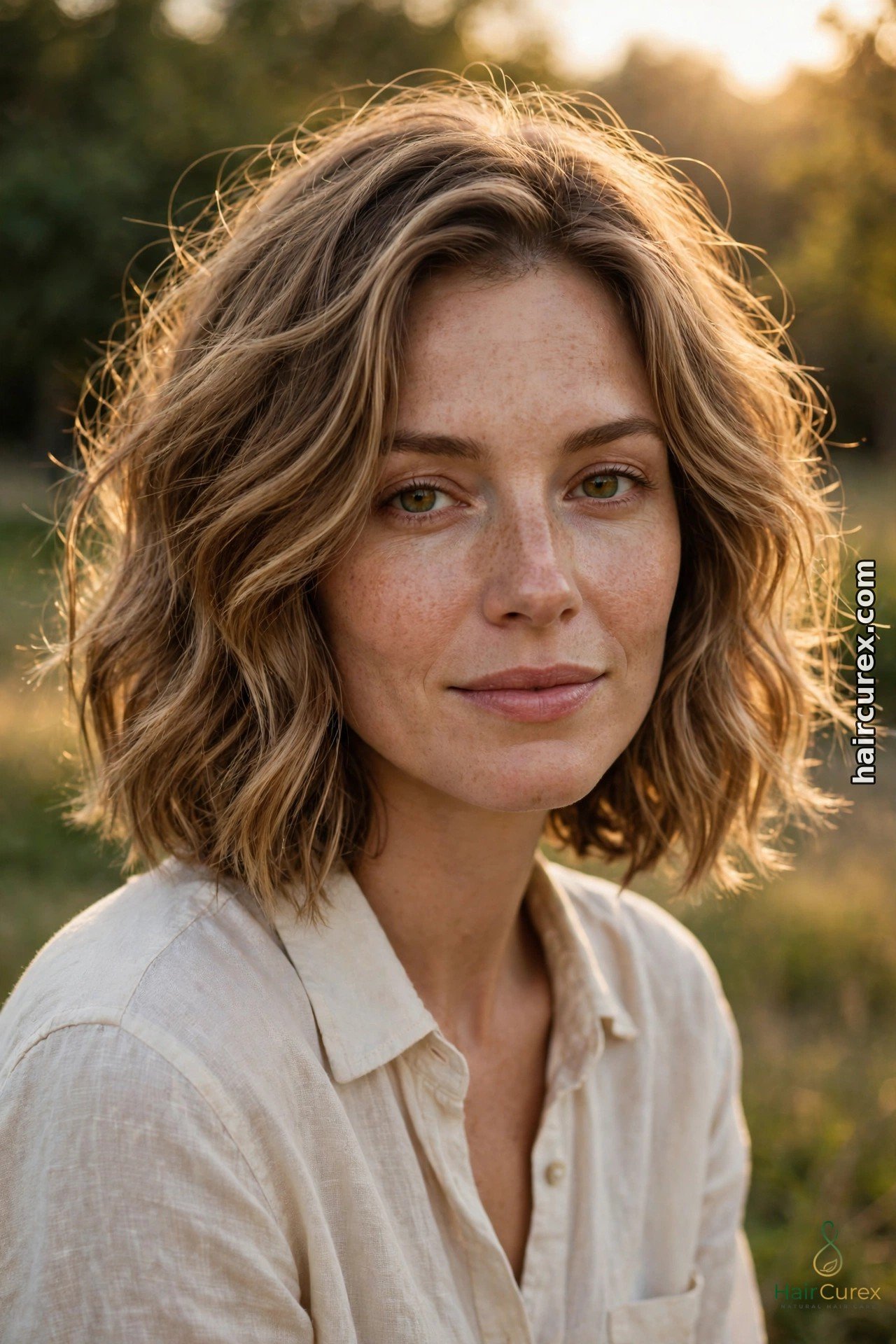
Fine hair. Fine hair looks thicker in a blunt or classic bob, because the solid bottom edge creates the illusion of density. Avoid heavy layers, which can make fine hair look thinner, and keep the length at chin level or above so the ends do not go wispy. A little root lift while blow-drying does more for fine hair than any product.
Thick hair. Thick hair needs layers or texture to remove bulk, or the bob haircut can turn into a heavy triangle. A layered bob or an Italian bob works with the volume instead of fighting it. Ask your stylist to thin the underneath slightly, and be prepared for a slightly longer appointment — thick hair takes longer to cut well.
Wavy hair. Wavy hair is made for the wavy or ripped bob, where deconstructed layers follow the natural wave pattern. Avoid a razor-sharp blunt bob unless you are happy to straighten it every day, because the wave will soften the line anyway. Air-drying with a texturising cream usually gives the best result.
Curly hair. Curly hair suits a shaped curly bob, but the cut must account for shrinkage — curls spring up several centimetres shorter than they look when wet. Book a stylist who cuts curly hair regularly, and expect the appointment to include a dry cut or a careful consultation about how your curls behave.
Straight hair. Straight hair suits almost every bob, and it is the only hair type that can carry a truly sharp blunt bob. The trade-off is that straight hair shows every uneven millimetre, so the cut needs to be precise and the trims regular.
How to Ask Your Stylist for a Bob
Most disappointments with the bob haircut come from a vague consultation, not a bad stylist. Go in with three things: a photo, a length, and a styling promise. Save two or three photos of the exact bob you want — from the front and the side — and show them at the start of the appointment, not after the cutting begins. Photos remove the guesswork from words like “short” and “layered”, which mean different things to different people.
Then agree on the length in plain terms: cheekbone, chin, jaw or shoulder. Point to the spot on your own face or neck rather than saying “a bit shorter”. And be honest about how much styling you will do. If you will never pick up a flat iron, say so — a good stylist will steer you toward a layered or wavy bob that looks good air-dried, instead of a sharp bob that needs daily heat. If you love styling, a blunt or ’90s bob will reward the effort.
Ask these three questions before the scissors come out: “How will this fall with my natural texture?”, “How often will I need a trim to keep this shape?” and “What will it look like when it grows out?” The answers tell you whether the cut fits your life. A stylist who rushes the consultation is a warning sign; a bob is a short cut, and there is not much length to hide a mistake behind.
How to Style a Bob Haircut
The bob haircut is quick to style once you know the routine — most looks take ten minutes or less. Start with clean, damp hair and always apply a heat protectant before any hot tool; our guide to the best heat protectant sprays and creams explains what to choose for your hair type. The American Academy of Dermatology’s healthy hair tips also recommend using the lowest heat setting that gets the job done, which matters doubly on short hair, where the same sections get heated again and again.
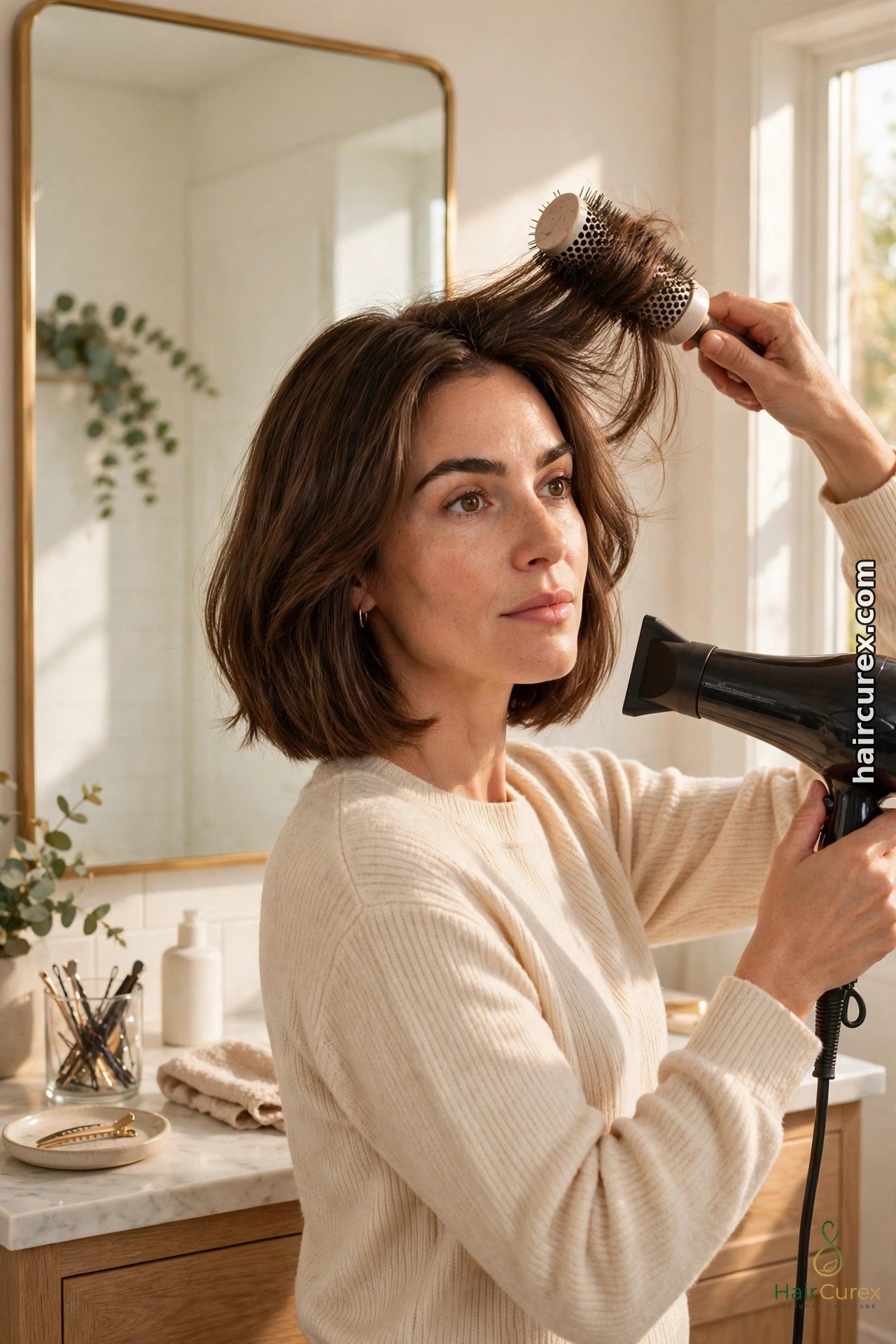
Sleek and straight. Rough-dry your hair to about 80% dry, then use a flat iron in small sections, curving the ends slightly under for a classic finish or flipping them out for a retro bell shape. Finish with a drop of smoothing serum on the ends only — too much product near the roots flattens the bob haircut.
Soft waves. The easiest everyday bob style. Apply a texturising spray or mousse to damp hair, then either air-dry and scrunch, or wrap random sections around a curling iron away from your face, leaving the ends straight for a modern finish. Brush through the waves with your fingers, not a brush, so they stay soft instead of turning fluffy.
Volume and bounce. Blow-dry with a round brush, lifting each section at the roots and rolling the ends under. A hair dryer brush works well on the bob haircut, because the sections are short and quick to dry. For extra lift, blow-dry the top sections forward, then sweep them back once cool.
Tucked and pinned. A bob’s best trick is how easily it changes with accessories. Tuck one side behind your ear and pin the other with a clip for an asymmetrical look, or add a headband for a polished finish. A small French braid along one side, pinned behind the ear, takes a bob from daytime to evening in two minutes — Howcast’s video guide to styling a bob cut demonstrates this exact technique, along with how to work with your natural texture instead of fighting it.
Second-day bob. Bobs flatten overnight, so revive yours with dry shampoo at the roots, then reshape the ends with a flat iron or a quick blast of the dryer. Sleeping on a silk pillowcase helps the shape last, and it reduces the frizz that short hair shows so easily.
Bob Haircut Maintenance: Trims, Washing and Growing It Out
The bob haircut lives or dies on its shape, and the shape lives or dies on trims. Plan on a trim every 6–8 weeks for most bobs, and every 4–6 weeks for a sharp or blunt bob, where uneven ends show first. Hair grows about 1–1.5 cm a month, so by week eight a chin-length bob is already closer to a lob — which is fine if you like it, but the clean line is gone. Book your next trim before you leave the salon so the shape never gets the chance to fall apart.

Washing the bob haircut is quick, and that is part of its appeal: less hair means less shampoo, less drying time and less product. Wash two to four times a week depending on how oily your scalp gets, and use a conditioner matched to your hair type — fine hair needs a light conditioner that will not weigh the ends down, while thick or curly hair needs a richer one. Over-washing strips the natural oils that keep a bob shiny, and it makes the ends look dry faster.
Growing out the bob haircut is easier than growing out any other short cut. Let the back catch up with the front, keep the ends trimmed every eight weeks so the shape stays intentional rather than straggly, and use the awkward stage to try a lob, which is a style in its own right rather than a waiting room. If you want to change the shape without growing it, ask your stylist to add layers or a fringe — both change the look completely without touching the length. The shaggy bob is also a good grow-out style, because its choppy layers hide uneven growth. If you are weighing a bob against a longer layered cut, our butterfly haircut guide shows the other direction — a cut that keeps the length and adds the movement instead.
5 Mistakes to Avoid With a Bob
| Mistake | What happens | Fix |
|---|---|---|
| Choosing the wrong type for your hair | The cut fights your texture every day | Match the bob to your hair type first, face shape second |
| Skipping trims | The clean line disappears, ends look straggly | Trim every 6–8 weeks, 4–6 for blunt bobs |
| Too much product | Roots go flat, ends look greasy | Pea-sized amounts, ends only, never at the roots |
| Styling with too much heat | Dry, frizzy ends that show on short hair | Lowest effective heat, always with a protectant |
| Judging a curly bob while it is wet | Curls spring up much shorter than expected | Cut curly bobs dry or with shrinkage accounted for |
The most common regret is not the bob haircut itself but the wrong bob — usually a blunt cut chosen for wavy hair, or a chin-length bob chosen for a round face. Both are avoidable with a ten-minute consultation and an honest answer about how much styling you will actually do. And if you do get a bob you do not love, remember that it grows: a bob is only ever a few months away from a lob, and a lob suits almost everyone.
The Bottom Line
The bob haircut has lasted a century because it does something very few cuts do: it looks deliberate and polished with very little daily effort, and it can be reshaped into almost anything — sharp or soft, sleek or wavy, classic or modern — simply by changing the length, the angle or the texture. The key is choosing the right type for your face and hair, being honest with your stylist about the styling you will actually do, and keeping up with trims so the shape stays intentional. Get those three things right and the bob haircut is one of the easiest, most flattering haircuts you can have. Get them wrong and you will spend three months fighting your hair every morning — so take the ten minutes to choose well, save your reference photos, and enjoy the cut. It has survived a hundred years of trends for a reason.
Frequently Asked Questions
What is a bob haircut?
The bob haircut is a short-to-medium cut where the hair ends between the cheekbone and the shoulders, usually in one clean line around the head. The classic bob sits at chin or jaw length with no visible layers, but there are many types, including blunt, layered, A-line, French, Italian, wavy and curly bobs.
Which bob haircut suits a round face?
An A-line bob or a long bob (lob) suits a round face best, because the longer front pieces elongate the face and draw the eye downward. A ’90s bob with face-framing pieces also works well. Avoid chin-length blunt bobs, which end at the widest part of the face and emphasise its roundness.
What is the difference between a bob and a lob?
A lob is a long bob that ends at or just below the shoulders, while a classic bob ends at chin or jaw length. The lob keeps enough length to tie back and is the safest first bob; the classic bob is shorter, sharper and shows its shape more clearly.
Is a bob haircut good for fine hair?
Yes, the bob haircut is one of the best cuts for fine hair. A blunt or classic bob makes fine hair look thicker because the solid bottom edge creates the illusion of density. Keep the length at chin level or above, avoid heavy layers, and add root lift while blow-drying.
How often should you trim a bob haircut?
Trim the bob haircut every 6–8 weeks to keep its shape. Sharp or blunt bobs need a trim every 4–6 weeks, because uneven ends show first on a clean line. Hair grows about 1–1.5 cm a month, so by week eight a chin-length bob is already growing into a lob.
How do you style a bob haircut at home?
Start with damp hair and a heat protectant, then blow-dry with a round brush for volume, use a flat iron for a sleek finish with the ends curved under, or add soft waves with a curling iron, leaving the ends straight. Air-drying with a texturising spray works well for wavy bobs. Most bob styles take ten minutes or less.
Can you get a bob with curly hair?
Yes, but it must be a curly bob shaped for your curl pattern, cut dry or with shrinkage accounted for, because curls spring up several centimetres shorter than they look when wet. Book a stylist experienced with curly cuts, and use layers to keep the shape balanced instead of triangular.