


Quick answer: An oily scalp happens when the sebaceous glands in your scalp produce more sebum — your skin’s natural oil — than your hair needs. The excess oil travels down the hair shaft, so roots look shiny and limp and strands clump together, sometimes within hours of washing. You cannot switch the glands off, but you can slow the grease down a lot: wash as often as your roots need with a gentle balancing shampoo, keep conditioner and styling products off your scalp, clarify once a week, and use dry shampoo between washes. Most people see a real difference within two to three weeks of fixing their routine.
You wash your hair in the morning, it looks great, and by the afternoon your roots are already shiny and flat. By the next morning the strands at your crown are clumping together and your hair looks dirty even though you just washed it. If that sounds familiar, you are dealing with an oily scalp — one of the most common hair complaints there is, and one of the most misunderstood. It is not caused by poor hygiene, and scrubbing harder or washing five times a day will not fix it. In fact, the harder you fight it with the wrong methods, the greasier it tends to get.
This guide explains what is actually happening on your scalp, why some people get greasy hair so much faster than others, and what genuinely helps — the right way to wash, the products worth using, the habits that make it worse, and a simple weekly routine you can start tonight. It also covers when greasiness is a sign of something that needs a dermatologist rather than a new shampoo.
What Is an Oily Scalp and Why Does It Happen?

An oily scalp is a scalp whose sebaceous glands — tiny oil glands attached to every hair follicle — produce more sebum than the hair needs. Sebum itself is not the enemy. It is your skin’s natural moisturizer: it coats each strand, keeps it flexible, protects it from drying out, and helps the scalp barrier stay healthy. Problems start when the glands make too much of it. The excess oil pools at the roots, travels down the hair shaft, and makes the hair look shiny, flat and dirty. Fine, straight hair shows it fastest, because oil slides easily down a smooth, straight strand; thick or curly hair hides it longer, because the oil has further to travel along bends and texture.
How much oil your glands make is mostly decided for you. Genetics is the biggest factor — if your parents have oily skin and hair, you probably will too, and your glands simply run at a higher baseline than someone else’s. Hormones are the second driver: androgens such as testosterone stimulate sebaceous glands, which is why oiliness often spikes during puberty, around periods, during pregnancy, and in times of stress. That is also why an oily scalp can suddenly appear in your teens and ease off in your thirties, or flare up again during hormonal changes later in life.
Your habits and products sit on top of that baseline and can push oil production up or down. Washing too often with a harsh shampoo strips the scalp’s natural oils, and the glands can respond by producing more to compensate — the classic overwash cycle. Heavy conditioners, oils and styling products applied at the roots add grease on top of the sebum your scalp already makes. Product buildup traps oil and sweat against the scalp. Heat, humidity, sweating, hats, and constantly touching your hair all move oil around and make it more visible. And some scalp conditions — notably seborrheic dermatitis, the condition behind most dandruff — come with excess oil and flaking together. Healthline’s guide to oily scalp causes covers these drivers in detail, including the scalp conditions that can sit underneath persistent greasiness: Healthline on oily scalp causes, treatment and prevention.
Oily Scalp vs Dry Scalp vs Dandruff: How to Tell Them Apart
People often confuse an oily scalp with a dry scalp or dandruff, and treating the wrong one makes things worse — heavy oils and moisturizing masks help a dry scalp but smother an oily one. The table below shows the differences at a glance.
| Sign | Oily scalp | Dry scalp | Dandruff (seborrheic dermatitis) |
|---|---|---|---|
| How hair looks | Shiny, flat, limp at the roots; strands clump together | Dull, rough, sometimes frizzy; roots look normal | Greasy-looking flakes, often with redness and itching |
| What falls from the scalp | Little or no flaking; oil is the main problem | Small, dry, white flakes | Larger, yellowish, oily flakes that stick to hair and shoulders |
| How the scalp feels | Greasy to the touch, sometimes itchy from buildup | Tight, itchy, sometimes sore | Itchy, irritated, sometimes red or inflamed |
| How fast it returns after washing | Grease returns within 12–24 hours | Dryness and flaking return gradually over days | Flakes return within a day or two without medicated shampoo |
| What helps most | Gentle balancing shampoo, clarifying weekly, dry shampoo | Moisturizing shampoo, scalp oils, less frequent washing | Anti-dandruff shampoo with zinc pyrithione, selenium sulfide or ketoconazole |
If you have greasy roots plus large, sticky flakes and redness, you may be dealing with dandruff rather than simple oiliness, and the treatment is different. Our guide to dandruff vs dry scalp walks through the difference in detail, including which shampoos actually help each one. If you are unsure, try the clarifying and routine steps in this article for two weeks — if the flaking and irritation do not improve, see a dermatologist rather than trying stronger products on your own.
How to Wash an Oily Scalp the Right Way
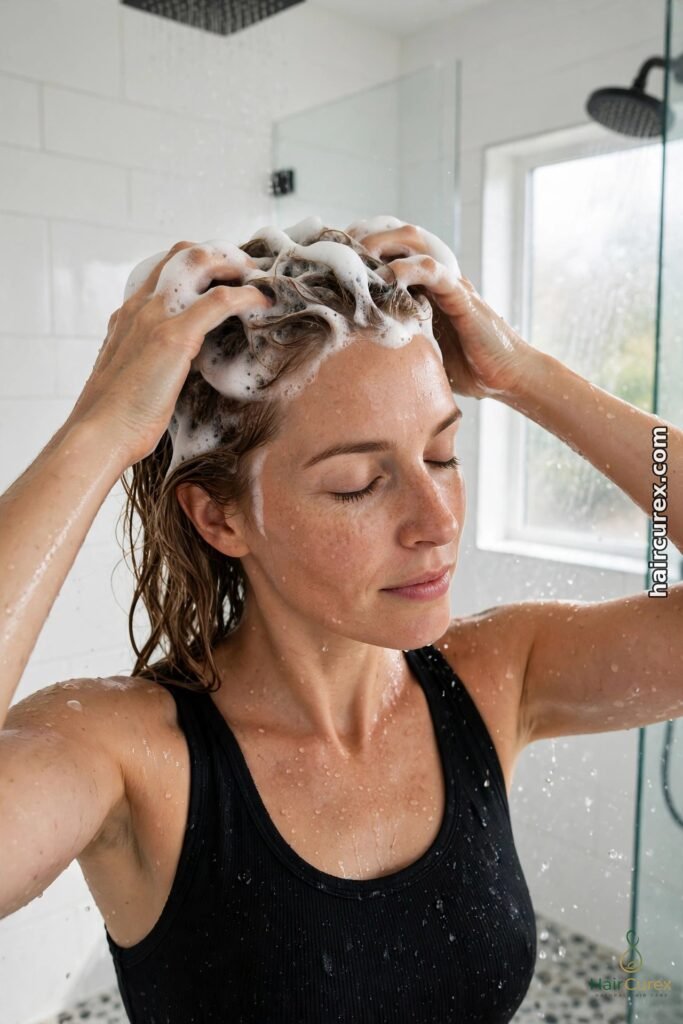
Washing is where most oily-scalp routines go wrong, and it is also where the biggest improvement comes from. The goal is to clean the scalp properly without stripping it so hard that it overproduces oil in response.
First, get the frequency right. Wash as often as your roots need, not as often as a rulebook says. For many people with an oily scalp, that means every day or every other day — and that is fine. The idea that daily washing is always bad is a myth when the shampoo is gentle; what damages the cycle is a harsh, stripping shampoo used daily, not the water itself. If your hair is greasy by the next morning, wash daily. If it stays fresh for two days, wash every other day. The right interval is the one where your roots stay clean without your lengths drying out.
Second, shampoo the scalp, not the lengths. Work the shampoo into your scalp with your fingertips — not your nails — and massage for a full minute so it can lift oil and buildup from the skin. Let the lather run down the lengths as you rinse; the lengths do not need to be scrubbed, and scrubbing them dries them out. Rinse with lukewarm water rather than hot, because very hot water strips more oil and can trigger the glands to replace it. Finish with a cool rinse if you can stand it — it helps the cuticle lie flat, which makes hair look less limp.
Third, consider double cleansing on wash day if you use a lot of product or your hair gets very greasy. The first wash lifts surface oil and buildup; the second actually cleans the scalp. You do not need a special product for this — the same gentle shampoo twice, with a good rinse between, works fine. And once a week, swap your regular shampoo for a clarifying shampoo to remove the buildup that daily shampoo leaves behind. Our detox shampoo guide explains how clarifying shampoos work and how often to use them without drying your hair out. One caution: clarifying shampoos are stronger than daily ones, so once a week is enough — more often and you are back in the stripping cycle.
Finally, condition only the lengths. Conditioner is for the mid-lengths and ends, never the roots. Apply it from the ears down, leave it for two or three minutes, and rinse thoroughly. Conditioner left on the scalp is one of the most common reasons roots go limp within hours. If your lengths are dry while your roots are oily, that combination is normal — treat the two zones differently and both will be happier.
The Best Products for an Oily Scalp

You do not need an expensive routine. You need the right kinds of products, used in the right places. Here is what to look for — and what to avoid.
Balancing or volumizing shampoo. A gentle, sulfate-free or mild-sulfate shampoo labelled for oily or normal hair is the daily workhorse. It should clean without leaving the scalp feeling tight and squeaky — that squeaky feeling means it stripped too much. Volumizing formulas tend to be lighter and leave less residue, which suits oily roots well. If your hair is also thinning, choose a shampoo made for your hair concern rather than piling on a second product; our best shampoo for hair fall roundup covers gentle options that clean well without harsh stripping.
Clarifying shampoo, once a week. Use it to reset the scalp and remove product buildup, silicones and hard-water residue. Look for one with gentle chelating ingredients rather than the harshest formula on the shelf, and always follow it with conditioner on the lengths.
Ingredients that help. Salicylic acid is the most useful single ingredient for an oily scalp: it gently exfoliates the scalp, dissolves oil and dead skin, and helps keep follicles clear. Zinc pyrithione helps when oiliness comes with flaking. Tea tree oil has mild antimicrobial properties and can calm an itchy, oily scalp, but it must be diluted or used in a formulated shampoo — never apply undiluted essential oil to your scalp. Niacinamide and lightweight humectants in scalp serums can help balance the scalp barrier without adding grease.
What to avoid. Heavy oils, butters and thick leave-in creams on the roots will make greasiness worse — keep oils on the ends only, if you use them at all. Silicon-heavy serums and shine sprays coat the hair and make it look greasy faster. Two-in-one shampoo-and-conditioner products usually leave too much residue on an oily scalp. And dry shampoo is a tool, not a replacement for washing: it absorbs oil for a day, but the powder builds up on the scalp and needs to be washed out properly, or it becomes part of the problem.
Dry Shampoo: Your Between-Wash Rescue

Dry shampoo is the single most useful product for stretching the time between washes — when it is used correctly. It works by absorbing excess sebum at the roots, which lifts the hair and makes it look freshly washed for another day. Our full dry shampoo guide covers how it works and how often to use it; the short version is below.
Apply it to dry hair only, holding the can about 20–30 cm from the scalp, and spray in short bursts at the roots, section by section, starting at the crown and hairline where oil shows first. Wait two to three minutes so the powder can absorb the oil — spraying and immediately brushing it out wastes most of it. Then massage the roots with your fingertips or brush through gently to distribute the powder and remove any white residue. On dark hair, use a tinted formula or brush thoroughly, because white powder is very visible on dark roots.
Use dry shampoo for one extra day at most, and never for several days in a row. Powder buildup clogs follicles, traps sweat and oil against the scalp, and can cause itching and breakouts along the hairline. It also does not clean anything — it only hides the oil. If you find yourself reaching for dry shampoo every morning just to leave the house, your washing routine needs fixing first; dry shampoo is the bridge, not the foundation. And if you ever wondered whether skipping washes entirely could damage your hair, the answer is in our guide to whether not washing your hair can cause hair loss — the short answer is that infrequent washing alone does not cause hair loss, but the buildup it allows can irritate the scalp and worsen shedding over time.
Habits That Make an Oily Scalp Worse
Products get most of the blame, but everyday habits quietly add oil to your hair too. Fixing these costs nothing and often makes as much difference as a new shampoo.
Touching your hair. Your hands transfer oil and sweat to your hair every time you run your fingers through it, push it back, or twirl a strand. People with oily hair tend to touch it more because it bothers them — which makes it oilier, which makes them touch it more. Breaking the loop is half the battle: tie your hair back when you are working, and notice how often your hands go to your hair.
Brushing too much — or too little. Over-brushing spreads sebum from the roots down the whole length of the hair, so it looks greasy faster. Under-brushing leaves oil sitting at the roots. The balance is a gentle brush once or twice a day with a clean brush, which distributes a little oil to the lengths (where it actually protects the hair) without dragging it all down at once. Clean the brush itself weekly — a dirty brush puts old oil and product straight back onto clean hair.
Hot water and heat styling. Very hot showers strip the scalp and trigger more oil production, and heat styling close to the roots flattens hair and makes grease more visible. Keep water lukewarm, and when you blow-dry, lift the roots with a round brush instead of pressing the hair flat.
Dirty pillowcases and hats. Your pillowcase collects oil, sweat and product every night, and you press your hair into it for eight hours. Change it every few days if your scalp is very oily. The same goes for hats, headbands and helmets — wash them regularly or they return yesterday’s oil to today’s clean hair.
Overwashing with harsh shampoo. It feels logical to wash more when your hair is greasy, but stripping the scalp daily with a harsh formula is the fastest way into the rebound cycle: stripped scalp, more oil, more washing. If you need to wash daily, use a gentle shampoo and save the strong clarifying wash for once a week.
A Simple Weekly Routine for an Oily Scalp

Here is a routine that works for most people with an oily scalp. Adjust the wash days to your own grease timeline — the structure matters more than the exact days.
| Day | What to do | Notes |
|---|---|---|
| Monday | Wash with balancing shampoo; condition ends only | Massage scalp 60 seconds; lukewarm rinse |
| Tuesday | Dry shampoo at roots if needed; no wash | Spray, wait 2–3 minutes, brush through |
| Wednesday | Wash with balancing shampoo; condition ends only | Double-cleanse if you used a lot of product |
| Thursday | Rest day or dry shampoo | Change pillowcase tonight |
| Friday | Wash with balancing shampoo | Style as usual; keep products off the roots |
| Saturday | Clarifying shampoo wash | Follow with conditioner on the lengths; clean your brush |
| Sunday | Rest day or gentle wash | A 5-minute fingertip scalp massage, then assess the week: is the grease arriving later than it used to? |
Give the routine two to three weeks before judging it. Your scalp needs time to adjust, especially if you have been overwashing — the first week can feel worse before it feels better, because the glands take a while to settle into the new rhythm. Track it simply: note how many hours after washing your roots start to look shiny. If that number is growing, the routine is working, even if your hair is not yet perfect.
When to See a Dermatologist About an Oily Scalp
Most oily scalps are a cosmetic problem, not a medical one. But some signs mean it is time to get professional help rather than trying another shampoo. See a dermatologist if you have persistent redness, scaling or sores on the scalp; thick, crusty patches that do not improve with anti-dandruff shampoo; intense itching that disrupts sleep; hair loss or thinning that seems to be getting worse; or an oily scalp that appeared suddenly along with other symptoms such as acne, excess facial hair or irregular periods, which can point to a hormonal issue. A dermatologist can check for seborrheic dermatitis, psoriasis, fungal infection or a hormonal cause, and can prescribe medicated shampoos or treatments that over-the-counter products cannot match.
The American Academy of Dermatology’s healthy-hair guidance is a good baseline for everything in this article: gentle washing, minimal heat, and protecting hair while you sleep all reduce the stress that makes scalp problems worse: American Academy of Dermatology healthy hair tips.
An oily scalp is frustrating, but it is manageable — and it is not a sign that you are doing something wrong. Your glands run at their own pace, set mostly by genetics and hormones, and the job is to work with that pace rather than fight it. Wash gently and as often as your roots need, keep products off your scalp, clarify once a week, and let dry shampoo carry the in-between days. Most people who fix the routine find their hair stays fresh a full day longer within a few weeks, and that extra day is the difference between hair you have to manage constantly and hair you can simply forget about.
Oily Scalp FAQs
Why does my hair get greasy so fast after washing?
Your scalp’s sebaceous glands produce sebum continuously, and how fast it shows depends on your genetics, hormones, hair type and washing habits. Fine, straight hair shows grease within hours because oil slides easily down a smooth strand, while thick or curly hair hides it longer. Harsh shampoo, conditioner on the roots, heavy styling products and overwashing can all make it appear faster.
Is washing your hair every day bad for an oily scalp?
No — washing daily is fine for an oily scalp as long as the shampoo is gentle. The problem is not the frequency, it is stripping the scalp with a harsh shampoo, which can trigger the glands to produce more oil. Wash as often as your roots need, use a mild balancing shampoo, and save the strong clarifying wash for once a week.
Does an oily scalp cause hair loss?
An oily scalp on its own does not cause hair loss. But the buildup that comes with it — oil, dead skin and product residue sitting on the scalp — can irritate the scalp and clog follicles, which can worsen shedding over time. Keeping the scalp clean and treating any underlying condition such as seborrheic dermatitis matters more than the oil itself.
How can I make my hair less oily without washing it?
Dry shampoo is the quickest fix: spray it at the roots, wait two to three minutes, then brush through. Other options are tying your hair up, using a little translucent powder at the parting, or blotting the roots with blotting paper. These are bridges between washes, not replacements for washing — use them for one extra day at most.
What shampoo is best for an oily scalp?
A gentle balancing or volumizing shampoo for daily use, plus a clarifying shampoo once a week to remove buildup. Look for salicylic acid if you want help with oil and flaking, and zinc pyrithione if oiliness comes with dandruff. Avoid heavy, moisturizing shampoos and two-in-one products, which leave residue that makes roots go limp faster.
Can diet or stress make your scalp more oily?
Stress can increase oil production because stress hormones stimulate the sebaceous glands, and some people notice their hair gets greasier during stressful periods. Diet has a smaller, less direct effect — there is no food that reliably fixes an oily scalp — but staying hydrated and eating a balanced diet supports overall scalp health. If oiliness appears suddenly with other symptoms, a dermatologist can check for a hormonal cause.