

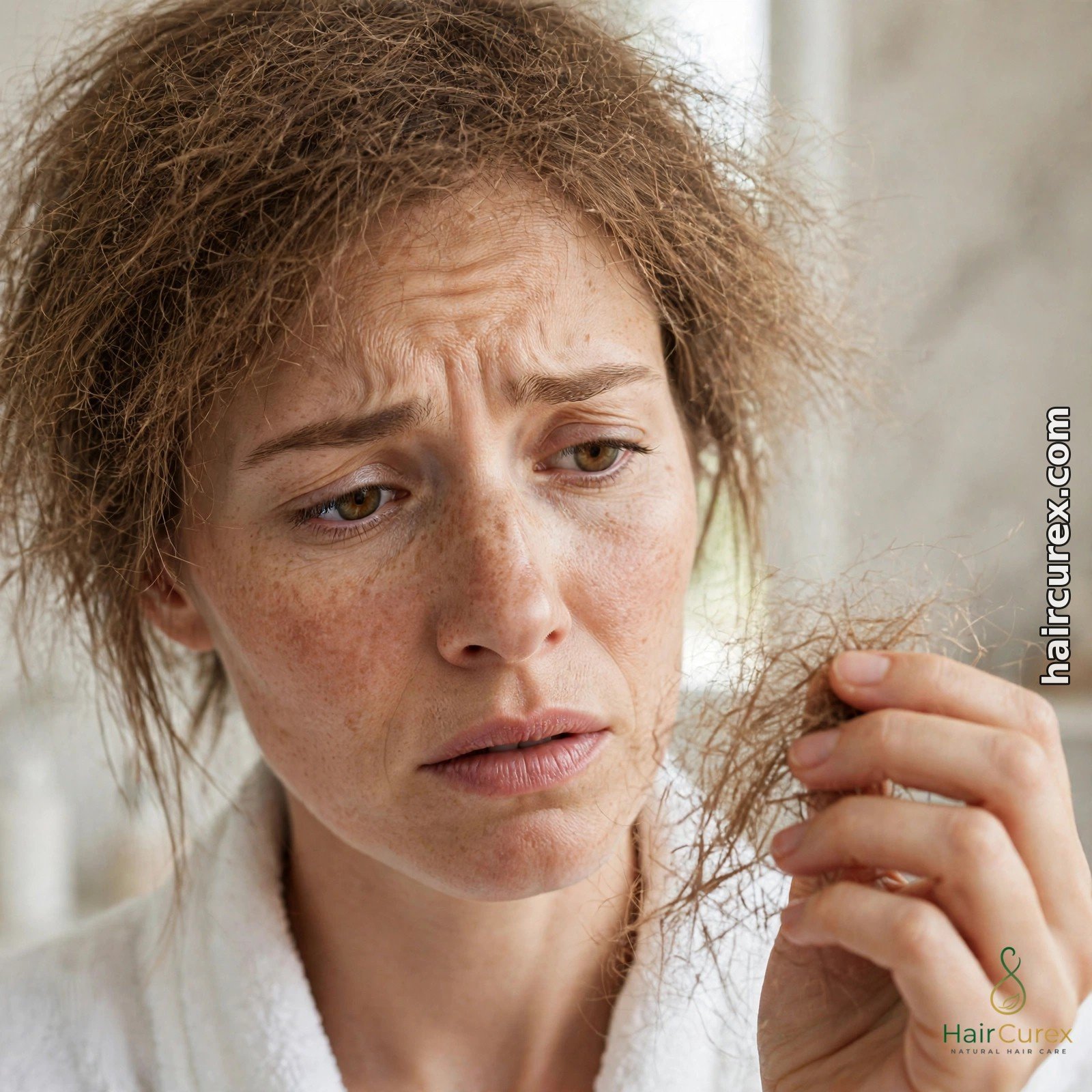
Quick answer: Protein overload is what happens when too many protein-rich products build up on your hair faster than moisture can balance them out. Instead of stronger hair, you get stiff, dry, straw-like strands that snap easily, tangle roughly, and lose their shine and curl. The fix is the opposite of what your instinct says: stop all protein for a few weeks, do one gentle clarifying wash, and rebuild moisture with deep conditioning until your hair feels soft and stretchy again. Most mild cases improve in one to two wash days; heavier buildup usually takes two to four weeks of consistent moisture-focused care.
You bought the strengthening shampoo, the keratin mask, the bond repair treatment, and the protein leave-in because every label promised stronger hair. Then your hair got worse, not better: drier, rougher, and more likely to snap. That is the confusing part of protein overload. Protein is genuinely good for damaged hair — it fills in weak spots along the hair shaft and helps hair feel stronger. But hair needs a balance between protein and moisture, and when protein piles up without enough moisture to balance it, strands lose their flexibility and start breaking. This guide explains what protein overload really is, the seven signs that point to it, how to tell it apart from ordinary dryness, and the step-by-step recovery plan that actually works.
What Is Protein Overload?
Protein overload is the name hair-care communities give to hair that turns stiff, rough, and brittle after a run of protein-heavy products. The idea is simple: protein treatments and protein-rich shampoos, conditioners, and styling products coat the hair shaft with protein. A little of that coating fills in damaged areas and makes hair feel stronger. Too much of it, layered on wash after wash without enough moisturizing care in between, leaves the hair rigid. Rigid hair cannot bend, so it snaps instead of stretching — the opposite of what you wanted from a strengthening routine.
It helps to be honest about what is and is not proven here. There is no peer-reviewed study of protein overload as a distinct hair condition, and no study showing that protein products make hair feel stiff or brittle in everyday use. The signs and the fix described in this guide come from trichologists, dermatologists, and experienced hair-care writers who see the pattern repeatedly — hair that turns stiff after weeks of strengthening products, then softens again when protein stops and moisture returns. That pattern is consistent and widely reported, but the label “protein overload” is a practical description, not a medical diagnosis. The honest way to use it is as a working theory: if your hair turned stiff after a run of protein products, pausing protein and adding moisture is a low-risk test, and if the stiffness eases, protein probably played a part.
Protein hides under many names on ingredient labels, which is why overload creeps up unnoticed. Look for keratin, hydrolyzed wheat protein, hydrolyzed soy protein, hydrolyzed silk protein, hydrolyzed collagen, amino acids, and rice or quinoa extracts. A single protein product rarely causes trouble. The problem is layering: a strengthening shampoo, plus a protein conditioner, plus a keratin mask, plus a protein leave-in, plus a bond-building treatment, used every wash day for weeks. Each product adds a little more protein, and none of them adds moisture. Living Proof’s guide to the condition describes the same mechanism — excess protein and keratin building up in the hair and disrupting its natural moisture balance, leaving it dry, brittle, and prone to breakage: Living Proof’s protein overload guide.
Some hair types are more vulnerable than others. Low porosity hair is the most susceptible, because its tightly closed cuticle does not absorb moisture easily, so protein sits on the surface and builds up instead of washing away. Fine hair is also at risk, because a little product goes a long way on a thin strand. Curly and coily hair tends to be drier and more porous, so it often feels stiff faster when protein-rich products are overused without enough moisture. Our guide to hair porosity explains how to test your own porosity and why it changes which products your hair can handle.
7 Signs Your Hair Has Too Much Protein
Overloaded hair has a recognizable feel, and the signs usually appear together rather than one at a time. If several of these sound familiar — especially if they started after you added strengthening products to your routine — protein overload is a strong suspect.
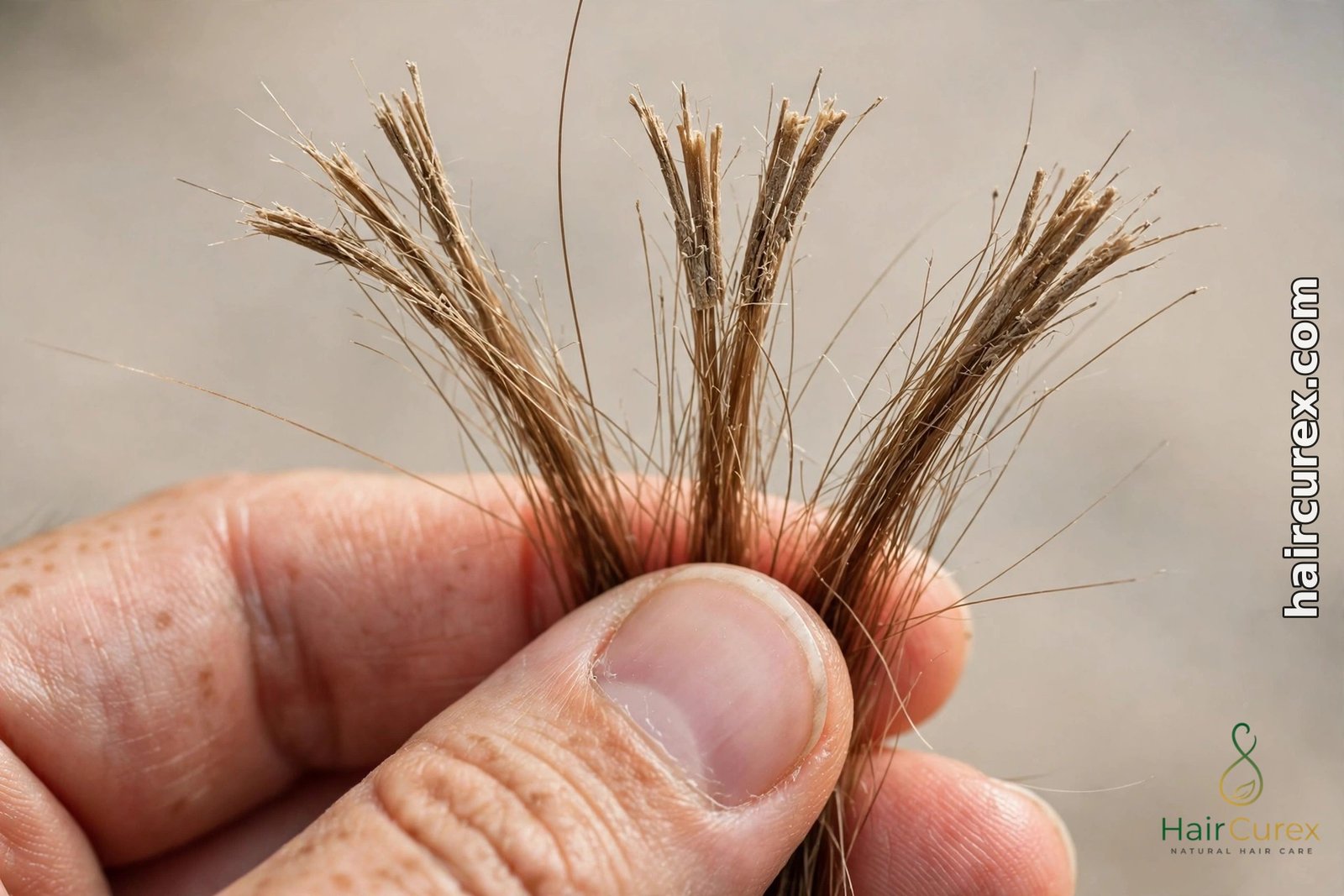
1. Your hair feels stiff and straw-like. This is the signature sign. Hair that used to feel soft now feels rough, wiry, and rigid, even right after conditioning. It does not move freely, and it holds a shape you did not ask for — sticking out, refusing to fall naturally, or feeling crunchy when you touch it.
2. Strands snap instead of stretching. Healthy hair stretches a little and bounces back. Overloaded hair snaps with a short, sharp break when you pull it gently. If you are finding more short broken pieces on your shoulders, in your brush, or on the bathroom floor, and your hair never seems to gain length, this is likely why. Our guide to hair breakage explains the other causes of snapping and how to tell them apart.
3. Your hair looks dull and lifeless. Protein buildup coats the hair shaft and stops it reflecting light properly, so hair looks flat, matte, and tired even when it is clean. Shine products sit on top of the coating instead of sinking in, and no amount of serum seems to bring the gloss back.
4. It tangles in a dry, scratchy way. Overloaded hair tangles differently from ordinary knots. The strands catch on each other with a rough, straw-like friction, and combing through feels scratchy rather than smooth. Detangling takes longer, hurts more, and breaks more hair.
5. Your curls lose their shape. If you have wavy or curly hair, overload often shows up as limp, stretched-out curls that will not spring back. The hair is too rigid to form a proper curl pattern, so waves fall flat and curls look stringy instead of defined.
6. The ends feel rough while the roots seem normal. Older hair has collected more product over time, so the lengths and ends — the oldest parts of your hair — feel the worst. The roots, which are new growth, often feel fine. That pattern points to buildup rather than a problem with your hair itself.
7. Conditioning does not seem to help. This is the most telling sign. You deep-condition, you use a mask, and an hour later your hair feels dry again. The protein coating blocks moisture from getting in, so conditioning products sit on the surface and rinse away without doing their job. If moisture stops working, the coating is the problem, not the conditioner.
The Stretch Test: How to Check Your Hair at Home
The stretch test is the most widely recommended at-home check for protein overload, and it takes thirty seconds. Take a single shed strand of hair — one that came out naturally, not one you pulled out — and hold it between the thumbs and forefingers of both hands. Gently stretch it and watch what happens.
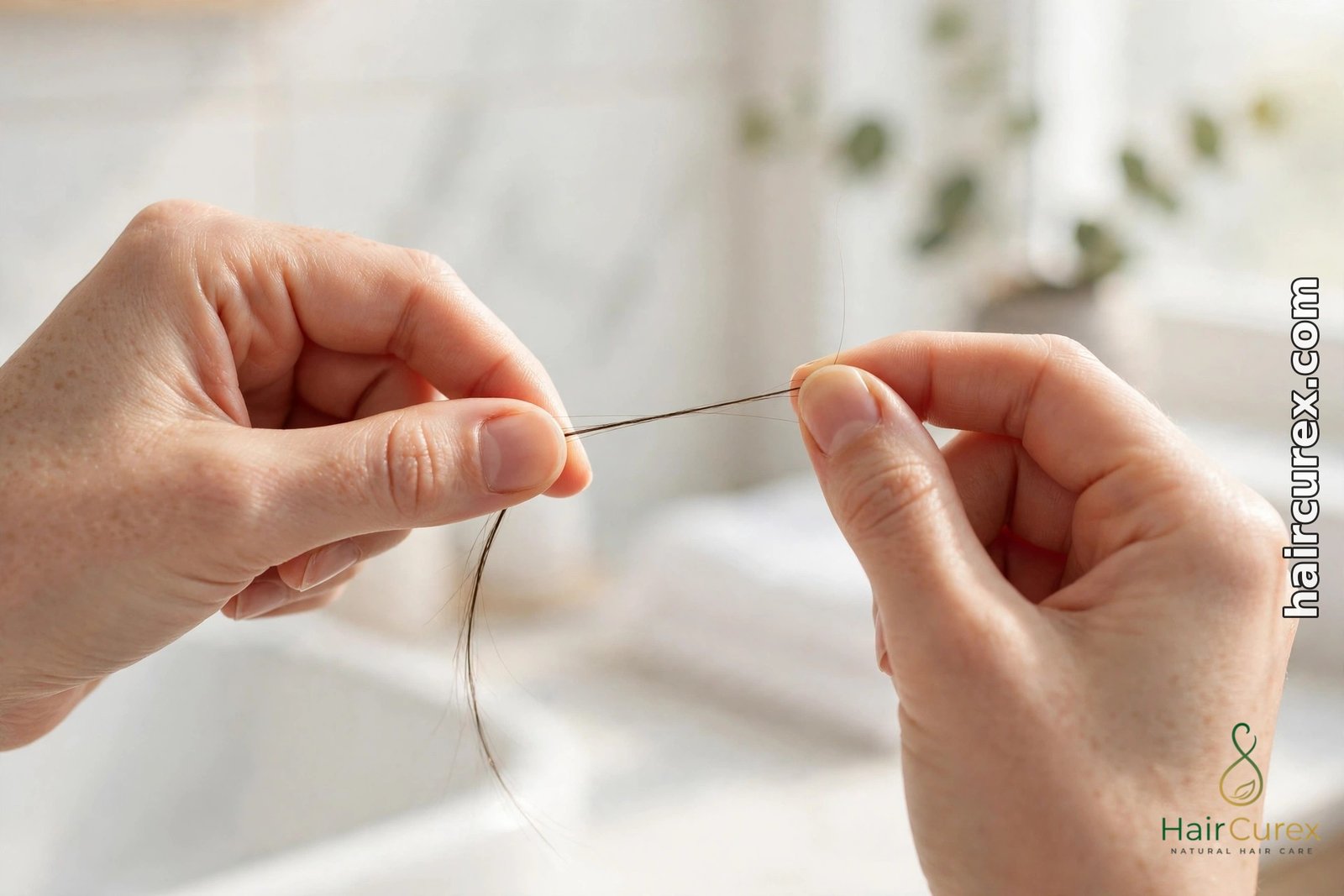
Healthy hair stretches about 20 to 30 percent of its length and then returns to its original shape, like a rubber band. Hair with too much protein snaps almost immediately, with little or no stretch. Hair with too much moisture stretches a long way and stays stretched, feeling soft and mushy. Hair that is simply dry may snap too, which is why the test is a clue rather than a diagnosis — it tells you about elasticity, not the cause. Trichologist Kate Holden, quoted in Woman & Home’s expert guide, explains that repeatedly using multiple protein-heavy products can leave hair feeling stiff, dry, rough, or more prone to snapping, and that how much is “too much” depends on your hair’s condition, porosity, and damage level: Woman & Home’s expert guide to protein overload.
Test a few strands from different parts of your head, because the ends and the roots can behave differently. Also test your hair when it is wet and when it is dry — wet hair stretches more than dry hair, so a strand that snaps while wet is a stronger warning sign than one that snaps when dry. And combine the test with the timing question: did the stiffness start after you began using strengthening products, keratin treatments, rice water rinses, or bond builders? If the answer is yes, and the stretch test shows snapping, you have a clear working diagnosis and a clear next step.
Protein Overload vs Dry Hair vs Moisture Overload
Protein overload, dryness, and moisture overload share symptoms — stiffness, dullness, breakage — which is why so many people treat the wrong problem. The table below shows how to tell them apart.
| Sign | Too much protein | Too little moisture (dry hair) | Too much moisture |
|---|---|---|---|
| Feel | Stiff, rough, straw-like | Rough, straw-like, hard to comb | Soft, mushy, limp |
| Stretch test | Snaps immediately, almost no stretch | Snaps with little stretch | Stretches a long way, stays stretched |
| Appearance | Dull, wiry frizz, curls fall flat | Dull, frizzy, flyaways | Limp, stringy, no volume |
| When it started | After weeks of protein products | After heat, sun, or harsh washing | After weeks of heavy masks, no protein |
| Conditioning helps? | No — moisture cannot get in | Yes — hair softens right away | No — hair is already overloaded with moisture |
| First fix | Stop protein, clarify, add moisture | Add moisture and reduce heat | Add a light protein treatment, clarify |
The most useful row is the last-but-one: does conditioning help? If a deep conditioner softens your hair immediately, you are probably just dry, and moisture is the answer. If conditioning does nothing, something is blocking the moisture — usually protein buildup — and you need to clear the coating first. If your hair feels soft and mushy rather than stiff, you may have the opposite problem, moisture overload, which needs a little protein rather than less of it. Getting the diagnosis right matters, because the fixes are opposites: treating moisture overload with more moisture makes it worse, and treating protein overload with more protein makes it worse too.
What Causes Protein Overload?
The most common cause is simply using too many protein products at once, for too long. A protein mask once a month rarely overloads anyone. But a protein shampoo, a protein conditioner, a protein leave-in, and a weekly keratin mask, used every wash day for a month, adds up quietly. Each product on its own is fine; the stack is the problem. Read your labels and count how many of your current products list a protein in the first ten ingredients — if the answer is three or more, your routine is protein-heavy.
Keratin treatments and bond builders are the second cause. Salon keratin treatments and at-home bond-repair products such as K18 and Olaplex are powerful tools for damaged hair, but they are not everyday products. Using a bond builder every wash, or getting keratin treatments more often than recommended, coats the hair repeatedly. Trichologists quoted in the press note that one bonding treatment a week is enough for most hair types, and overusing them can leave hair feeling coated and stiff. Our K18 vs Olaplex comparison explains how these treatments work and how often each one should actually be used — it is less often than the marketing suggests.
Rice water rinses are a third, often overlooked cause. Rice water contains starch and small amounts of protein-like material, and used several times a week or left on for hours, it can leave the same stiff, coated feeling as a protein treatment. Our guide to rice water for hair covers the safe frequency — once a week, diluted, followed by conditioner — and warns that overuse is the most common mistake. The same applies to DIY protein masks made with egg, yogurt, or gelatin: they are real protein treatments, and using them weekly on top of protein products is a fast route to overload.
Finally, some hair simply needs less protein than the products assume. Low porosity hair, fine hair, and healthy virgin hair that has never been bleached or colored usually need very little protein at all. If your hair was healthy before you started “strengthening” it, the strengthening products may be the entire problem. Healthy hair does not need repair products — it needs gentle washing, moisture, and protection.
How to Fix Protein Overload: A Step-by-Step Recovery Plan
The fix is the opposite of your instinct. Do not add another treatment. Take things away, then add moisture back slowly. Here is the plan, in order.
Step 1: Stop all protein immediately. Put every protein product on pause — shampoo, conditioner, mask, leave-in, styling products, and bond builders. Check the ingredient lists and remove anything with keratin, hydrolyzed protein, collagen, amino acids, or silk, wheat, soy, or rice protein. During recovery, every product that touches your hair should be protein-free or protein-light, including the shampoo if it markets itself as “strengthening” or “repairing.” This pause lasts two to four weeks, not two days.
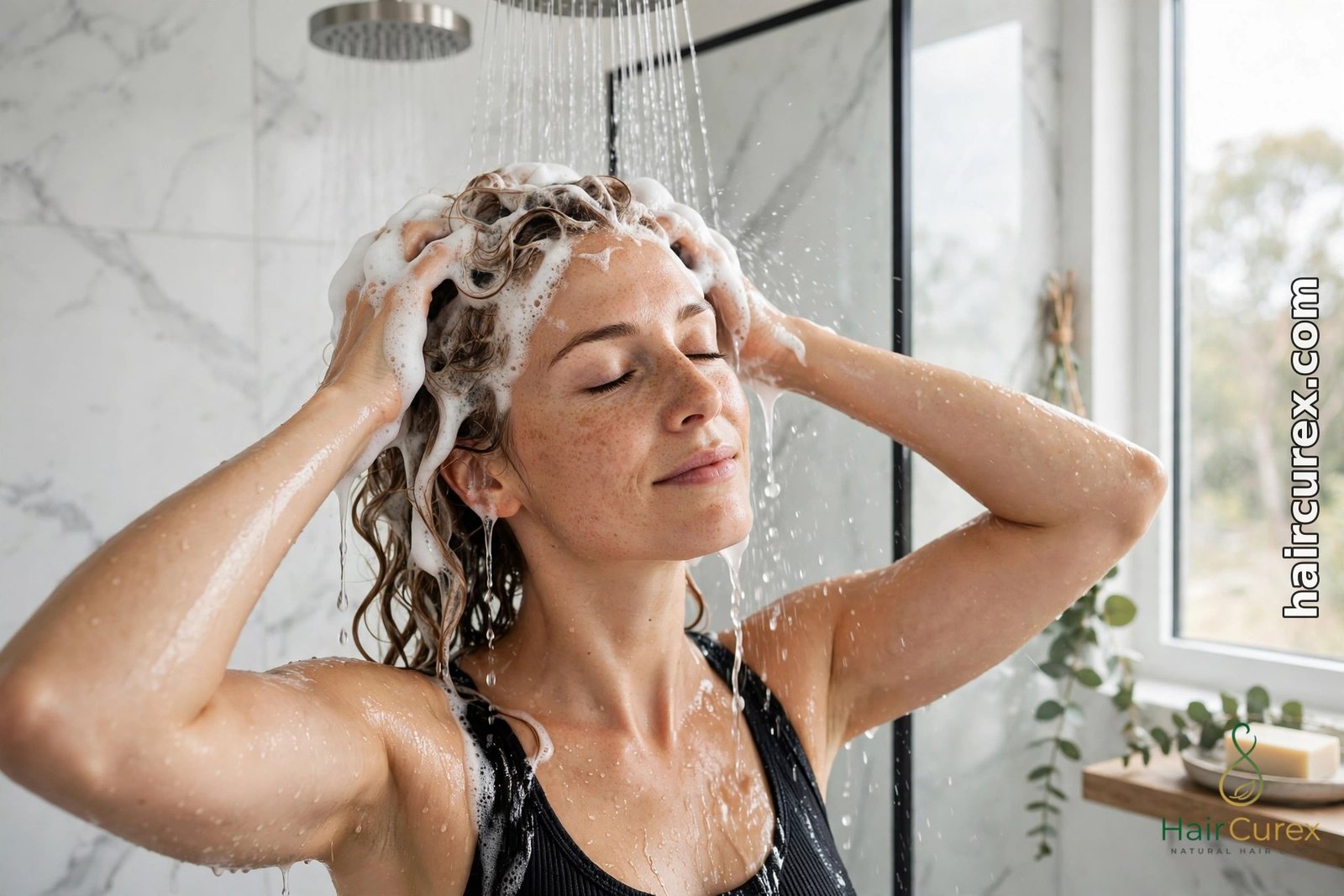
Step 2: Do one gentle clarifying wash. A clarifying shampoo removes the protein buildup sitting on the hair shaft so moisture can get in again. Use it once, not every wash — clarifying shampoos are stronger than everyday ones and can dry your hair out further if overused. Massage it through the lengths, rinse thoroughly, and follow immediately with a moisturizing conditioner. If you have hard water or heavy product buildup, one clarifying wash may not be enough; a second one a week later is fine, but do not clarify daily.
Step 3: Deep-condition with a purely moisturizing mask. After the clarifying wash, apply a protein-free deep-conditioning mask to the lengths and ends — not a “repair” mask, which usually contains protein, but a moisture mask built around ingredients like glycerin, aloe vera, shea butter, or fatty alcohols. Leave it on for 20 to 30 minutes with gentle heat, such as a shower cap and a warm towel, then rinse with cool water. Repeat this moisture-focused wash day once or twice a week.
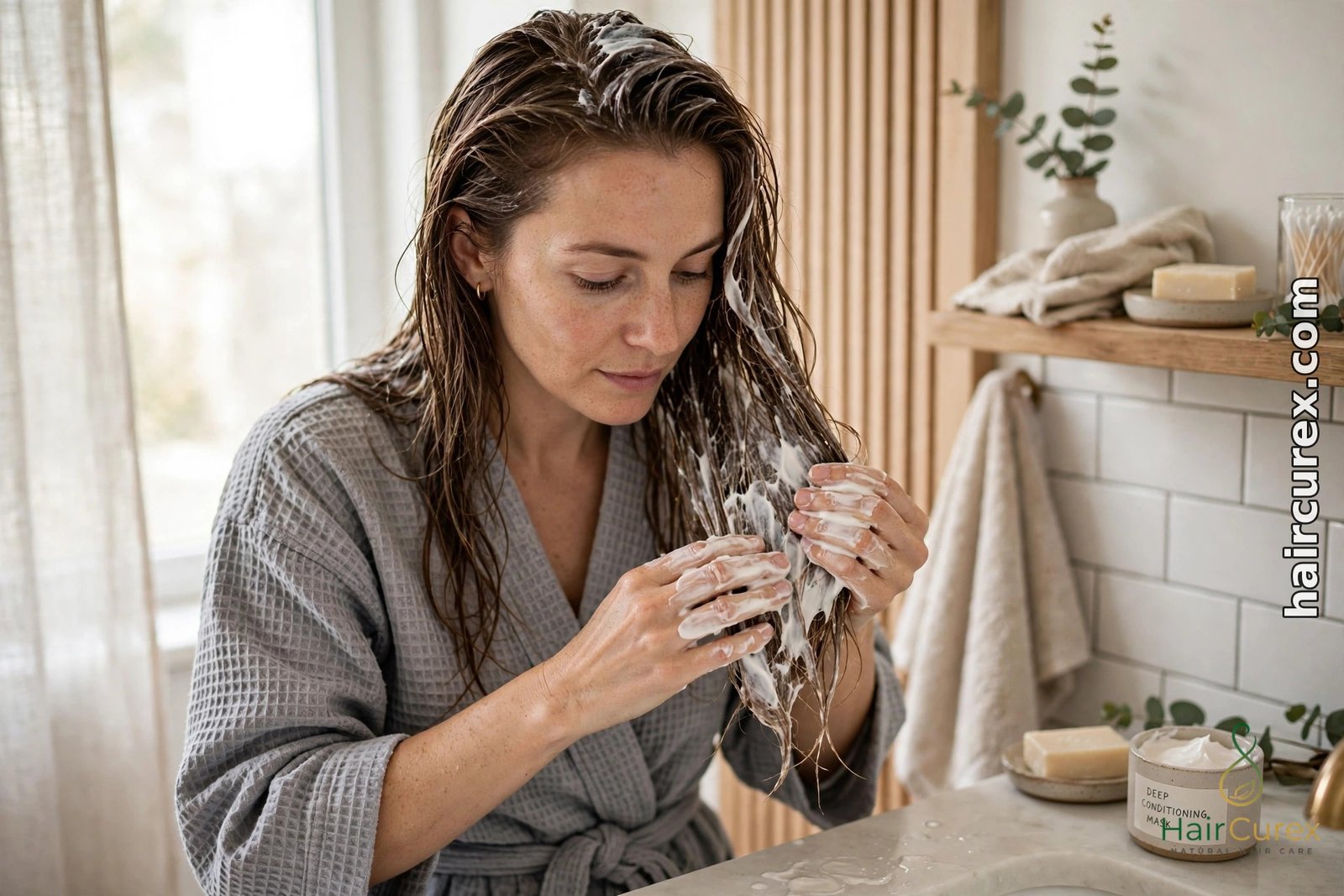
Step 4: Switch to a moisture-focused routine. For the next two to four weeks, wash with a gentle, sulfate-free, protein-free shampoo, condition every wash, and use a leave-in conditioner on damp hair. Our guide to the best leave-in conditioners includes protein-free options that add moisture without adding to the buildup. Skip heat styling while you recover, or use the lowest effective temperature with a heat protectant. The American Academy of Dermatology’s healthy hair guidance stresses the same basics — gentle handling, washing to suit your hair type, and protecting hair from heat and harsh treatments: AAD healthy hair tips.
Step 5: Reintroduce protein slowly, one product at a time. Once your hair feels soft and stretchy again, you can bring protein back — but one product at a time, with at least a week between additions, so you can see which one your hair reacts to. Most people do well with one protein treatment every four to six weeks and moisture at every other wash. If stiffness returns after adding a product back, that product is the one your hair cannot handle, and you now know to leave it out.
How Long Does It Take to Recover?
Recovery time depends on how much buildup there is and how long it has been accumulating. Mild cases — a few weeks of protein-heavy products — usually improve noticeably after one or two moisture-focused wash days. Your hair softens, detangles more easily, and stops snapping as much. Heavier overload, built up over months of strengthening products, usually takes three to four weeks of consistent protein-free moisture before elasticity feels normal again. The improvement is gradual rather than all at once, so judge progress week by week, not wash by wash.
One honest limit: no wash or mask can repair hair that has already snapped. The broken pieces are gone, and the lengths that remain are the lengths you have. What recovery does is stop further breakage and restore softness and flexibility to the hair that is still there, so the new growth comes through healthy and the remaining length stops getting shorter. If the ends are severely damaged — split, frayed, or snapping at the slightest touch — a small trim removes the worst of it and makes the rest of the recovery faster. A trim is not a defeat; it is the quickest way to stop breakage from travelling further up the strand.
How to Prevent Protein Overload
Prevention is easier than recovery, and it comes down to balance. First, count the protein in your routine. One protein product at a time is a safe rule for most people — either a protein shampoo or a protein mask, not both, and not every wash. Second, alternate protein and moisture wash days. If you use a protein treatment this week, make the next two wash days moisture-only. Third, match protein to damage. Bleached, colored, or heat-damaged hair genuinely benefits from protein, because its structure has gaps to fill. Healthy virgin hair usually does not, and giving it protein it does not need is how overload starts.
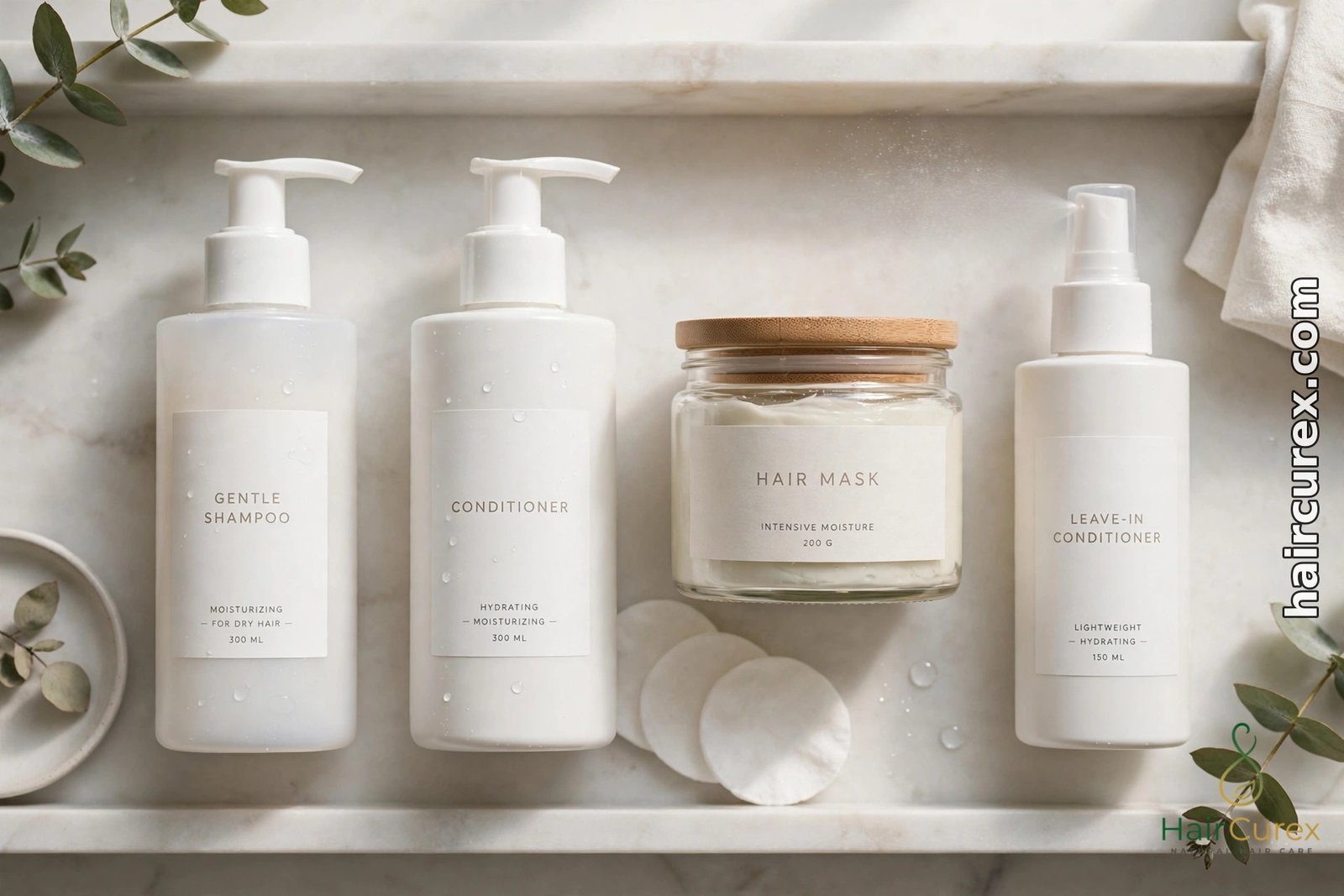
Fourth, read labels every time you buy. Products marketed as “strengthening,” “repairing,” “reconstructing,” or “bond-building” almost always contain protein, even when the front of the bottle does not say so. Check the ingredients before you add a new product to a routine that already has protein in it. Fifth, listen to your hair. If it starts feeling stiff, rough, or less flexible after a new product, that is the early warning — pause the product for two weeks and see if the feeling goes away. Catching overload early means a two-week fix instead of a two-month one.
When to See a Professional
Most protein overload clears up at home with the plan above. But see a dermatologist or a trichologist if your hair does not improve after four weeks of proper moisture care, if you are losing hair in patches, if shedding is sudden or heavy, or if your scalp is red, itchy, blistered, or sore. Those symptoms point to something beyond product buildup — a scalp condition, a nutritional deficiency, a hormonal change, or a reaction to a product — and they need a professional diagnosis, not another rinse.
See a hairdresser rather than a doctor if your hair is severely damaged from bleach, color, or heat, or if you are unsure whether your problem is protein overload, moisture overload, or simple damage. A good stylist can feel the difference in your hair, check its elasticity properly, and tell you whether a trim, a professional moisture treatment, or a break from chemical services is the right next step. And remember the honest limit of this whole topic: protein overload is a working description used by hair-care professionals and writers, not a medically defined condition. If home care does not fix it, the next step is a professional who can look at your hair and scalp directly, not another product.
Frequently Asked Questions
What does protein overload hair feel like?
Protein overload hair feels stiff, dry, and straw-like, even right after conditioning. It tangles in a rough, scratchy way, looks dull, and snaps easily when stretched. Curls may fall flat and lose their shape. The key clue is that conditioning does not seem to help, because the protein coating blocks moisture from getting in.
How do you fix protein overload fast?
There is no overnight fix, but the fastest route is to stop all protein products immediately, do one gentle clarifying wash to remove buildup, and deep-condition with a protein-free moisturizing mask. Most mild cases feel noticeably softer after one or two moisture-focused wash days. Heavy buildup takes two to four weeks of consistent moisture care.
Can protein overload cause hair loss?
Protein overload itself does not make hair fall out from the root — it makes the hair shaft brittle, so strands snap along their length. That breakage can look like hair loss because hair stays the same length and short broken pieces appear everywhere. True shedding from the root, especially sudden or patchy shedding, is a different problem and needs a dermatologist.
Does clarifying shampoo fix protein overload?
One gentle clarifying wash helps by removing the protein buildup sitting on the hair shaft, which lets moisture get in again. But clarifying alone is not the fix — you also need to stop protein products and rebuild moisture with deep conditioning for two to four weeks. Clarifying too often dries hair out further, so use it once, then again a week later only if needed.
How often should you use protein treatments?
Most people do well with one protein treatment every four to six weeks, with moisture-focused care at every other wash. Damaged, bleached, or high-porosity hair may need protein more often; healthy, low-porosity, or fine hair may need it rarely or not at all. One protein product at a time is a safe rule — never stack a protein shampoo, conditioner, mask, and leave-in together.
Is protein overload the same as dry hair?
No, though they feel similar. Dry hair softens immediately when you deep-condition it. Protein-overloaded hair stays stiff after conditioning because the protein coating blocks moisture. The stretch test also differs: overloaded hair snaps with almost no stretch, while dry hair usually stretches a little before breaking. If conditioning does not help, suspect buildup rather than simple dryness.