

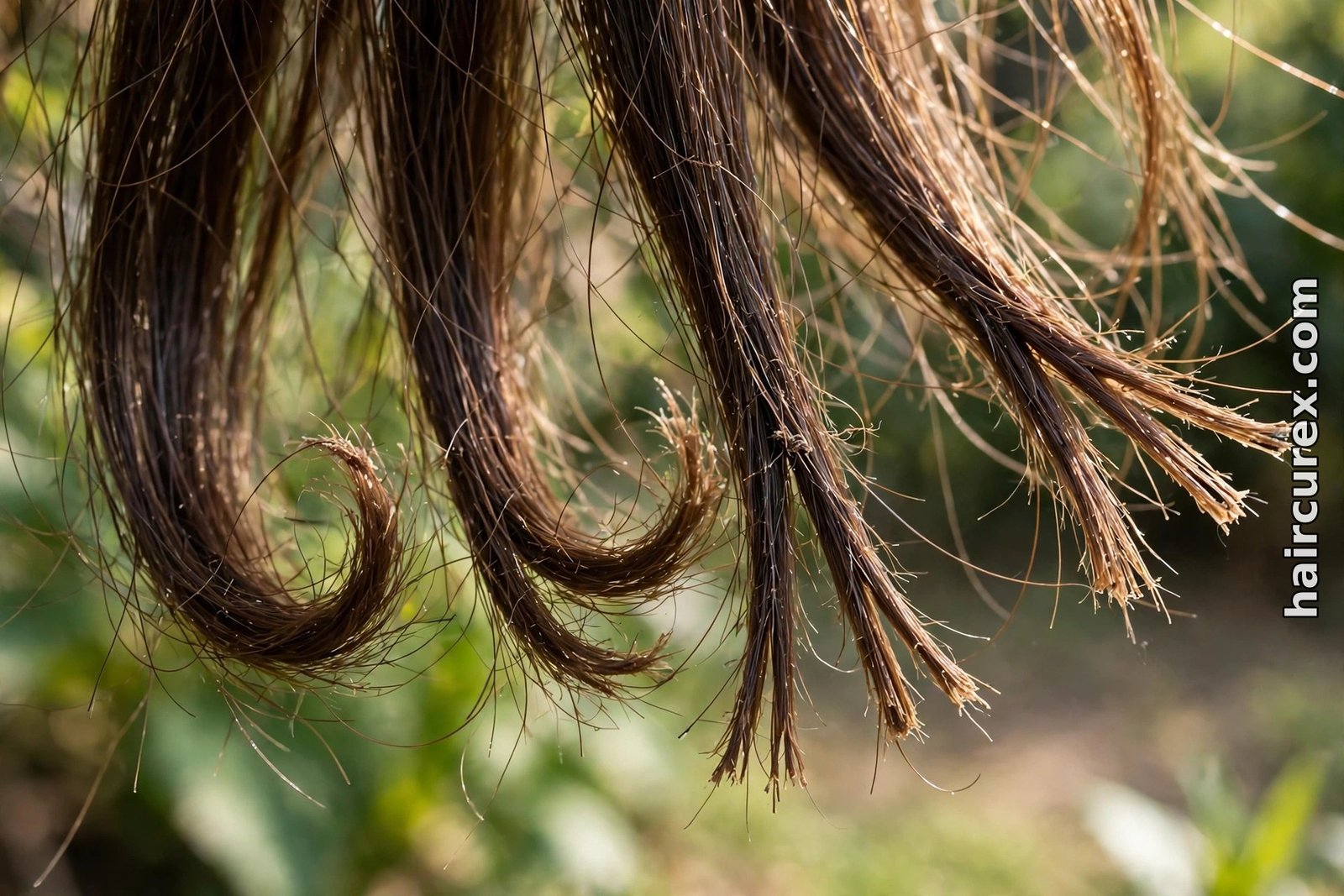
Hair breakage happens when the hair shaft becomes weak and snaps along its length, usually in the middle of the strand, instead of shedding from the root. The most common culprits are repeated heat styling, chemical treatments, rough brushing, tight hairstyles, and wet-hair handling that wears down the protective cuticle. You can stop it by cutting back on heat, always using a heat protectant, detangling gently from the ends upward, and adding regular protein and deep-conditioning treatments while the damaged length grows out.
If you keep finding short, frizzy pieces on your shoulders, on your brush, or on the bathroom floor, and your hair seems to stay the same length no matter how long you grow it, breakage is the likely cause. This guide explains what hair breakage is, how it differs from shedding and split ends, the nine causes that matter most, and a realistic repair routine you can follow at home. It focuses on mid-shaft breakage, the kind that creates flyaways and uneven layers halfway down the strand, rather than damage that is limited to the very tips.
What Is Hair Breakage?
Hair breakage is the snapping of the hair shaft at a weak point. Each strand has an outer cuticle, a layer of overlapping scales that protects the inner cortex, where most of the strand’s strength lives. When the cuticle is worn away by heat, chemicals, friction, or rough handling, the cortex is exposed and the strand loses elasticity. It then stretches less, bends less, and eventually snaps under normal stress, such as brushing, tying it up, or even sleeping on it.
Broken hairs are easy to spot once you know what to look for: short pieces that are much shorter than the rest of your hair, a halo of flyaways around the crown, white dots or tiny knots along a strand where it is about to snap, and ends that feel rough, dry, or see-through. Because the hair breaks instead of falling out, the overall density at the roots can look normal while the lengths look thin, uneven, and hard to grow past a certain point.
Split ends are related but different. A split end is damage at the very tip of the hair, where the strand frays into two or more pieces. Mid-shaft breakage happens higher up the strand and can occur even when the ends look fine. If your main problem is frayed tips, read our guide to split ends: what they look like, what causes them, and how to prevent them. This article deals with the breakage that happens between the roots and the ends.
Hair Breakage vs. Shedding vs. Split Ends
People often confuse these three things, and the fix for each one is different, so it is worth telling them apart before you change anything in your routine.
| Sign | Hair breakage | Shedding (hair loss) | Split ends |
|---|---|---|---|
| Where it happens | Mid-shaft, anywhere along the strand | From the root, whole strand falls out | At the very tip of the strand |
| What you see | Short broken pieces, flyaways, uneven lengths | Full-length strands, often with a small white bulb at one end | Tips that fork or fray into two or more strands |
| Root bulb | No bulb; the piece is a fragment of a strand | Usually a small white bulb at the root end | No bulb; the strand is still attached |
| Main cause | Damage to the hair shaft from heat, chemicals, and friction | Normal growth cycle, stress, hormones, or scalp and health factors | Wear and age of the oldest part of the hair |
| What helps | Gentler handling, less heat, protein and moisture treatments | Addressing the underlying cause; see a dermatologist if it is sudden or heavy | Trimming the damaged tips and protecting the ends |
A simple check helps: pick up a strand you have lost and look at both ends. A shed hair is full length with a tiny bulb at the root. A broken piece is short, has no bulb, and often has a rough or tapered end where it snapped. If most of what you find is short pieces, your problem is breakage, not shedding, and the solution is to protect the lengths you already have.
What Causes Hair Breakage?
Breakage rarely has a single cause. In most cases several small stresses add up over months: the cuticle is thinned a little by each heat session, each color appointment, and each rough brush stroke, until the strand can no longer take normal handling. Finding your own combination is the fastest way to stop it, because you can change the two or three habits that are doing the most damage first.
1. Heat styling
Flat irons, curling wands, and blow dryers are the most common cause of hair breakage. Temperatures above about 180 degrees Celsius (350 degrees Fahrenheit) can crack the cuticle and boil the water inside the strand, leaving tiny bubbles and weak spots in the cortex. Daily straightening is far more damaging than an occasional blow dry, and using a hot tool on hair that is already dry or damaged multiplies the harm. Lower the temperature, use heat only on fully dry hair, and never go over the same section twice.

2. Chemical treatments
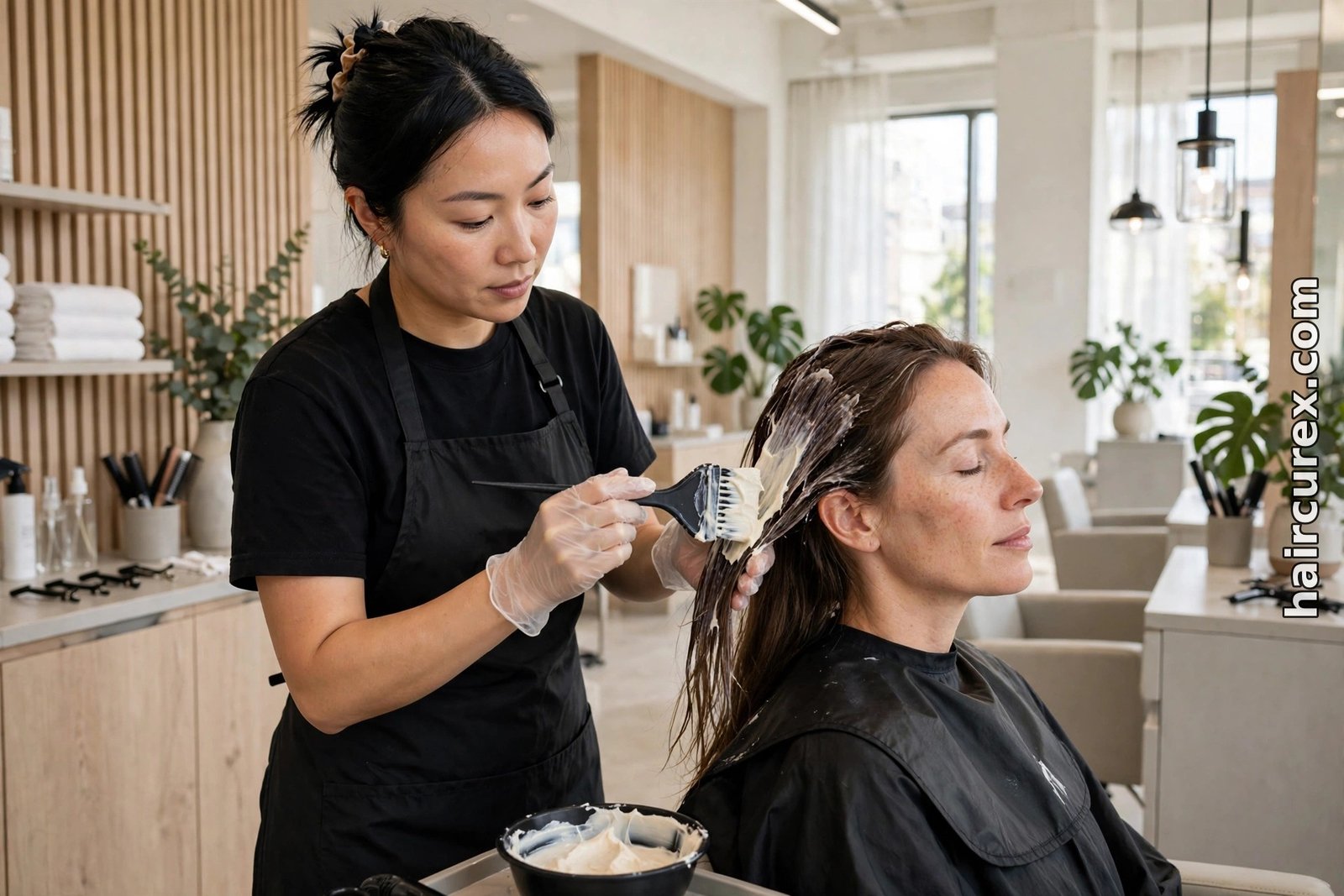
Bleach, permanent color, perms, relaxers, and keratin treatments all change the internal structure of the hair. Bleach is the harshest: it lifts the cuticle and removes pigment, and double-processed or overlapping bleach can leave hair stretchy when wet and brittle when dry. Color and chemical services are not automatically harmful, but stacking them, for example bleaching hair that has already been relaxed, or coloring over freshly bleached hair without a break, is a classic route to breakage. Space chemical services at least six to eight weeks apart and tell your stylist everything that has been done to your hair.
3. Over-brushing and tight hairstyles
Brushing does not need to be aggressive to cause damage. A fine-tooth brush dragged through tangled hair, a hundred strokes a day, or brushing curly hair when it is dry can all snap strands. Tight ponytails, braids, buns, and extensions pull constantly on the same points, which weakens those spots and can also stress the hairline. If you see short broken pieces around the hairline or where your elastic sits, tension is part of the problem. Switch to a wide-tooth comb or a flexible detangling brush, hold the section above the tangle while you work through it, and vary where you place ponytails and parts.
4. Wet-hair handling
Wet hair is weaker than dry hair. It stretches more and the cuticle is raised, so the same brush stroke that is harmless on dry hair can snap a wet strand. Rough towel drying, wringing hair out, and brushing straight from the shower are common mistakes. Instead, squeeze water out gently with a microfiber towel or an old cotton T-shirt, detangle with a wide-tooth comb while conditioner is still in the hair, and let hair air dry at least partway before you brush or style it.
5. Protein-moisture imbalance
Healthy hair needs both protein and moisture, and too much of either one causes breakage in different ways. Hair that lacks protein feels soft, limp, and stretchy, and snaps when it is pulled because it has lost its internal structure. Hair that is overloaded with protein treatments feels stiff, rough, and straw-like, and snaps because it has lost elasticity. Hair that lacks moisture feels dry, rough, and frizzy, and breaks from friction. The fix is balance: alternate a protein treatment with a moisturizing deep conditioner, and watch how your hair responds for two weeks before you change anything else.
6. Harsh products and buildup
Products that strip the hair or leave heavy buildup can both lead to breakage. Strong clarifying shampoos used too often, high-pH soaps, and products with drying alcohols can leave the cuticle rough and raised. At the other extreme, heavy silicones, waxes, and oils that are never properly washed out coat the strand, attract dirt, and make detangling harder. Read labels and simplify your routine. Our list of hair ingredients to avoid explains which ingredients are most likely to cause problems and what to use instead.
7. Sun, chlorine, and salt water
Ultraviolet light breaks down the proteins in hair, especially in hair that is already colored or fine. Chlorine strips natural oils and can leave hair dry and brittle, while salt water draws moisture out of the strand. A summer of swimming and sun without protection can show up as breakage in the autumn. Wet hair with clean water before you swim, wear a swim cap or rinse immediately afterward, and use a hat or a UV-protectant spray on long days outdoors.
8. Nutritional factors
Hair is mostly protein, and it is one of the first places the body cuts back on when nutrition is poor, because hair growth is not essential for survival. Very low protein intake, crash dieting, iron deficiency, and low levels of zinc or biotin have all been linked to weaker, more breakage-prone hair. Food alone will not repair hair that is already damaged, since the lengths are not living tissue, but a balanced diet with enough protein, iron-rich foods, and a variety of vitamins gives new growth the best chance of being strong. If you suspect a deficiency, ask your doctor for blood tests rather than guessing with supplements.
Cause and Fix at a Glance
| Cause | What it does | Fix that works |
|---|---|---|
| Daily high heat | Cracks the cuticle and weakens the cortex | Lower the temperature, use heat protectant, take heat-free days |
| Bleach and overlapping color | Removes structure from inside the strand | Space services 6 to 8 weeks apart, add bond-building treatments |
| Rough brushing | Snaps tangled and dry strands | Wide-tooth comb, detangle from ends up, brush only when needed |
| Tight hairstyles | Constant tension at the same points | Looser styles, vary placement, use soft ties |
| Wet-hair handling | Stretches and snaps weaker wet strands | Microfiber towel, comb with conditioner in, air dry partway |
| Protein-moisture imbalance | Hair is either limp and stretchy or stiff and dry | Alternate protein and moisture treatments |
| Harsh products | Raises the cuticle or coats the strand | Gentle shampoo, clarify monthly, read labels |
| Sun and chlorine | Breaks down protein and dries hair out | Pre-wet before swimming, rinse after, wear a hat |
How to Tell Breakage from Shedding
If you are unsure which problem you have, try these three checks over a week. First, look at what lands in the shower drain and on your brush: short pieces under about 5 centimeters (2 inches) with no bulb point to breakage, while full-length strands with a bulb point to shedding. Second, look at your hairline and part: a halo of short flyaways and uneven layers at the same length points to breakage, while a widening part or overall thinning points to shedding. Third, do a gentle stretch test on a single wet strand: healthy hair stretches a little and returns, while damaged hair either snaps immediately or stretches and stays stretched.
Keep in mind that some shedding is normal. Most people lose 50 to 100 hairs a day as part of the growth cycle. Breakage, on the other hand, is never normal in large amounts, and it is a sign that the lengths need protection rather than a scalp treatment. If shedding suddenly increases, comes with itching, scaling, or bald patches, or does not settle within a few weeks, see a dermatologist rather than trying to treat it at home.
How to Stop Hair Breakage: A Step-by-Step Repair Routine
Damaged hair cannot be glued back together, but you can stop new breakage and protect the hair while healthy new growth replaces the damaged lengths. Follow this routine for at least eight weeks before you judge the results.
- Trim the worst damage. Cut off split, see-through, or gummy ends so breakage cannot travel up the strand. A small trim every eight to twelve weeks beats one big chop later.
- Wash gently. Use a sulfate-free shampoo, massage the scalp with your fingertips rather than your nails, and let the suds run down the lengths instead of piling hair on top of your head to scrub it.
- Condition every time. Apply conditioner from mid-length to ends, leave it for two to three minutes, and detangle with a wide-tooth comb while it is in.
- Deep condition weekly. Use a deep conditioner or hair mask once a week for 20 to 30 minutes, with gentle heat from a warm towel if your hair is very dry.
- Alternate protein and moisture. Use a light protein treatment every two to four weeks if your hair feels limp and stretchy, and a moisturizing mask on the other weeks.
- Protect before heat. Apply a heat protectant to damp hair before blow drying, keep tools at or below 180 degrees Celsius, and take at least two heat-free days each week.
- Sleep on silk or satin. A silk pillowcase or a loose braid at night cuts friction while you sleep, which is when a surprising amount of breakage happens.

Products and Treatments That Help
Protein treatments rebuild strength in the cortex. Look for hydrolyzed keratin, wheat, or silk protein, and use them sparingly: once every two to four weeks is enough for most hair, and overuse makes hair stiff. Bond-building treatments used in salons can help bleach-damaged hair, but they work best as part of a gentler routine, not as a license to keep bleaching.
Deep conditioners and hair masks restore moisture and elasticity, which is what stops hair from snapping when it is brushed or styled. Leave-in conditioners add a daily layer of protection and make detangling easier, especially for curly hair. See our roundup of the best leave-in conditioners for curly hair if your curls tangle easily. A heat protectant is non-negotiable whenever you use hot tools: it does not make heat harmless, but it slows the damage enough to matter. If frizz tempts you to reach for the flat iron every day, our guide on how to get rid of frizzy hair offers gentler ways to smooth it.
Common Mistakes That Keep Hair Breaking
- Brushing dry, curly, or tangled hair. Detangle when hair is damp and coated with conditioner, working from the ends upward.
- Skipping heat protectant. Even one pass with a hot iron on unprotected hair can create weak spots.
- Overusing dry shampoo. Dry shampoo is useful between washes, but relying on it for days on end leaves buildup that makes hair dull, itchy, and harder to detangle.
- Too much protein, or too little. Protein treatments help weak hair, but using them every wash makes hair brittle. Balance them with moisture.
- Expecting a product to repair split or snapped hair. Conditioners can smooth the cuticle and reduce further breakage, but they cannot rejoin a broken strand. Only time and new growth replace it.

When to See a Dermatologist or Trichologist
Most breakage improves with gentler handling, but see a dermatologist or trichologist if shedding suddenly increases, you notice bald patches or a widening part, your scalp is itchy, sore, or scaly, or breakage does not improve after two to three months of a gentle routine. A dermatologist can check for scalp conditions, hormonal causes, and nutritional deficiencies that no shampoo can fix. For background on gentle hair care, the American Academy of Dermatology’s healthy-hair tips cover washing, brushing, and heat use, and Medical News Today’s guide to hair breakage explains its common causes and prevention in detail.
Frequently Asked Questions About Hair Breakage
Is hair breakage the same as hair loss?
No. Hair breakage means the shaft snaps, so you lose length but the root stays in place and new hair keeps growing. Hair loss means whole strands fall from the root, which can thin the hair overall. Breakage is fixed by protecting the lengths, while hair loss needs the underlying cause to be found.
Can broken hair grow back or be repaired?
A broken strand cannot be repaired, because hair is not living tissue once it leaves the follicle. The hair itself does grow back from the root, and with gentle handling the new growth stays intact, so lengths gradually improve as damaged hair is trimmed away and replaced.
How long does it take to stop hair breakage?
Most people see fewer broken pieces within four to eight weeks of cutting back on heat and detangling gently, because new damage stops quickly. Visible improvement in length and thickness takes longer, usually three to six months, because hair grows about one centimeter per month and the damaged lengths need time to be replaced.
Does cutting hair stop breakage?
Cutting removes the most damaged ends and stops splits from travelling upward, which reduces breakage at the ends. It does not stop mid-shaft breakage on its own. You still need to change the habits that weakened the hair, or new damage will appear on the fresh lengths.
Is protein or moisture better for breakage?
It depends on what your hair is missing. Limp, stretchy hair that snaps when pulled usually needs protein. Dry, rough, frizzy hair that snaps from friction usually needs moisture. Most damaged hair needs both, so alternate a protein treatment with a moisturizing deep conditioner and see how your hair responds.
Can I still use heat tools if my hair is breaking?
Yes, but less often and at lower temperatures. Take a break from heat for two to four weeks if breakage is severe, then reintroduce it with a heat protectant, a temperature at or below 180 degrees Celsius, and no more than one pass per section.