

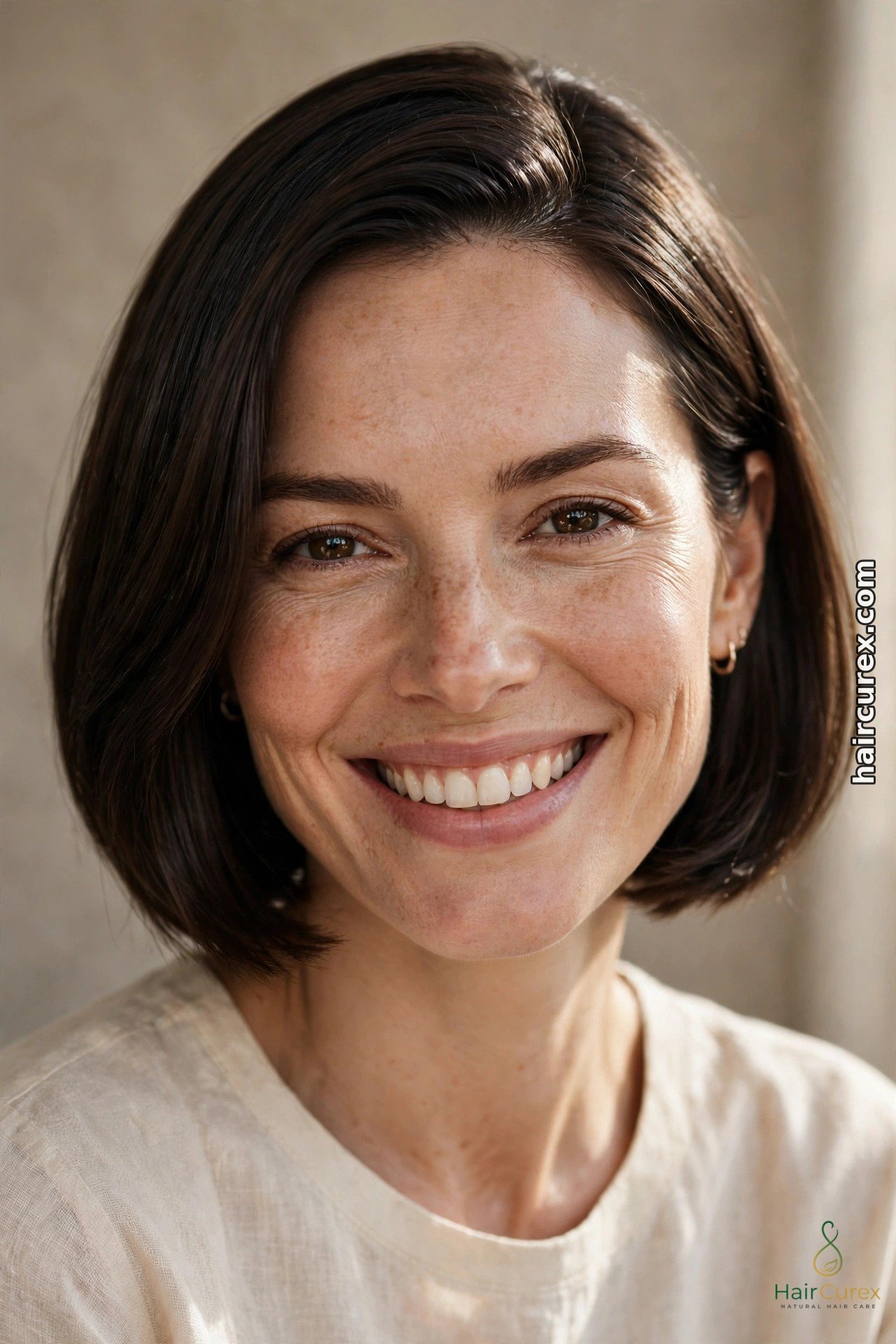
Quick answer: The best short haircuts for women depend on your face shape and hair type, not on a single “perfect” cut: a chin-length bob suits almost everyone, a textured pixie flatters oval and heart-shaped faces best, a lob is the safest first step into short hair, and a curly pixie or short shag works best for wavy and curly hair. Short hair is faster to wash and style every morning, but it needs a trim every 4 to 8 weeks to hold its shape — so the real choice is between salon visits and styling time, not just length.
Going short is the fastest way to change how you look, and the most common reason women put it off is not the cut itself — it is the fear of picking the wrong one. That fear is understandable: a long cut grows out quietly, but a short cut is visible from every angle, and a bad one takes months to fix.
This guide takes that risk out of the decision. It starts with how to match a cut to your face shape and hair type, then walks through the 20 best short haircuts for women — pixies, bobs, lobs, shags and curly cuts — with who each one suits, how much upkeep it needs, and what to ask for in the chair.
How to Choose Short Haircuts for Women
Choosing between short haircuts for women starts with two honest measurements: your face shape and your hair texture. Face shape decides which lengths flatter you — a cut that ends at the jaw highlights the jaw, a cut with height on top lengthens a round face, and a cut with width at the sides balances a long face.
Hair texture decides how the cut will actually behave once you leave the salon: fine hair looks fuller in shorter cuts because the weight is gone, thick hair needs thinning inside the cut or it mushrooms out, wavy hair gives layers movement for free, and curly hair shrinks as it dries, so it must be cut longer than the finished length you want.
To find your face shape, pull your hair back, stand square to a mirror, and measure four things with a tape: the length from the middle of your hairline to the tip of your chin, and the widths of your forehead, your cheekbones and your jaw. An oval face is longer than it is wide, with the length about one and a half times the cheekbone width and a gently rounded chin. A round face has length and width close to equal, with full cheeks and a soft jaw.
A square face has a strong, wide jaw about as wide as the forehead. A heart-shaped face has a wider forehead and a narrow, pointed chin, and a long face is notably longer than it is wide.
That ratio method comes from the face-shape guide at Hairstyle Atlas, which lays out the measurements for all six shapes: Hairstyle Atlas on how to measure your face shape. If you are still unsure after measuring, our guide to which hairstyle suits me walks through face shape and hair type together.
The 20 Best Short Haircuts for Women
These are the 20 short haircuts for women that stylists recommend most often, grouped by style family. Use the table to narrow it down, then read the sections below for the detail on each group.
| # | Haircut | Length | Best for | Upkeep |
|---|---|---|---|---|
| 1 | Classic chin-length bob | Chin | Almost everyone; the safest short cut | Trim every 6–8 weeks |
| 2 | Textured bob | Chin | Volume and movement; wavy hair | Trim every 6–8 weeks |
| 3 | Blunt bob | Chin | Thick, straight hair; a sharp line | Trim every 5–6 weeks |
| 4 | Long bob (lob) | Collarbone | First step into short hair; versatility | Trim every 8 weeks |
| 5 | Textured pixie cut | Very short | Showing off bone structure; fast mornings | Trim every 4–6 weeks |
| 6 | Side-swept pixie | Very short | A softer pixie; first-time short hair | Trim every 4–6 weeks |
| 7 | Curly pixie | Very short | Curly hair; volume at the crown | Trim every 5–6 weeks |
| 8 | Short curly cut with layers | Ear to chin | Defined curls without the triangle shape | Trim every 6–8 weeks |
| 9 | Modern shag | Chin to shoulder | Texture and edge; wavy or curly hair | Trim every 8–10 weeks |
| 10 | Short wolf cut | Chin to shoulder | Volume at the crown; a bold look | Trim every 8–10 weeks |
| 11 | Bob with curtain bangs | Chin | Softening the forehead; growing out bangs | Trim every 4–6 weeks |
| 12 | Asymmetrical bob | Chin | Adding angles; a modern edge | Trim every 5–6 weeks |
| 13 | French bob | Jaw | A chic, Parisian look; fine hair | Trim every 5–6 weeks |
| 14 | Buzz cut | Very short | The boldest choice; almost no styling | Trim every 3–4 weeks |
| 15 | Pixie with undercut | Very short | Edge and contrast; thick hair | Trim every 4 weeks |
| 16 | Short layered cut | Ear to chin | Movement on fine hair; easy styling | Trim every 6–8 weeks |
| 17 | Bixie (bob + pixie) | Ear to chin | The in-between cut; easy grow-out | Trim every 5–6 weeks |
| 18 | Short cut with side-swept bangs | Chin | Adding angles; softening a wide forehead | Trim every 4–5 weeks |
| 19 | Curly bob | Chin | Curly hair with shape and bounce | Trim every 6–8 weeks |
| 20 | Choppy bob with layers | Chin | Thick hair; removing bulk | Trim every 6–8 weeks |
The Pixie Cut
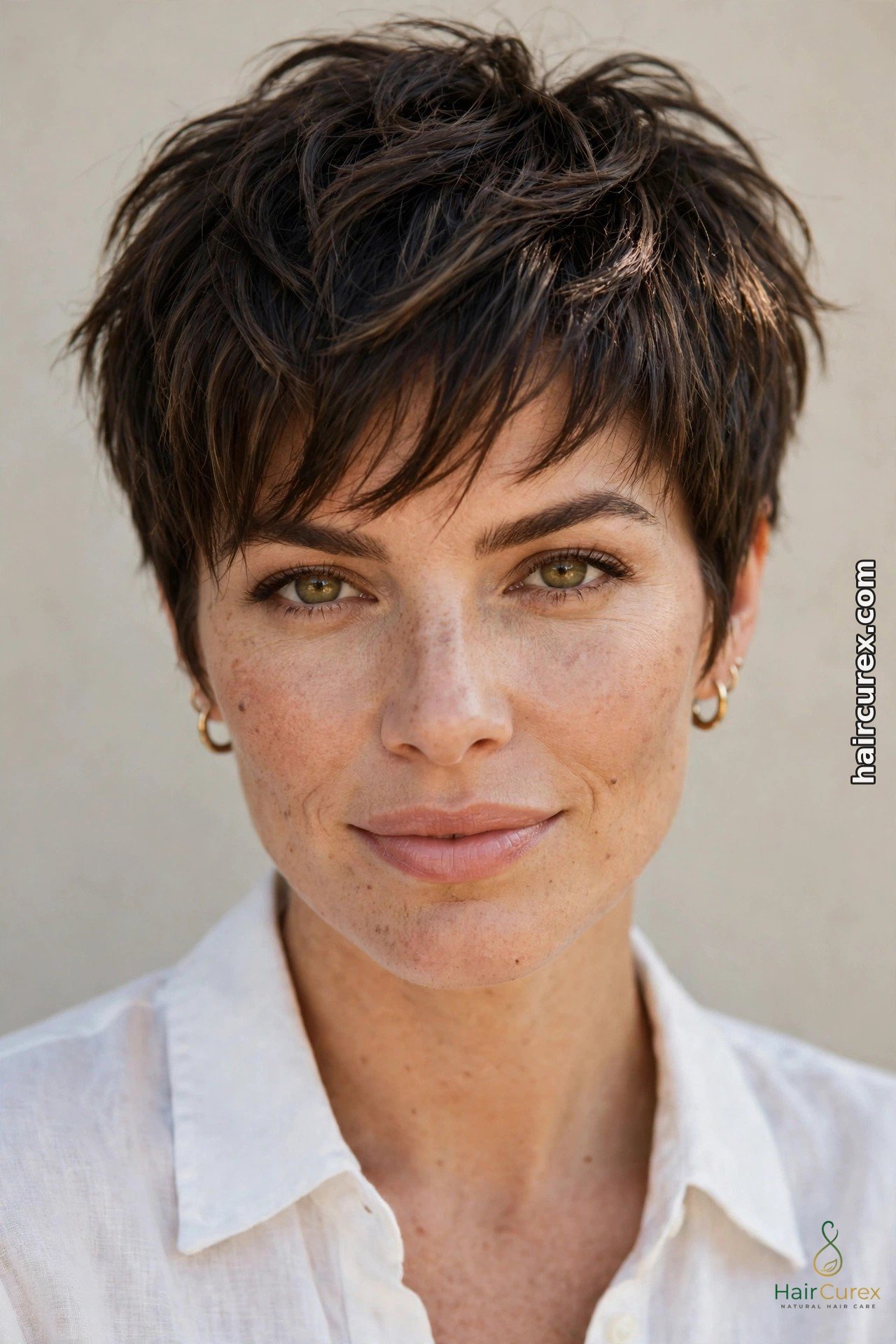
If there is one cut that defines short haircuts for women, it is the pixie. Short on the sides and back with longer pieces on top, the pixie puts your cheekbones and eyes at the centre of the picture in a way no longer style can, and it takes about five minutes to style in the morning. A textured pixie with choppy layers on top is the most forgiving version: the layers add height and movement, and the cut works on straight, wavy and fine hair alike.
A side-swept pixie keeps a little more length across the forehead, which makes it the best first pixie for anyone nervous about going very short, and it is also the easiest version to grow out later — it grows into a bixie, then a bob, without an awkward stage.
The honest trade-off with any pixie is maintenance: the shape needs a trim every 4 to 6 weeks, because half an inch of growth changes the whole silhouette on a cut this short. If you are torn between a pixie and a bob, the bob is the safer first step — but if you want the fastest mornings and the most dramatic change, the pixie is the cut. Our full guide to the pixie cut covers who it suits, how to style it, and what growing it out is really like.
Bobs and Lobs

Among short haircuts for women, the bob is the short cut that suits the widest range of women, because the horizontal line of a bob plays against the vertical length of the face and balances it. A classic chin-length bob is clean and polished, and it is particularly good on fine hair, because the blunt ends make the hair look thicker than it is.
A textured bob adds choppy layers through the ends for volume and movement, and it is the better choice for wavy hair or for anyone who wants a bob that does not need a flat iron every morning. The blunt bob — cut straight across at one length with no layering — is the sharpest version, and it looks best on thick, straight hair that can hold the line; on fine hair it can fall flat, so it needs a little texturising at the ends.
The long bob, or lob, sits between the chin and the collarbone, and it is the most versatile of all the short haircuts for women. It is long enough to tie back, short enough to feel like a real change, and it works with a centre part, a side part, or curtain bangs.
A bob with curtain bangs is the softest version: the fringe parts in the middle and sweeps to each side, framing the forehead without covering it, and it blends into layers as it grows out, so there is no awkward growing-out stage. All bobs need a trim every 6 to 8 weeks to hold their line — the blunt and French versions a little more often — because half an inch of growth changes the shape of a short cut fast.
Short Haircuts for Curly Hair

Short haircuts for women with curly hair need one rule above all others: cut the curls dry, or at least cut them longer than the finished length, because curly hair shrinks as it dries — sometimes by several inches — and a cut that looks right when wet can end up much shorter than expected. A curly pixie is one of the best short cuts for curly hair: the volume at the crown adds desirable height, while the exposed neck and ears highlight the jawline.
A short curly cut with layers, sitting between the ear and the chin, is the most forgiving curly short cut, because the layers remove the weight that makes curly hair go triangular — wide at the bottom, flat at the top. A curly bob keeps the length at the chin with layers through the ends, so the curls have shape and bounce instead of sitting like a solid block.
The key detail for any curly short cut is the stylist: ask whether they cut curly hair dry, and bring photos of your own curl pattern, not just the finished style, because a cut designed for loose waves will not behave the same way on tight coils. Our guide to curly hair types explains the 2A to 4C range and how each type behaves when cut short, which is worth reading before you book, because the advice changes a lot between loose waves and tight coils.
Shag and Layered Short Cuts
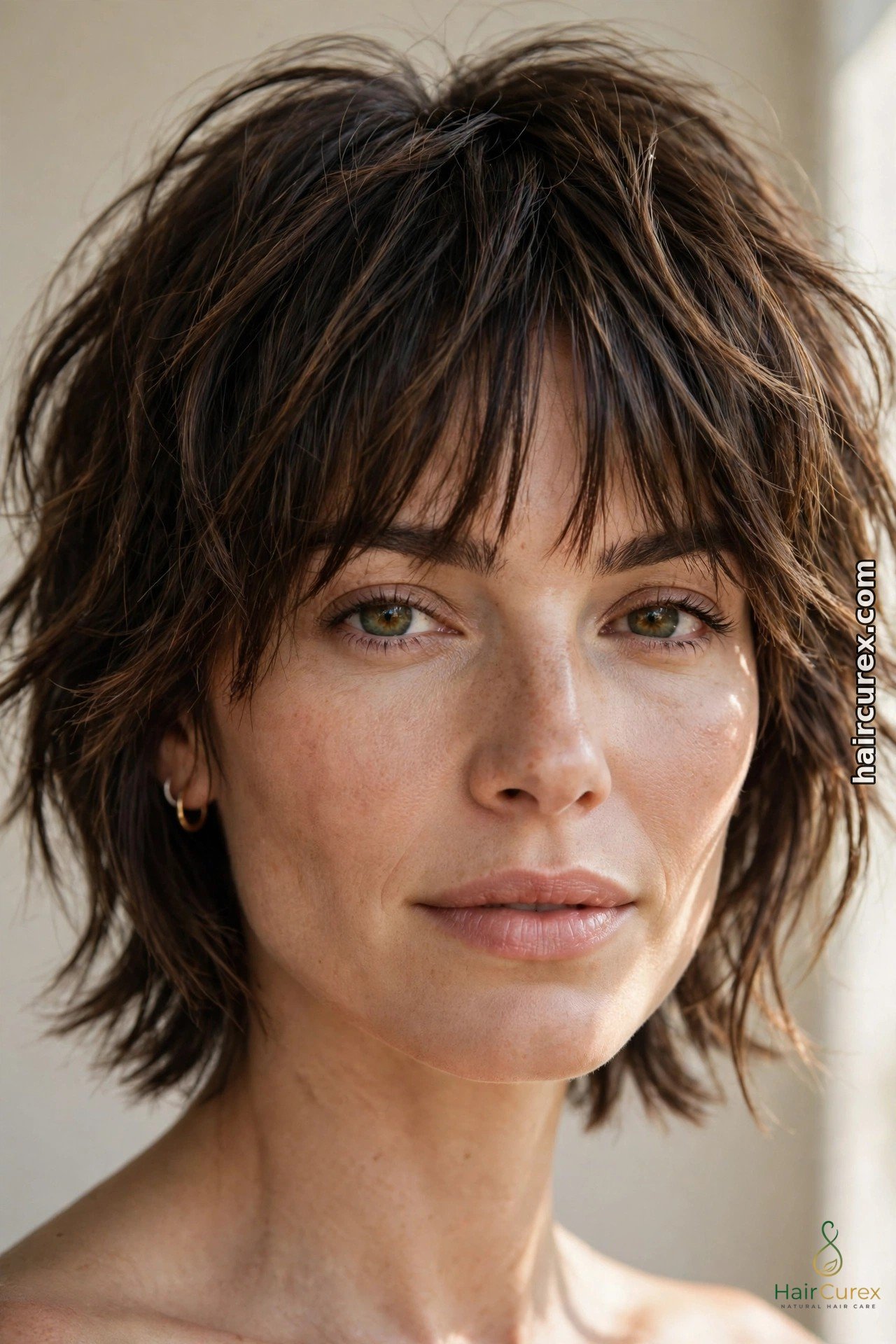
The modern shag and the short wolf cut are the textured, lived-in options among short haircuts for women, and they suit wavy and curly hair best, because the natural texture does half the styling work. A modern shag layers short pieces at the crown with longer pieces through the lengths, plus a fringe — usually curtain bangs or a wispy fringe — and the result is soft, tousled and deliberately undone.
It is one of the lowest-maintenance short cuts: the whole point is that it looks good slightly messy, so it grows out well and needs a trim only every 8 to 10 weeks. The short wolf cut is the shag’s bolder cousin — more volume at the crown, more contrast between the short top layers and the longer bottom layers — and it is a genuine style choice rather than a safe one, so bring photos and ask how the cut will grow out before the stylist starts.
Layered short haircuts for women are also the answer for fine hair that goes flat in a blunt cut. A short layered cut, sitting between the ear and the chin with layers through the crown, adds height and movement that fine hair cannot hold at longer lengths, and a choppy bob with layers does the same job while removing bulk from thick hair — the layers take weight out from the inside, so the cut moves instead of sitting like a solid sheet.
The bixie, a cross between a bob and a pixie, is the in-between cut for anyone who wants short hair without committing to a full pixie: it has the length of a bob at the back and the texture of a pixie on top, and it grows out more gracefully than either parent cut.
Short Haircuts for Women by Face Shape
Face shape is the fastest way to narrow the list. Oval faces can wear almost any of these short haircuts for women, because their proportions are already balanced — the choice comes down to hair texture and styling time, not correction. Our guide to haircuts for oval face shapes walks through all 15 of the best options for that shape, from long layers to pixies.
Round faces need height on top and length past the chin to look longer, so the best short cuts are a lob with volume at the crown, an asymmetrical bob, or a pixie with height on top — and the cuts to be careful with are chin-length bobs with no volume, which can make a round face look rounder. Our guide to haircuts for a round face covers the full list with what to avoid.
Square faces need softness at the jaw rather than hard lines that end right at it, so the best short cuts are textured bobs with layers, shags with curtain bangs, and side-swept pixies — all of which soften the jawline instead of echoing it. Heart-shaped faces need fullness at chin level to balance a wider forehead, so a chin-length bob, a lob with waves at the ends, or a pixie with volume at the sides works well.
Long faces benefit from width at the sides — a bob with volume, a shag with curtain bangs, or a curly bob — and should be careful with very tall, volume-heavy styling on top, which stretches the face further. The honest truth is that most women are a blend of two shapes, so use your shape to rule out the two or three short haircuts for women that will fight you, not to find the one cut you are allowed to wear.
Short Haircuts for Women by Hair Type
Hair texture decides how each of these short haircuts for women will behave on you. Fine hair looks thicker in shorter cuts, because the weight is gone — a chin-length bob, a French bob or a textured pixie will make fine hair look fuller than a longer cut will, and soft layers on top add height that fine hair cannot hold at longer lengths. If your fine hair is very straight, a blunt or French bob holds its shape best, but it needs a little texturising at the ends or it can fall flat.
Thick hair is the opposite problem: it needs thinning and textured layers inside the cut, or bobs and pixies can look bulky and mushroom-shaped, so be clear with your stylist about removing bulk — a choppy bob with layers or a pixie with an undercut handles thick hair far better than a one-length bob.
Wavy hair is the easiest texture for short hair — it gives bobs, shags and textured pixies movement for free, and a lob with natural wave is one of the lowest-effort combinations on this list.
Very curly hair needs a longer version of any short cut, cut dry so the stylist can see how each curl springs up, and layers that start lower, at the chin or collarbone, so the curl pattern is not fighting the cut. If your hair is thinning, shorter cuts generally look fuller than long ones, because short hair stands up from the scalp instead of lying flat against it — a textured pixie or a chin-length bob will make the hair you have look fuller, though no haircut can regrow hair or treat hair loss itself.
What to Tell Your Stylist
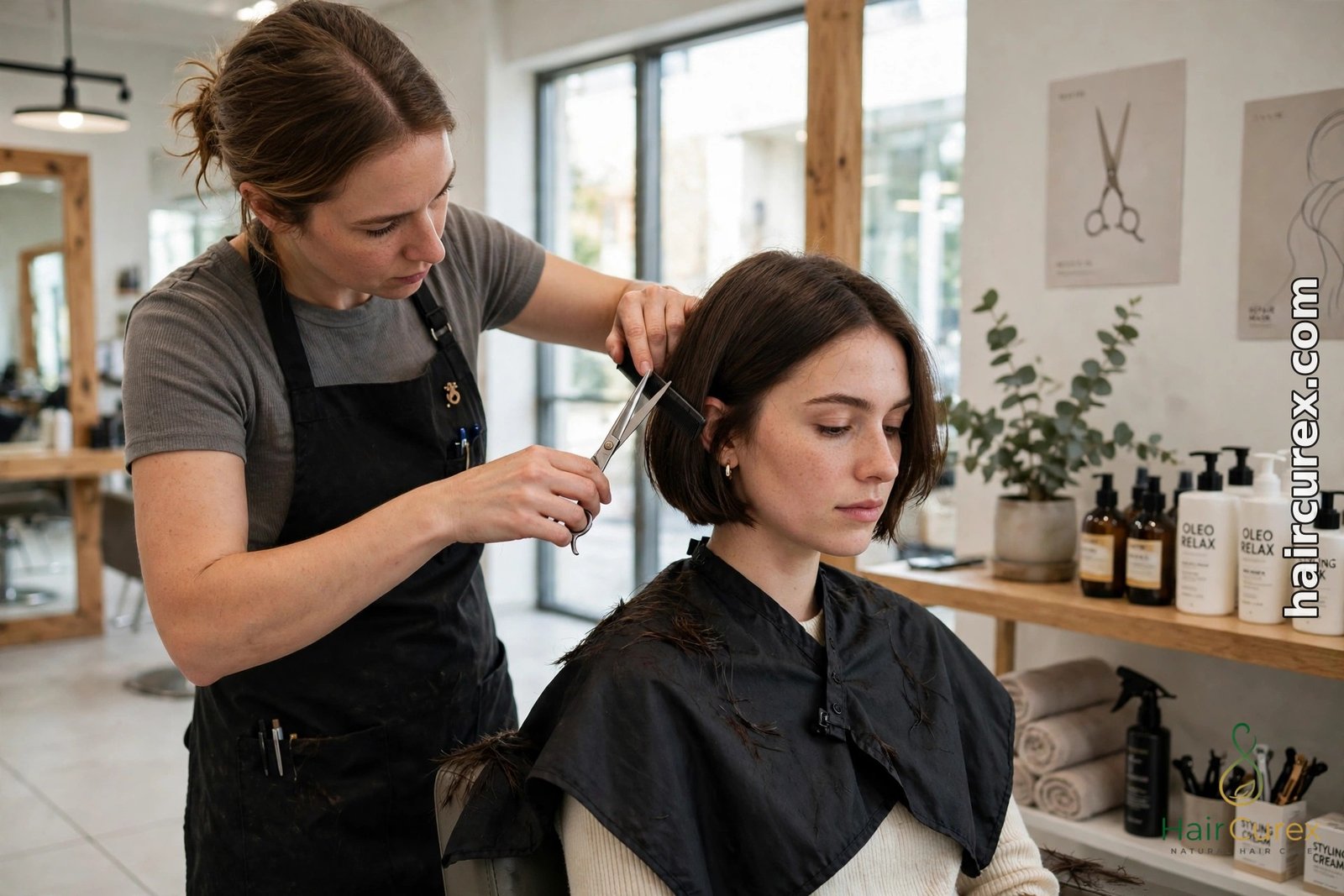
The difference between a haircut you love and one you tolerate is usually the conversation before the scissors come out, and with short haircuts for women the conversation matters more than usual — because so much hair is coming off, your stylist needs to know what you actually want, not just what suits your shape. Bring two or three photos of the exact cut, from different angles if you can, and one photo of a version you do not want, which is just as useful. Point to the exact length you want on the photo, because your “short” and their “short” may be inches apart.
Ask three questions before they start: how will this cut grow out, when should I come back for the next trim, and how do I style it at home. A skilled stylist cuts with the next eight weeks in mind, not just today, and the grow-out plan should be part of the conversation from the start — especially with a pixie or a buzz cut, where the grow-out is a real commitment.
Ask them to show you the styling routine before you leave the salon, while your hair is still damp, so you can copy it the next morning. And remember that healthy hair is what makes any short cut look good: the American Academy of Dermatology’s healthy-hair guidance covers the basics that matter most for short hair — gentle washing, minimal heat, and handling wet hair carefully: American Academy of Dermatology healthy hair tips.
Maintenance and Cost
Upkeep is the practical side of choosing between short haircuts for women, and it varies more than people expect. Bobs and lobs need a trim every 6 to 8 weeks to hold their line, and a blunt or French bob a little more often, every 5 to 6 weeks. Bangs of any kind add a trim every 4 to 6 weeks. Pixie cuts are the most maintenance-heavy at the salon — a trim every 4 to 6 weeks, roughly 9 to 12 visits a year — even though they are the fastest to style each morning, at about five minutes.
Shags and layered cuts are the cheapest to maintain: a trim every 8 to 10 weeks, because the whole point of the cut is that it looks good slightly messy. A first full cut usually costs more than a maintenance trim, typically $50 to $100 or more depending on the city and the salon, so budget for the first appointment and the rhythm after it, not just the day you walk in.
The other cost is styling time, and it runs in the opposite direction from salon visits: the shorter the cut, the faster the morning routine and the more frequent the salon visits. There is no wrong answer here — only the trade-off that fits your life.
If you hate regular salon visits, pick a lob or a shag. If you hate spending time on your hair each morning, pick a pixie or a textured bob. And whatever you choose, remember that a haircut is not permanent: hair grows about half an inch a month, so even a bold choice grows out within a year, and the best of these short haircuts for women is the one you will actually enjoy wearing every day.
Short hair is not one cut — it is a whole family of cuts, and the right one for you is the one that fits your face shape, your hair texture, your styling time, and how often you want to see your stylist. Start with a lob if you want the safest first step, a bob if you want a clean change, or a pixie if you want the boldest one. Your hair is already doing half the work — the right cut just shows it off.
Short Haircuts for Women FAQs
What is the best short haircut for women?
A chin-length bob is the best all-round choice, because it suits almost every face shape and hair type, grows out gracefully, and needs a trim only every 6 to 8 weeks. A textured pixie is the best choice if you want to show off your bone structure, a lob is the most versatile medium option, and a curly pixie or short layered cut is the best choice for curly hair. The right pick depends on your face shape, your hair texture and how much upkeep you want.
Do short haircuts suit round faces?
Yes, as long as the cut adds height on top or length past the chin. A lob with volume at the crown, an asymmetrical bob, or a pixie with height on top all flatter a round face, because they make it look longer. The cut to be careful with is a chin-length bob with no volume, which can make a round face look rounder.
Is short hair good for fine hair?
Yes — fine hair usually looks thicker in a shorter cut, because removing the weight lets the hair stand up from the scalp instead of lying flat. A chin-length bob, a French bob or a textured pixie will make fine hair look fuller than a longer cut will, especially with soft layers on top for height. Ask for a little texturising at the ends so a blunt cut does not fall flat.
How often should you trim short hair?
Most short haircuts for women need a trim every 6 to 8 weeks to hold their shape. Pixie cuts need one every 4 to 6 weeks, buzz cuts every 3 to 4 weeks, and bangs of any kind every 4 to 6 weeks. Shags and layered cuts are the exception — they need a trim only every 8 to 10 weeks, because they are designed to look good slightly messy.
Does a pixie cut suit an oval face?
Yes — an oval face is the shape a pixie cut suits best, because balanced proportions and a gently rounded jaw can carry almost any version, from classic to textured to long. A textured pixie with choppy layers on top is the most forgiving, and a side-swept pixie is the best first pixie. Expect a trim every 4 to 6 weeks to keep the shape.
Will short hair work on curly hair?
Yes, but it must be cut with the curl pattern in mind — ideally cut dry, or at least cut longer than the finished length, because curly hair shrinks as it dries. A curly pixie, a short layered curly cut, or a curly bob all work well, with layers starting lower, at the chin or collarbone, so the curls keep their shape instead of going triangular.