


Long hair gives you more styling options than any other length — and, on a busy morning, it can also feel like more hair to deal with. The good news is that the best hairstyles for long hair are not the complicated ones you see in ten-minute tutorials. They are the simple styles that work with your hair’s weight and texture instead of fighting it: a low ponytail that stays put, a bun that does not pull, a braid that holds all day, and a half-up style that keeps hair out of your face without hiding the length you grew it for.
This guide covers easy everyday styles you can do in under five minutes, polished occasion styles for weddings, parties and work events, and how to adapt each one for straight, wavy and curly long hair. No miracle claims, no “one style fits everyone” promises — just practical steps, honest time estimates, and the small details that decide whether a style lasts until evening or falls apart by lunchtime.
Quick answer: The easiest hairstyles for long hair are a low ponytail, a messy bun, a simple three-strand or French braid, a claw-clip twist, and a half-up half-down style — all doable in under five minutes with a hair tie and a few pins.
For occasions, the same base styles dressed up work best: loose waves, a sleek low bun or chignon, a polished half-up twist, or a braided crown. The style that lasts is the one matched to your hair type: straight hair needs grip from texture spray or a little backcombing, wavy hair holds braids and buns easily, and curly hair needs styles that work with the curl pattern rather than pulling it straight.
Before You Style: The 2-Minute Prep That Makes Styles Last
Most long-hair styles fail for the same two reasons: the hair is too slippery, or the style is pulling against the hair’s weight. A short prep step fixes both, and it takes less time than redoing a fallen bun later.
Start with hair that is not freshly washed and completely clean, unless the style needs a smooth, sleek finish. Day-old hair has more grip, which is why braids and buns hold better on second-day hair. If you have just washed it, a light mist of texture spray or dry shampoo at the roots gives the same grip without weighing the lengths down. For a sleek ponytail or chignon, the opposite applies: freshly washed, blow-dried hair is easier to smooth, and a drop of smoothing serum on the surface tames flyaways.
Detangle before you style, not during. Long hair tangles most at the nape and underneath, where you cannot see it. Brush or comb from the ends upward in short strokes, so you work knots out gently instead of dragging them down the whole length. The American Academy of Dermatology’s healthy hair tips make the same point in general terms: gentle handling, less heat and less pulling protect the hair over time, and that matters most when the hair is long enough to catch, snag and break.
Finally, gather your tools before you start. For almost every style in this guide you need a snag-free hair tie, two or three bobby pins, and — for buns and twists — a claw clip or a hair stick. Keep them in one place. Searching for a pin with one hand holding a ponytail is how styles end up lopsided.
Hairstyles for Long Hair at a Glance
Use this table to pick a style by how much time you have and where you are going. The times are realistic for long hair once you have done the style a couple of times — the first attempt always takes longer.
| Style | Time | Best for | Hair types it suits best |
|---|---|---|---|
| Low ponytail | 2 minutes | Work, gym, everyday | All — easiest on straight and wavy |
| Messy bun / top knot | 3 minutes | Everyday, running errands, hot days | Wavy and curly; straight hair needs grip |
| Three-strand or French braid | 5 minutes | Everyday, school, work | All — best hold on wavy and curly |
| Claw-clip twist | 1 minute | Everyday, work from home | Thick and wavy hair especially |
| Half-up, half-down | 4 minutes | Everyday to smart-casual | All — flatters every face shape |
| Loose waves | 15–20 minutes | Weddings, parties, date night | Straight and wavy; curly hair can enhance its own pattern |
| Sleek low bun / chignon | 10 minutes | Weddings, formal work events | Straight and wavy; curly hair can be smoothed first |
| Braided crown | 10 minutes | Weddings, festivals, summer events | All — needs enough length to wrap around |
Everyday Hairstyles for Long Hair
Everyday styles need to pass three tests: they must be fast, they must stay in without constant fixing, and they must not hurt by the end of the day. A style that pulls at the scalp for eight hours is not a good everyday style, however pretty it looks in the mirror at 8 a.m.
The Low Ponytail

The low ponytail is the most underrated of all hairstyles for long hair. It suits every face shape, works with every hair type, and takes two minutes. The difference between a polished low ponytail and a limp one is placement and tension.
Gather the hair at the nape, not high on the head, and smooth the top with a brush as you gather so there are no bumps. Secure it with a snag-free tie — fabric-covered ties or spiral ties pull less than plain elastic bands. Then take a thin strand from underneath the ponytail, wrap it around the tie, and pin it underneath with a bobby pin. That one step hides the tie and makes the whole style look deliberate rather than rushed.
For a little lift, gently pull at the hair above the tie to loosen the crown. If your ponytail swings and loosens during the day, use two ties: one at the base and one a few inches down the length, which distributes the weight instead of letting it all hang from one point.
The Messy Bun and Top Knot

A messy bun is the fastest way to get long hair completely out of the way, and it suits hot weather, workouts and days when you simply do not want hair on your neck. It also has a reputation for looking accidental, which is unfair — a good messy bun is controlled, just loosely controlled.
Gather the hair into a high ponytail, twist the length loosely, and wrap it around the base. Secure it with a second tie or a few pins, then gently pull out a few face-framing strands and loosen the bun slightly with your fingertips. The key word is loosely: a bun pulled drum-tight gives you a headache and flattens the crown. A bun that is too loose falls apart, so pin the base in two or three places and leave the rest soft.
Straight hair is the hardest hair type for a messy bun because it slips, so add texture spray first or braid the ponytail loosely before wrapping it — the braid gives the bun something to grip. A top knot is the same style worn higher, at the crown, and it works best when you want the hair fully off the face and neck.
The Claw-Clip Twist
If you own one hair tool for long hair, make it a large claw clip. The twist takes about a minute: gather the hair as if for a low ponytail, twist the length upward, fold it back on itself, and clip it in place so the ends fan out at the top.
It holds thick hair better than most ties because the clip distributes the weight, and it leaves no dent in the hair when you take it out — a real advantage if you want to wear your hair down later the same day. The claw-clip twist looks best slightly undone, with a few strands pulled loose at the front, and it is the easiest style in this guide to do without a mirror.
Braids That Actually Stay In
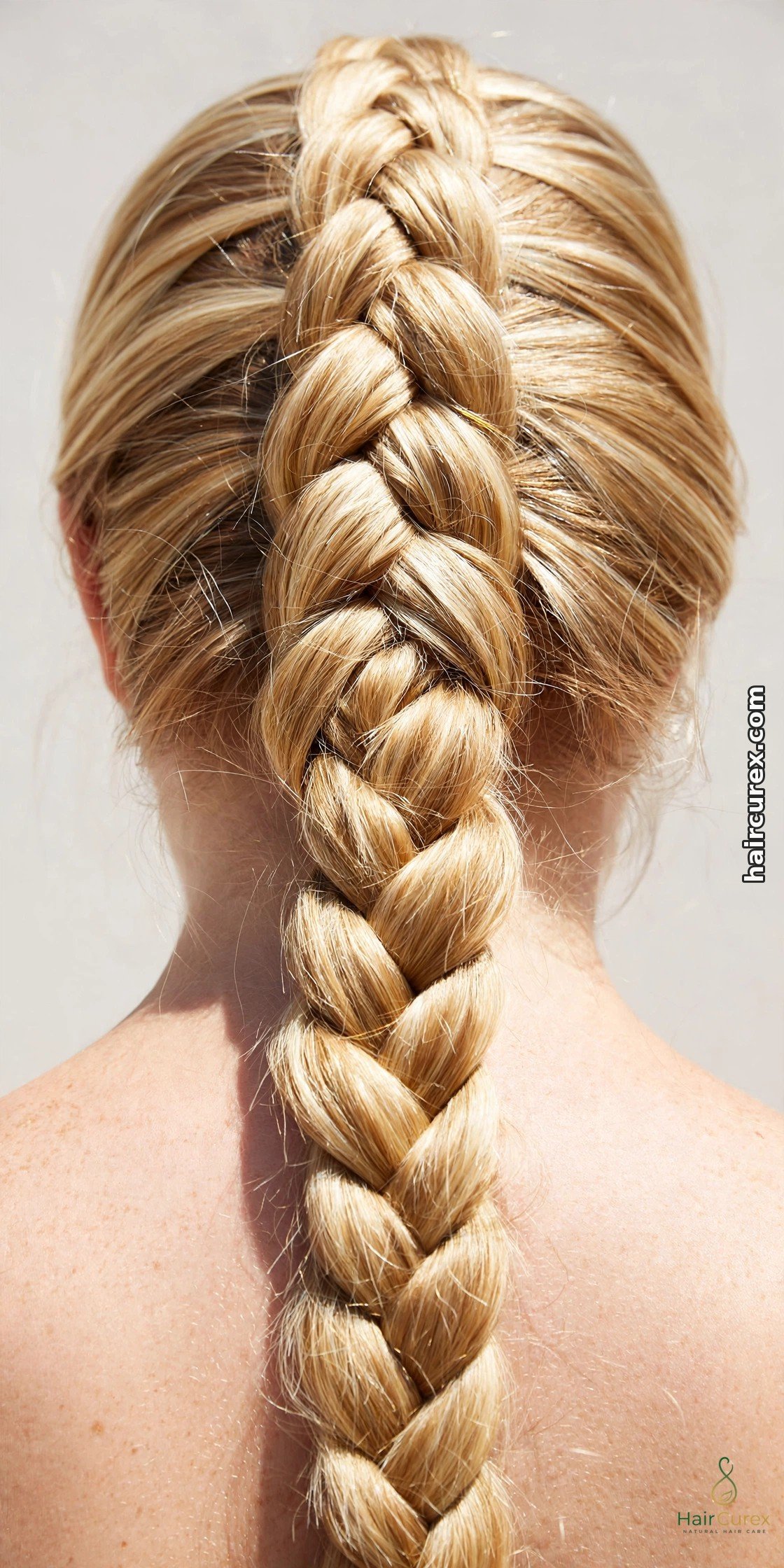
Braids are the most practical hairstyles for long hair when you need the style to last all day: they keep the hair contained, they protect the ends from tangling, and they look better as the day goes on rather than worse. The three to learn are the classic three-strand braid, the French braid and the fishtail.
The classic braid needs no explanation — divide the hair into three sections and cross them over each other — but two details make it last: braid it slightly tighter at the top and looser toward the ends, and secure it with a small tie rather than a bulky one, which lets the braid taper naturally.
A French braid starts at the crown and picks up hair as you go down, which keeps the braid close to the head and stops it swinging. It takes a little practice, but it is the braid that stays put through a full day, a workout or a windy walk. The fishtail looks intricate and takes no more skill than the classic braid: split the hair into two sections and pass small pieces from the outside of one section to the inside of the other, alternating sides. It suits long hair particularly well because the length shows off the pattern.
For all braids, the same prep rule applies: braid on hair with some grip, not freshly washed slippery hair. If your hair is fine or straight and braids slide out, braid it when it is slightly damp, or add a little texture spray first. And do not pull a braid too tight at the scalp — a braid that hurts is a braid that will cause breakage at the hairline over time. If your hair is very long and heavy, a side braid is kinder than a braid down the back, because the weight rests on the shoulder instead of pulling straight down.
Half-Up, Half-Down
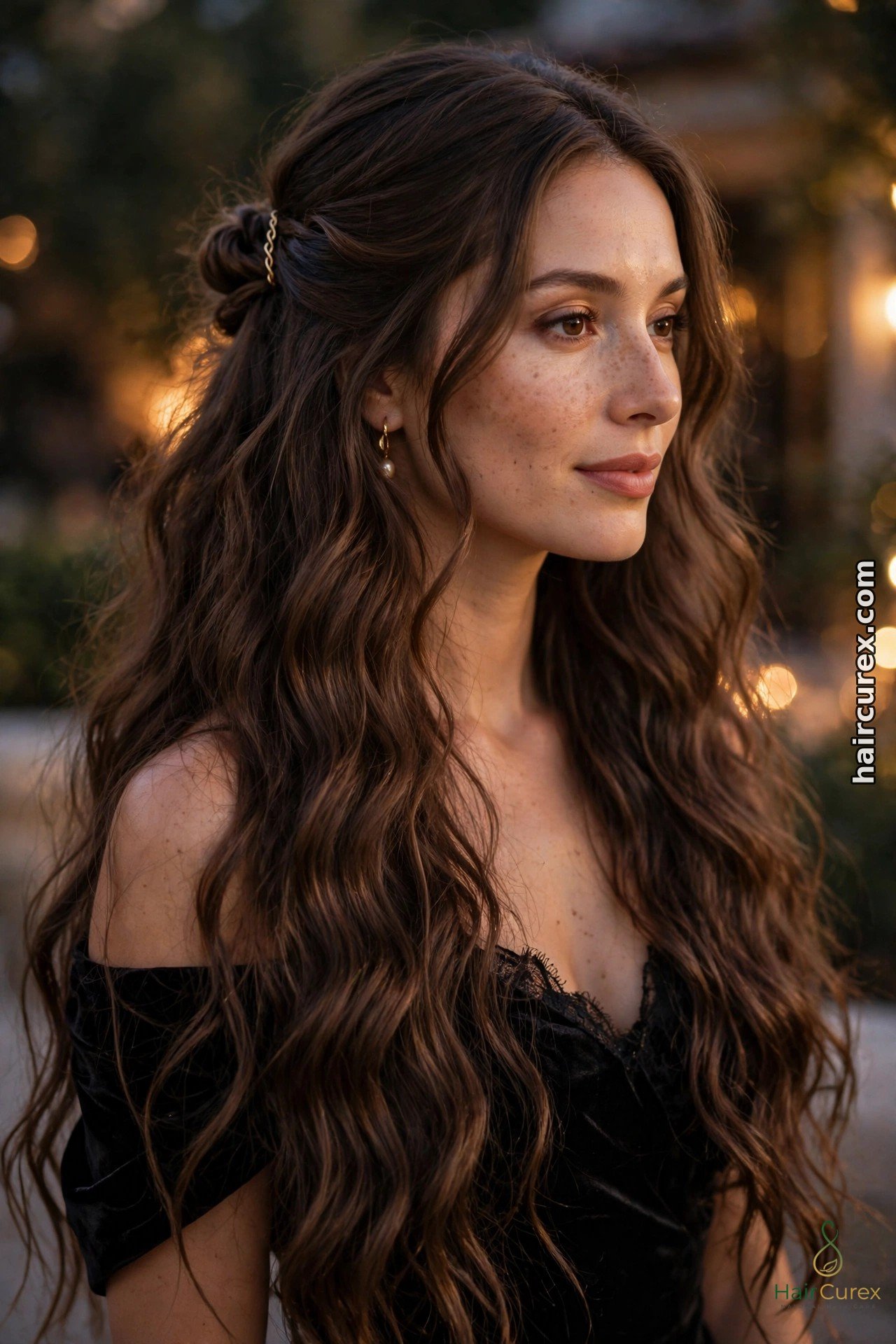
The half-up style is the compromise that long hair does better than any other length: it keeps hair out of your face and shows off the length at the same time. Take the top section of hair from temple to temple, gather it at the back of the crown, and secure it with a tie, a small clip or a twist. Leave the rest down. That is the whole style, and it takes four minutes.
The variations are where it earns its place. Twist the top section before securing it for a slightly more polished look, braid the top section for texture, or pull the half-up section into a tiny bun on top for a casual half-up bun. It works on straight, wavy and curly hair alike, and it is the easiest style to dress up: add a decorative clip or a ribbon and the same style goes from school run to dinner. One caution — do not take too much hair into the top section. A top section that is too thick pulls at the front hairline and gives you a headache; a section about two inches deep at the crown is enough.
Occasion Styles
Occasion styles are everyday styles with more polish: smoother finish, more hold, and a little more time. The mistake is to attempt a completely new, complicated style for an important event. Choose a style you have done before, and spend the extra time on the finish rather than on a new technique.
Loose Waves

Loose waves are the default occasion style for long hair for a reason: they show off length, shine and movement, and they photograph well. You can create them with a hair curler — a large barrel, 32 mm or wider, gives soft waves rather than tight curls — or with a salon blowout at home using a round brush, which gives volume at the roots and a soft bend at the ends.
Work in sections, curl away from the face, and let each curl cool before you touch it — a curl that is pulled apart while still warm falls out within the hour.
Once all the hair is curled and cool, brush through it gently with your fingers or a wide-tooth comb to turn separate curls into flowing waves, and finish with a light-hold spray. Do not use a strong-hold spray on long hair: it stiffens the waves and makes them look set rather than soft. If your hair is naturally wavy or curly, you may not need heat at all — scrunch in a curl cream on damp hair, let it dry, and you have the same effect without the damage risk.
The Sleek Low Bun and Chignon
A low bun, worn at the nape, is the most elegant occasion style for long hair and one of the simplest. Smooth the hair back with a brush, secure it in a low ponytail, twist the length and wrap it into a bun, and pin it in place.
A chignon is the same idea with the bun folded and tucked rather than wrapped, which gives a flatter, more sculpted shape. The finish is what makes it formal: smooth the surface with a little serum, hide every pin, and make the parting neat — a centre part reads classic, a side part reads softer. This is the style to choose for weddings and formal work events, and it is also the most forgiving if your hair is not freshly washed, because the smoothing hides day-old roots.
The Braided Crown and Half-Up Twist
A braided crown — two braids wrapped around the head and pinned — sounds complicated and looks it, but it is just two ordinary braids pinned in place. It suits summer weddings and festivals, keeps the hair completely off the neck, and works on every hair type. The half-up twist is the quicker formal option: twist the two front sections back, cross them at the crown, and pin them so they hold the front hair away from the face while the rest falls in waves. Both styles benefit from a little texture spray first, so the pins have something to grip.
The Polished High Ponytail
A high ponytail reads as occasion-ready when it is smooth, high and voluminous rather than scraped back. Gather the hair at the crown, smooth the sides with a brush, and secure it firmly. Wrap a strand around the tie, as with the low ponytail. Then add volume: gently backcomb the ponytail underneath, or curl the ends. A high ponytail suits long hair well because the length gives it movement, but it is also the style most likely to cause a headache, so do not wear it pulled tight for a whole day — loosen the base slightly once it is secured, and take it down between events if you can.
Hairstyles for Long Hair by Hair Type
The same style behaves differently on different hair, and matching the style to the texture is what makes it look effortless rather than forced.
Straight long hair looks sleek in ponytails, buns and chignons, and it shows off shine better than any other type. Its weakness is grip: braids slip, buns slide, and waves fall out. The fixes are texture spray before styling, braiding slightly damp hair, and using pins as well as ties. If you want waves that last, curl the hair, let it cool completely, and use a light spray — and accept that straight hair waves will always soften over the day, which is fine as long as you plan for it.
Wavy long hair is the easiest hair type to style, because it has natural grip and natural movement. Braids hold, buns stay, and a half-up style looks good with almost no effort. Its weakness is frizz, especially in humidity, so a drop of serum on the lengths and a light hold on the finished style help more than extra product at the roots. Our guide on how to get rid of frizzy hair covers the wash-day habits that calm frizz at the source, which matters more than any styling product.
Curly long hair has the most volume and the most styling potential, and it needs the least heat. Work with the curl pattern: a high puff or pineapple ponytail, a loose bun that lets the curls show at the edges, braids that follow the curl clumps, and a half-up style that keeps the front curls out of the face. Do not brush curly hair dry before styling — it breaks the curl pattern into frizz. Style it damp, with a little leave-in or curl cream, and let it dry in the style.
If you are not sure which curl type you have, our guide to curly hair types explains the 2A to 4C range and what each type needs. Long curly hair is also the heaviest, so a style that distributes the weight — a low bun, a side braid, a claw clip — will feel better at the end of the day than a high, tight ponytail.
Thick long hair needs stronger ties, larger clips and more pins than fine hair, and styles that distribute weight. A single thin tie will snap or slide; use a thick fabric tie or two ties. Fine long hair needs the opposite: lightweight products, styles that add volume at the crown, and a gentle touch with pins, which show more easily in fine hair. A half-up style with a little backcombing at the crown gives fine long hair the fullness it lacks on its own.
Tools, Products and the Mistakes to Avoid
You do not need a drawer full of tools for hairstyles for long hair. A good brush, a wide-tooth comb, snag-free ties, bobby pins that match your hair colour, one large claw clip, and — if you want waves — a large-barrel curler or a round brush are enough. Add a light texture spray and a light-hold finishing spray, and you have everything these styles require. The U.S. Food and Drug Administration explains how cosmetics are labelled, so the ingredient list is the most reliable guide to what a styling product actually contains — worth a ten-second check before you buy a new spray or serum.
The mistakes that ruin long-hair styles are almost always the same ones. Pulling a style too tight at the scalp causes headaches and, over time, breakage at the hairline — if a style hurts, loosen it. Using a thin elastic band instead of a snag-free tie snaps hair and leaves a dent.
Brushing curly hair dry before styling creates frizz. Styling soaking-wet hair and expecting it to hold usually ends with a style that drops as the hair dries — style damp hair, not dripping hair, unless the style is a braid, which holds better damp. And the biggest mistake of all for an occasion: trying a brand-new style on the day itself. Practise it once on an ordinary day first, so you know how long it takes and where it needs pins.
One more practical point about length itself: very long hair is heavy, and heavy hair pulls. If you wear the same tight ponytail in the same place every day, the hair at that spot thins over time. Vary the position — low one day, side braid the next, claw clip the day after — and your hairline will thank you. If you want the look of extra length or fullness for an occasion without growing it, halo hair extensions are the simplest option: they sit on a clear wire, add length in minutes, and come out at the end of the night.
Frequently Asked Questions
What is the easiest hairstyle for long hair?
The low ponytail is the easiest: gather the hair at the nape, secure it with a snag-free tie, and wrap a strand around the tie to hide it. It takes two minutes, suits every face shape and hair type, and stays in all day. The claw-clip twist is even faster at about a minute, and it is the best choice for thick hair because the clip distributes the weight.
How can I style long hair in 5 minutes?
Pick a style with one step, not five: a low ponytail, a messy bun, a claw-clip twist, a simple braid, or a half-up style. Do it on second-day hair, which has more grip, and keep a tie and pins in one place so you are not searching for them. Styles that need heat, like loose waves, take 15–20 minutes and are not five-minute styles — save them for occasions.
What hairstyle is best for long hair for a wedding?
For a wedding guest, loose waves or a half-up twist are the safest choices: they look polished, photograph well, and do not need constant fixing. For a bride, a sleek low bun or chignon is the classic choice because it holds all day and shows off the neckline of the dress. Whichever you choose, practise it once before the day and do it on hair with some grip, not freshly washed slippery hair.
How do I stop my long hair from falling out of a bun or ponytail?
Use a snag-free tie rather than a thin elastic, add texture spray or dry shampoo at the roots for grip, and pin the base of the bun in two or three places. For a ponytail, use two ties — one at the base and one a few inches down — so the weight is shared. Straight, fine hair slips most, so braid the ponytail loosely before wrapping it into a bun, which gives the style something to hold onto.
Are braids good for long hair?
Yes. Braids are one of the best styles for long hair: they keep the hair contained, protect the ends from tangling, and hold all day. A French braid stays closest to the head and lasts longest, a classic three-strand braid is the quickest, and a fishtail shows off very long hair best. Do not pull braids too tight at the scalp, and braid on hair with some grip rather than freshly washed hair.
How do I keep long hair healthy while styling it every day?
Vary the style and its position so the same spot is not pulled every day, use snag-free ties and a wide-tooth comb, avoid tight styles that hurt, and limit heat styling — let waves form with braids or curl cream where you can. Wash styling product out regularly rather than layering new product over old, and detangle gently from the ends upward. Healthy hair holds a style better than damaged hair, so the care routine and the styling routine are the same job.